

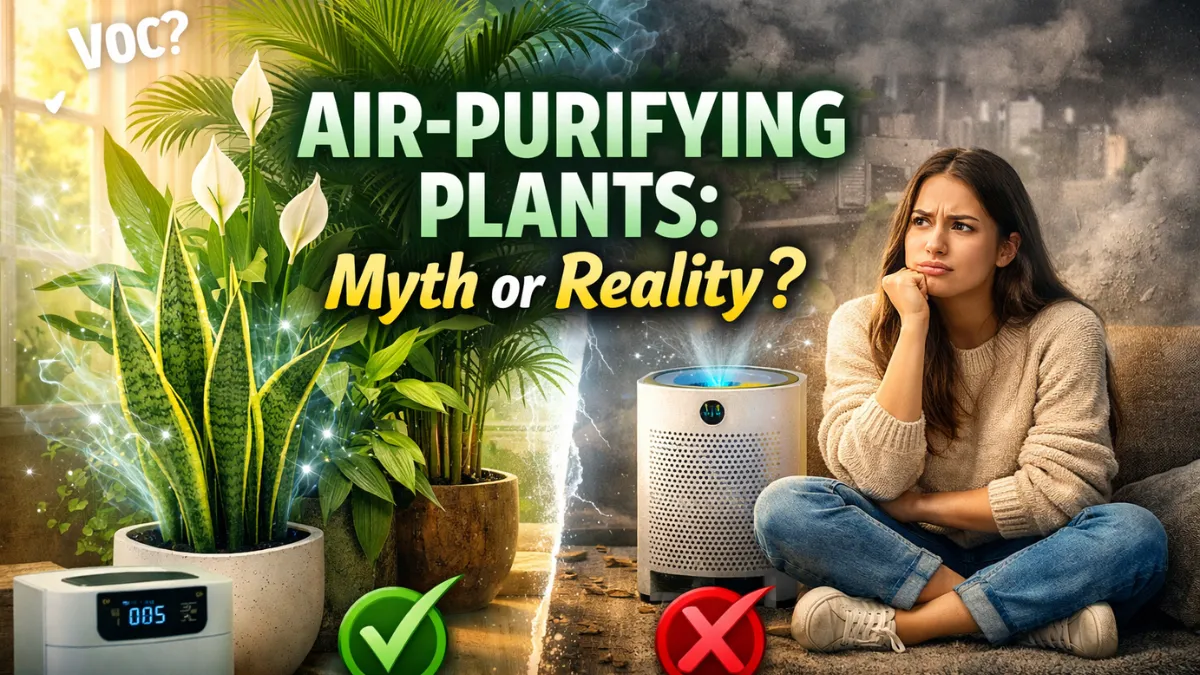
Indoor air quality has become a serious concern in modern homes filled with furniture, paint, and electronics. Many people wonder whether houseplants can truly purify the air or if they're just a trend. I've personally tested numerous plants in bedrooms and workspaces over the years. Some made the room feel fresher, while others made no significant difference. This science-based 2026 guide explains what actually works and what doesn't.
Quick Answer:
Related News


Yes, some indoor plants can remove small amounts of airborne toxins like formaldehyde and benzene under controlled conditions. However, whether indoor plants truly purify the air in homes effectively depends on the number of plants, ventilation, and room size. Plants support air quality, but they can't replace proper airflow or an air purifier.
What Science Really Says About Air-Purifying Plants
Most of their popularity began after the NASA Clean Air Study in 1989. Researchers tested plants in sealed chambers and found that they could remove volatile organic compounds (VOCs).
But here's an important point: these tests were conducted in a small, controlled lab environment.
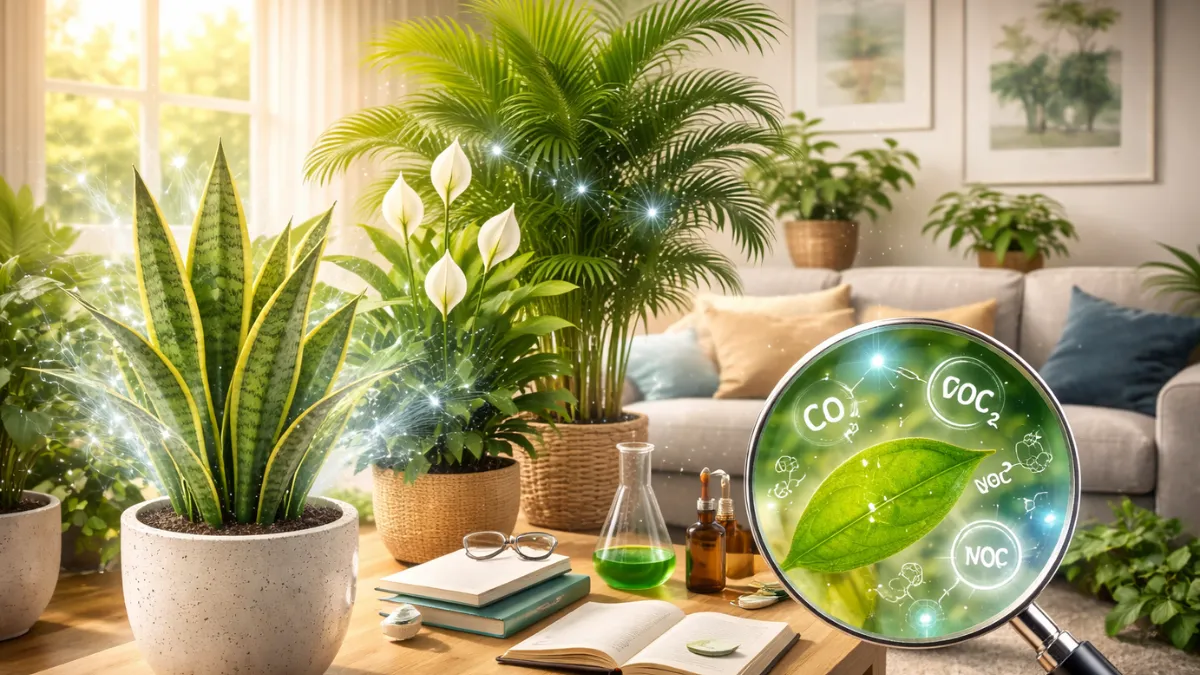
So if you're asking, are NASA's air-purifying plant results applicable to bedrooms? The obvious answer is yes, but not completely. Real homes have varying airflow, open spaces, and constant pollutant sources.
Still, plants do contribute a little, especially when grouped together.
1. Snake Plant (Dracaena trifasciata)
Best for : Bedroom
Removes : Formaldehyde, benzene (lab-tested)
The snake plant is often listed as a top choice. One reason is its CAM photosynthesis process, which means it releases oxygen at night.
Many readers ask if the snake plant is good for air purifying at night. Based on research and my own bedroom tests, it's one of the best low-maintenance options.
In my own experience, placing two medium-sized plants near a window improved the room's freshness, but one small plant didn't make much of a difference.
Drawback : To match the performance of an air purifier, you'll need several plants per square meter.
2. Peace Lily (Spathiphyllum)
Best for : Living Room
Removes : Benzene, Formaldehyde, Ammonia
Peace lilies consistently rank high in lab studies.
People often search for which indoor plant removes benzene most effectively. Peace lilies perform well under controlled conditions.
It also slightly increases indoor humidity, which can be very helpful in dry climates.
However, one thing that didn't work for me: I expected significant improvement in air quality even when placed in a dimly lit corner. Growth slowed, and the tips of the leaves turned brown.
Note : It is mildly toxic to pets.
3. Areca Palm
Best for : Large Rooms
Removes : Xylene, Toluene (Lab-Tested)
If you're wondering what the best large indoor plant is for clean air, the Areca Palm is a strong candidate.
Its leaves have a large surface area, which, in theory, improves pollutant absorption.
In my own living room, I noticed a better humidity balance during the winter months after planting a large Areca.
Reality Check : Larger plants perform better because their leaves have more mass.
4. Spider Plant
Best for : Beginners
Removes : Formaldehyde (Lab-Tested)
This plant is resilient and adapts easily.
Many readers ask if spider plants are effective air cleaners. In a sealed environment, yes. But in normal homes, results are decent.
Spider plants are better seen as supportive air helpers rather than primary filtration systems.
5. Aloe Vera
Best for : Sunny windows
Removes : Formaldehyde (Limited Evidence)
Aloe vera is often mentioned on air-purifying lists.
If you're asking whether aloe vera removes toxins from indoor air, research suggests modest benefits in lab conditions.
But there's a limit : aloe needs bright light. In dimly lit apartments, it struggles to grow and sometimes even stops growing, negating any air-purifying benefits.
Comparison Table (Science + Practical Uses)
| Plant | Best Room | Lab-Tested Toxins | Real-Home Impact | Care Level |
|---|---|---|---|---|
| Snake Plant | Bedroom | Formaldehyde | Moderate (with multiples) | Very Easy |
| Peace Lily | Living Room | Benzene, Ammonia | Mild | Medium |
| Areca Palm | Large Rooms | Xylene | Mild–Moderate | Medium |
| Spider Plant | Any Room | Formaldehyde | Mild | Easy |
| Aloe Vera | Sunny Spaces | Formaldehyde | Low | Easy |
How Many Plants Do You Really Need?
One of the most common questions is how many air-purifying plants are needed in each room.
Scientific estimates suggest that to replicate the NASA lab results, you would need 10–100 plants per square meter.
This isn't possible for most homes.
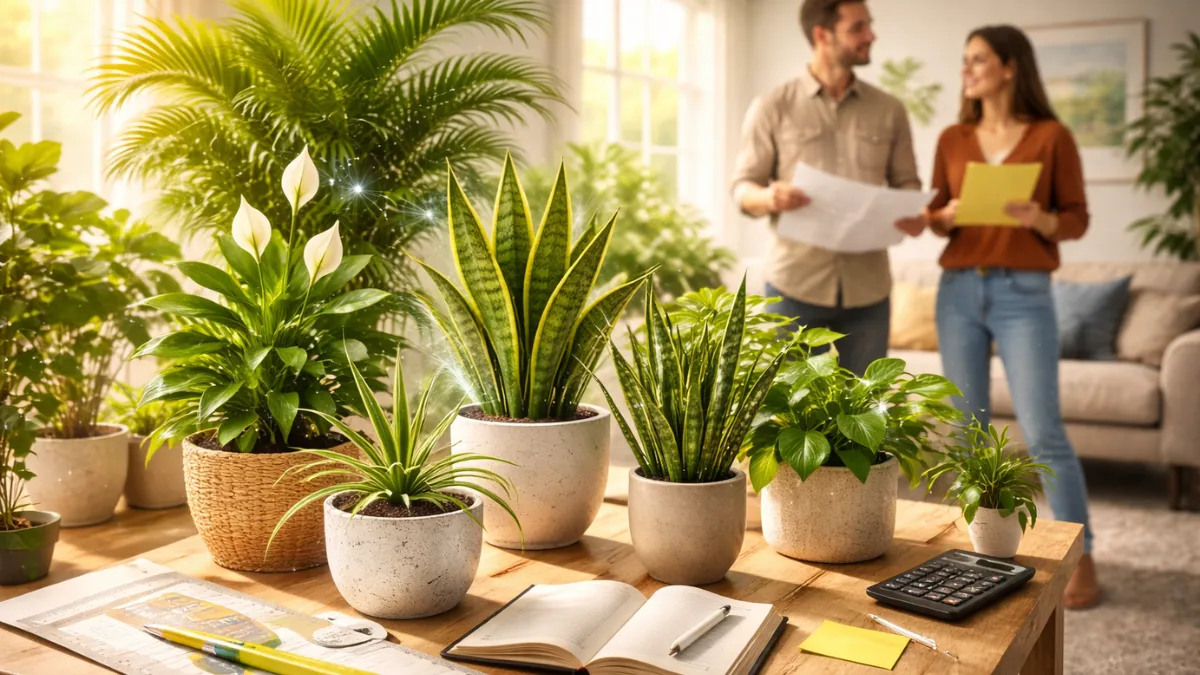
Instead, a practical approach is:
• 2–3 medium plants per 100 sq ft
• Combine with ventilation
• Avoid overwatering (mold can cause poor air quality)
Are air-purifying plants better than air purifiers?
Short answer : Absolutely not.
If you're comparing whether plants are better than air purifiers for VOC removal, mechanical air purifiers with HEPA + carbon filters are significantly more effective.
Plants provide:
• Psychological comfort
• Some help with humidity
• Some reduction in toxins
Air purifiers provide:
• Easy removal of pollutants
• Faster results
• More coverage
The purpose of this article is to help you choose plants wisely—not to expect them to replace a ventilation system.
Final verdict (2026 update)
Indoor plants help improve the indoor environment, but mostly through supportive and indirect effects.
If your goal is truly air purification, consider combining the following:
• Several large plants
• Proper ventilation
• Occasional use of an air purifier
If your goal is a healthy-feeling home with a natural look, air-purifying plants are definitely worth it.
For more in-depth reading, you can link to this guide:
How Many Plants Do You Need in a Bedroom for Noticeable Air Improvement?
Best Bedroom Plants for Oxygen and Air Quality (Science-Backed Guide)
Air Purifying Indoor Plants People Are Loving in 2025
Written from real experience caring for indoor plants for IndoorPlantify.