


Indoor plants in the bedroom create a calming and refreshing feeling. Many people believe that certain plants can increase oxygen and purify indoor air overnight. But what does the science actually say? In this guide, I'll cover the best bedroom plants for oxygen and air quality, realistic expectations, and what I've observed personally after years of keeping plants near my bed.
Quick Answer:
Related News



Which plants are best for the bedroom?
The most recommended plants for oxygen and air quality in the bedroom include:
• Snake Plant
• Peace Lily
• Aloe Vera
• Areca Palm
• Spider Plant
Some of these were highlighted in NASA's famous Clean Air Study. However, the real-world impact in the bedroom depends on the size of the room, ventilation, and the number of plants.
Do bedroom plants really increase oxygen at night?
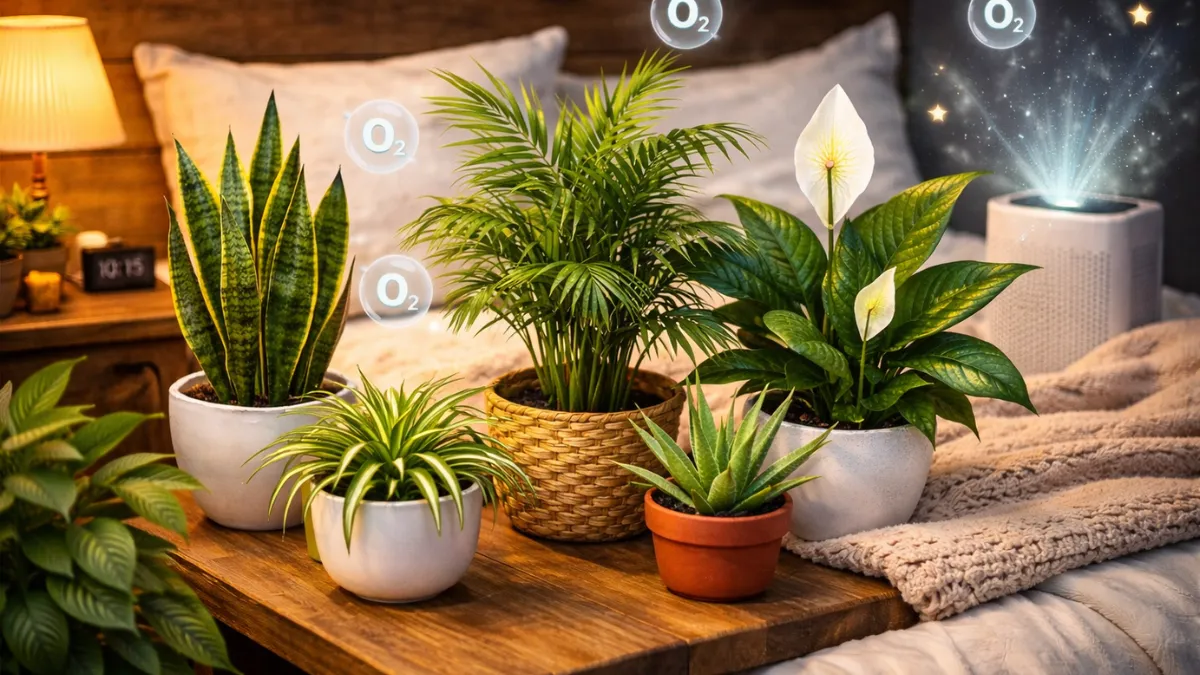
All green plants produce oxygen during photosynthesis (daytime). At night, most plants take in oxygen. However, some plants, such as the snake plant and aloe vera, use a unique process called CAM photosynthesis, which causes them to release less oxygen at night.
However, the increase in oxygen in a typical bedroom is minimal. You would need dozens of plants to make a significant difference in oxygen concentration.
In my own experience, plants make a room feel fresher, but this feeling is more related to psychological and humidity factors than a significant increase in oxygen.
What Science Says About Air Purification
Are indoor plants scientifically proven to purify the air?
A NASA study found that some plants can remove toxins in a sealed lab environment. However, modern research shows that in real homes, natural ventilation already quickly replaces indoor air. A few potted plants alone cannot significantly clean a bedroom.
Drawbacks : Plants help a little, but they can never replace proper ventilation, an air purifier, or open windows.
Still, plants improve humidity balance and mental comfort, which indirectly contribute to better sleep.
Best Bedroom Plants for Oxygen and Air Quality
1. Snake Plant (Sansevieria)
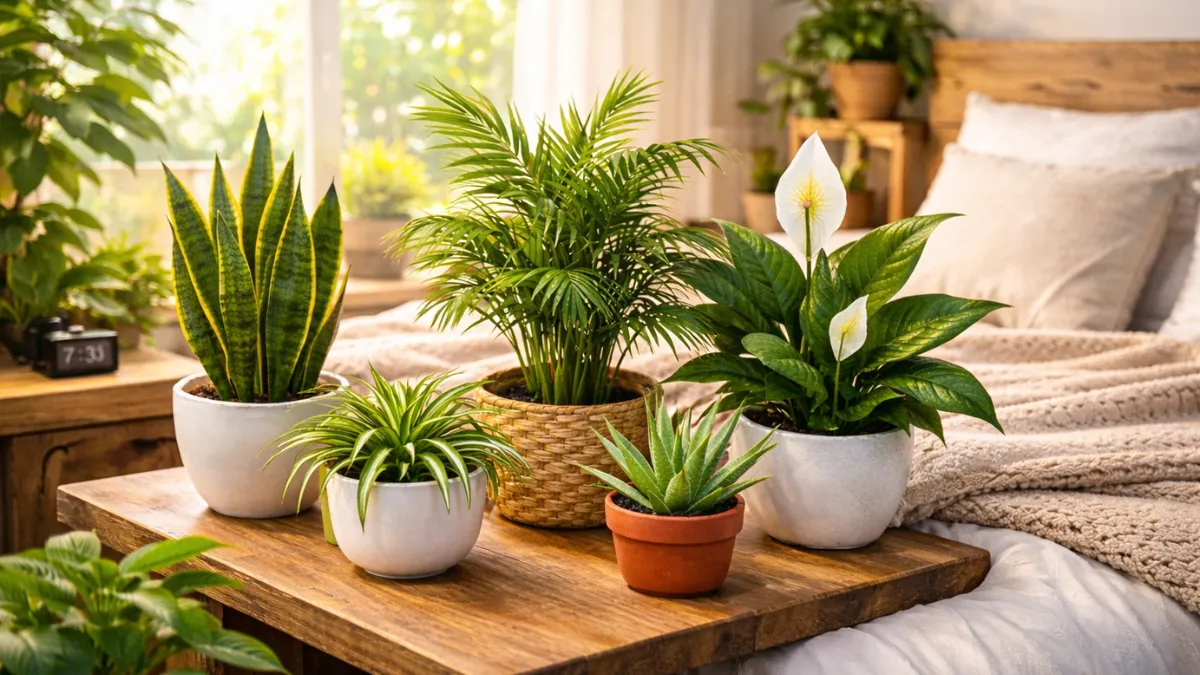
Is the Snake Plant Good for Oxygen in the Bedroom?
The Snake Plant is popular because it uses CAM photosynthesis and tolerates low light.
Why it's good for the bedroom:
• Low maintenance
• Handles dry indoor air
• Small size
• Releases mild oxygen at night
I've had it by my bed for three years. It survived without watering and even in poor winter light without any problems.
Care tip : Water only when the soil is completely dry.
2. Peace Lily
Does Peace Lily Improve Indoor Air Quality?
Peace Lily was highlighted in a NASA study for removing certain compounds from the air.
Benefits:
• Beautiful white flowers
• Can reduce small indoor pollutants
• Increases humidity
However, one thing didn't work for me at all. I placed it in a dark corner, hoping it would do well. But it wilted and stopped blooming. Peace Lily still needs indirect light.
Important : Toxic to pets.
3. Aloe Vera
Can Aloe Vera release oxygen at night?
Aloe vera uses CAM photosynthesis, making it perfect for the bedroom.
Benefits:
• Compact
• Easy to care for
• Medicinal gel inside the leaves
It prefers bright, indirect light. In dimly lit bedrooms, its growth slows significantly.
4. Areca Palm
Which palm plant is best for bedroom air quality?
The Areca Palm is known for its:
• Humidity support
• Lush tropical look
• Large leaf surface area
It requires brighter light than most people expect. In my north-facing bedroom, it struggled until I moved it closer to a window.
5. Spider Plant
Is it safe to keep a spider plant in the bedroom?
The spider plant is one of the safest and easiest options.
Why it works well:
• Pet-friendly
• Tolerates medium light
• Produces small plants
This is especially good for beginners.
Comparison Table : Bedroom Plant Performance
| Plant | Night Oxygen | Air Filtering Potential | Light Needs | Beginner Friendly |
|---|---|---|---|---|
| Snake Plant | Mild | Moderate (lab-tested) | Low–Medium | Very Easy |
| Peace Lily | Low | Moderate (lab-tested) | Medium | Moderate |
| Aloe Vera | Mild | Low | Bright Indirect | Easy |
| Areca Palm | Low | Moderate | Bright | Moderate |
| Spider Plant | Low | Mild | Medium | Very Easy |
How many plants are needed to clean a bedroom?
Scientifically, you'll need a large number, perhaps 10–100+ medium-sized plants, to make a noticeable change in air chemistry.
The purpose should be clear : Bedroom plants should provide emotional comfort, balance light humidity, and aesthetic peace, not to replace a ventilation system.
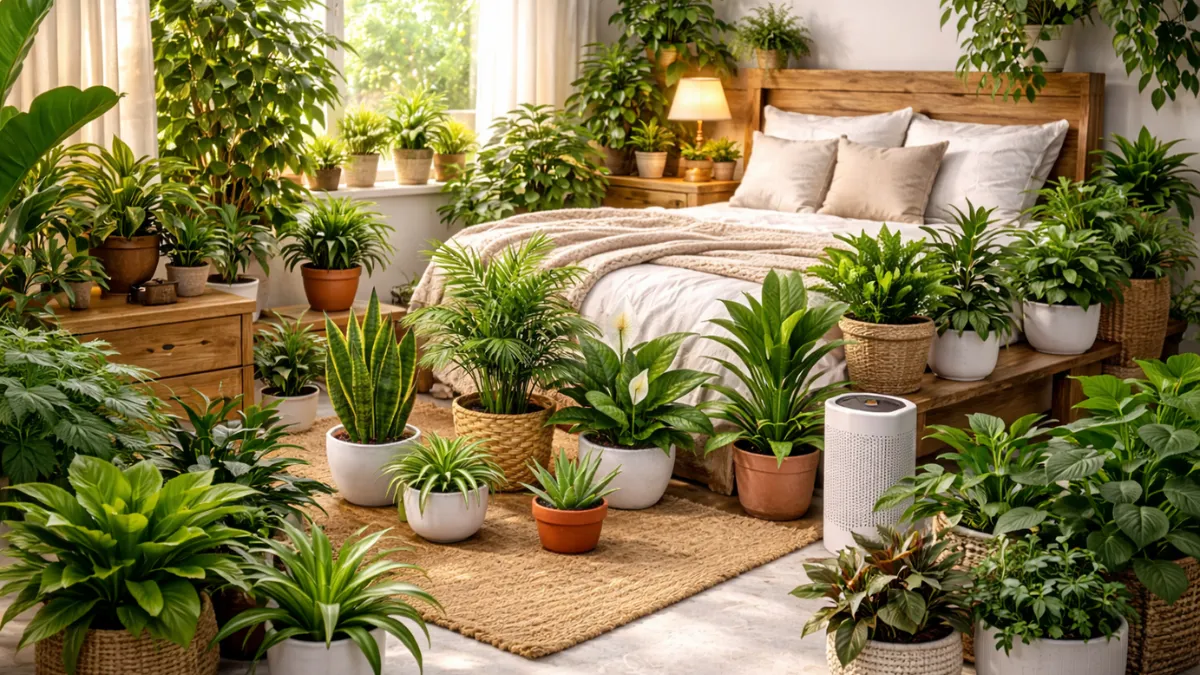
Is it dangerous to sleep with plants in your room?
No, it's not dangerous. Plants take in much less oxygen at night than humans.
Unless you have a severe allergy to specific plant pollen (very rare indoors), plants are safe to have in the bedroom.
Which plants in the bedroom help you sleep better?
There is limited scientific evidence that plants directly improve sleep quality through oxygen. However:
• Greenery reduces stress
• Caring for plants creates a routine
• Natural beauty calms the mind
In my own case, watering plants before bed became part of my nighttime relaxation routine.
Realistic expectations about air quality
If you're expecting plants to eliminate dust, smoke, or heavy pollution alone, they will never do that. To truly improve the air, do the following:
• Open windows daily
• Use an exhaust fan
• Use a HEPA air purifier
• Avoid overwatering (prevents mold growth)
• Plants are not miracle plants, but they are environmentally friendly.
Where should I place plants in my bedroom?
Here's what works best:
• Near windows that receive direct light
• Not directly overhead
• Avoid blocking air flow
• Use ventilated pots that drain water
Avoid placing too many large plants in very small rooms, as overcrowding can increase humidity and lead to mold growth.
Common Mistakes to Avoid
• Overwatering (the most common problem)
• Keeping plants in complete darkness
• Expecting a dramatic increase in oxygen
• Neglecting drainage
• Choosing poisonous plants near pets
I once had five plants tightly packed near my bedside table. The lack of air flow led to mildew in the soil. Spaced them apart, this problem was resolved.
Final Thoughts
Bedroom plants can slightly support oxygen levels and indoor air balance, but their greatest benefit is mental relaxation. However, when properly selected and cared for, they can make the bedroom feel calm, refreshed, and more connected to nature.
If your goal is clean air, place plants with proper ventilation. If your goal is better sleep and a calming environment, plants are a beautiful thing.
For more guidance, see:
Snake Plant Oxygen at Night: Truth, Myth or Just Hype?
Spider Plant vs Snake Plant : Which One Should You Buy?
Spider Plant Benefits : Why Almost Every Home Needs One
Written from real experience caring for indoor plants for IndoorPlantify.