

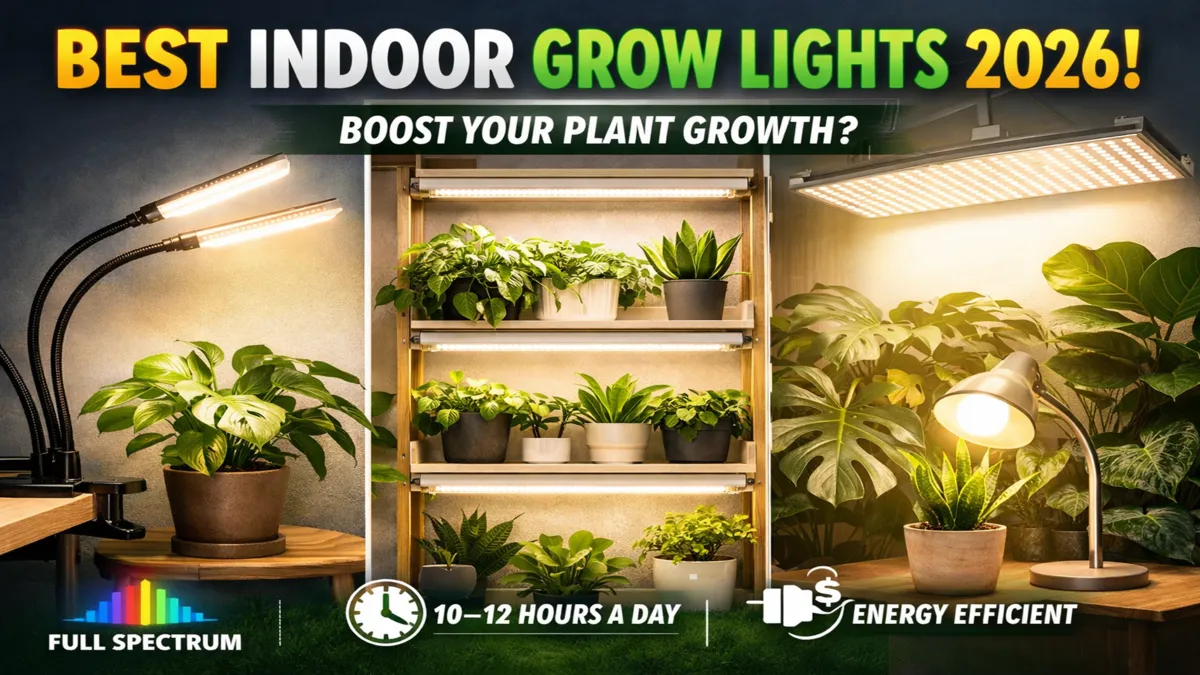
Indoor plants face challenges in modern homes. Curtains, tinted glass, and north-facing windows block out more light than we realize. If you've ever wondered if indoor plants really need grow lights in winter, the short answer is yes especially in dark rooms.
I started using grow lights when my Monstera stopped producing new leaves in winter. Within three weeks of receiving the right light, growth resumed. The difference was obvious and consistent.
Related News


Let's see what really works in 2026.
Quick Answer:
The best indoor grow lights for houseplants in 2026 are full-spectrum LED grow lights with a 4000K–6500K color temperature and adjustable brightness.
For small plants : Clip-on LED lights
For shelves : LED light bars
For large collections : Panel grow lights
For single pots : Full spectrum grow bulbs
Full spectrum LEDs are energy efficient, safe for homes, and promote good leaf growth.

What is a full spectrum grow light?
If you're confused about what a full spectrum grow light for houseplants is, it simply means that the light mimics natural sunlight.
Plants use different wavelengths:
Blue light = leaf growth
Red light = flowering
Balanced white spectrum = overall health
By 2026, most good-quality LED grow lights will combine these with natural white tones instead of the old purple-pink glow.
Types of indoor grow lights (and who should use them)
1. LED grow light bulbs
These are best for : table plants and single pots.
If you're asking if I can use a regular LED bulb as a grow light, technically the answer is yes, but the results are weaker. A dedicated full-spectrum bulb provides better plant growth.
You simply screw it into a standard lamp and place it 6–12 inches above the plant.
Limitation : Its coverage is limited. One bulb usually supports one plant well.
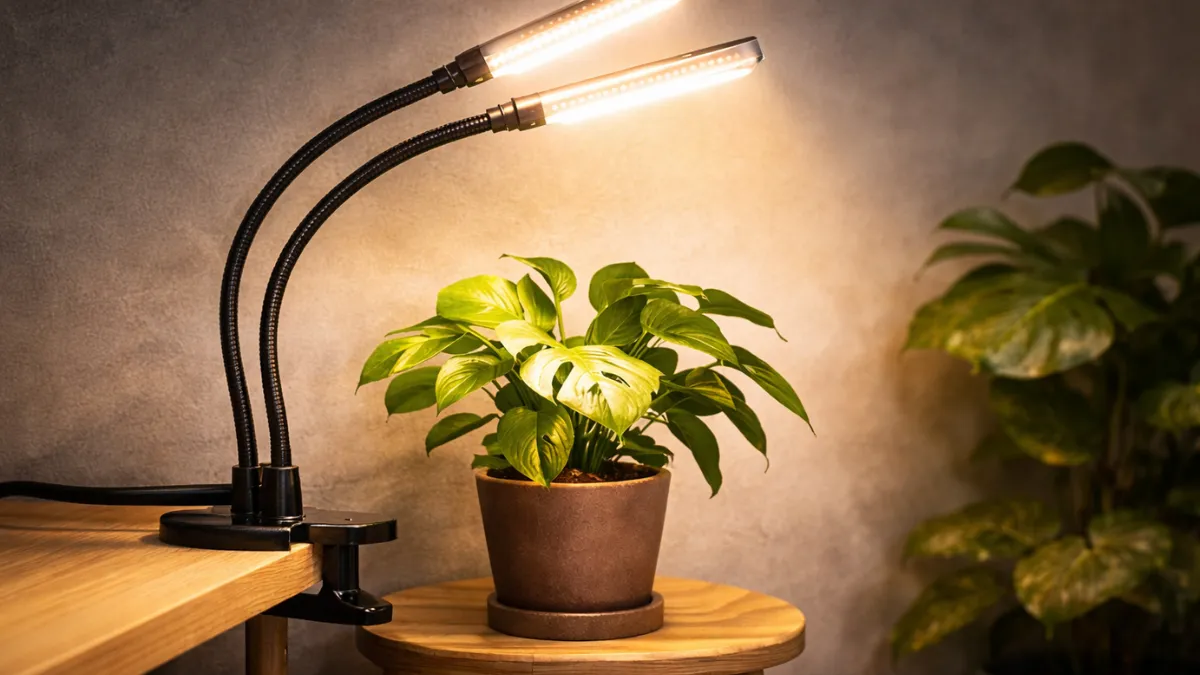
2. Clip-On Grow Lights
Best for : Apartments and Renters
Many people search for the best clip-on grow lights for small plants because they are affordable and flexible.
These:
• Mount on a desk or shelf
• Often have timers
• Work well for herbs and pothos
I used a dual-head clip light for my shelf plants, and it worked well, but I made the mistake of placing it too far away. Because distance matters more than brightness.
3. LED Light Bars
Best for : Plant Shelves.
If you're wondering how to properly light indoor plant shelves, LED light bars are the best solution.
They:
• Mount under the shelf
• Provide even coverage
• Look minimal and modern
• Are great for growing multiple foliage plants at once.
4. LED Panel Grow Lights
Best for : Large collections or serious hobbyists.
If you're asking if LED panel grow lights are safe for indoor use, yes modern 2026 models are safe, run on cold water, and are energy-efficient.
Its panels spread light evenly over a large area, making them good for:
• Monsteras
• Fiddle Leaf Figs
• Rubber Plants
• These are more expensive but perfect for larger setups.
Grow Light Comparison Table
| Type | Best For | Coverage | Energy Use | Setup Difficulty |
|---|---|---|---|---|
| LED Bulb | Single plant | Small | Low | Very Easy |
| Clip-On Light | Small groups | Small–Medium | Low | Easy |
| Light Bars | Plant shelves | Medium | Low | Moderate |
| LED Panel | Large collections | Large | Medium | Moderate |
How many hours should grow lights be on?
A common question is how many hours should grow lights be on for houseplants.
Most foliage plants need:
• 10–12 hours daily
• 12–14 hours in winter
Always use a timer, as consistency matters more than speed.
And yes, too much light can stress plants. If the leaves curl or wilt, you should give them less light.
How far should grow lights be from plants?
Another common question is how far away from indoor plants they should be.
General rule:
Low-powered lights = 6–12 inches
Strong panels = 12–24 inches
If plants stretch toward the light, it's too far. If their leaves turn white, it's too close.
Do grow lights completely replace sunlight?
Many newcomers also ask if grow lights for indoor plants can completely replace sunlight.
Yes for most leafy houseplants.
However:
• Flowering plants may need more light.
• Some plants also benefit from occasional exposure to natural light.
Just to be clear : This guide focuses on healthy leafy houseplants in a normal home environment, not greenhouse production.
Are grow lights expensive to run?
You may also be wondering if indoor grow lights increase your electricity bill.
But this isn't the case, as modern LED grow lights use very little electricity.
Example:
20W light × 12 hours daily = low monthly cost
• Cheap compared to running a ceiling fan
• In my own experience, the increase in electricity was barely noticeable.
Do grow lights help plants grow faster?
If you're wondering if indoor grow lights help plants grow faster, then yes but only when the light itself was the obstacle.
My pothos started showing stronger, larger leaves when the lighting improved. But remember:
Light only helps if:
• Watering is correct
• Soil is well-draining
• Nutrient balance is maintained
• Light alone won't fix root problems.
Common Mistakes to Avoid
• Using lights without timers
• Placing lights too far away
• Choosing weak decorative lights
• Neglecting the type of plant
One thing that didn't work for me : cheap purple USB grow lights. They looked bright but didn't support real growth in the long run.
Best Grow Light Color Temperature (2026 Standard)
If you're unsure which grow light color temperature is best for houseplants, choose:
• 4000K for balanced growth
• 5000K–6500K for leafy plants
• Avoid warm yellow 2700K bulbs for leafy growth.
Are grow lights safe for bedrooms?
Another common concern: are grow lights safe for use in bedrooms?
Modern LED grow lights:
• Produce less heat
• Emit no harmful radiation
• Are safe when used properly
• Choose a white spectrum model for visual comfort.
When do you really need grow lights?
You may need grow lights if:
• The room has north-facing windows
• Light doesn't reach the plant's corners
• Growth slows in winter
• Leaves shrink or stretch
If you're wondering how to tell if indoor plants need more light, look for elongated stems and pale leaves.
Final Thoughts
The best indoor grow lights in 2026 are full spectrum LED systems that match your plant size and location. Unless you have a large collection, you don't need expensive commercial panels.
Always start small. Use a timer. Adjust the distance. Watch your plants.
Good lighting transforms indoor plant care from survival to continued growth.
Also Read : Indoor Plants : Complete Beginner-to-Expert Guide (2026 Edition)
Also Read : How to Grow Indoor Plants Without Sunlight – Proven Tips
Written from real experience with indoor plant care for IndoorPlantify.