

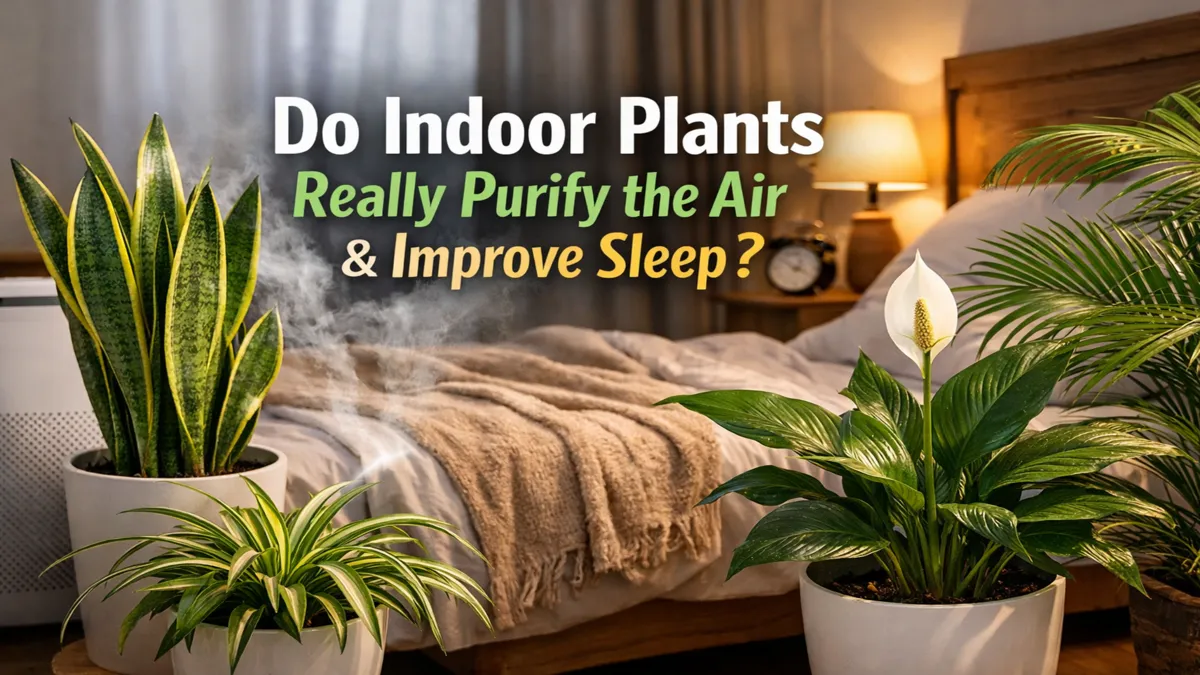
You may have heard that indoor plants purify the air and help you get a better night's sleep.
But then, you also hear people claiming that this is merely a myth.
So, what is the actual truth?
Related News


Let's break it down in a simple and clear manner, so you can understand what actually works in your home.
Do indoor plants really purify the air?
Yes but not in the way most people think.
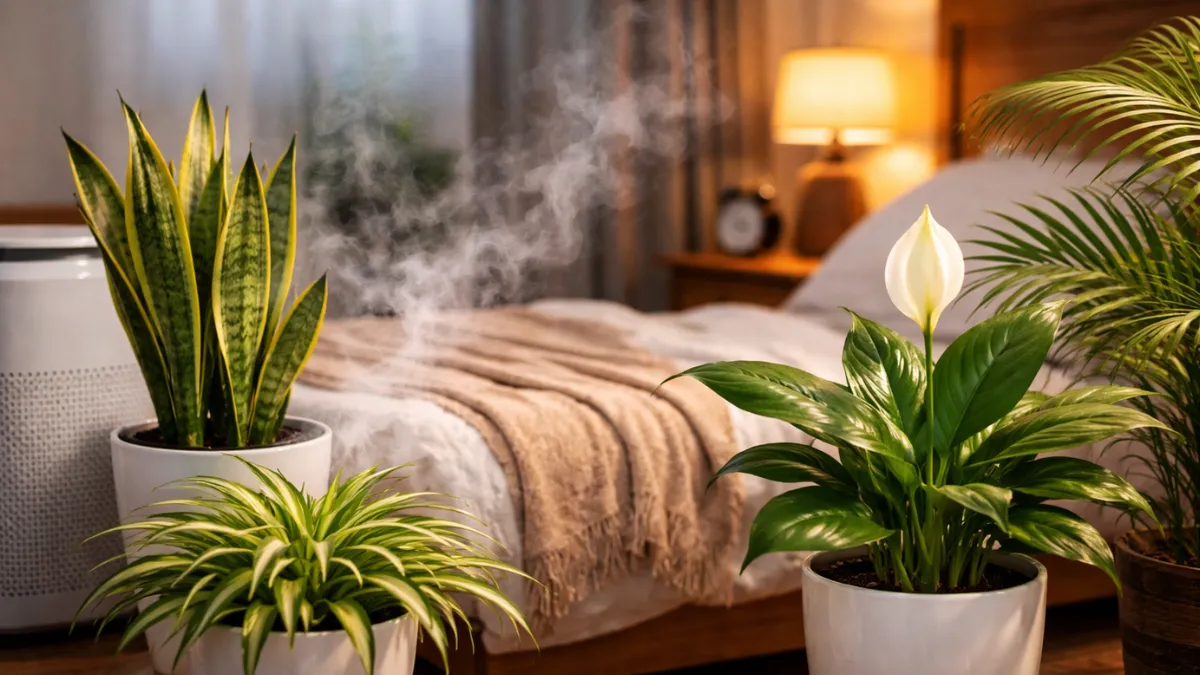
Plants can absorb small amounts of toxins and release oxygen.
However, in an average-sized room, the effect is quite slow and limited.
In my experience, having 2–3 plants in a room makes the space feel fresher.
But expecting them to completely purify the air like a machine would is simply unrealistic.
Can indoor plants improve sleep?
Indirectly, yes.
Plants don't magically put you to sleep any faster.
However, they create a calm and natural environment that helps soothe your mind.
I’ve noticed that in bedrooms with plants, the air feels less dry and the atmosphere feels more peaceful.
For this reason alone, sleep quality can improve over time.
The Best Indoor Plants for Air Quality and Sleep
Snake Plant
The Snake Plant is one of the easiest plants to care for.
It is popular because it continues to release oxygen even at night (albeit in small quantities).
It can survive in low-light conditions and requires very little maintenance.
Read more:
Snake Plant Oxygen at Night : Myth or Scientific Fact?
Spider Plant vs Snake Plant : Which Is Better for Your Home?
Spider Plant
The Spider Plant is an excellent choice for beginners. It helps remove certain indoor pollutants and grows very rapidly.
It also adds a fresh and vibrant look to any room.
Read more:
Spider Plant Benefits for Indoor Air (Proven & Practical)
Spider Plant vs Snake Plant for Asthma : Which Is Safer?
Peace Lily
The Peace Lily is renowned for its air-purifying capabilities.
It can slightly increase humidity levels in the air and help alleviate dryness in a room.
However, it requires a bit more care compared to the Snake Plant or Spider Plant.
I once made the mistake of overwatering mine, which caused its roots to rot. Therefore, keep the soil slightly moist—not wet.
Areca Palm
The Areca Palm looks magnificent in large rooms.
It helps boost humidity levels and imparts a fresh, tropical vibe.
If your room feels dry or dusty, this is an excellent choice.
Some Common Misconceptions You Should Ignore:
A single plant can purify an entire room.
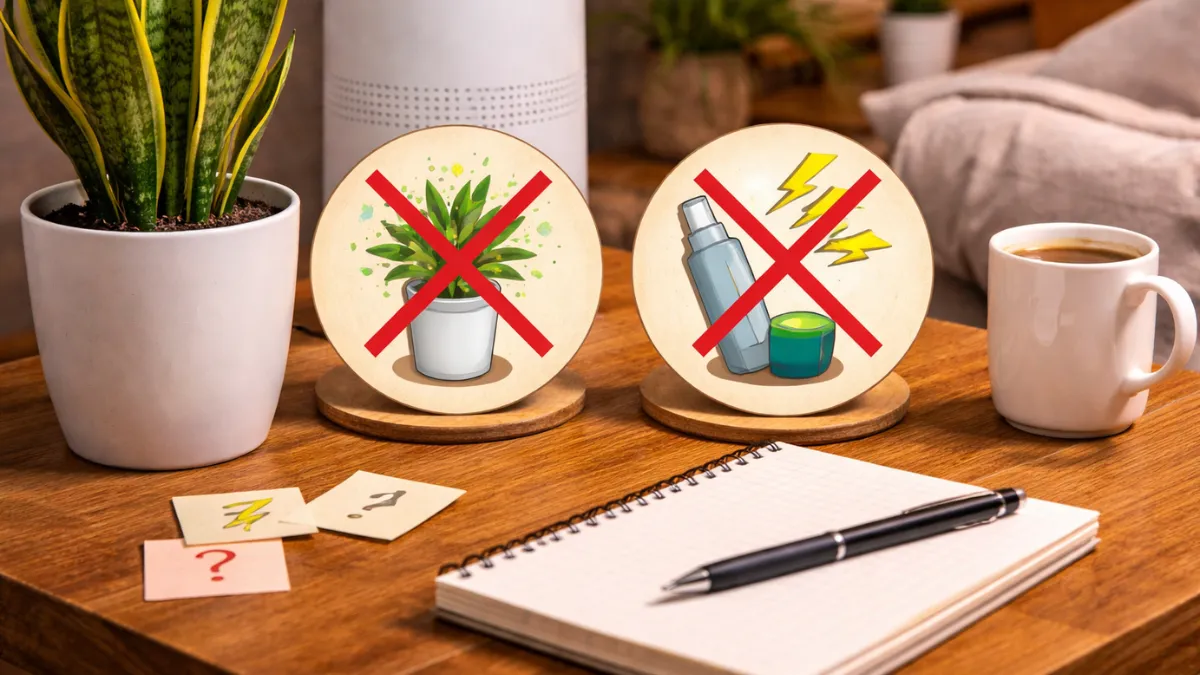
This is not true.
You would need dozens of plants to even come close to matching the performance of a standard air purifier.
Plants do help, but they are not a substitute for an air purifier.
Plants alone can cure respiratory issues.
While plants can help improve air quality, they do not treat medical conditions.
If you suffer from asthma or allergies, do not rely solely on plants.
Useful Information:
Spider Plant vs Snake Plant for Asthma : Which Is Safer?
How many plants do you *actually* need? For a standard bedroom:
• 2–4 small plants are sufficient.
• Place them near windows or in corners.
• Avoid overcrowding the space with too many plants.
In my experience, having too many plants makes them difficult to care for.
Furthermore, if the airflow isn't adequate, the room can start to feel uncomfortable.
Simple Tips for Better Results:
• Keep the leaves clean (dust hinders airflow).
• Avoid overwatering your plants.
• Whenever possible, place them in indirect light rather than direct sunlight.
• Use a breathable soil mix that allows for proper aeration.
These small details make a much bigger difference than simply acquiring the plants themselves.
A Reality Check You Should Know:
Plants improve the environment gradually over time.
If your room suffers from poor ventilation or high pollution levels,
plants alone will not be enough to solve the problem.
You will still need fresh air, open windows, or proper airflow to ensure a healthy environment.
Final Thoughts:
Indoor plants are not a magical cure-all.
Nevertheless, keeping them is highly beneficial.
They make your immediate surroundings feel calm, fresh, and vibrant.
And for that very reason, they can help improve the quality of both your breathing and your sleep.
Start with 2–3 low-maintenance plants, such as a Snake Plant or a Spider Plant.
Keep them healthy, and over time, you will begin to notice the difference yourself.
Written from real indoor plant care experience for IndoorPlantify.