

Many people wonder which plants they should keep in their bedroom to promote good sleep. The truth is that certain indoor plants can indeed help create a tranquil atmosphere, reduce stress, and slightly improve air quality. While plants are not a medical cure for sleep issues, they can certainly make your bedroom feel more comfortable and relaxing.
Based on my own experience of growing indoor plants at home, I have found that placing a few lush green plants near the bed makes the room feel calmer and less stressful after a long day at work. However, it is important to understand the science behind this: plants alone cannot guarantee deep sleep, but they can contribute to creating an environment that is more conducive to restful sleep.
Related News



This guide explores the best plants for bedrooms and good sleep in India, how they affect oxygen levels at night, and which plants are recommended according to the principles of Vastu Shastra and Feng Shui.
In Brief: The Best Plants for Good Sleep in the Bedroom
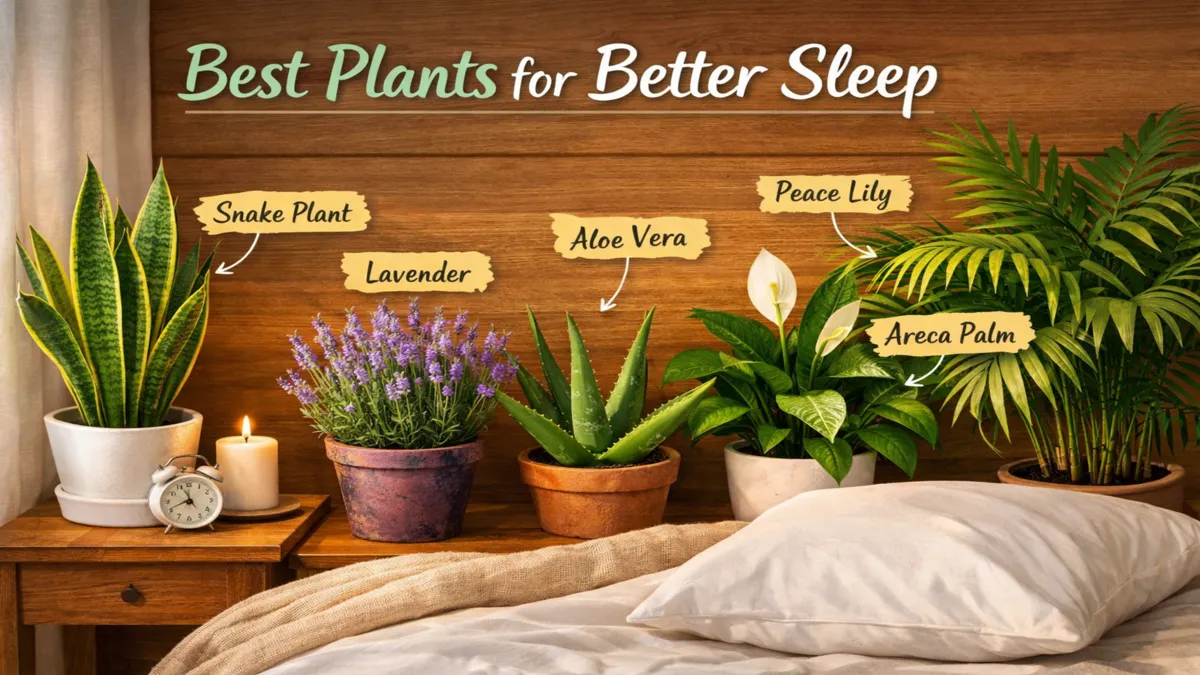
If you are looking for simple options, the following 5 plants are generally recommended as the best choices for the bedroom:
• Snake Plant
• Lavender
• Peace Lily
• Aloe Vera
• Areca Palm
These plants are popular because they are easy to care for and can help create a serene atmosphere indoors.
1. Snake Plant – One of the Best Bedroom Plants for Oxygen
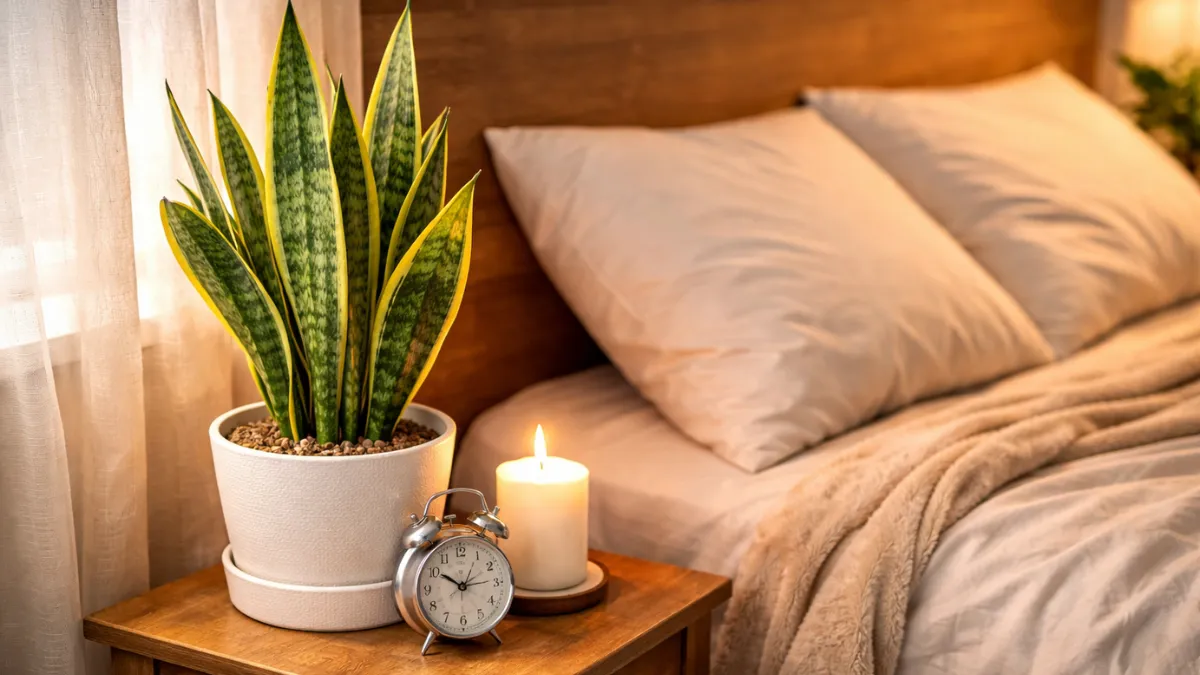
The Snake Plant (Sansevieria) is often considered one of the best plants to keep in the bedroom for boosting oxygen levels.
Unlike many other plants, the Snake Plant utilizes a unique process known as CAM photosynthesis, which means it releases oxygen during the night.
Potential Benefits:
• Can freshen indoor air
• Very easy to care for
• Thrives even in low-light bedrooms
• Often recommended for bedrooms according to Vastu principles
My Personal Experience:
I once placed a Snake Plant on my bedside table, and its greatest advantage was the minimal maintenance it required. Even with very infrequent watering, it remained lush and healthy for months.
However, keep your expectations realistic. The amount of oxygen produced by a single plant is quite small; therefore, it should be viewed as a complementary aid rather than a complete air purifier.
2. Lavender – A Popular Plant for Sleep and Stress Reduction
Lavender is renowned worldwide for its calming fragrance.
Research suggests that the scent of lavender can help reduce stress and promote relaxation, which is why it is frequently recommended as a plant to aid sleep and alleviate stress.
Potential Benefits:
• Pleasant and natural fragrance
• Can help reduce stress levels at bedtime
• Lends a serene and beautiful aesthetic to the room
Limitation:
Lavender requires ample sunlight. In many Indian bedrooms, where lighting is often dim, this plant may not grow properly unless it is placed near a window.
3. Peace Lily – A Natural Air Freshener
The Peace Lily is another excellent indoor plant for the bedroom.
This plant is frequently recommended because it can help reduce certain indoor air pollutants and slightly increase the humidity levels in the air.
Its benefits include:
• Attractive white flowers
• Can thrive even in low-light conditions
• Helps maintain indoor humidity levels
In regions with dry climates, this added humidity can make the room feel more comfortable for sleeping.
Important Note:
The Peace Lily is slightly toxic to pets; therefore, if you have cats or dogs, keep it out of their reach.
4. Aloe Vera – An Easy and Beneficial Plant for the Bedroom
Aloe Vera is one of the easiest plants to keep in the bedroom for oxygen supply at night.
Much like the Snake Plant, Aloe Vera utilizes CAM photosynthesis and releases oxygen during the nighttime hours.
Why it works so well in the bedroom:
• It requires very little water.
• It is compact enough to be placed on a bedside table.
• It can withstand dry indoor conditions.
A Common Mistake I Made:
I once overwatered my Aloe Vera plant, under the mistaken belief that it required frequent watering. In reality, Aloe Vera prefers dry soil, so watering it just once every 2–3 weeks is ideal.
5. Areca Palm – A Natural, Green Stress Reliever
The Areca Palm is a large plant that is frequently recommended for bedrooms designed according to Feng Shui and Vastu principles.
It can help with the following:
• Improving indoor humidity levels.
• Creating an atmosphere of greenery and tranquility in the room.
• Adding a natural element to the decor.
Due to their large size, these plants look best in spacious bedrooms or placed in a corner of the room, rather than right next to the bed.
Are Bedroom Plants Safe for Oxygen at Night?
A very common question is: Is keeping plants in the bedroom safe in terms of nighttime oxygen levels?
The simple answer is: Yes.
Some people believe that plants consume excessive amounts of oxygen during the night. From a scientific perspective, however, this is a misconception (a myth). The amount of oxygen plants consume is negligible and does not significantly alter the normal oxygen levels present in the bedroom air.
In fact, certain specific types of plants such as:
• Snake Plant
• Aloe Vera
• Orchids
actually release oxygen during the night.
Therefore, plants in the bedroom do not pose an oxygen-related problem at night, provided the room has adequate ventilation.
Also Read : Snake Plant Oxygen at Night: Myth or Truth? Science Explained + Bedroom Benefits
Best Plants for the Bedroom According to Vastu
In Vastu Shastra, it is believed that plants influence the flow of energy within a home.
Generally, the best plants for the bedroom, according to Vastu principles, are:
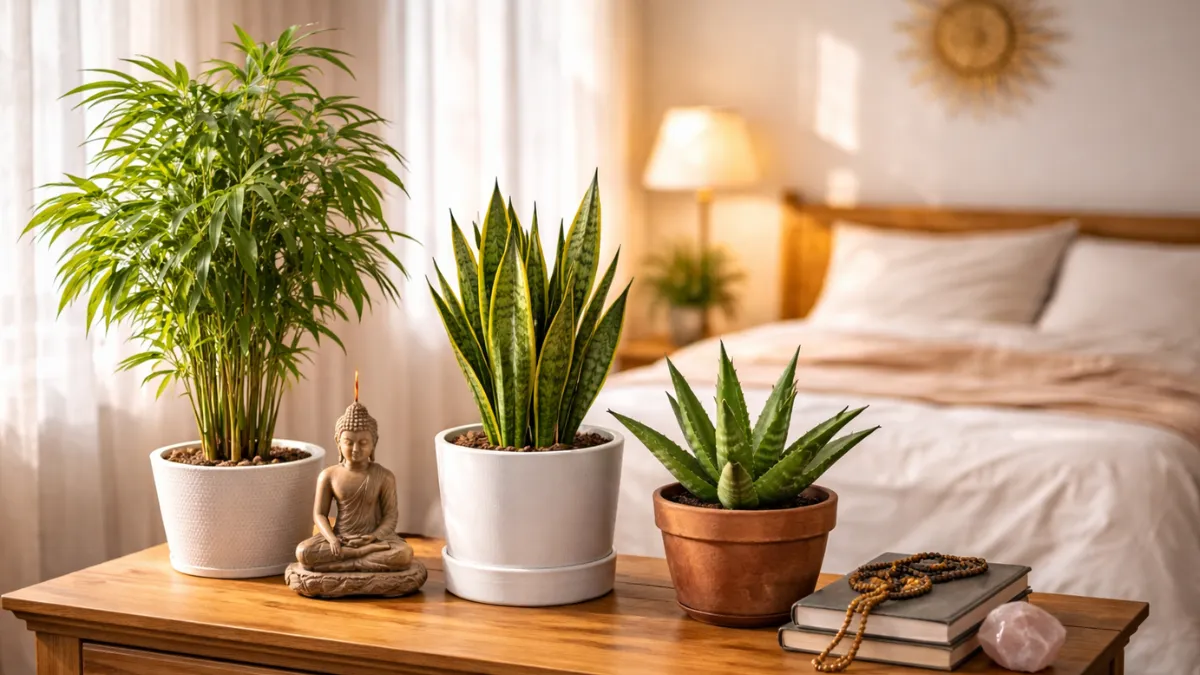
• Snake Plant
• Bamboo Plant
• Aloe Vera
Vastu experts often recommend placing these plants in the eastern or south-eastern direction of the bedroom.
According to traditional Vastu beliefs, one should avoid placing thorny plants such as cacti near the bed.
Best Plants for the Bedroom According to Feng Shui
Feng Shui focuses on balance and positive energy.
Good plant choices for the bedroom, according to Feng Shui, include:
• Peace Lily
• Bamboo Plant
• Areca Palm
These plants are believed to promote a sense of calm energy and enhance the emotional atmosphere of the room.
However, Feng Shui experts generally advise against overcrowding the bedroom by filling it with too many plants.
Practical Tips for Keeping Plants in the Bedroom
If you wish to use plants to promote better sleep and alleviate anxiety,
follow these simple tips:
1. Limit the Number of Plants
Typically, two or three plants are sufficient.
2. Choose Low-Maintenance Plants
Snake plants, Aloe Vera, and Pothos are excellent choices.
3. Avoid Strongly Scented Plants at Night
Heavily fragrant plants can sometimes disrupt the sleep of sensitive individuals.
4. Ensure Proper Ventilation
Always allow for some airflow within the bedroom.
Fact Check: Can Plants Truly Improve Sleep?
Plants can help create a relaxing atmosphere, but they cannot directly cure insomnia or sleep disorders.
They can assist in the following ways:
• Making the bedroom visually calm and soothing
• Slightly improving air freshness
• Reducing stress levels
Better sleep still depends on these factors:
• Light exposure
• Screen usage (mobile/TV) before bedtime
• Bedroom temperature
• Stress management
Therefore, plants should be viewed merely as a supportive element within a healthy sleep environment.
Final Thoughts
The primary goal when selecting the best plants for your bedroom and for better sleep is to create a calm and comfortable space.
Low-maintenance plants such as the Snake Plant, Aloe Vera, Peace Lily, Lavender, and Areca Palm are excellent choices for Indian households. These can help enhance your bedroom's atmosphere while adding a touch of natural beauty.
Speaking from my own gardening experience, I can say that even a single plant placed on a bedside table can make the room feel significantly calmer and more peaceful. Just remember that plants are not a magical cure, but they can certainly contribute to creating a healthier and more comfortable bedroom environment.
Written from real indoor plant care experience for IndoorPlantify.