Best Pots for Indoor Plants in India (Plastic vs Ceramic vs Clay – 2026 Guide)
Choosing the right pot helps plants grow better, stay healthy, and live longer. Learn which is better for home use – plastic, ceramic, or clay.
Healthy Plants Start with the Right Pot
Summary generated by AI · Reviewed by Indoor Plantify Team
- Choosing the correct pot significantly impacts indoor plant growth and health.
- Poor drainage and lack of root aeration are common issues with unsuitable pots.
- Prioritize functionality like drainage over aesthetics to avoid plant problems.
Choosing the right pot for indoor plants seems simple, but it significantly impacts growth, watering, and overall plant health. Many people buy pots that look good but then wonder why the leaves are turning yellow or why the soil stays wet. These kinds of questions often arise. Let me explain how to avoid these problems, not with theory, but with real-world experience.
How the Wrong Pot Can Harm Indoor Plants
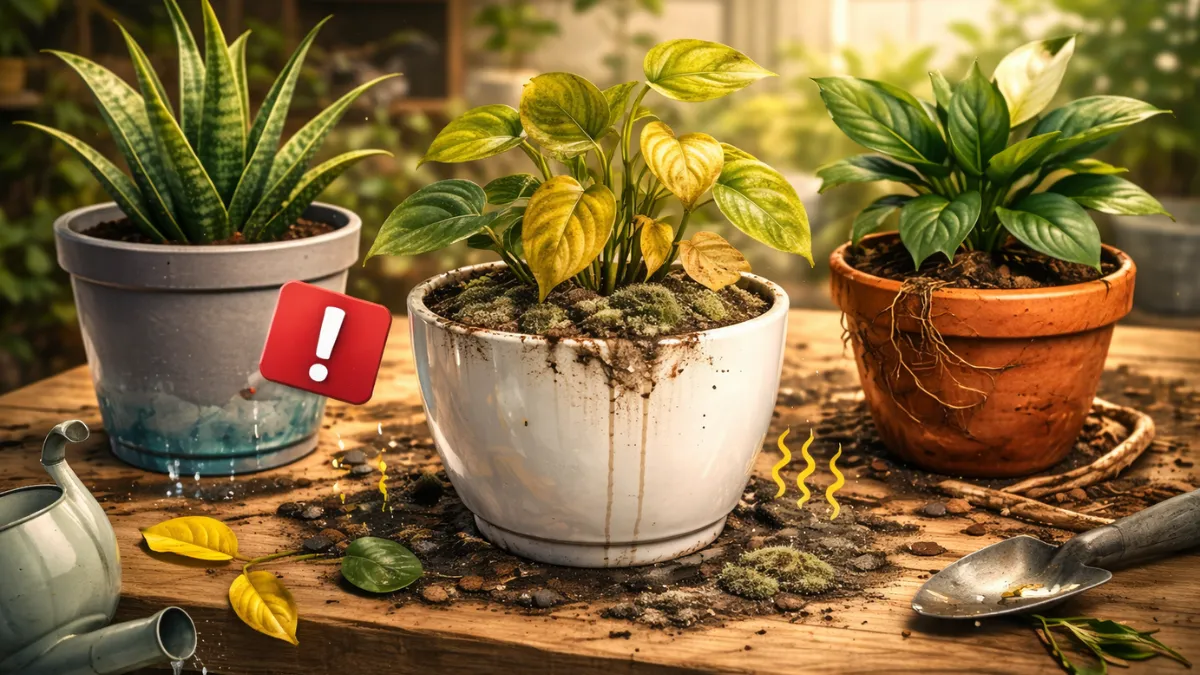
A bad pot can ruin a healthy plant because the roots can't breathe properly, water doesn't drain effectively, and the soil stays too wet for too long; I lost several plants this way when I first started gardening indoors.
Related Articles
Sometimes a pot looks beautiful, but it's not practical for indoor use; it might lack drainage holes, get too hot, be too heavy to move, or dry out the soil too quickly, stressing the plant.
• Drainage is more important than design
• Roots need air, not just space
• Watering needs vary depending on the pot type
Plastic Pots for Indoor Plants – Lightweight, Safe, but Not Perfect
Plastic pots are the easiest option for beginners. They are lightweight, inexpensive, and don't break easily if dropped. I use them for shelves, hanging plants, and small corners of my home. Because they retain moisture for longer, I don't have to water them as often.
However, plastic pots can also cause problems. Since they don't breathe, overwatering becomes risky. In the summer, they heat up quickly near windows. A cheap plastic pot can also crack within a year. If you choose plastic, opt for good quality and always ensure they have drainage holes.
Best Use Cases
• Small herbs and small plants
• Low-light corners
• Renters or people who move frequently
Ceramic Pots – Beautiful and Perfect for the Living Room
Ceramic pots look very beautiful. They make the plant feel like a part of the home decor. I mostly use ceramic pots in the living room, bedroom, and on tabletops. Because they are sturdy and stable, tall plants don't easily tip over.
However, ceramic pots are heavy and usually expensive. Many of them also lack drainage holes, which is risky. I always double-pot: a plastic pot inside the ceramic pot. This way the plant stays safe, and I can still enjoy the aesthetics.
Terracotta Pots – Natural, Breathable, and Best for Overwaterers
Terracotta pots feel like they truly care for the plants. Because the plants breathe well in them, the terracotta absorbs excess water from the soil, reducing the risk of root rot. Whenever I feel like I tend to overwater, I always choose a terracotta pot. My snake plant, money plant, and aloe vera love terracotta pots.
One drawback is that the soil dries out quickly. You'll have to water a little more often. Terracotta pots are also quite fragile and can easily break if dropped. But for healthy roots, it's the most natural option.
Common Potted Plant Problems and Real Solutions (Table)
| Problem | Why It Happens | Simple Home Fix |
|---|---|---|
| Soil stays wet for many days | No drainage / plastic pot | Shift to clay or add drainage holes |
| Leaves turning yellow | Roots suffocating | Use breathable pot or well-draining mix |
| Mold or fungus on soil | Too much moisture | Use clay pot and reduce watering |
| Plant not growing | Rootbound or stressed | Repot into slightly bigger pot |
| Pot looks dry outside but soil wet inside | Non-breathable pot | Check moisture properly, not outside look |
Which pot should you choose? (Real Home Advice)
If you tend to forget to water
Plastic or ceramic pots are safer. They retain moisture longer and reduce stress on the plant.
If you tend to overwater
A terracotta pot is your best friend. It naturally dries out the soil, protecting your plants.
If aesthetics matter most
Ceramic clearly wins. It looks premium and complements home interiors.
If budget is a concern
Plastic pots are perfect. Just ensure you choose good quality material.
Some quick tips learned from experience
• Always choose pots with drainage holes
• Use a pebble tray under the pot to protect floors and tables
• Don't jump to very large pots suddenly
• Repot gradually and gently
• Match the pot size to the plant size
Related articles
Best Indoor Plants for Self-Watering Pots (Smart Gardening)
How Often Should You Water Indoor Plants? Stop Guessing
Indoor Plants That Can Survive Missed Watering
Conclusion
The best pot is the one that matches your plant, your home, and your watering habits. I learned this after many mistakes. Always start simple, observe your plants, and choose wisely. Healthy roots always mean a happy plant.
Also Read
💬 Join the Discussion
No discussions yet. Be the first to start one!
+Deepak Kumar is an indoor gardening content contributor who focuses on practical plant solutions for small homes and apartments. He has spent years observing common plant problems faced by indoor plant owners and enjoys breaking down complex plant care topics into simple, easy-to-follow guidance. At IndoorPlantify, Deepak contributes articles based on everyday experiences with houseplants, helping readers understand what works, what doesn’t, and why consistency matters in indoor plant care.
-
Do Indoor Plants Really Improve Sleep? (Scientific Evidence Explained) -
Top Ficus Plants for Indoors (Why Theyre Trending in 2026) -
Best Low Light Indoor Plants That Actually Survive (2026 Picks) -
Best Bedroom Plants for Oxygen and Better Sleep (2026 Guide) -
Best Air Purifying Indoor Plants (Science-Based List 2026) -
How Many Plants Do You Need in a Bedroom for Noticeable Air Improvement?