
Indoor plants often fail not because of light or watering mistakes, but because of what’s happening below the surface. The wrong pot and soil combo can quietly block drainage, suffocate roots, or hold moisture too long. In 2026, indoor plant care focuses more on balance than trends. Choosing the right pot and soil together makes plants grow steadily, stay stress-free, and recover faster from mistakes.
Quick Comparison:
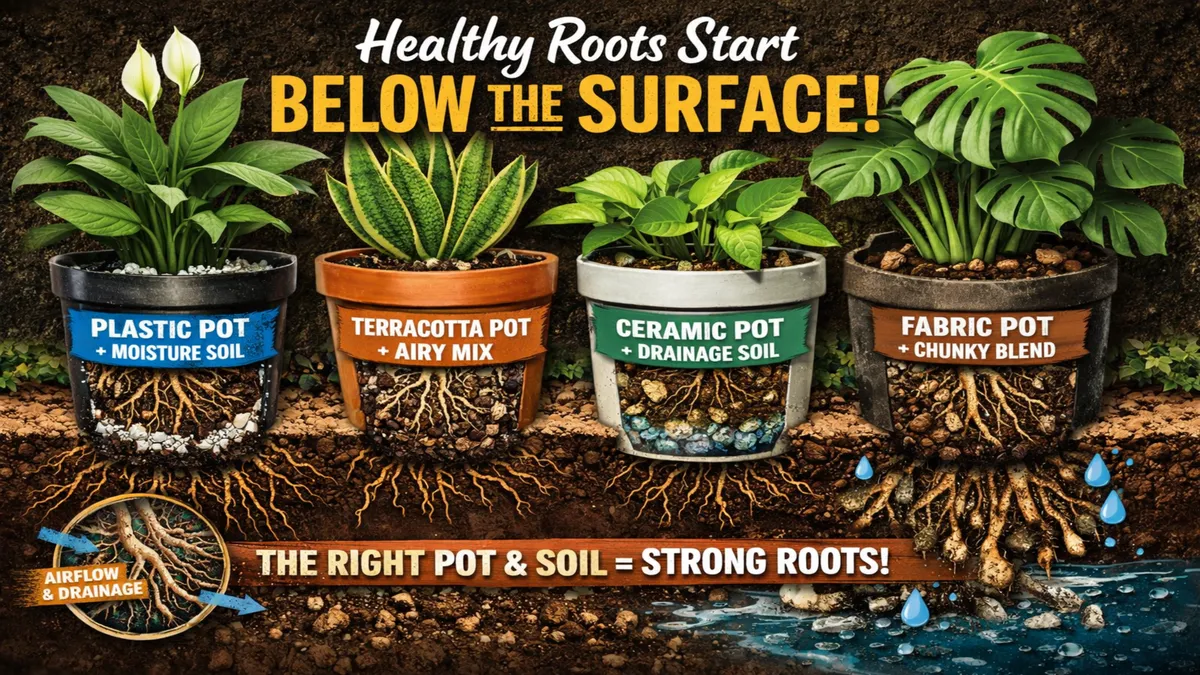
• Best for low light: Plastic pot + moisture-balanced soil
• Best for fast growth: Terracotta pot + airy soil mix
• Best for beginners: Ceramic pot with drainage + all-purpose indoor soil
• Best for air circulation: Fabric pot + chunky soil blend
Related News
Why Pot and Soil Pairing Matters More Than Ever
Indoor homes today are more insulated, climate-controlled, and closed than before. This changes how soil dries and how roots breathe. A good pot without the right soil still traps moisture, while perfect soil inside the wrong pot dries unevenly.
Root health depends on oxygen, not just water. When pot material and soil structure work together, roots grow stronger instead of rotting silently.
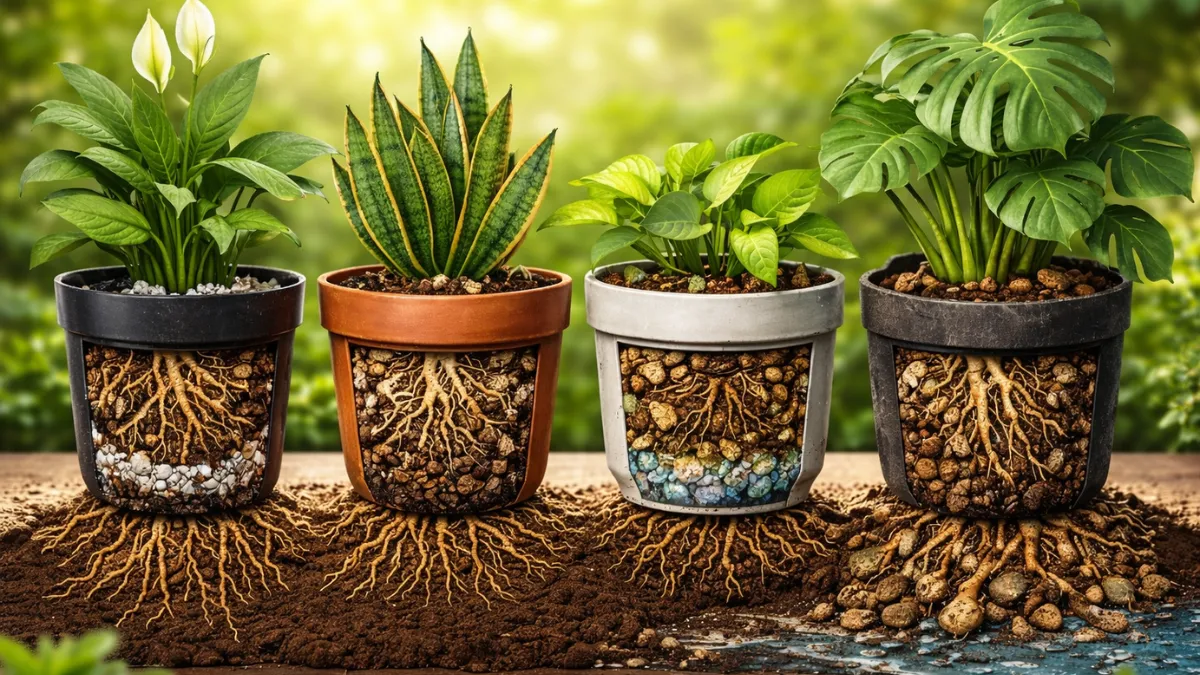
The goal is stability, not speed. Plants that grow slower but evenly stay healthy longer. Matching pot type with soil texture reduces stress during watering gaps and protects plants from sudden environment changes.
Terracotta Pots and Airy Soil Mixes
Terracotta pots naturally release moisture through their walls. This makes them forgiving for people who water too often. However, they dry soil faster than expected, especially indoors with airflow.
To balance this, terracotta works best with soil that holds some moisture but still drains well. Adding coco coir or fine bark helps prevent roots from drying out too quickly.
This combination suits plants like snake plants, pothos, and rubber plants that dislike soggy soil but still need consistency.
Related Article:
Best Pots for Indoor Plants in India (Plastic vs Ceramic vs Clay – 2026 Guide)
Plastic Pots with Moisture-Controlled Soil
Plastic pots do not breathe. They trap moisture longer, which can be helpful in dry indoor homes. The risk appears when dense soil is used, turning the pot into a water reservoir.
Using a lighter indoor soil with perlite or pumice keeps roots oxygenated. This setup works well for ferns, peace lilies, and calatheas that enjoy steady moisture.
Plastic pots are best for people who forget to water, not those who water on schedule without checking soil.
Ceramic Pots : Balanced but Drainage-Dependent
Ceramic pots sit between terracotta and plastic. Glazed ceramic holds moisture, while unglazed ceramic allows some evaporation. The biggest mistake is choosing ceramic pots without drainage holes.
With drainage, ceramic pots pair well with standard indoor plant soil. Without drainage, no soil can fully protect roots long-term.
This combo suits beginner-friendly plants where stability matters more than speed.
Fabric Pots and Chunky Soil for Root Health
Fabric pots are becoming popular indoors in 2026 due to their airflow benefits. Roots receive oxygen from all sides, reducing rot risk significantly.
They must be paired with chunky soil mixes using bark, perlite, and coarse materials. Fine soil leaks out and dries too fast.
This setup works best for large leafy plants that stay in one place and don’t need frequent moving.
Common Pot and Soil Mistakes (And Fixes)
| Mistake | What Happens | Better Fix |
|---|---|---|
| Dense soil in plastic pot | Root rot | Add perlite or switch soil |
| Terracotta + sandy soil | Roots dry fast | Add coco coir |
| No drainage hole | Water buildup | Always use drainage |
| Decorative pot only | Hidden rot | Use nursery pot inside |
This table solves most indoor plant failures without changing watering habits.
How to Choose the Right Combo for Your Home
Start with your environment, not the plant. If your home stays cool and shaded, avoid moisture-trapping combinations. If it’s warm and dry, moisture-holding setups work better.
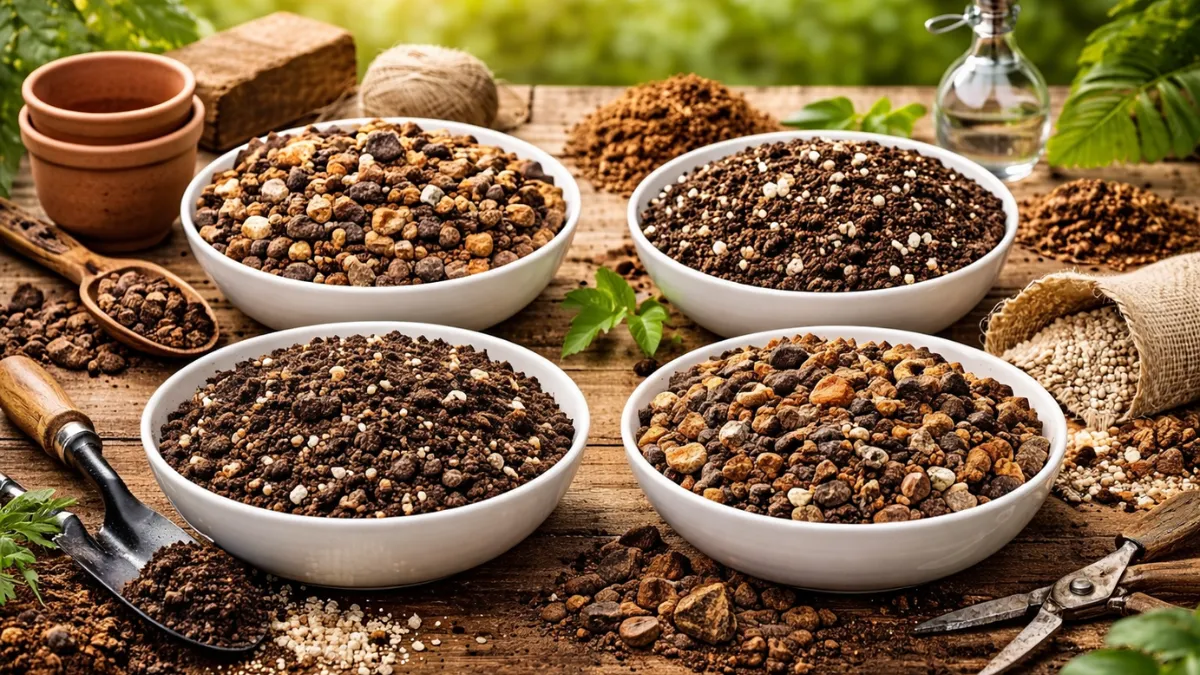
Plants adapt slowly. Changing both pot and soil together causes less shock than adjusting watering alone. Repot only when roots need space, not just because growth slows.
Related Article:
DIY Soil Mix for Indoor Plants at Home – Easy Recipe (2026)
What Will Not Work in 2026 Indoor Homes
One-size-fits-all soil is unreliable. Outdoor soil indoors suffocates roots. Decorative pots without drainage continue to fail plants quietly. Overcorrecting dryness with heavy soil leads to long-term damage.
Healthy growth comes from balance, not extreme solutions.
Related Article:
Best Soil for Indoor Plants : Complete Guide for Healthy Growth (2026)
Final Tips for Long-Term Indoor Plant Health
The best pot and soil combination is one that dries predictably, not quickly or slowly. Watch how soil behaves after watering instead of following schedules. A stable root environment allows plants to tolerate light changes, missed watering, and seasonal shifts without stress.