
Most indoor plants don't die from lack of water or sunlight. They often fail because of the wrong soil. Soil controls the roots, water, and air. When I finally got my soil mix right at home, my plants stopped turning yellow and finally started thriving.
What Makes Good Soil for Indoor Plants?
Good indoor plant soil isn't garden soil. I learned this the hard way after losing two money plants to heavy, muddy soil.
Related News

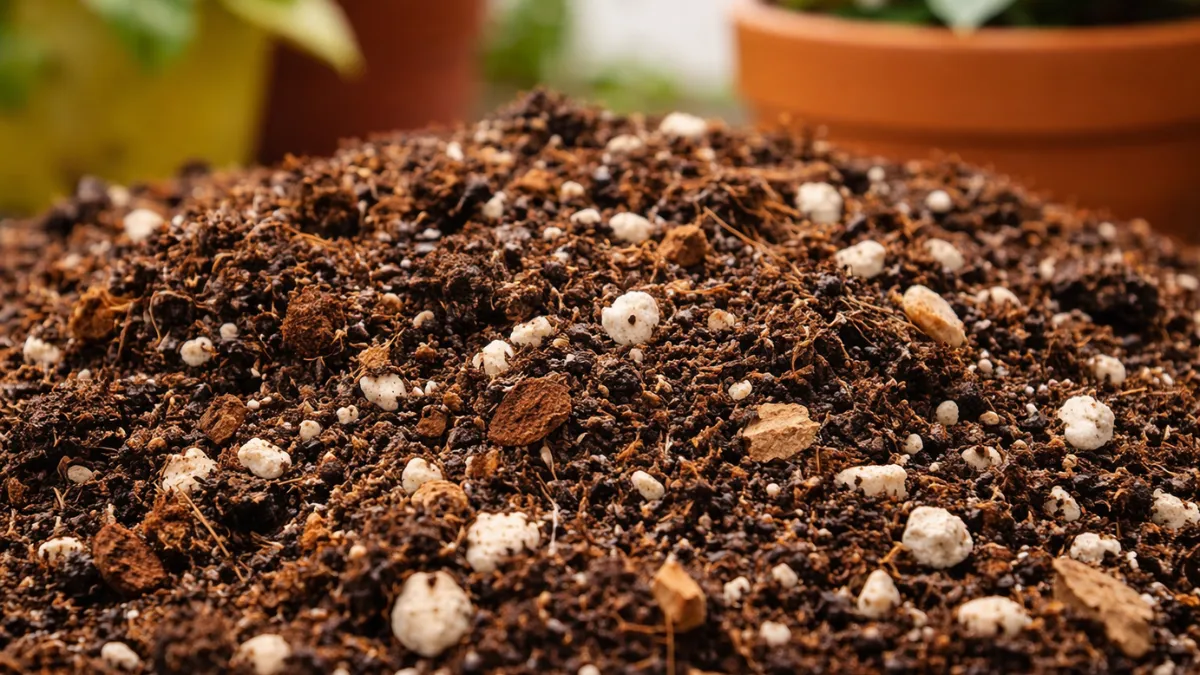
Indoor plant soil should always be loose. Roots need air as much as they need water. If the soil compacts, the roots silently rot inside the pot.
It also needs to drain quickly. Standing water is the biggest enemy of indoor plants.
• Loose texture
• Fast drainage
• Retains some moisture, but not too much
Why Garden Soil Fails for Indoor Plants
Garden soil works outdoors, not in pots. I tried it once to save money. It was my biggest mistake.
It holds too much water
Garden soil becomes compacted in pots. Water gets trapped, and after a few days, the roots start to smell.
It prevents air from reaching the roots
Indoor pots don't have earthworms or natural airflow. This means heavy soil quickly suffocates the roots.
It can contain pests
Outdoor soil can bring pests or fungi into your home. That's how I ended up with fungus gnats.
The Best Soil Mix for Indoor Plants (Tried and Tested at Home)
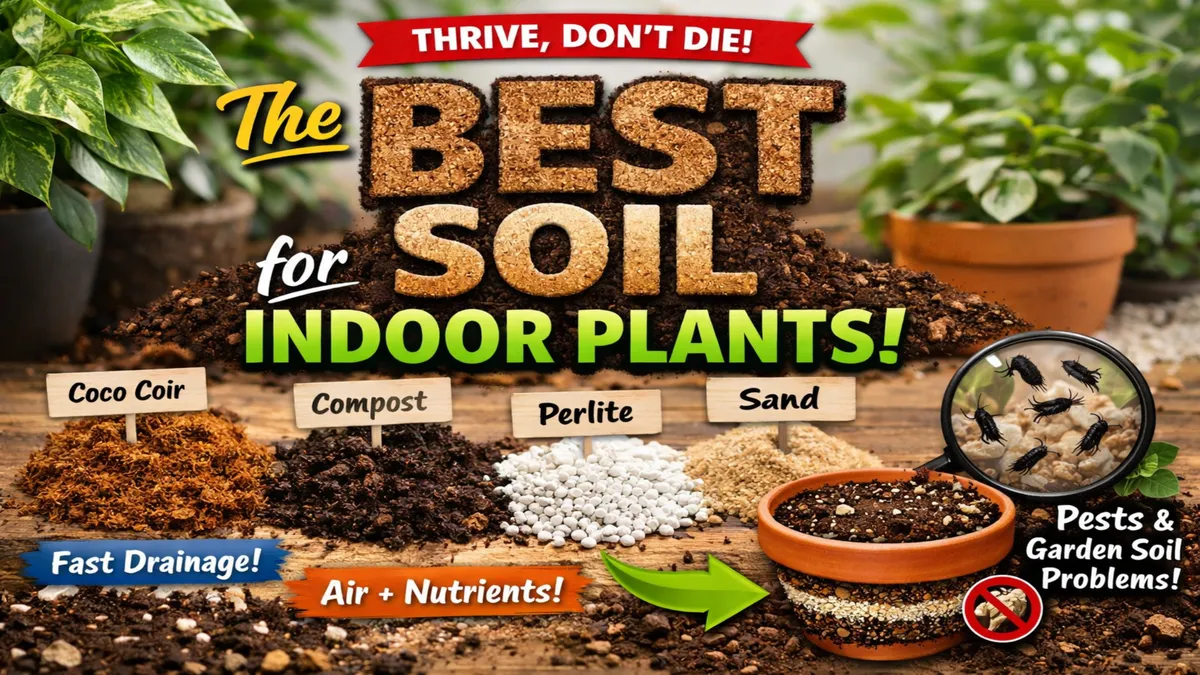
After years of testing, this simple mix works perfectly for most indoor plants. Basic All-Purpose Indoor Potting Mix
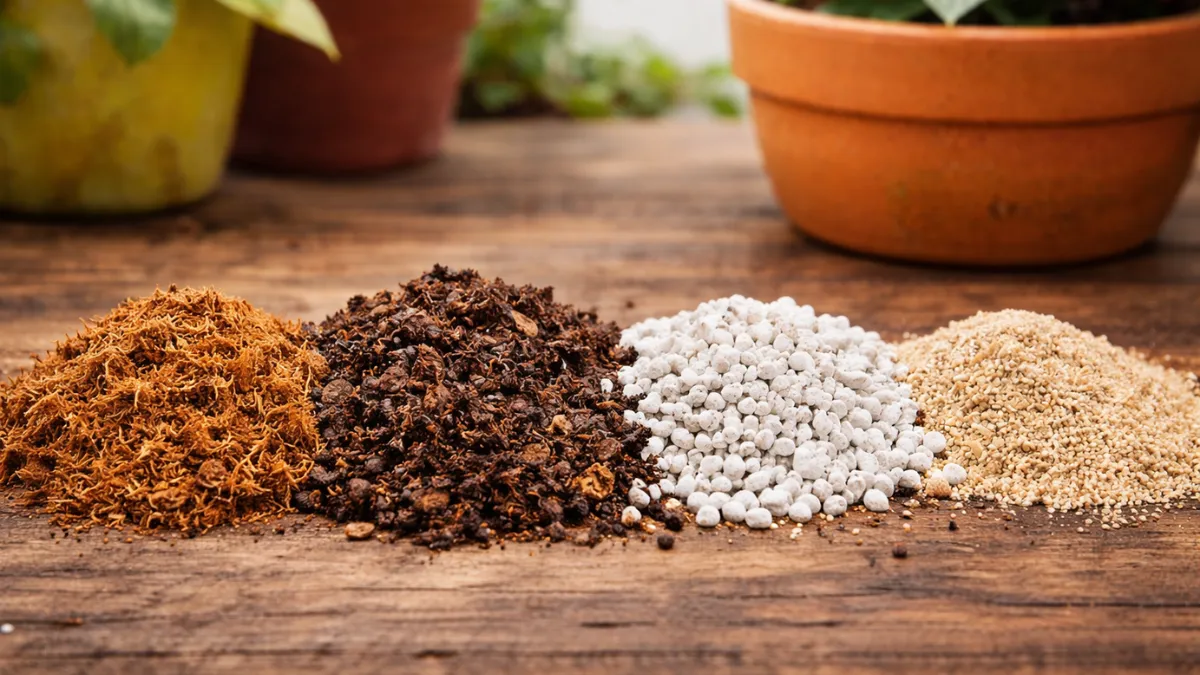
• 40% Coco Coir or Peat Moss
• 30% Compost or Vermicompost
• 20% Perlite or Sand
• 10% Garden Soil (Optional)
This mix is lightweight, drains well, and still provides slow-release nutrients to the plant.
Why This Mix Works
Coco coir retains moisture without waterlogging the roots. Perlite creates air pockets. Compost provides nutrients without burning the roots.
Soil Needs for Different Indoor Plants
For Foliage Plants (Money Plant, Philodendron)
They prefer slightly moist soil. Use more coco coir and less sand.
For Succulents and Cactus
They absolutely hate wet soil. Use more sand and perlite. Compost should be minimal.
For Flowering Indoor Plants
They often require more nutrients. The quality of the compost is more important here.
Common Indoor Soil Problems and Easy Solutions
| Problem | Cause | Simple Fix |
|---|---|---|
| Soil stays wet for days | No drainage, heavy mix | Add perlite and check pot holes |
| White layer on soil | Salt buildup | Flush soil with plain water |
| Fungus gnats | Wet organic soil | Let top soil dry, reduce compost |
| Plant not growing | Poor nutrients | Refresh top soil with compost |
This table is based on mistakes I've made myself at home.
How Often Should You Change the Soil for Indoor Plants?
Indoor potting soil doesn't last forever. That's why I change or refresh the soil every 12-18 months.
If the plant's growth slows down, the leaves wilt, or the water drains too quickly, the soil is exhausted. Sometimes just replacing the topsoil can revive the plant. Ready-made potting soil vs. homemade mix
Ready-made soil is convenient, while a homemade mix offers flexibility.
Store-bought soil is good for beginners, but I always add extra perlite to improve drainage. Most packaged soils are too dense for Indian homes.
Easy tips from real-world experience
• Always use pots with drainage holes.
• Never compact the soil tightly when repotting.
• Water only when the topsoil feels dry.
• Keep the soil dry for a day after repotting.
• These small habits protect the roots more than fertilizers.
Related articles
Best Pots for Indoor Plants in India (Plastic vs Ceramic vs Clay – 2026 Guide)
Best Indoor Plants for Self-Watering Pots (Smart Gardening)
Overwatering Is not the Problem : The Real Reason Your Plants Are Dying
Final Thoughts
Healthy indoor plants always start with healthy soil. When I stopped thinking of soil as "just dirt" and started paying attention to aeration, water, and roots, my plants became stronger and easier to manage. Good soil quietly does most of the work.