

Why is Bur Ka Potato trending so rapidly among Indian farmers in 2025? Find out why.
Data Insight : In the last six months, farmers in North India have increased Bur Ka Potato cultivation by approximately 20%, while small-scale vegetable farmers have temporarily abandoned it due to its high yield and low cost.
Related News



Bur Ka Potato is bringing a silent revolution to Indian agriculture. While it was unheard of a few years ago, today farmers are increasingly cultivating it. Its cultivation grows rapidly and yields are high, making it a popular money crop. However, its cultivation is very difficult; it grows well even in low-fertile soil and semi-arid conditions.
In this article, let's understand why it's going viral, how you can easily grow it, its yields are expected to be faster than other crops (though it requires a little more work), and its yield is 30–40% higher than regular potatoes.
What is Bur Ka Potato and why has it become a favorite among farmers?
• A hardy potato variety, commonly known as Bur Ka Potato because of its difficult harvesting process.
Growth time : Only 75–85 days (15–20 days faster than traditional varieties).
• It requires 30–40% less irrigation, ideal for low-moisture soil.
• It is less prone to pests and highly disease-resistant, reducing chemical costs.
• Each Bur Ka Potato potato weighs approximately 200–250 grams.
Data Insight : Field reports from Rajasthan indicate that its average yield is 21–24 tons per acre, which is quite high, compared to the 14–16 tons yield of common varieties.
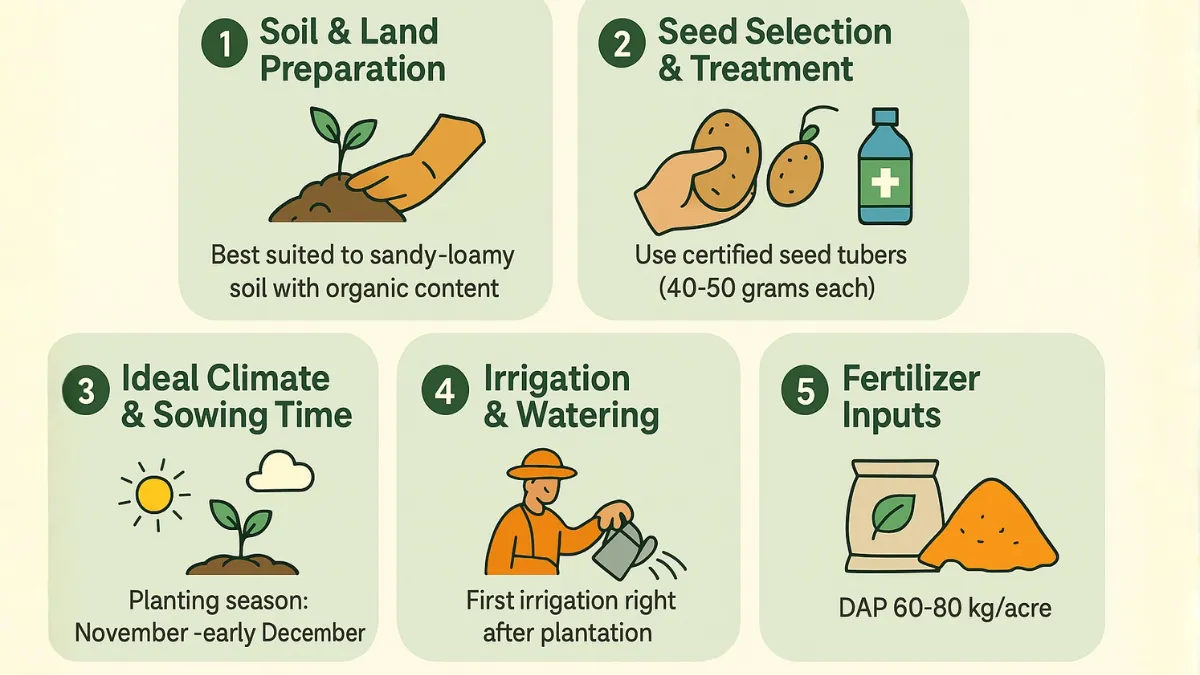
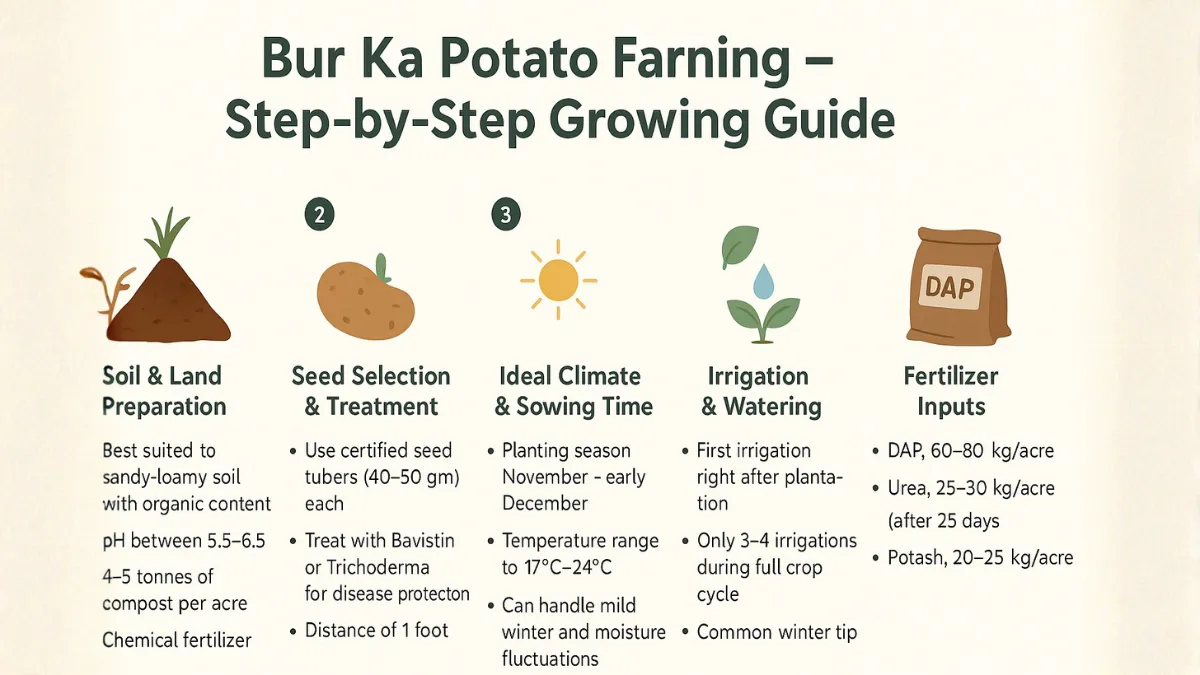
Let's learn how to grow Bur Ka potatoes with a step-by-step cultivation guide.
1. Soil and Land Preparation
• It is best cultivated in sandy-loam soil with organic matter.
• And maintain a pH level between 5.5–6.5.
• Use 4–5 tons of compost per acre, and chemical fertilizers should be used only when necessary.
2. Seed Selection and Treatment
• Use certified seed tubers (40–50 grams each).
• Treat the seedlings with Bavistin or Trichoderma to protect them from disease.
• Maintain a distance of 1 foot between each plant.
3. Suitable Season and Sowing Time
Sowing Season : Sow in November–early December.
• Temperature: 17°C–24°C.
• This plant can tolerate only mild winters and humidity fluctuations.
4. Irrigation and When to Water
• The first irrigation should be done immediately after planting.
• It requires only 3–4 irrigations throughout its crop cycle.
• Do not irrigate during heavy dew (general winter advice).
Fertilizer Inputs
| Input Type | Quantity |
|---|---|
| DAP | 60–80 kg/acre |
| Urea | 25–30 kg/acre (after 25 days) |
| Potash | 20–25 kg/acre |
Common Issues & Solutions
| Problem | Solution |
|---|---|
| Sprouting delay | Use pre-germinated tubers |
| Root rot | Avoid over-irrigation |
| Late blight | Use copper oxychloride spray (0.2%) |
Harvesting and Storage (A Special Feature of Bur Ka Potato!)
After the Bur Ka Potato vine dries, it should be buried in the soil for 5-7 days, allowing the outer skin to harden, allowing it to last for 4-5 months without cold storage.
Cost & Profit Breakdown (Per Acre)
| Particular | Cost (INR) |
|---|---|
| Seed Tuber | ₹18,000 |
| Fertilizers | ₹8,000 |
| Irrigation | ₹4,500 |
| Labour | ₹7,500 |
| Total Cost | ₹38,000 |
| Average Income (Yield 22 tonnes @ ₹10/kg) | ₹2,20,000 |
| Net Profit | ₹1,82,000 per acre |
Profit Margin : Returns are approximately 5 times the amount invested.
Verdict : Should you grow Bur Ka Potato in 2025 or not?
If you're a farmer looking for high yields at low costs, you should definitely grow it. Since it's a quick-selling crop, Bur Ka Potato is one of the best options for 2025.
It's a great option for small and medium-sized farmers, especially those in North and Central India, as its large size and long shelf life are expected to increase demand in the export market.