
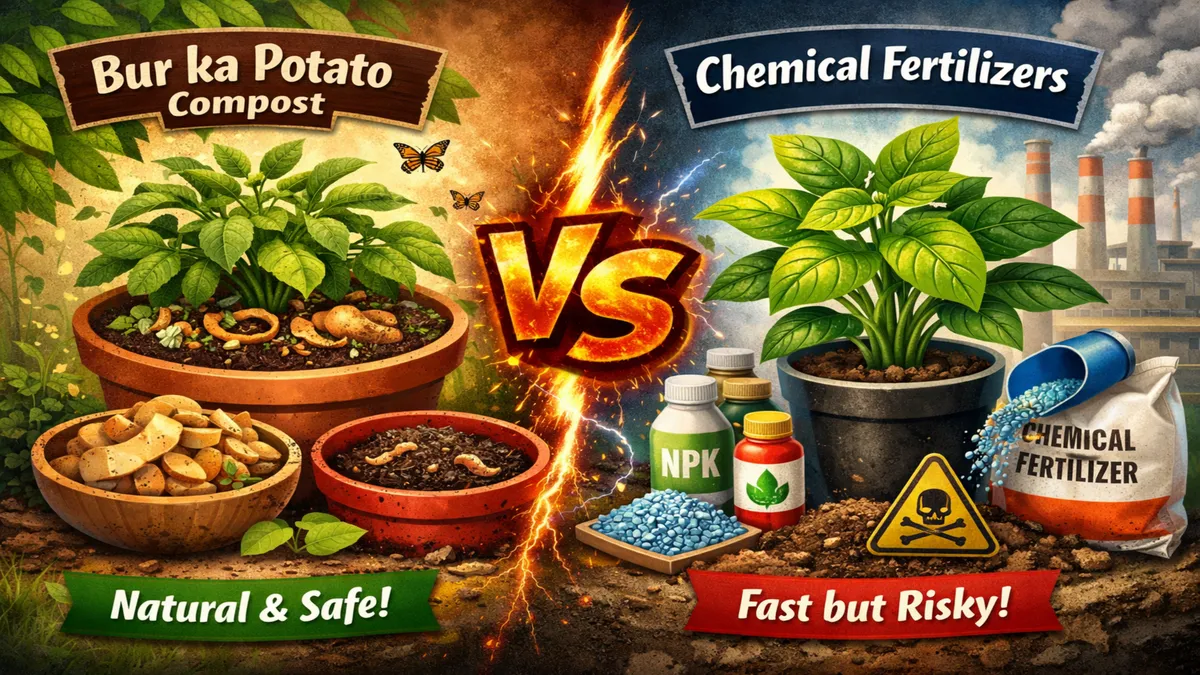
In many homes, we don't throw away vegetable scraps directly. Things like potato peels, kitchen waste, and plant trimmings gradually transform into something useful. I too grew up seeing elders use "Bur ka potato" for their plants. But today, chemical fertilizers promise rapid growth. This creates confusion for home gardeners. I've used both methods for years, and they work very differently with plants and soil.
Quick Answer Box
Quick Comparison:
Best for low light : Bur ka potato
Best for rapid growth : Chemical fertilizers
Best for beginners : Bur ka potato
Best for air circulation : Bur ka potato
Related News

What does Bur ka potato mean?
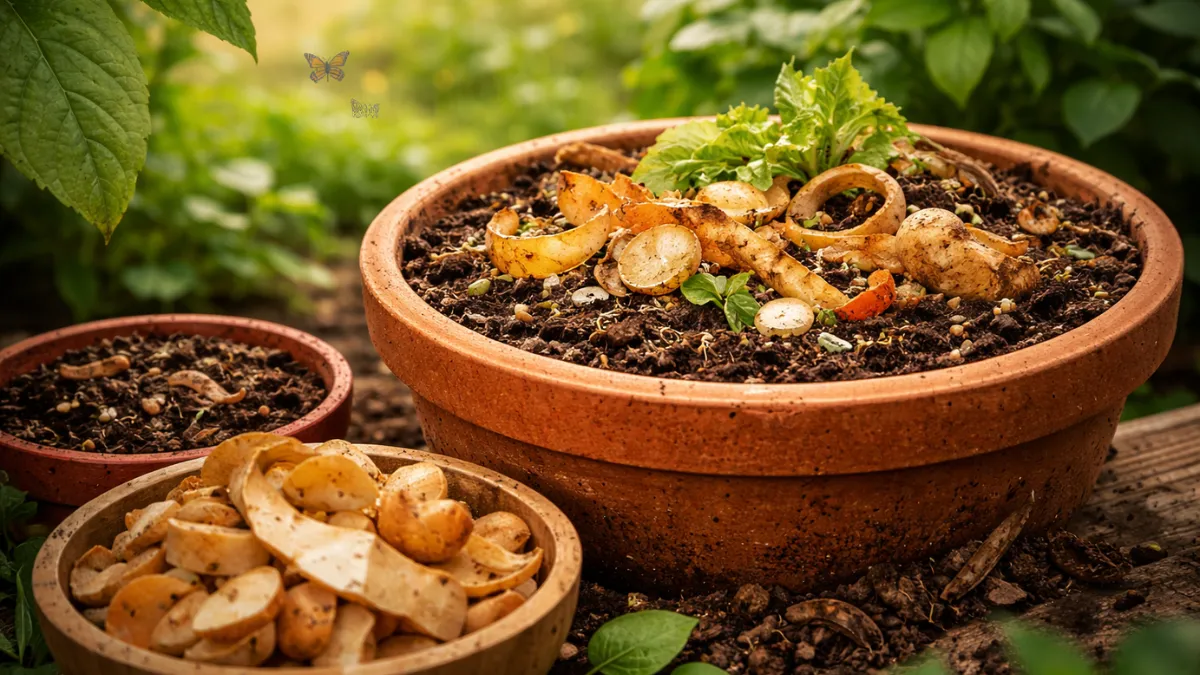
Bur ka potato simply means rotten potato peels that have been mixed into the soil or compost. Often in homes, potato waste slowly breaks down and becomes natural food for plants. It nourishes the soil first, not the plant directly. This results in slower but steady growth. The plants remain balanced and stress-free.
This method works best when the potato peels are completely dry or composted. Fresh peels can smell bad or attract pests. But once decomposed, they improve the soil's texture and moisture retention capacity. Many balcony gardeners still rely on this traditional method because it feels safe and natural.
What are Chemical Fertilizers and How Do They Work?
Chemical fertilizers are factory-made plant food that delivers nutrients very quickly. You can see rapid leaf growth within a few days. This sounds exciting, especially when a plant looks weak. But this food goes directly to the plant, not the soil.
Over time, if chemicals are used excessively, the soil can become hard and lifeless. The roots become dependent on regular feeding. If watering or dosage is incorrect, the leaves can burn. Chemical fertilizers require careful control, especially for indoor plants.
Growth Speed vs. Long-Term Health
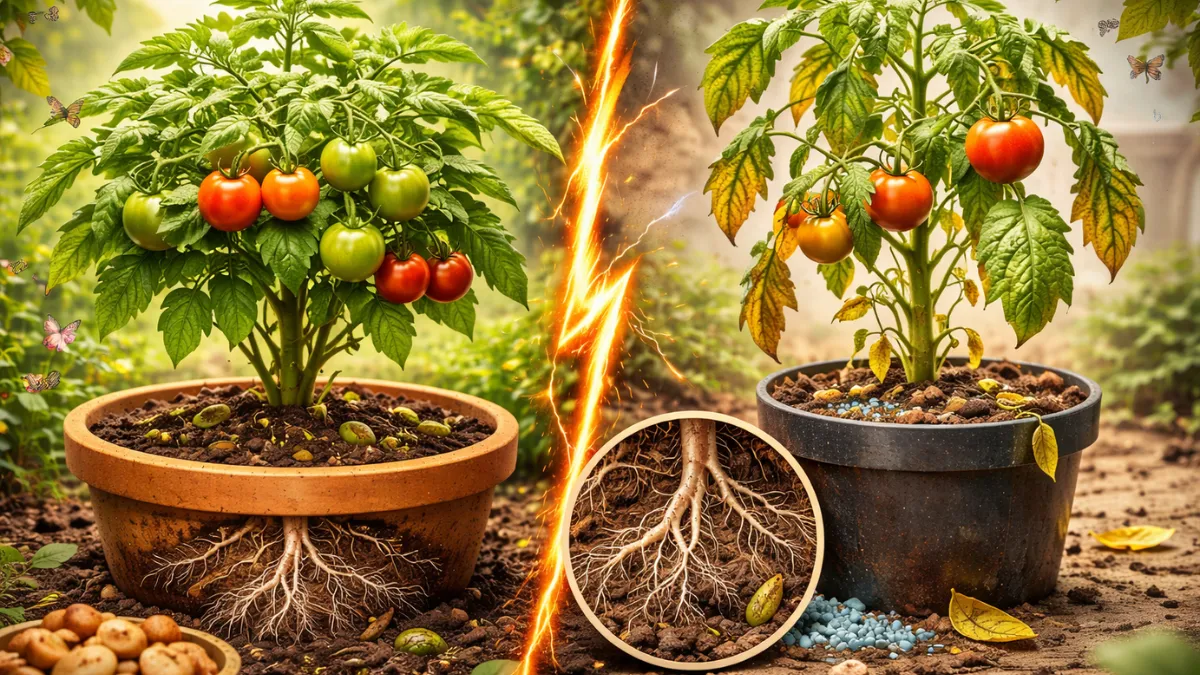
Bur ka potato gradually improves plant health. Leaves grow naturally, and roots strengthen over time. You might not see immediate results, but the plants remain stable and live longer. This method is perfect for those who enjoy gardening with patience.
Chemical fertilizers provide rapid height and leaf size. However, the growth sometimes appears forced. If you suddenly stop feeding, the plants may look wilted. It works for short-term results, but long-term care requires discipline and experience.
Impact on Soil: Living Soil vs Exhausted Soil
| Aspect | Bur ka Potato | Chemical Fertilizer |
|---|---|---|
| Soil texture | Soft and airy | Can become hard |
| Earthworms | Attracts them | Pushes them away |
| Moisture holding | Improves slowly | No improvement |
| Long-term use | Safe | Needs breaks |
This difference becomes very clear after a few months of use.
Related Articles:
Bur Ka Potato: Benefits, Uses & Secret Gardening Tricks (Full Guide 2026)
Which is safer for indoor plants?
For indoor plants, Bur ka potato is safer. There is no risk of overdosing. Even if you add a little extra, the plants adjust themselves. This is why new gardeners feel confident using kitchen compost.
Chemical fertilizers can harm indoor plants if the dosage is incorrect. Indoor soil dries out slowly, so salts accumulate more quickly. One mistake can lead to yellowing leaves or root stress.
Odor, Cleanliness, and Daily Convenience
Many people are concerned about odor. Bur ka potato only emits an odor when used raw. Once properly composted, there is no unpleasant smell. It feels clean and natural.
Chemical fertilizers have no odor, but they need to be stored properly. Spills can damage floors or skin. For homes with children or pets, natural compost feels much safer.
Cost and Availability for Your Home
Bur ka potato is free. It utilizes everyday kitchen waste. This makes it perfect for budget-friendly gardening. You also naturally reduce waste.
Chemical fertilizers cost money and need to be purchased regularly. For larger plant collections, the monthly expense increases. Availability is easy, but it creates a dependency.
When Chemical Fertilizers Are Useful
Chemical fertilizers are useful when a plant is very weak or during the flowering season. They can help quickly restore lost vitality. Many experienced gardeners use them sparingly alongside organic methods.
Suggested Balanced Use
Use chemical fertilizers occasionally, not regularly. Combine them with organic soil care to avoid long-term damage.
Final Thoughts from Real-World Experience
After years of growing plants at home, I rely on compost for daily care because it keeps the soil healthy and the plants thriving. Chemical fertilizers have their place, but only as a supplement, not as a regular practice. If you want peaceful, low-stress gardening, natural methods always prove better in the long run.