Indoor plants often slow down or stop growing at night due to low humidity, poor light cycle balance, or stress. This guide helps you restart healthy growth with simple fixes and better care habits.
✨
AI summarized this news · Reviewed by Indoor Plantify
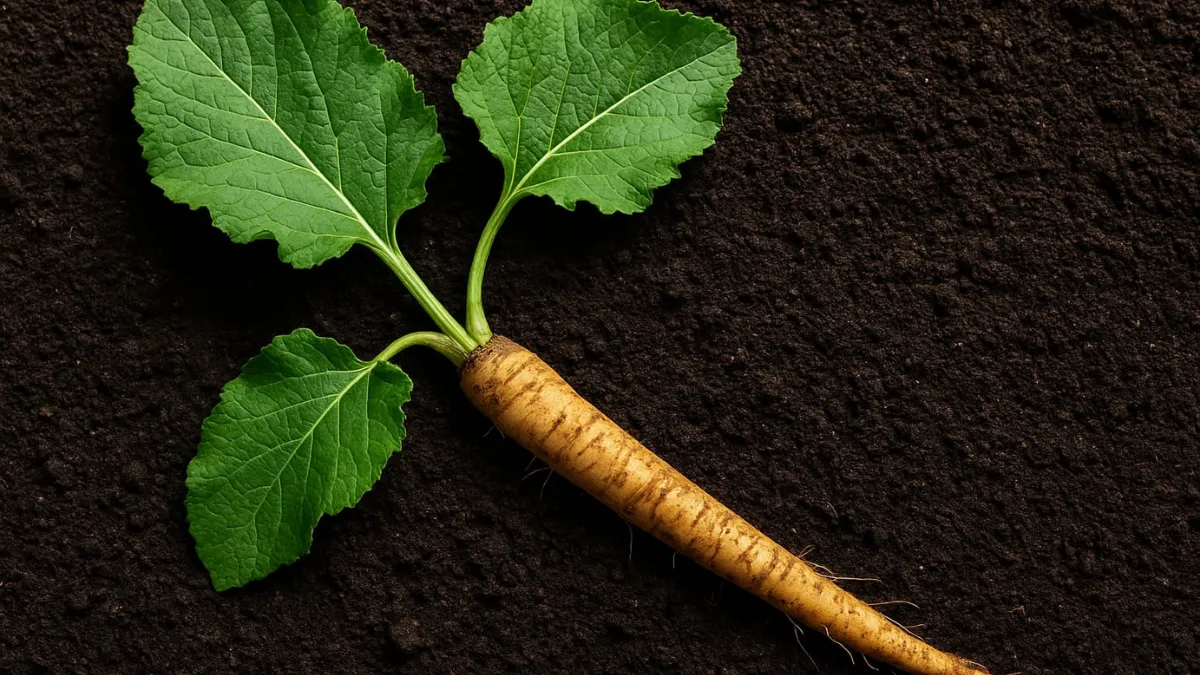
Bur Ka Potato commonly known in India as burdock potato, is a powerful medicinal and edible plant widely used in Ayurveda, Japanese cuisine, and herbal medicine. Scientifically known as Arctium lappa, this plant produces long, slender, carrot-like roots that grow deep into the soil.
It's very easy to grow, this plant is highly nutritious, and is considered one of the best herbal plants for home gardeners.
In this complete article, you will learn everything about growing, caring for, harvesting, and using Burdock root.
Bur Ka Potato is a hardy biennial plant known for its thick, edible root. This plant has large green leaves, purple flowers, and a deep taproot underground.
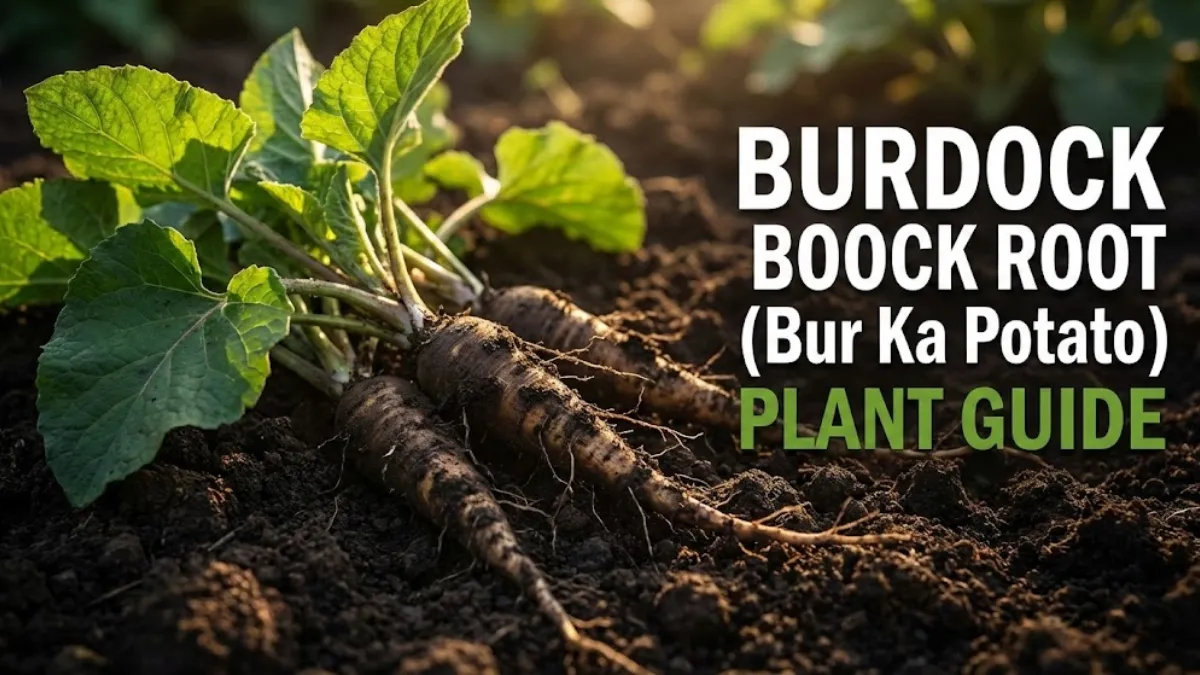
Because the root resembles a potato and is edible, many people call it Bur Ka Potato. File Photo : A freshly harvested root vegetable with bright green leaves resting on rich, dark soil.
It also has other popular names :
• Gobo Root (Japan)
• Arctium lappa
• Burdock Vegetable
• Edible Thistle Root
• Greater Burdock
This plant is valued for both culinary and medicinal uses.
Health Benefits of Burdock Root
Burdock root is rich in antioxidants, fiber, vitamins, and detoxifying compounds. It has been used for centuries in Ayurvedic and Chinese medicine.
1. Improves Digestion
Burdock is rich in inulin (a natural prebiotic) which improves gut health and aids digestion.
2. Detoxifies the Body
It cleanses the liver and purifies the blood, making it one of the best natural detox roots.
3. Great for Skin Health
It helps reduce acne, eczema, and inflammation, and promotes clear, glowing skin.
4. Aids in Weight Loss
Low in calories + high in fiber = keeps you feeling full for longer.
5. Anti-inflammatory and Antibacterial
Used in natural remedies to reduce inflammation, infections, and joint pain.
6. Boosts Immunity
It contains antioxidants that strengthen immunity and fight toxins.
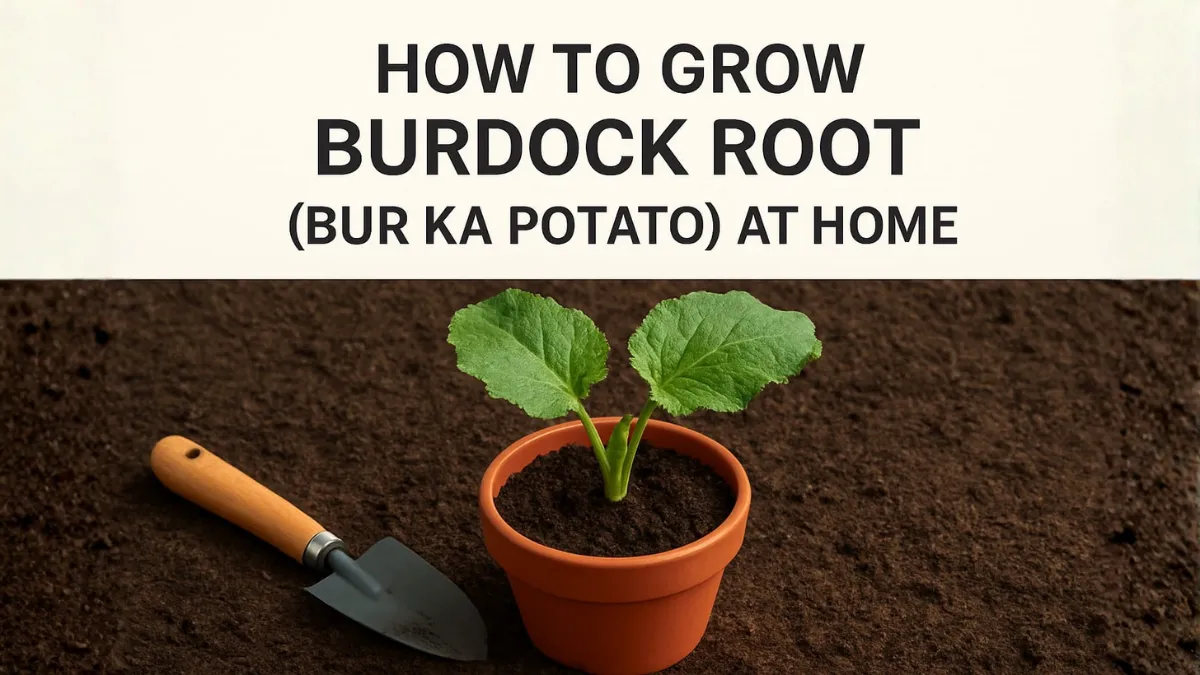
File Photo : Young burdock root plant growing in a small pot with garden soil and tools, showing the early stage of home cultivation.
Fully grown size: 1–2 meters tall
How to Grow Burdock Root at Home
Burdock root is very easy to grow – even beginners can easily cultivate it.
1. Best Soil for Burdock Root
The most important thing for this plant is loose, soft soil.
Suggested soil mix:
• 50% sandy soil
• 30% garden soil
• 20% organic compost
Avoid : Do not plant this plant in clay or compacted soil as it restricts root growth.
Tip : Deep pots or deep soil beds help the roots grow long and straight.
2. Sunlight Requirements
Burdock root needs 4–6 hours of direct sunlight daily.
• Too much shade = slow growth
Full sun = fastest growth + larger roots
• If you are growing this plant indoors, place it near a window that receives the most sunlight.
3. How to Plant Burdock Root Seeds
• Loosen and aerate the soil.
• Sow seeds 1.5–2 cm deep.
• Maintain a distance of 15–20 cm between each plant.
• Water gently to settle the soil.
• Seeds germinate in 7–15 days.
4. Watering Schedule
• Water regularly to keep the soil moist, but avoid overwatering.
• Water at least 2-3 times a week during the summer months.
• Water only once a week during the winter months.
• Overwatering can cause root rot.
5. Fertilizer Requirements
Burdock root grows best with organic fertilizers.
Best organic fertilizers:
• Compost
• Cow manure
• Vermicompost
• Seaweed fertilizer
• Fertilize this plant once every 30 days.
• Avoid chemical fertilizers – they can make the roots taste bitter.
Year-Round Care Tips
1. Mulching
Apply 2–3 cm of mulch to keep the roots cool and moist.
2. Weed Control
Remove weeds every 10–15 days – they steal nutrients.
3. Pest Protection
Aphids and caterpillars sometimes attack the leaves.
Spray neem oil (5 ml per liter of water) every 20 days.
4. Temperature Requirements
Ideal temperature: 15°C–30°C
Common Problems and Solutions
Yellowing Leaves
Cause : Overwatering or poor drainage in the pot
Solution : Improve drainage + reduce watering.
Short or Thin Roots
Cause : Compacted soil Solution: Use loose, sandy soil, deepen the soil bed.
Slow Plant Growth
Cause : Insufficient sunlight Solution : Move it to a brighter, sunnier location.
• Culinary Uses of Burdock Root
Burdock root is a popular ingredient in Japanese and Korean cooking.
• Popular Uses
• Soups
• Stews
• Stir-fried dishes
• Pickles
• Herbal teas
• Kimchi
• Salads
It has a mild, slightly sweet, earthy flavor similar to carrots.
Medicinal Uses
Traditionally used as:
• Ayurvedic tonic
• Herbal detox drinks
• Blood purifier
• Skin treatments
• Joint pain relief
• You can also boil the root and drink it as burdock tea.
How to Harvest Burdock Root
Burdock roots are ready for harvest after 3-4 months.
Method:
Loosen the soil deeply using a garden fork.
• Gently pull out the roots.
• Wash the roots thoroughly.
• Use immediately or store in a cool, dry place.
• You can store the roots in the refrigerator for 2-3 weeks.
Follow Us On Social Media
Join the Discussion
No discussions yet. Be the first to start one!
Expert FAQs
What is Bur Ka Potato called in English?
It is called Burdock Root.
Is Burdock Root safe for eating?
Yes, it is 100% safe and nutritious.
Can Burdock Root grow indoors?
It can grow, but sunlight is usually insufficient indoors, so outdoor growth is better.
How long does Burdock take to grow?
90–120 days (3–4 months).
Can beginners grow it easily?
Yes, Burdock is one of the easiest herbal plants to grow.