

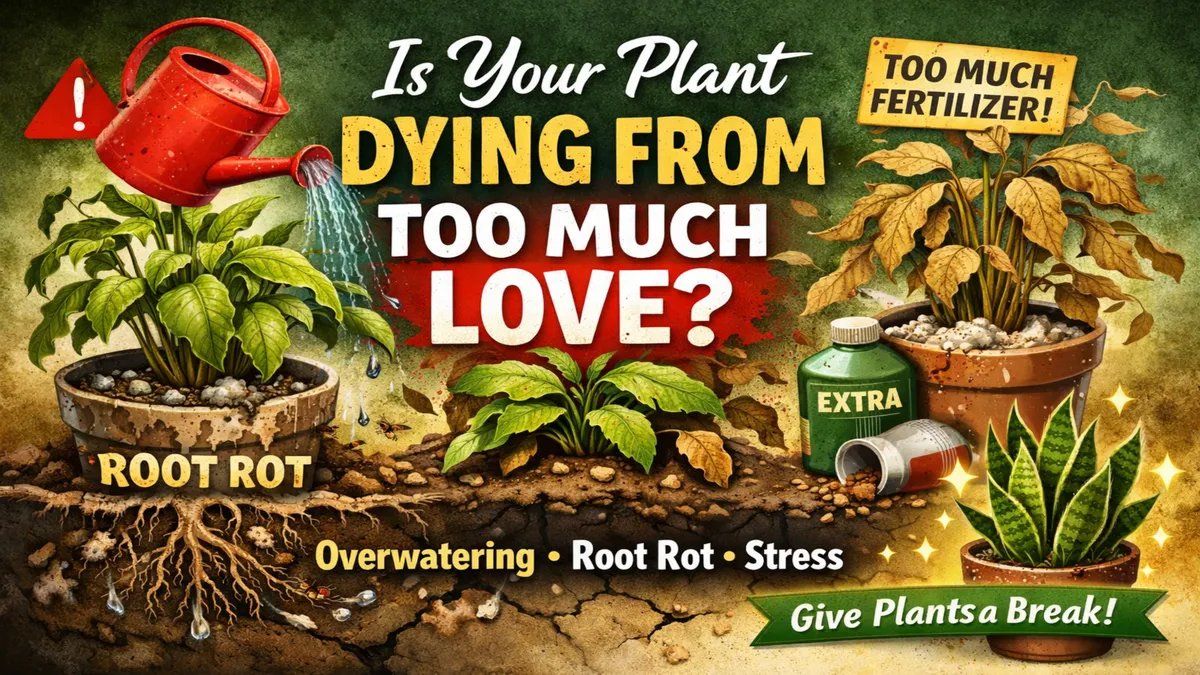
Indoor plants are often treated like family members, and their care is usually given with the best intentions. However, many people overwater, frequently move pots, and regularly fertilize to help their plants thrive. Unfortunately, too much attention, especially overwatering, can slowly harm them. Plants always need balance more than excessive love. Understanding how over-caring affects roots, soil, and growth helps prevent accidental damage and keeps indoor plants healthy for the long term.
Quick Comparison:
• Best for low light : Snake Plant
• Best for fast growth : Pothos
• Best for beginners : ZZ Plant
• Best for air purification : Areca Palm
Related News

Why Over-Caring Becomes a Problem for Indoor Plants
Indoor plants grow at a steady, calm pace. But when they are constantly subjected to watering, fertilizing, or repotting, their natural rhythm is disrupted. Roots need dry periods, oxygen, and stability. Over-caring eliminates these essential conditions and creates stress that often manifests as a sudden decline.
Over-caring usually develops gradually. It can lead to yellowing leaves, stunted growth, and soil that remains wet for too long. These signs are often misinterpreted as weakness, leading to even more watering or fertilizing. This cycle continues until the roots are compromised and the plant eventually fails to recover.
Overwatering : The Most Common Form of Too Much Love
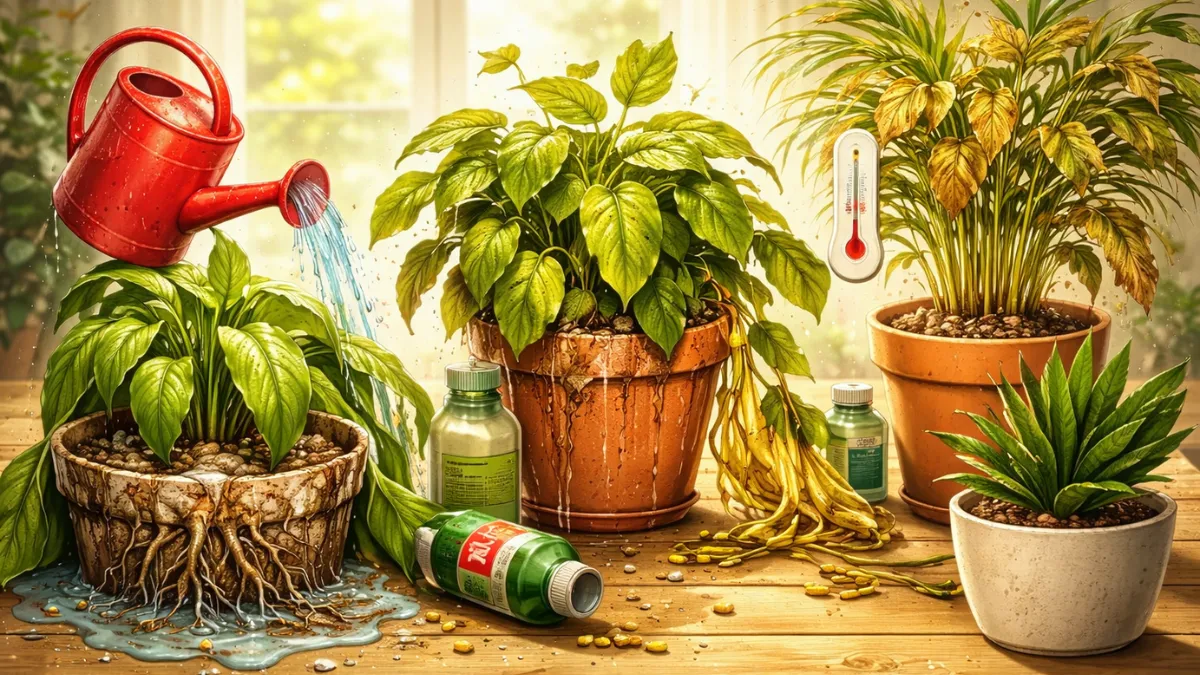
Overwatering saturates the air pockets in the soil with moisture. Roots need oxygen to breathe and properly absorb nutrients. But when the soil remains wet, the roots suffocate, weaken, and begin to rot, even if the plant looks green on top.
Overwatered plants often exhibit soft stems, drooping leaves, and stunted growth. Many people respond to drooping leaves by watering even more, unaware that the roots are already compromised. This misconception is one of the leading causes of indoor plant failure.
How Root Rot Begins Without Warning
Root rot develops below the soil surface, where it remains hidden. Fungal growth thrives in consistently damp soil and attacks stressed roots first. Once the rot spreads, nutrient uptake ceases, and the leaves rapidly deteriorate despite continued care.
Why Drainage Matters More Than Watering Frequency
If pots lack drainage holes, even light watering can harm plants. This is because trapped water at the bottom keeps the roots saturated for days. Proper drainage allows excess moisture to escape and restores the oxygen balance within the soil.
Too Much Fertilizer Weakens Roots Instead of Nourishing Them
Fertilizer seems helpful, but frequent applications lead to a buildup of salt residue in the soil. This residue burns the root tips and hinders water absorption. Instead of thriving, plants develop brown edges, curled leaves, or stunted growth.
Indoor plants grow more slowly than outdoor plants, especially in low light. Frequent fertilization overwhelms them. Many indoor plants only require fertilizer during periods of active growth and in small amounts.
Constant Touching and Moving Causes Stress
Indoor plants gradually adapt to their environment. Frequent changes in light direction, temperature, or airflow force plants to readjust their growth patterns. This stress reduces leaf production and weakens stems over time.
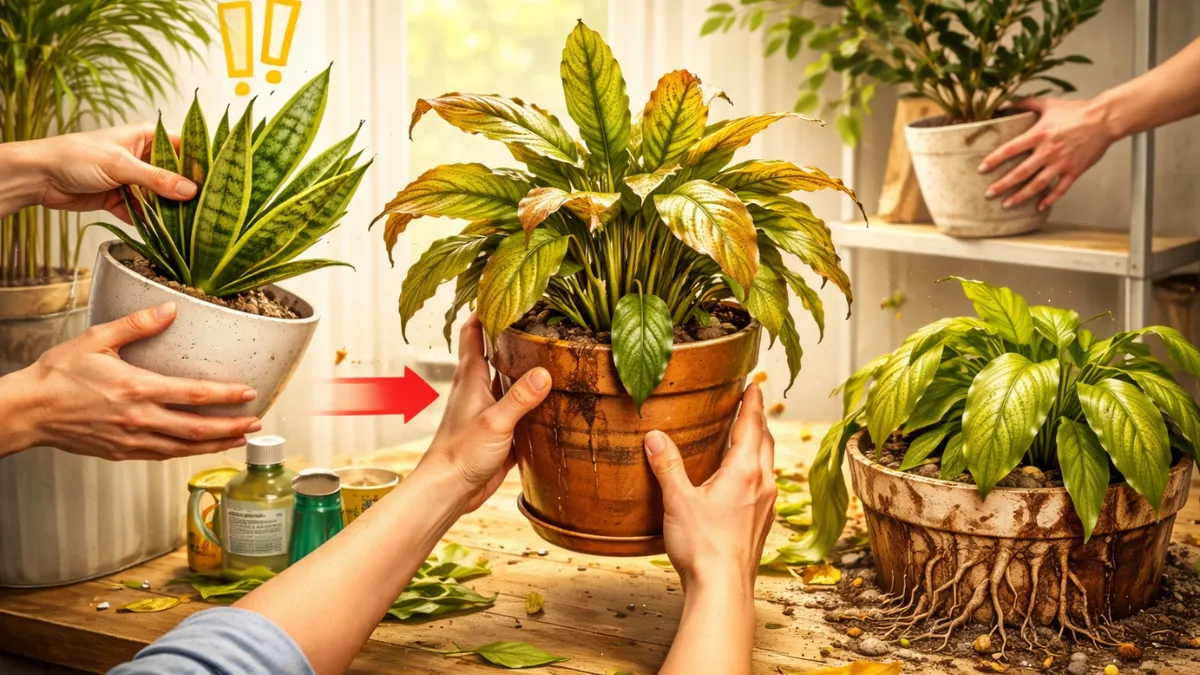
Touching the leaves frequently, rotating the pots daily, or repotting too often disrupts root stability. Plants prefer stability. Once established, they thrive best when left alone for weeks at a time.
Signs Your Plant Is Stressed from Overcare
Indoor plants show signs of stress from overcare, but these signs are often misinterpreted. Recognizing them early prevents permanent damage.
| Common Mistake | What It Causes | Better Fix |
|---|---|---|
| Watering on schedule | Root suffocation | Water only when soil dries |
| Fertilizing monthly | Salt buildup | Feed sparingly |
| Constant repositioning | Growth shock | Keep placement stable |
| Frequent repotting | Root disturbance | Repot only when rootbound |
Why Sometimes Neglect Is Better Than Overcare
Many indoor plants have evolved to survive drought, shade, and inconsistent conditions. Snake plants, ZZ plants, and succulents store water and prefer minimal intervention. When overwatered or over-cared for, these plants deteriorate faster than if they were slightly neglected.
Neglect allows the soil to dry out, giving the roots a chance to breathe, and allows the plant to regulate itself naturally. Balanced care doesn't mean frequent attention, but rather attention at the right time.
Related articles:
7 Common Indoor Plant Mistakes That Slowly Kill Your Plants
How to Properly Love Your Indoor Plants
Caring for healthy plants focuses on observation, not a trending schedule. Checking soil moisture, leaf firmness, and growth rate provides better guidance than following a routine. Plants communicate through subtle changes, and responding calmly helps them recover naturally.
Let your plants rest. Skip watering if the soil feels moist. Reduce fertilizer if growth slows. Keep their location consistent and allow the roots to establish themselves. Gentle care, rather than constant intervention, builds strong plants.
Related articles:
Common Soil Mistakes Killing Indoor Plants (And How to Fix Them) (2026)
The Final Line : Balance Keeps Plants Alive
Too much love comes not from kindness, but from misunderstanding. Indoor plants need air, drying time, and stability more than constant attention. When attention is less and observation is better, plants thrive on their own. Healthy growth comes from patience, not pressure, and learning when to step back is often the best care you can provide.