
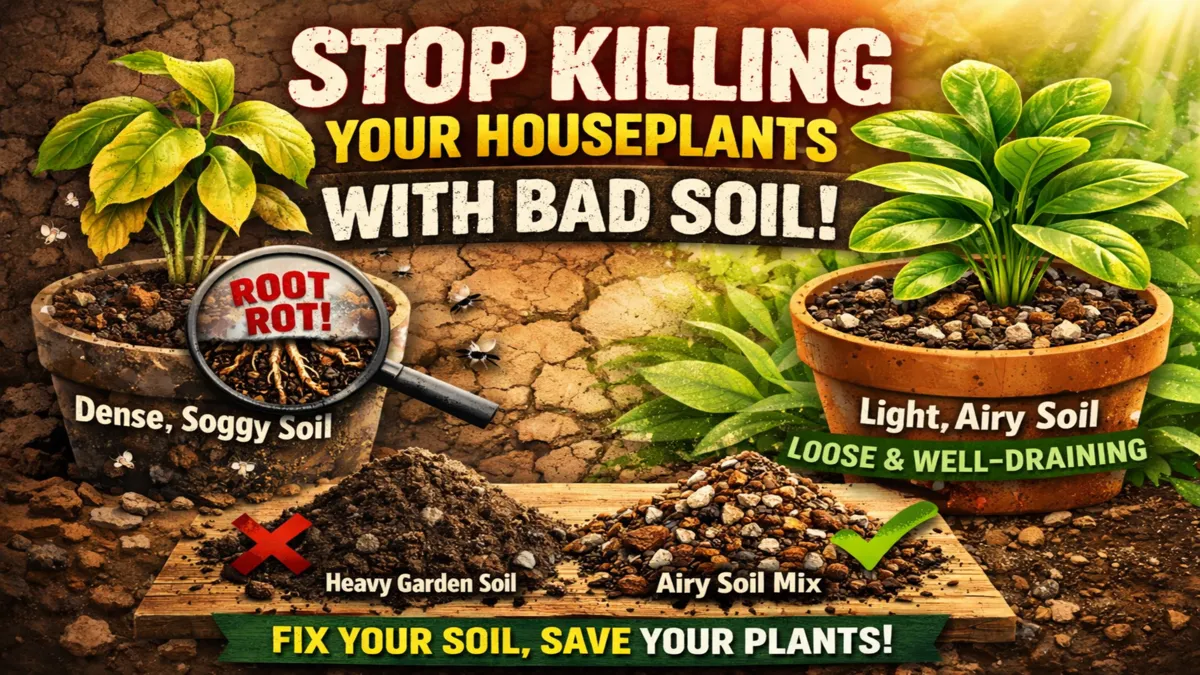
Most indoor plant problems don't start with the leaves; they start below the soil. Yellowing leaves, root rot, fungal gnats, and stunted growth are often blamed on watering or light, but the real culprit is usually the soil. Many people assume that any potting soil is fine for plants, but indoor plants have very different needs than garden plants. Understanding how soil behaves in a container can completely change how your plants grow, thrive, and survive indoors long-term.
Quick Answer:
Related News
The best soil for indoor plants is a loose, well-draining mix that retains moisture without becoming waterlogged.
Regular garden soil or dense potting soil suffocates roots indoors. Airflow, drainage, and texture matter more than nutrients.
What Most People Get Wrong About Indoor Plant Soil
Mistake 1 : Using Garden Soil Indoors
Can garden soil be safely used for indoor plants?
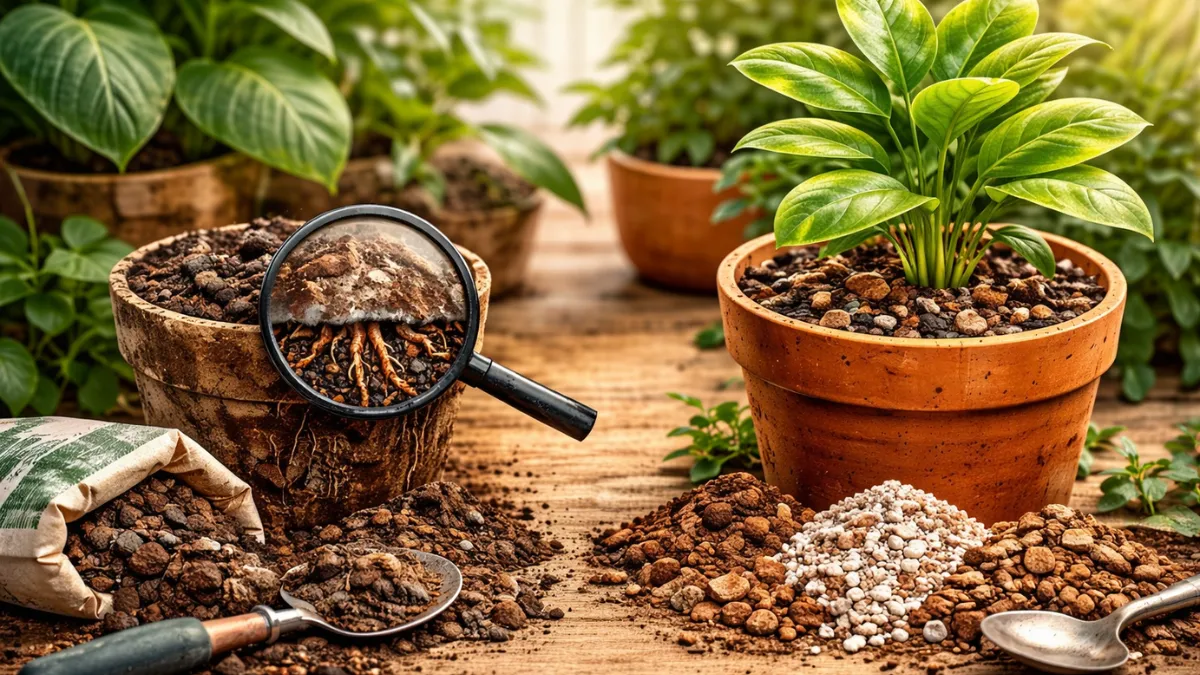
Garden soil is heavy, dense, and designed for open ground, not a container. Indoors, it quickly compacts, restricts airflow, and traps water around the roots. This is the fastest way to cause root rot in houseplants.
Mistake 2 : Assuming All Potting Soils Are the Same
Why does store-bought potting soil kill indoor plants?
Many all-purpose mixes are peat-heavy and retain too much moisture indoors. They work for a while, then turn into a soggy mess. Soil texture matters more than the label on the bag.
Mistake 3: Prioritizing fertilizer over proper drainage
Is nutrient-rich soil bad for indoor plants?
Plants can survive mild nutrient deficiencies, but they can never survive with suffocated roots. Too much fertilizer or compost in the soil often leads to fungal problems before the plants can even benefit from the nutrients.
What indoor plants actually need from their soil
1. Air around the roots
Do indoor plants need air in the soil?
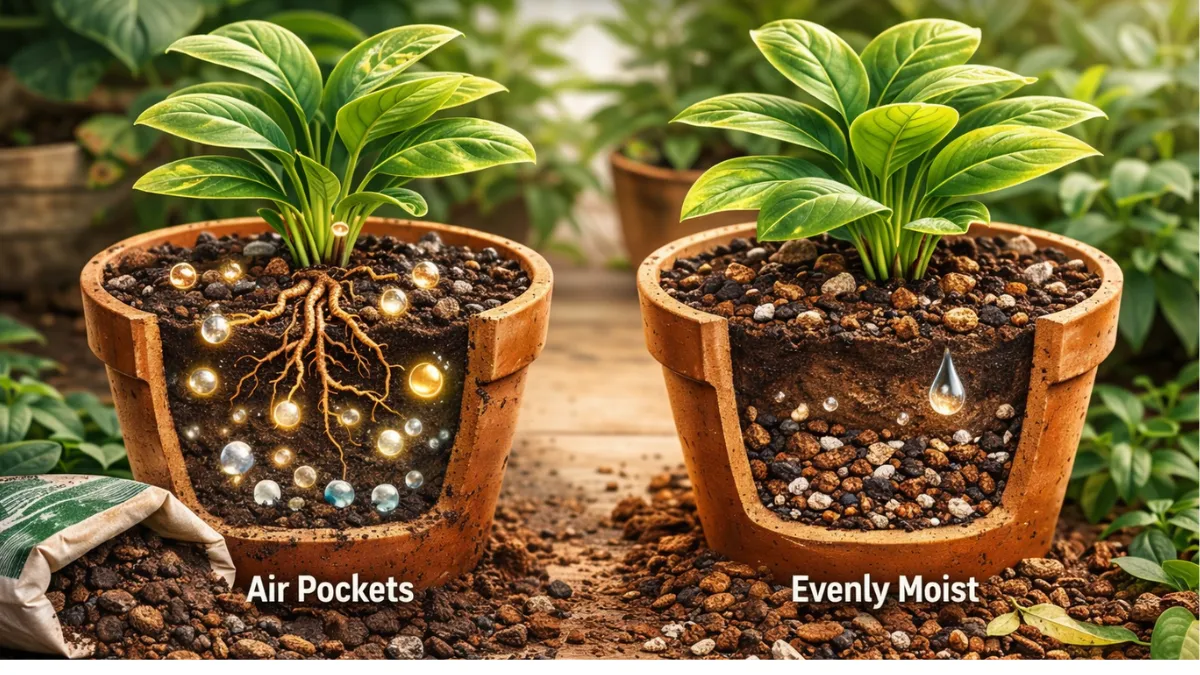
Roots breathe. And without oxygen pockets in the soil, roots weaken, rot, and stop absorbing water properly, even if the soil looks moist.
2. Maintaining controlled moisture
How long should soil stay moist for houseplants?
Good indoor soil retains moisture evenly, then drains excess water quickly. Soil that stays wet for days invites fungal gnats and root rot.
3. Stable texture over time
Why does indoor plant soil become compacted after watering?
Cheap mixes break down quickly. Once the soil compacts, even proper watering habits won't save the plant.
Best soil mix for most indoor plants
| Component | Purpose |
|---|---|
| Coco peat or peat moss | Holds light moisture |
| Perlite or pumice | Improves drainage & airflow |
| Bark chips or coarse sand | Prevents compaction |
| Small amount of compost | Gentle nutrition |
What is the best DIY soil mix for indoor plants?
This balanced mix works for most foliage plants, from pothos to snake plants.
Soil modifications based on plant type
For low-light plants
Does low light affect soil drying indoors?
Use more perlite to avoid soggy soil, as evaporation is slower in low light.
For Succulents and cactus
Why do succulents rot in regular potting soil?
They need gritty, fast-draining soil with low organic matter.
For Tropical Plants
What soil prevents tropical houseplants from wilting?
They prefer airy soil that stays lightly moist but never soggy.
Real Experience : What Worked (and Didn’t)
From real-world houseplant care experience, switching from dense store-bought soil to an airy mix immediately reduced yellowing leaves and fungus on my plants.
What didn't work : Simply adding sand to heavy soil. This made drainage worse, not better.
One drawback : No single soil mix works forever; soil structure degrades over time and needs refreshing.
The goal of good indoor soil isn't rapid growth, but healthy roots over time.
When to Change or Refresh Indoor Plant Soil
How often should you change indoor plant soil?
If the soil stays wet for too long, smells sour, or develops a hard crust, it's time to refresh it, even if the plant looks fine on top.
Also Read : Common Soil Mistakes Killing Indoor Plants (And How to Fix Them) (2026)
Written from real-world houseplant care experience for IndoorPlantify.