

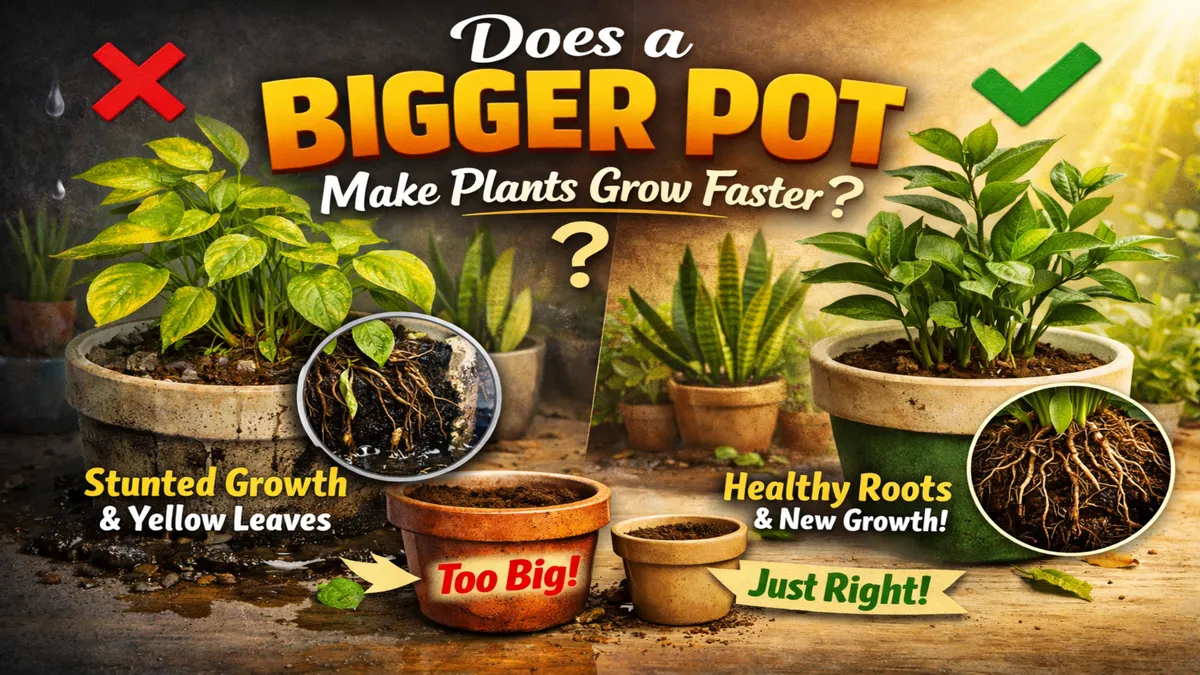
Many people believe that planting a houseplant in a larger pot will make it grow faster. I thought the same when I started growing plants at home. But after many mistakes, I learned that this isn't always true. A larger pot only helps sometimes, and sometimes it even weakens the plant. Plant growth depends on the roots, water, soil, and light. The pot size is only a small part of the equation. Let's understand this properly with real-world examples from home gardening.
Why this problem actually occurs
Many people who keep houseplants think that their plants grow like humans. More space means faster growth. But plants work differently. They grow their roots first, not their leaves. When the roots feel lost in too much soil, they stop functioning properly. This slows down growth instead of improving it.
Related News
Another reason is overwatering. Larger pots hold more soil and more water. In your homes, this often keeps the soil wet for several days. This keeps the roots constantly wet, restricts airflow, and slows down or completely stops growth.
Also Read : Why Your Indoor Plant Stops Growing After Repotting and What It Needs
Some signs that your plant is struggling
When a plant isn't happy in a large pot, it gives clear signals. Its growth slows down. New leaves remain small. The soil stays wet for days. Sometimes, even with less watering, the leaves turn yellow.
Examples
• Money plant grows leaves but the vines stop growing
• Snake plant remains healthy but no new shoots appear
• ZZ plant looks green but doesn't change in size for months
Also Read : Your Snake Plant Is Tall But Weak : Heres What Nobody Told You
What actually works in real homes
In my experience, plants grow best when the pot size matches the size of the roots. Not too tight. Not too big. The roots should feel supported. This helps them absorb water and nutrients properly. Instead of sudden changes, small and gradual steps work much better. Gradually increasing the pot size keeps the plants stress-free and thriving in normal household conditions.
Some small changes that make a big difference
| Mistake People Make | Correct Action That Works |
|---|---|
| Jumping to a very big pot | Increase pot size by only 1–2 inches |
| Using deep pots for small roots | Use pots just slightly wider than roots |
| Overwatering after repotting | Water lightly for first 7–10 days |
| Ignoring drainage holes | Always use pots with bottom holes |
| Repotting every few months | Repot only when roots fill the pot |
Common Mistakes People Make
Many people repot their plants simply because the plant looks big from the top. They never check the roots. Another mistake is using garden soil in large pots, which stays too wet indoors for too long. Some people also repot during extreme heat or cold, which shocks the plant and further slows its growth.
Conclusion
From my experience, I can say that larger pots don't automatically make indoor plants grow faster. Instead, the right pot size, good drainage, moderate watering, and patience are more important. Plants grow slowly and steadily when their roots are comfortable. If your plant is healthy, don't rush to repot it. Small, careful steps always yield better results in the long run.