

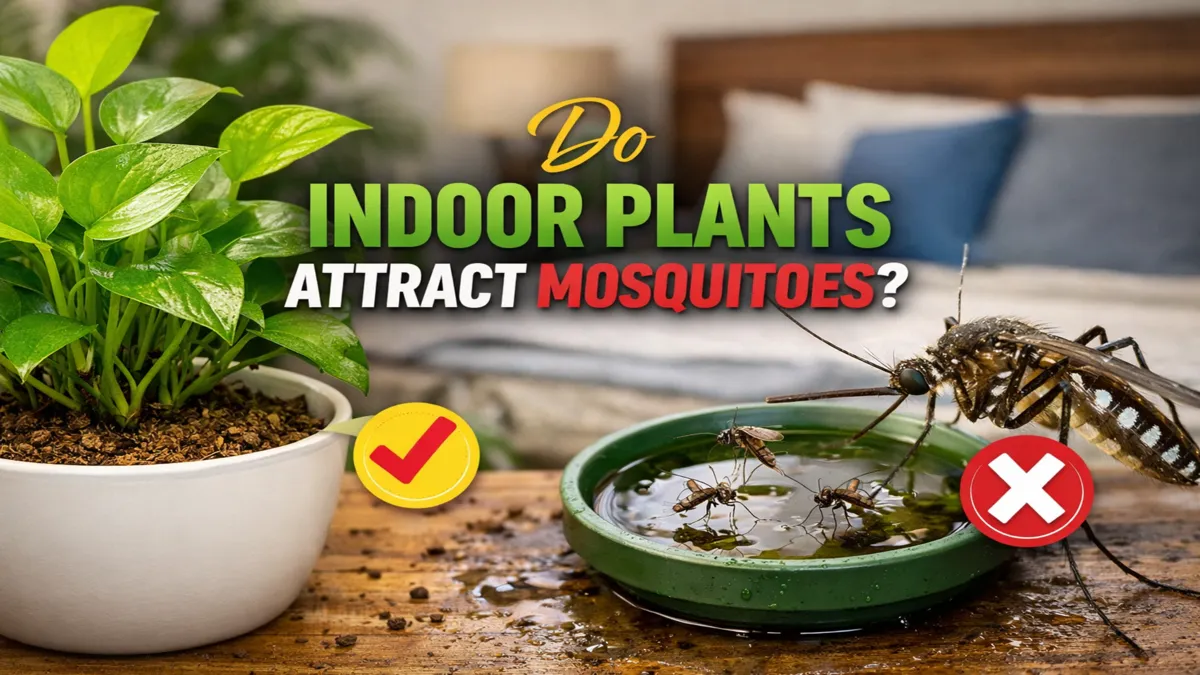
Indoor plants make homes healthier, calmer, and more beautiful. But a common problem many Indian plant owners still worry about is mosquitoes. After adding several plants to my bedroom, I noticed mosquitoes becoming more frequent, which made me suspect a connection. This truth is surprising, and most people don't believe it. Understanding this clearly can help keep your home safe without removing your plants.
Quick Answer:
Related News


Do indoor plants really attract mosquitoes?
Indoor plants themselves don't directly attract mosquitoes. Mosquitoes are always drawn to stagnant water, moisture, and humidity, not to the plant's leaves or stems.
If your indoor plants create wet soil, water trays, or damp corners, mosquitoes can use those places to breed.
The problem is usually plant care habits, not the plant itself.
The real reason mosquitoes are near indoor plants
Many people ask why mosquitoes come near indoor plants even when the windows are closed. The answer is simple: mosquitoes often seek out water to lay eggs.
Female mosquitoes need stagnant water to reproduce. Even a little water can be enough for them.
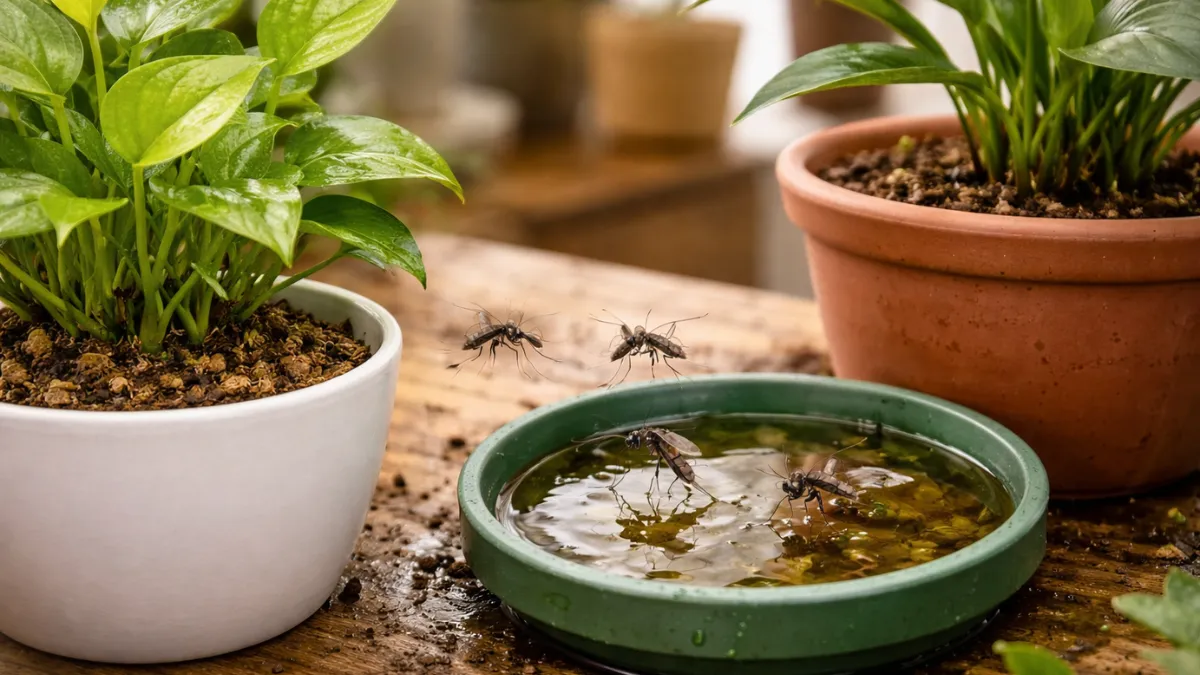
Common causes of mosquitoes from plants include:
• Overwatered soil
• Stagnant water in saucers
• Hydroponic plant containers
• Persistently wet soil
• Poor air circulation
In Indian homes, especially during monsoon and summer, indoor humidity significantly increases mosquito activity.
How mosquitoes use plant pots as breeding spots
Mosquitoes never live inside plants they use the water near them.
People often wonder if mosquitoes can breed in indoor plant pots. The answer is yes, but only if there is stagnant water.
Breeding occurs like this:
| Condition | Mosquito Risk Level | Explanation |
|---|---|---|
| Dry topsoil | Very Low | Mosquitoes cannot lay eggs |
| Moist soil | Low | Usually safe if no standing water |
| Water-filled saucer | High | Ideal mosquito breeding spot |
| Hydroponic water container | High | Perfect egg-laying environment |
| Overwatered compact soil | Medium | Moisture supports larvae survival |
Even a few ml of water can support mosquito eggs.
Indoor Plants That People Mistakenly Blame
Some plant owners ask which indoor plants in India attract mosquitoes the most. In fact, no specific plant naturally attracts mosquitoes.
However, plants that require frequent watering indirectly increase the risk:
• Areca Palm
• Peace Lily
• Money Plant
• Bamboo Plant
• Fern
These plants require humid conditions, which, if managed improperly, can create a favorable environment for mosquitoes.
The problem isn't the plant itself, but rather water management.
The biggest mistake most plant owners make is
Leaving water in the tray is the most common mistake.
Many people ask if watering the plant tray attracts mosquitoes indoors. Yes, this is the main reason.
From my personal experience, I once left water in a saucer under my money plant for several days. Within a week, mosquitoes increased significantly around that area. Removing the water from the tray completely solved the problem.
Stagnant water in the plant tray is one of the worst mosquito risks.
Does soil moisture attract mosquitoes?
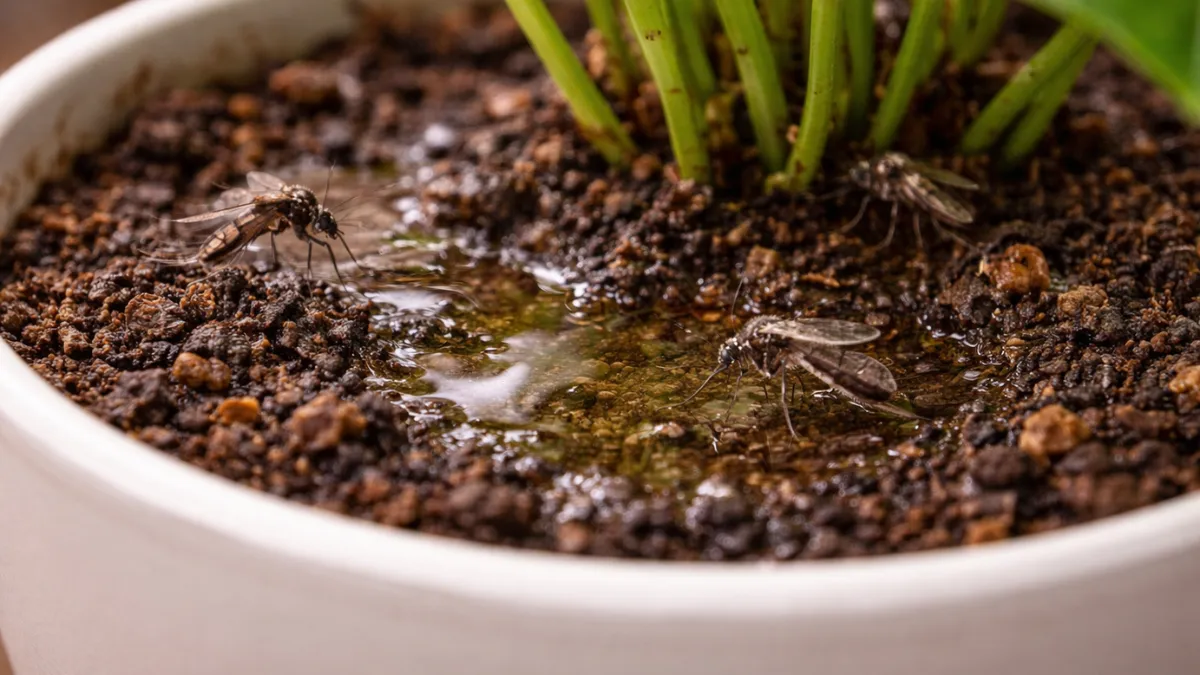
People often worry about mosquitoes laying eggs in the soil of indoor plants. Mosquitoes prefer water, not soil.
However, if water accumulates on the surface, excessively wet soil can support larvae.
Healthy soil should be:
• Slightly moist, not wet
• Well-draining
• Airy
Dry topsoil significantly reduces mosquito risk.
Moisture plays a major role indoors
Mosquitoes thrive in humid environments.
Many homeowners ask why mosquitoes increase after planting indoor plants. This is because plants slightly increase humidity through ventilation.
High humidity makes the environment more comfortable for mosquitoes, but it doesn't directly attract them.
Poor ventilation further exacerbates the problem.
Plants that actually help reduce mosquitoes
Some plants can help repel mosquitoes naturally.
People often ask which indoor plants help repel mosquitoes naturally. These plants include:
• Tulsi (Holy Basil)
• Lavender
• Mint
• Lemongrass
These plants release mild natural compounds that mosquitoes dislike.
However, their effectiveness is lessened indoors.
They help reduce mosquitoes, but not eliminate them completely.
Tested Methods for Preventing Mosquitoes Around Indoor Plants
If properly managed, indoor plants are perfectly safe.
Many plant owners search for how to naturally prevent mosquitoes from indoor plants. These steps work effectively:
1. Empty the water tray regularly
• Never let water sit for more than 24 hours.
2. Avoid overwatering
• Water only when the topsoil feels dry.
3. Improve air circulation
• Use fans or open windows daily.
4. Use well-draining soil
• Loose soil prevents water from pooling.
5. Add a layer of sand to the topsoil
Sand dries quickly and prevents mosquitoes from breeding.
This simple trick proved very useful in my home after repeated mosquito problems.
Hydroponic plants are more prone to mosquitoes
Hydroponic plants use constantly stagnant water.
People often ask if hydroponic indoor plants are more prone to mosquitoes. Yes, because the water remains exposed.
If you grow hydroponic plants:
• Change the water weekly
• Keep containers covered if possible
• Clean the containers regularly
• Stagnant water is a major risk factor.
What doesn't work well
Many people try spraying chemicals randomly on the soil.
This method didn't work effectively in my case and can damage the plant roots.
Mosquito prevention is best achieved through water management, not chemicals.
An important thing to understand:
Indoor plants can increase humidity slightly, but they are not the primary cause of mosquito breeding.
If you already have mosquitoes in your home, it could be due to:
• Bathroom drains
• Open windows
• Water storage containers
• Outdoor mosquito breeding sites
Plants are just another cause.
A hidden truth most Indian homes don't know
People often believe that plants directly attract mosquitoes.
But the real reason behind whether indoor plants contribute to the mosquito problem in Indian homes is poor watering habits and stagnant water.
When properly cared for, indoor plants don't increase the mosquito threat.
In fact, removing plants won't solve the mosquito problem if the water source is elsewhere.
Related articles:
Why Indoor Plants Drop Leaves Overnight (Hidden Reasons)
Related articles:
Roots Are Healthy But Plant Not Growing? Hidden Reasons Explained
Final Conclusion: Should you remove indoor plants?
No, indoor plants don't directly attract mosquitoes.
Mosquitoes are drawn to water, not plants.
If you:
• Avoid standing water
• Water properly
• Maintain ventilation
Your plants will be completely safe.
If properly cared for, indoor plants provide far more benefits than risks.
Their purpose is to improve indoor health, not cause problems.
Written for IndoorPlantify from real-life experience caring for indoor plants.