

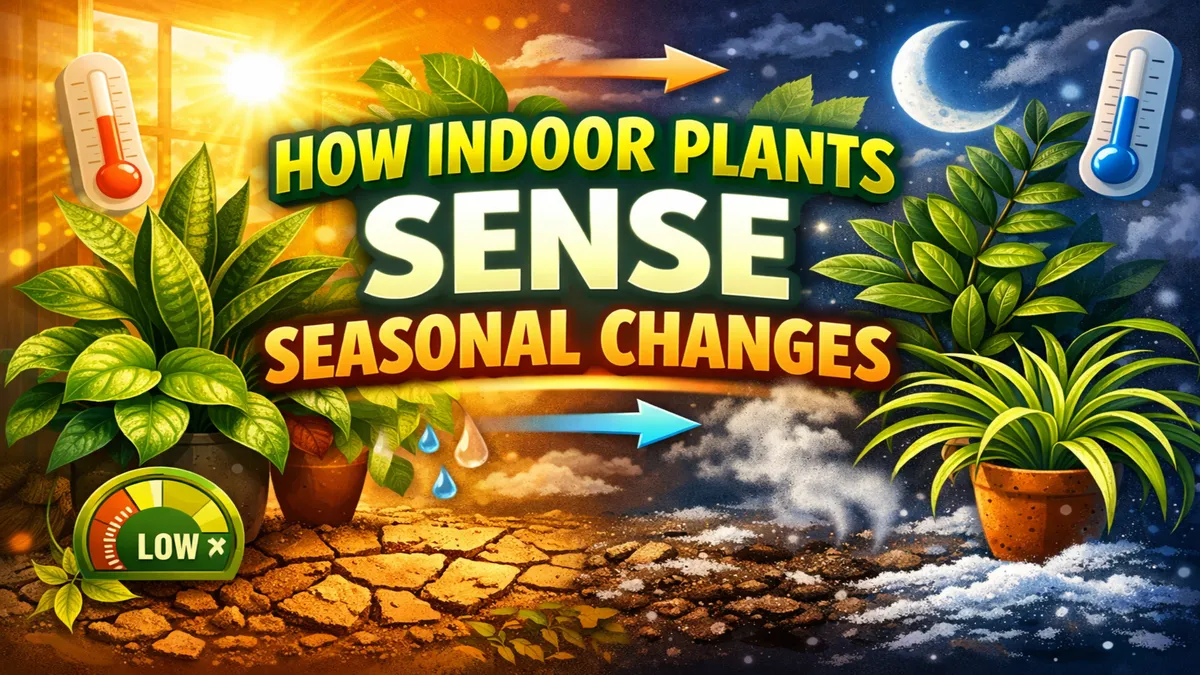
Indoor plants may seem protected from the outside weather, but they still react to subtle changes that occur indoors over time. I noticed this when my plants' growth slowed down, even though my room's environment seemed unchanged. Leaves became smaller, watering needs shifted, and growth stalled without warning. These changes often confuse plant owners. Understanding how plants perceive seasonal changes indoors helps explain why care routines sometimes stop working after a while.
Quick Comparison:
• Best for low light : Snake Plant
• Best for fast growth : Pothos
• Best for beginners : ZZ Plant
• Best for air purification : Spider Plant
Related News



How Indoor Plants Detect Seasonal Changes Without Weather
Indoor plants don't experience weather like outdoor plants, but they react to indirect cues. These include changes in the intensity of light coming through windows, fluctuations in indoor humidity, and shifts in daily temperature patterns. Plants sense these cues through their leaves and roots, not by sensing the weather itself.
These changes affect photosynthesis and water use. Even a few minutes less sunlight each day makes a difference. Over time, plants adjust their growth rate, leaf size, and root activity. This response is automatic and cannot be prevented by maintaining stable indoor settings.
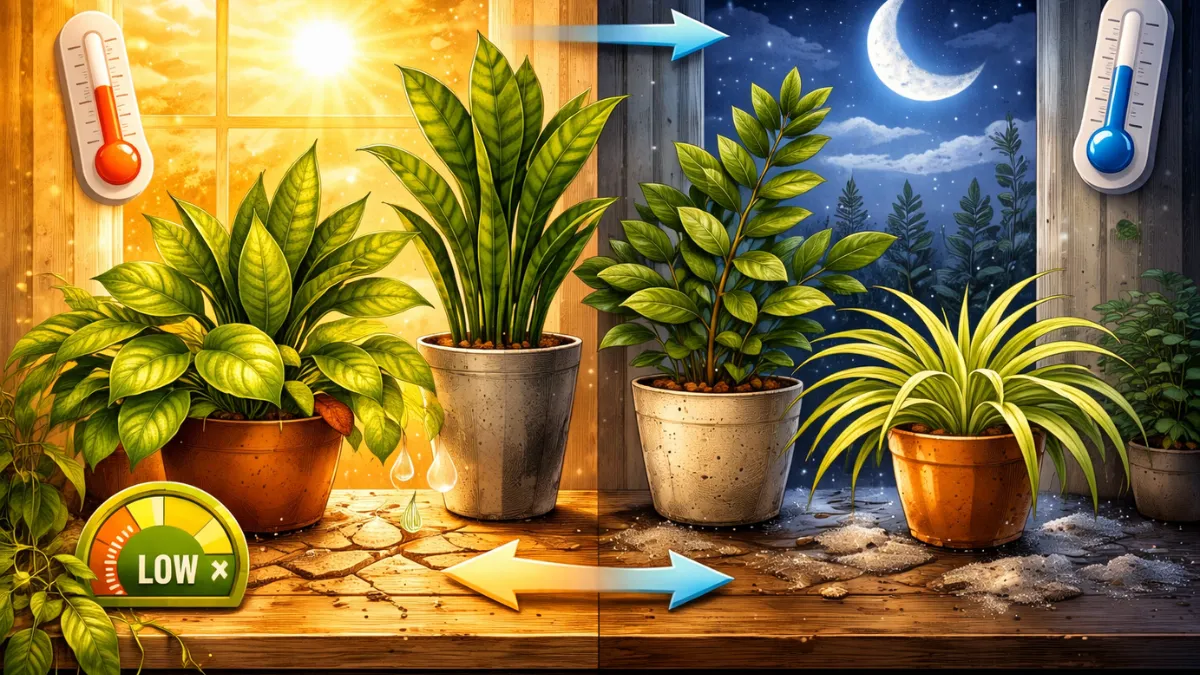
Light Changes Are the Strongest Seasonal Signal Indoors
Light is the primary driver of indoor plant behavior. As the angle of daylight changes, the quality and duration of light coming through windows shifts. Plants measure light daily, not monthly, so small changes gradually impact growth patterns. Artificial lights help, but they can't completely replicate the natural light cycle.
Most indoor lights remain constant, while natural light gradually changes in direction and intensity. Plants notice this difference, which explains why growth often slows down even under grow lights.
Temperature stability doesn't stop plant cycles
Many homes maintain a stable temperature, but plants still experience subtle fluctuations. Nighttime temperatures drop slightly, heating systems dry out the air, and surfaces cool at different rates over time. Roots sense these changes more acutely than leaves.
Plants use temperature patterns to regulate energy use. When there are repeated slight drops in temperature, plants slow down growth to conserve resources. This isn't stress; it's a natural adjustment that protects long-term health.
Indoor air and humidity change over time
Indoor air changes gradually throughout the year. Heating and cooling systems alter humidity, airflow, and the movement of oxygen around plants. Leaves quickly sense moisture loss during dry periods, even if watering remains consistent.
This slows leaf expansion and causes leaf surfaces to thicken. Many people mistake this for a watering problem, but it's often due to air conditions. Simply increasing watering won't correct humidity-related changes.
Why growth slows down even with consistent care
Plants follow internal growth cycles. When light and air signals change in tandem, plants enter a slower growth phase. This is often called dormancy, but indoors it's usually partial, not complete.
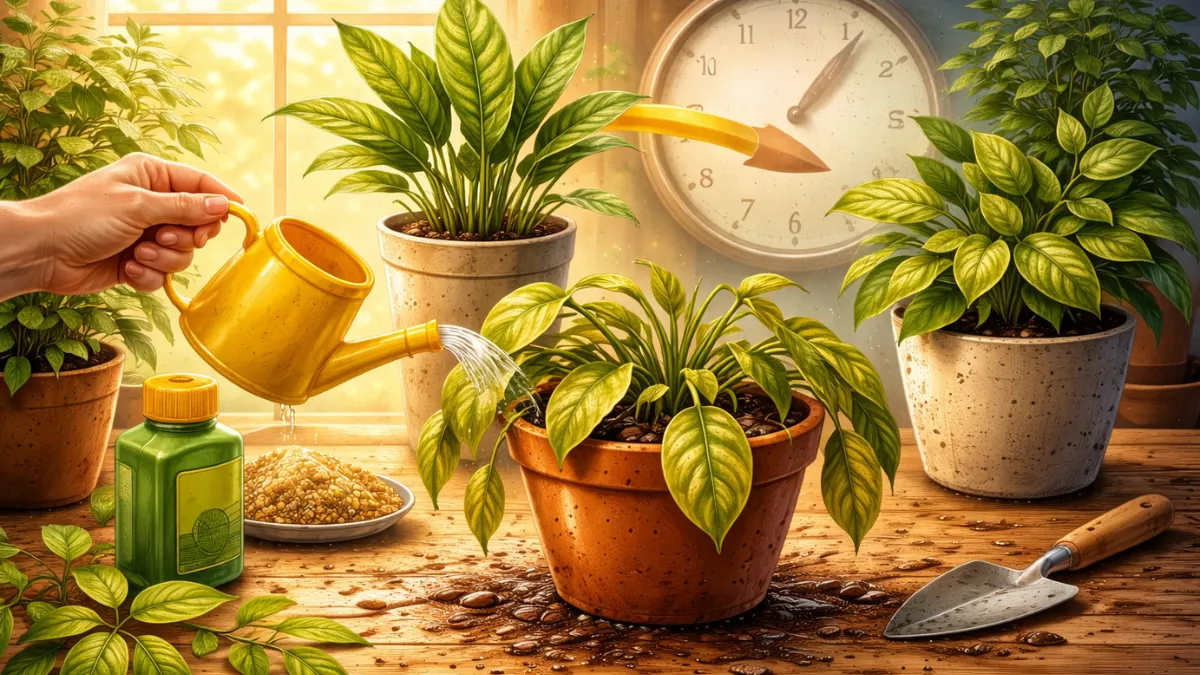
During this time, plants focus on root stability rather than new leaf growth. Forcing growth with extra fertilizer or water won't restart the process. When conditions return to normal, the plant recovers on its own.
Common Indoor Seasonal Changes and Plant Responses
| Indoor Change | Plant Response | What Will Not Work |
|---|---|---|
| Shorter light exposure | Slower leaf growth | Extra fertilizer |
| Drier indoor air | Thicker or smaller leaves | Overwatering |
| Slight night cooling | Paused growth | Repotting |
| Reduced air movement | Weaker transpiration | Strong pruning |
Do all indoor plants react the same way?
Different plants react at different rates. Fast-growing plants show changes quickly, while slow-growing plants adjust more subtly. Plants adapted to low light often handle indoor changes better than those that prefer brighter light.
Succulents and plants with thick leaves store resources, so changes appear later. Plants with thin leaves react more quickly because they are more dependent on a constant balance of light and air.
Related Articles:
Indoor Plant Watering Schedule Chart (Weekly & Seasonal Guide 2026)
Related Articles:
Should Indoor Plants Be Moved During Seasonal Change?
Related Articles:
Indoor Plants That Help With Seasonal Allergies
What Seasonal Awareness Doesn't Mean for Plant Care
Seasonal response doesn't mean drastically changing your plant care routine. Most indoor plants don't require a strict seasonal schedule. Sudden changes in care often do more harm than good.
It also doesn't mean the plants are unhealthy. Slower growth isn't a failure; it's a protective response. Understanding this prevents unnecessary interventions that disrupt the roots and soil balance.
When Do Indoor Plants Resume Active Growth?
Growth returns when daylight hours increase, humidity stabilizes, and energy intake improves. This happens gradually, not on a fixed date. New leaves may initially appear smaller, then return to normal size.
Patience is always more important than action. Observing leaf texture and spacing provides better indicators than counting weeks. Plants resume growth when conditions feel right again.
Final Thoughts
Indoor plants sense seasonal changes, but through patterns of light, air, and energy rather than the calendar. These responses are subtle and slow, making them difficult to perceive. Once you understand this cycle, plant care becomes easier and more predictable. Growth pauses aren't problems to fix, but rather signals to maintain consistency and allow the plants to adjust naturally.