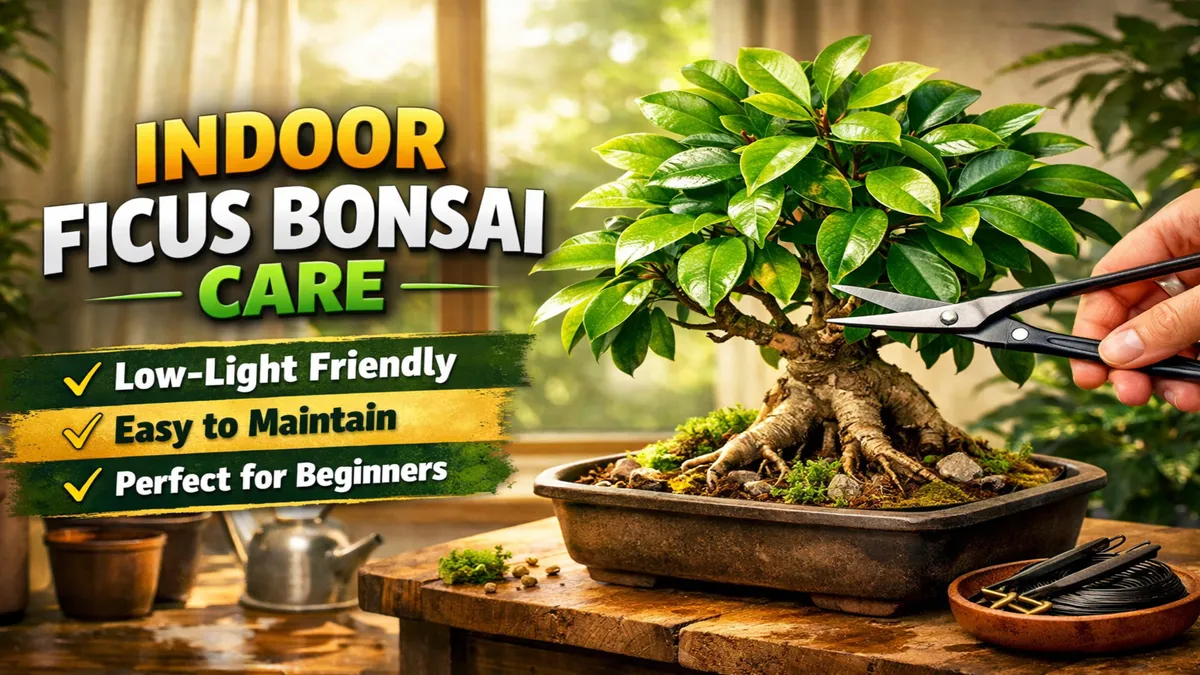
Ficus bonsai is one of the easiest indoor bonsai trees for beginners, offering glossy leaves, flexible shaping, and long life when grown correctly inside homes or apartments.
✨
AI summarized this news · Reviewed by Indoor Plantify
Ficus bonsai is one of the few bonsai trees you can grow indoors, making it ideal for beginners who want beauty without constant stress. Its glossy leaves, sturdy trunk, and ability to adapt to indoor conditions help it thrive where many bonsai often fail. I grew my first Ficus bonsai in a low-light apartment, expecting problems—but it surprised me with consistent growth. This guide explains how to properly grow a Ficus bonsai indoors without overcomplicating the care.
Quick Answer Box:
Is Ficus bonsai good for indoors?
Yes. Ficus bonsai adapts to varying indoor light conditions, tolerates minor care mistakes, and thrives indoors when given bright indirect light, proper watering, and occasional pruning.
A Ficus bonsai is a miniature form of tropical Ficus trees, typically Ficus microcarpa or Ficus retusa. Unlike many outdoor bonsai species, Ficus naturally prefers warm temperatures and stable indoor conditions.
• What is a Ficus bonsai?
• Ficus bonsai meaning
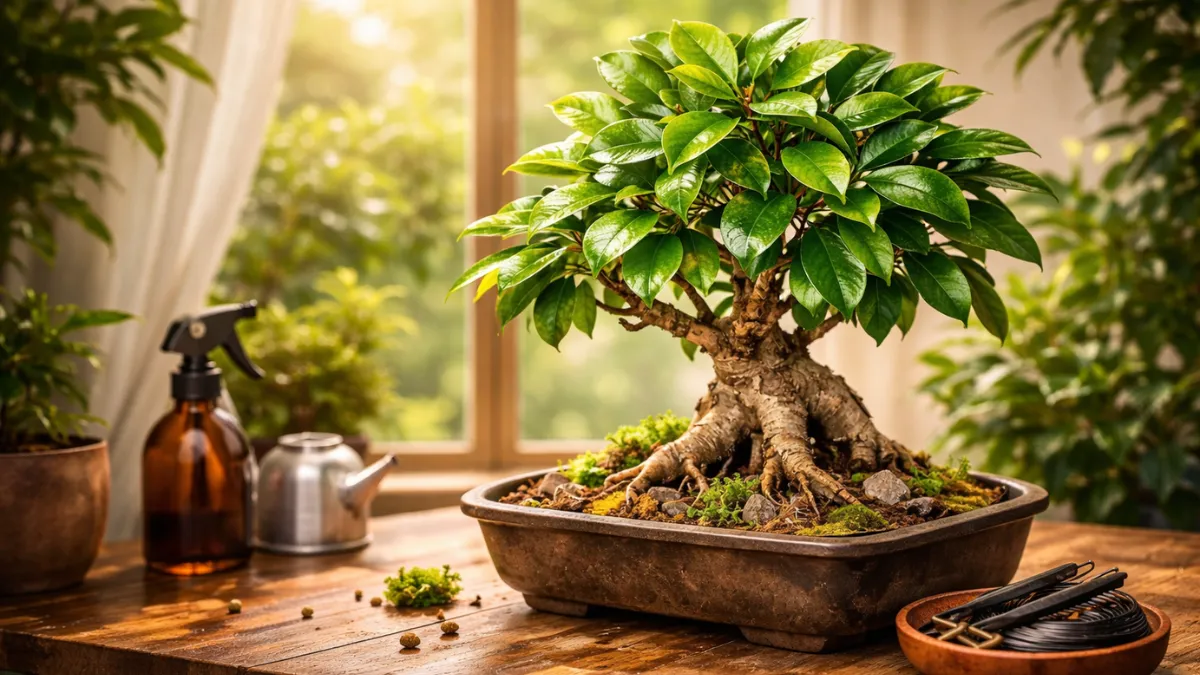
File Photo : Ideal indoor placement showing how ficus adapts to home environments.
Why Ficus bonsai is ideal for indoor spaces
• Handles indoor humidity better than most bonsai
• Recovers well from pruning mistakes
• Does not require winter dormancy
• Strong roots and flexible branches
From personal experience, Ficus bonsai survives better indoors without water than juniper or maple bonsai.
• Best Indoor Bonsai Trees
• Bonsai Trees for Beginners
Lighting Requirements for Indoor Ficus Bonsai
Ficus bonsai require at least 5-6 hours of bright, indirect light daily.
Light Type
Suitability
Bright indirect light
Best
Morning direct sun
Limited
Low light corners
Poor growth
Artificial grow light
Helpful
I once placed my Ficus too far from a window – it survived, but the leaf size was significantly reduced.
The Ficus bonsai isn't just easy for beginners – it's forgiving, resilient, and rewarding. While it won't tolerate complete neglect, it adapts well to an indoor lifestyle and allows for learning from mistakes. This guide aims to empower beginners with confidence, not fear, when starting their indoor bonsai journey.
Written for IndoorPlantify from real indoor plant care experience.
Follow Us On Social Media
Join the Discussion
No discussions yet. Be the first to start one!
Expert FAQs
Can a Ficus bonsai really survive indoors?
Yes. Ficus bonsai tolerate indoor conditions well when placed in bright indirect light and protected from cold drafts.
How often should I water a Ficus bonsai indoors?
Water when the top layer of soil feels slightly dry rather than following a fixed schedule.
Why are the leaves on my indoor Ficus bonsai turning yellow?
Yellow leaves are commonly caused by overwatering or insufficient light, so improving drainage and moving the plant to a brighter location usually helps.
What type of light does a Ficus bonsai need indoors?
Bright, indirect sunlight near a window is ideal, while complete darkness should be avoided.
Is overwatering dangerous for Ficus bonsai?
Yes — waterlogged soil can lead to root rot, one of the most common bonsai problems.
Why is my Ficus bonsai dropping leaves after moving it?
Leaf drop often happens due to sudden environmental changes or inconsistent watering.
Do Ficus bonsai need high humidity indoors?
They thrive in higher humidity, and low humidity can cause slow growth and leaf issues.
When should I prune a Ficus bonsai?
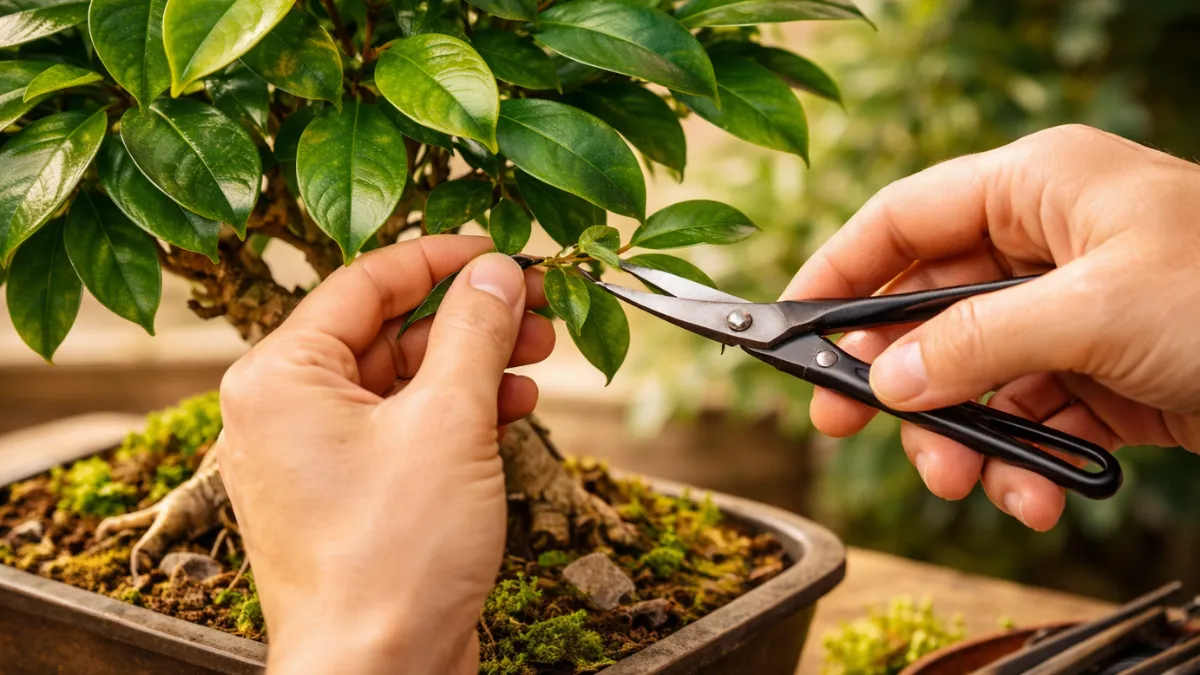
Trim new shoots after several leaves develop to maintain shape and encourage healthy growth.
Where should I place a Ficus bonsai inside the house?
Keep it near a window with filtered light and avoid dark corners or areas close to heaters and vents.
Is Ficus bonsai good for beginners?
Yes — it tolerates indoor conditions and forgives minor watering mistakes, making it beginner-friendly.