

Ficus bonsai is one of the few bonsai trees you can grow indoors, making it ideal for beginners who want beauty without constant stress. Its glossy leaves, sturdy trunk, and ability to adapt to indoor conditions help it thrive where many bonsai often fail. I grew my first Ficus bonsai in a low-light apartment, expecting problems—but it surprised me with consistent growth. This guide explains how to properly grow a Ficus bonsai indoors without overcomplicating the care.
Quick Answer Box:
Is Ficus bonsai good for indoors?
Yes. Ficus bonsai adapts to varying indoor light conditions, tolerates minor care mistakes, and thrives indoors when given bright indirect light, proper watering, and occasional pruning.
Related News



What is a Ficus bonsai?
A Ficus bonsai is a miniature form of tropical Ficus trees, typically Ficus microcarpa or Ficus retusa. Unlike many outdoor bonsai species, Ficus naturally prefers warm temperatures and stable indoor conditions.
• What is a Ficus bonsai?
• Ficus bonsai meaning
Why Ficus bonsai is ideal for indoor spaces
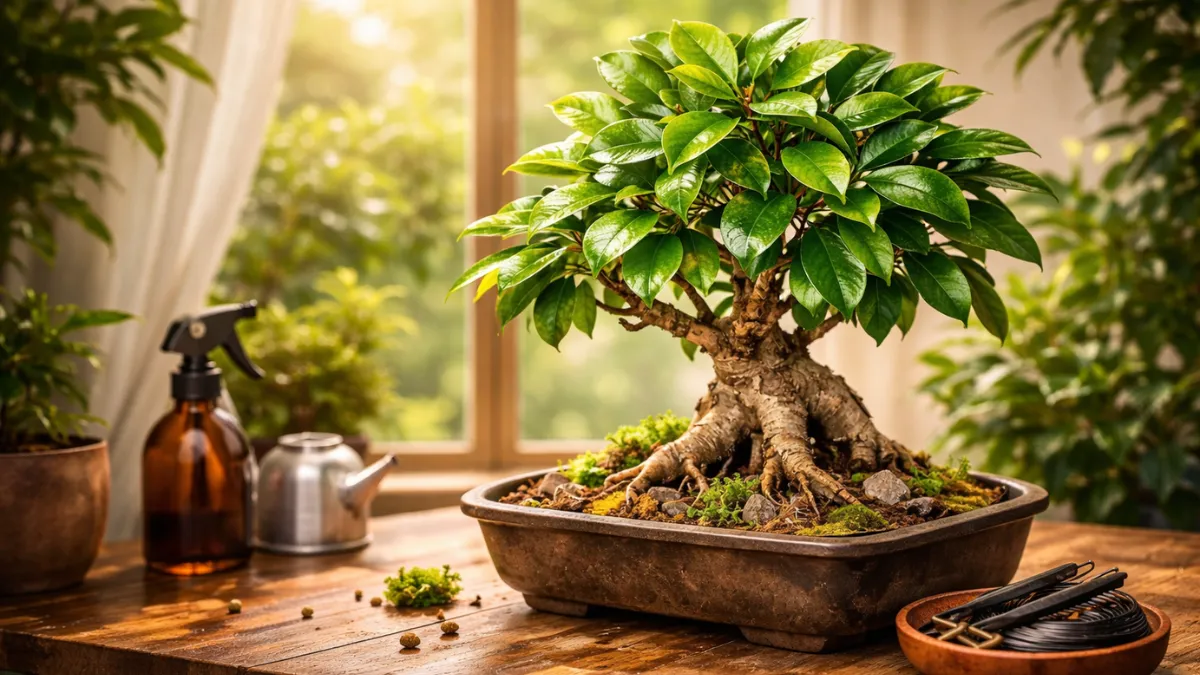
• Handles indoor humidity better than most bonsai
• Recovers well from pruning mistakes
• Does not require winter dormancy
• Strong roots and flexible branches
From personal experience, Ficus bonsai survives better indoors without water than juniper or maple bonsai.
• Best Indoor Bonsai Trees
• Bonsai Trees for Beginners
Lighting Requirements for Indoor Ficus Bonsai
Ficus bonsai require at least 5-6 hours of bright, indirect light daily.
| Light Type | Suitability |
|---|---|
| Bright indirect light | Best |
| Morning direct sun | Limited |
| Low light corners | Poor growth |
| Artificial grow light | Helpful |
I once placed my Ficus too far from a window – it survived, but the leaf size was significantly reduced.
• Ficus Bonsai Lighting Requirements
• Indoor Bonsai Lighting Needs
Proper Watering for Ficus Bonsai
Overwatering is the most common mistake beginners make.
The Right Way:
• Water only when the topsoil feels slightly dry
• Use room temperature water
• Ensure adequate drainage holes
What didn't work for me was a fixed watering schedule – Ficus prefer observation, not routine.
• How Often to Water Ficus Bonsai
• Signs of Overwatering Ficus Bonsai
Best Soil Mix for Indoor Ficus Bonsai
Fast-draining soil prevents root rot.
Ideal Mix:
• 50% Bonsai Soil
• 25% Perlite
• 25% Organic Compost
My own initial setup with heavy garden soil didn't drain properly and slowed down root health.
• Ficus Bonsai Soil Mix
• Best Soil for Indoor Bonsai
Pruning and Shaping Basics
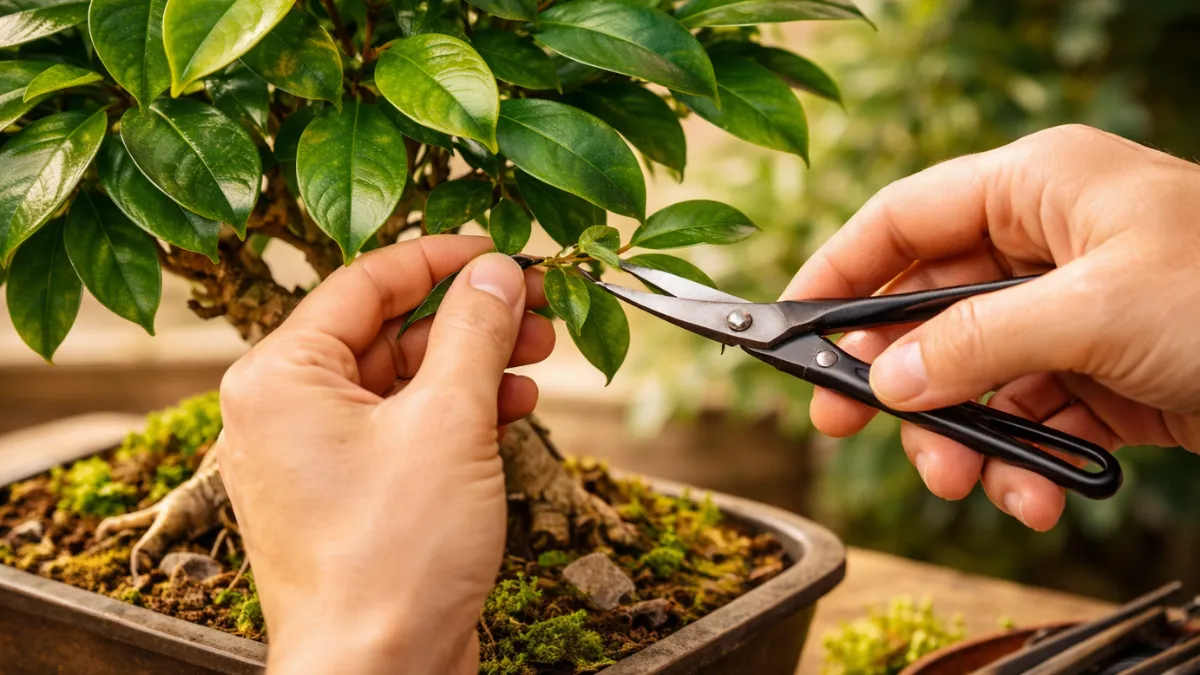
Pruning helps maintain a compact size and branch structure.
• Prune new shoots after 6–8 leaves
• Always use clean, sharp scissors
• Avoid heavy pruning in winter
Ficus heal quickly, making them very forgiving for beginners when it comes to shaping.
• How to Prune a Ficus Bonsai
• Ficus Bonsai Shaping Guide
Temperature and Humidity Requirements
Ideal Temperature: 65–80°F (18–27°C)
• Avoid drafts and AC vents
• Normal room humidity is sufficient
One major drawback: Ficus bonsai react very poorly to sudden temperature changes.
• Ficus Bonsai Temperature Range
• Indoor Bonsai Humidity
Common Problems and Easy Solutions
| Problem | Cause | Solution |
|---|---|---|
| Yellow leaves | Overwatering | Let soil dry |
| Leaf drop | Sudden move | Keep location stable |
| Weak growth | Low light | Move closer to window |
Related articles:
Indoor Plants : Complete Beginner-to-Expert Guide (2026 Edition)
Related articles:
Jade Plant Benefits and Disadvantages: Complete Indoor Guide
Related articles:
Best Indoor Plants for Sleep, Stress Relief & Clean Air (2026 Guide)
Final Thoughts
The Ficus bonsai isn't just easy for beginners – it's forgiving, resilient, and rewarding. While it won't tolerate complete neglect, it adapts well to an indoor lifestyle and allows for learning from mistakes. This guide aims to empower beginners with confidence, not fear, when starting their indoor bonsai journey.
Written for IndoorPlantify from real indoor plant care experience.