

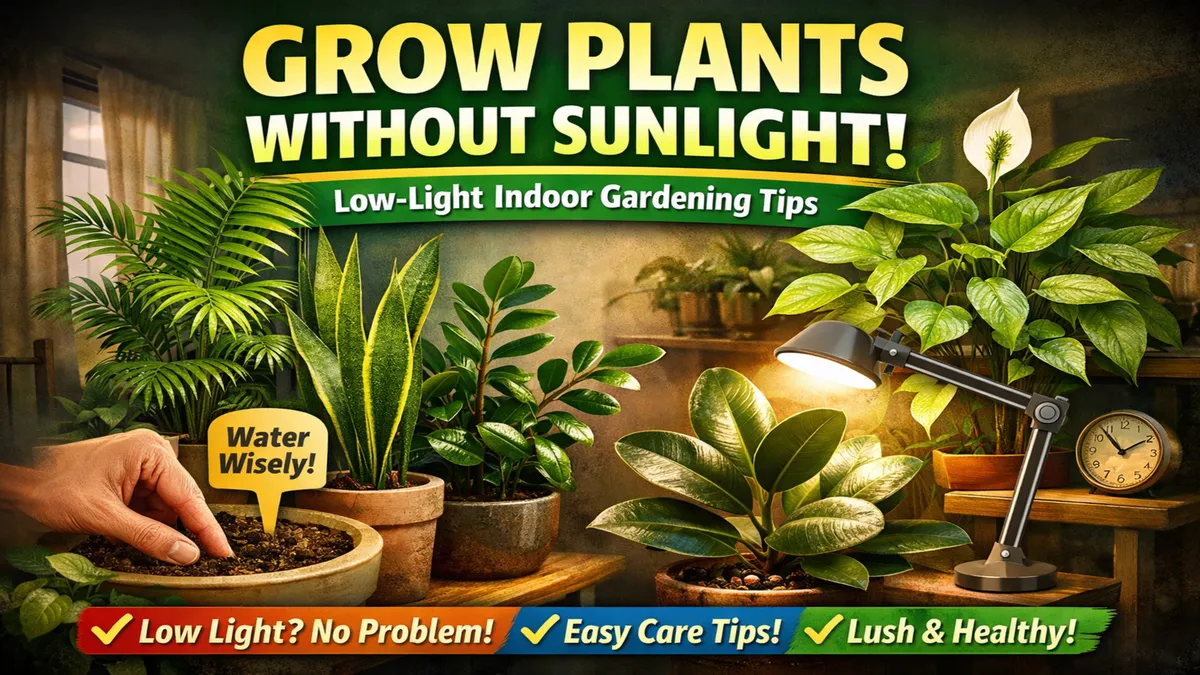
I also live in a flat where sunlight barely reaches inside. For years, I thought indoor plants needed bright sunlight to survive. But many of my plants died before I learned the truth. Some plants thrive happily even without direct sunlight if you care for them properly. You just need the right location, the right watering technique, and patience. This guide will give you simple, tried-and-tested tips that will work in your home too.
Quick Answers
Quick Comparison:
Best for low light : Snake Plant, ZZ Plant
Best for fast growth : Pothos, Peace Lily
Best for beginners : Snake Plant, Spider Plant
Best for air purification : Areca Palm, Rubber Plant
Related News

Understanding Low-Light Areas in Our Homes
Many homes have rooms where direct sunlight never reaches. Bathrooms, stairwells, rented flats, and north-facing rooms are often dimly lit throughout the day. Low light doesn't mean no light at all. Tube lights and indirect window light also help plants survive.
Plants don't need direct sunlight all day. They just need consistent light, airflow, and the right amount of water. Once we understand this, growing indoor plants becomes easy and stress-free.
Best Indoor Plants That Grow Without Sunlight
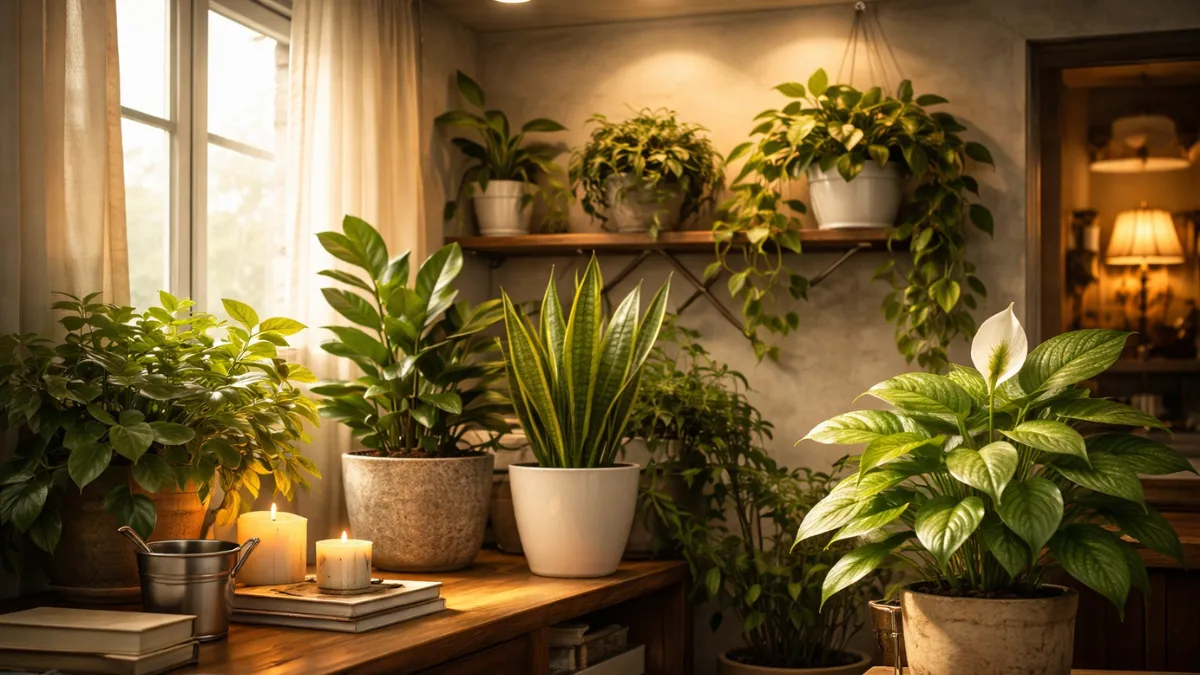
Not all plants struggle in low light. Some even thrive in it. Plants like the Snake Plant, ZZ Plant, Pothos, Peace Lily, and Aglaonema grow slowly but remain perfectly healthy indoors. These plants are hardy and don't complain easily.
Always choose plants with thick leaves or dark green foliage. They store energy better. Avoid flowering plants in dark rooms. Foliage plants are always a safer bet for beginners.
Related Article:
Is Indirect Sunlight Enough for Flowering Indoors?
How Artificial Light Helps Indoor Plants Grow
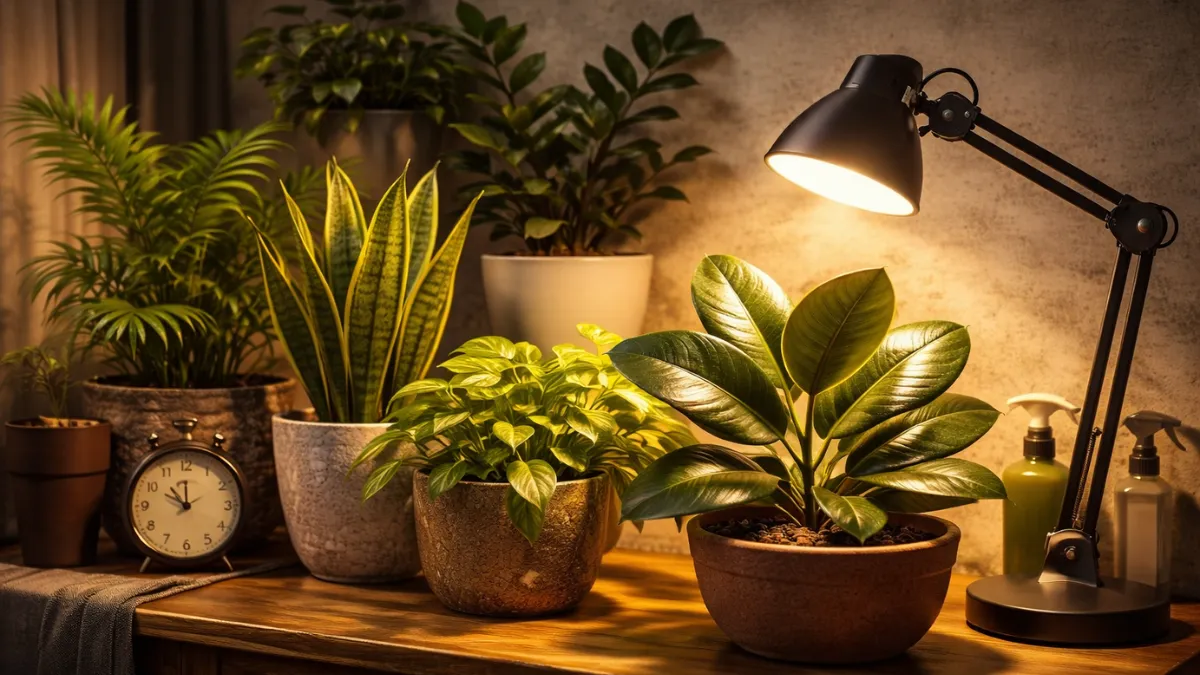
Ordinary room lights can help more than you think. LED bulbs, tube lights, and ceiling lights provide enough light for survival. Plants don't need expensive grow lights initially.
Keep plants 4-6 feet away from the light source. Don't place them directly under the bulb. Too much heat dries out their leaves. Gentle, consistent light works better than intense light for short periods.
Watering Mistakes That Kill Plants in Low Light
Overwatering is a plant's biggest enemy. In low light, the soil dries slowly. Watering daily suffocates the roots. Always check the soil with your finger before watering. If the topsoil feels moist, wait. Most low-light plants need watering once every 7-10 days. Use pots with drainage holes. Empty the tray after watering. Healthy roots mean healthy leaves.
Common Mistakes vs. Easy Solutions
| Mistake | Simple Fix |
|---|---|
| Watering daily | Water only when soil feels dry |
| No drainage hole | Use pots with bottom holes |
| Dark corner placement | Place near light reflection |
| Using heavy garden soil | Use light, airy potting mix |
The Right Location Makes a Big Difference
Plants need to see the light, not hide from it. Always place them near windows, not inside dark cupboards. Even indirect daylight helps. Bathroom plants thrive due to humidity and tube lights.
Rotate the pots every two weeks. This ensures even growth. Clean the leaves with a damp cloth. Dust prevents light absorption and slows down growth.
Related Article:
No Sunlight, No Problem? Indoor Plants Survival Secrets Revealed
Fertilizing in Low Light Conditions
Plants grow slowly in low light. But over-fertilizing can burn the roots. Use liquid fertilizer only once a month. Half the recommended dose is sufficient.
Organic options like vermicompost tea work best. Avoid strong chemical fertilizers. Remember, less growth means less need for nutrients.
Signs Your Plant Is Adjusting Well
New leaves may be smaller. This is normal. They should remain green, not yellow. If the leaves are standing strong, the plant is happy. Slow growth in low light is a sign of success.
Avoid moving your plants around frequently. Plants need time to adjust. Consistency matters more than perfection.
Related Article:
Indoor Plants : Complete Beginner-to-Expert Guide (2026 Edition)
Final Tips from Real Home Experiences
Growing plants indoors without direct sunlight is possible with patience and observation. Choose plants that are easy to grow, avoid overwatering, and respect slow growth. Indoor gardening isn't about speed. It's about balance. Once you understand your home's light and air conditions, plants will thrive naturally and peacefully.