Your plant’s roots look fine, yet growth has stopped completely. This guide explains the real hidden reasons behind slow or no growth and what actually helps over time.
✨
AI summarized this news · Reviewed by Indoor Plantify
When a plant's roots look healthy, but it's not growing, it can be confusing and frustrating. You water it. You check the soil. Nothing seems wrong. Yet weeks go by, and there's no new foliage or increase in height. This problem is far more common than most people realize. Plant growth doesn't depend solely on the roots. Light, space, nutrients, and the plant's internal balance all play a role. Let's understand what's really happening with your plants.
Quick Comparison:
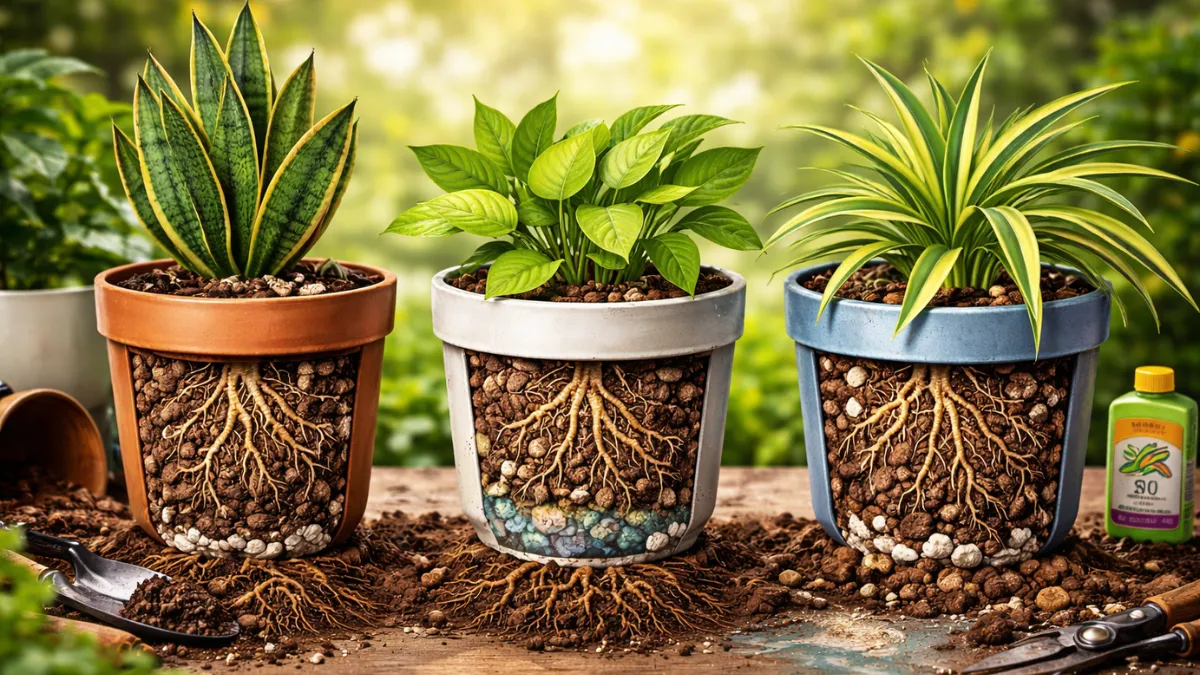
• Best for low light : Snake Plant
• Best for fast growth : Pothos
• Best for beginners : ZZ Plant
•Best for air purification : Spider Plant
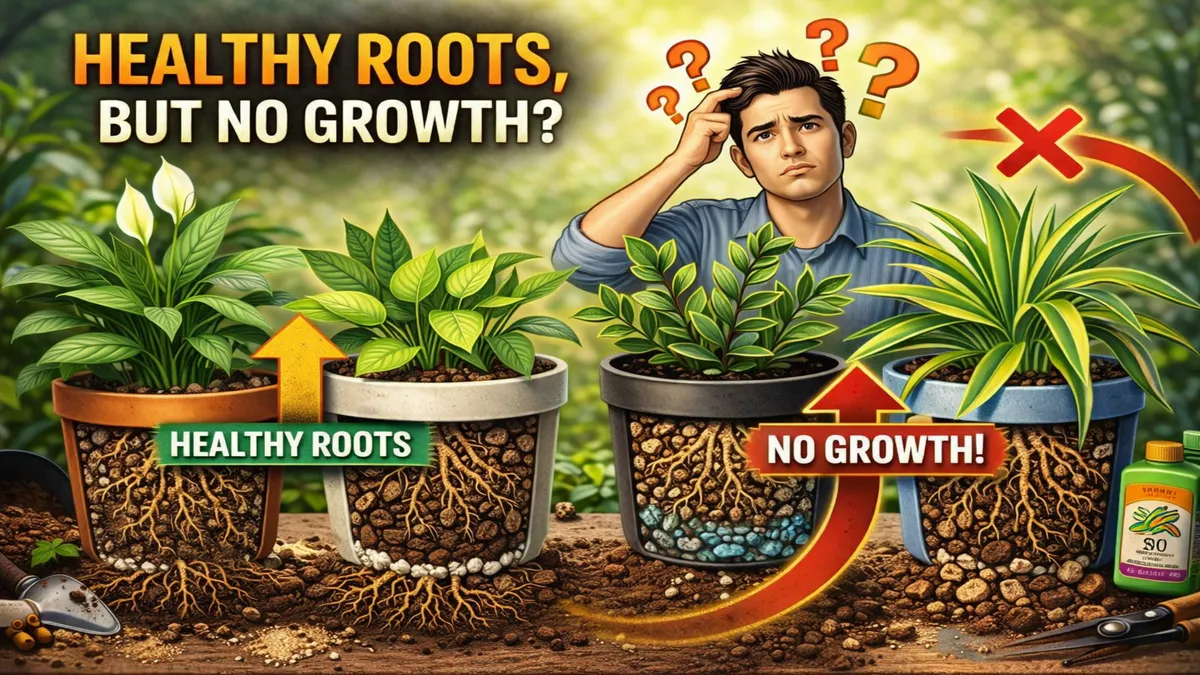
While a plant's roots may appear white, strong, and disease-free, they can still be inactive. A plant can stop growing even when its roots look fine. Growth only occurs when the plant receives the right signals from its environment. Without those signals, the plant chooses to simply survive rather than grow.
Many indoor plants enter a slow-growth phase when conditions are stable but not ideal. The plant is alive, not struggling, but also not motivated to grow. This is normal behavior and not a sign of neglect.
File Photo : Healthy white roots showing survival mode without active growth.
Light is Often the Real Reason for Stunted Growth
Light often controls energy production within the plant. While a plant may survive in low light, survival is not the same as growth. Many plants slow down when the light is sufficient for survival but not enough to produce new tissue.
Indirect light that seems bright to humans can be weak for plants. The plant may maintain its existing leaves instead of producing new ones. Moving it slightly closer to the light source often changes the growth pattern within a few weeks.
Pot size can subtly limit growth.
The roots may be healthy but constricted. When the roots mostly fill the pot, the plant focuses more on maintenance than growth. This doesn't always look like root rot or stress. Everything looks fine, yet growth stalls.
A tight pot restricts oxygen flow and nutrient movement. The plant adapts by slowing leaf production. Repotting doesn't immediately trigger growth, but it often resumes within one to two months.
Old soil can inhibit growth without looking bad.
The soil may look clean and still be depleted. Over time, soil loses its structure and nutrients. Water may drain too quickly or remain unevenly wet. The roots remain healthy, but they don't receive what they need to support new growth.
Fresh soil provides air spaces and minerals that reactivate root function. Simply adding fertilizer to old soil rarely solves this problem completely.
Watering is correct, but it's still not helping.
Watering on a schedule doesn't always match the plant's needs. Some plants require a drying cycle to trigger growth hormones. Constant moisture can keep the roots alive but inactive.
Overwatering without root rot is common indoors. The plant feels comfortable but remains sluggish. Adjusting the depth and timing of watering is often more beneficial than simply adding nutrients.
Why won't fertilizer alone fix this?
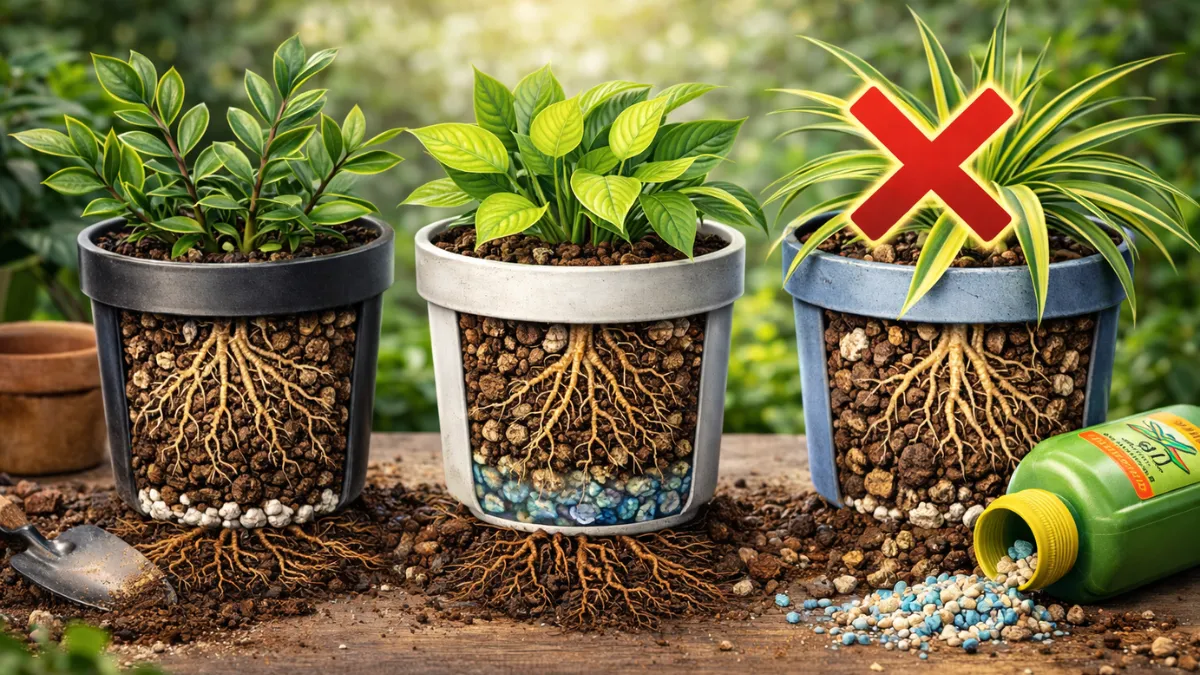
Fertilizer doesn't force growth. If light, space, or soil conditions are limiting, the nutrients cannot be utilized. This can actually stress the plant over time.
Plants only absorb nutrients when their growth conditions are balanced. Feeding a non-growing plant often results in salt buildup instead of new leaves.
File Photo : Fertilizer applied but indoor plant growth remains stalled.
Even after correction, growth takes time.
Once conditions improve, plants need time to respond. Often, the roots need to adjust before new leaves appear. This delay can be frustrating, but it's part of the plant's natural behavior.
Most indoor plants show new growth within four to eight weeks after the right adjustments. Faster results are rare and usually temporary.
Common Confusions Clearly Explained
Problem Seen
What’s Actually Happening
What Helps
Healthy roots but no leaves
Light energy is too low
Brighter indirect light
No growth after feeding
Growth conditions are blocked
Improve soil or pot size
Stable plant, no changes
Plant is in maintenance mode
Adjust water and light
When Doing Nothing Is the Right Option
Sometimes, the plant is simply resting. If its leaves look healthy and the color remains normal, patience is key. Forcing changes can cause stress that further delays growth.
Plants grow in response to balance, not pressure. Observation is part of good plant care.
Healthy roots mean your plant is alive, not necessarily that it's ready to grow. Growth depends on the quality of light, the freshness of the soil, the environment, and internal balance. Fixing one thing at a time works better than trying to fix everything at once. Give your plant consistent conditions and realistic time. Slow growth is not a failure. It's often a sign that the plant is waiting for better conditions.
Follow Us On Social Media
Join the Discussion
No discussions yet. Be the first to start one!
Expert FAQs
Why is my plant not growing even though the roots are healthy?
Healthy roots mean survival, but growth depends on light, soil quality, space, and internal balance.
Can a plant stay alive without growing new leaves?
Yes, many indoor plants remain in maintenance mode when conditions are stable but not ideal.
Does low light stop plant growth even if watering is correct?
Yes, low light often provides enough energy for survival but not enough for new growth.
Why doesn’t fertilizer help when my plant isn’t growing?
Plants cannot use fertilizer unless light, soil, and space conditions support active growth.
How long does it take for a plant to grow after fixing conditions?
Most indoor plants take four to eight weeks to show new growth after proper adjustments.
Can old soil stop plant growth without causing root rot?
Yes, depleted soil can limit nutrients and airflow while roots still appear healthy.
Should I repot if my plant has healthy roots but no growth?
Repotting helps only if the plant is root-bound or soil quality has degraded.
Is slow growth always a problem in indoor plants?
No, slow growth is often normal and indicates the plant is conserving energy.
Can overwatering cause growth to stop without visible damage?
Yes, constant moisture can keep roots alive but inactive.
When should I leave my plant alone instead of fixing things?
If leaves look healthy and color is stable, patience is often the best solution.