

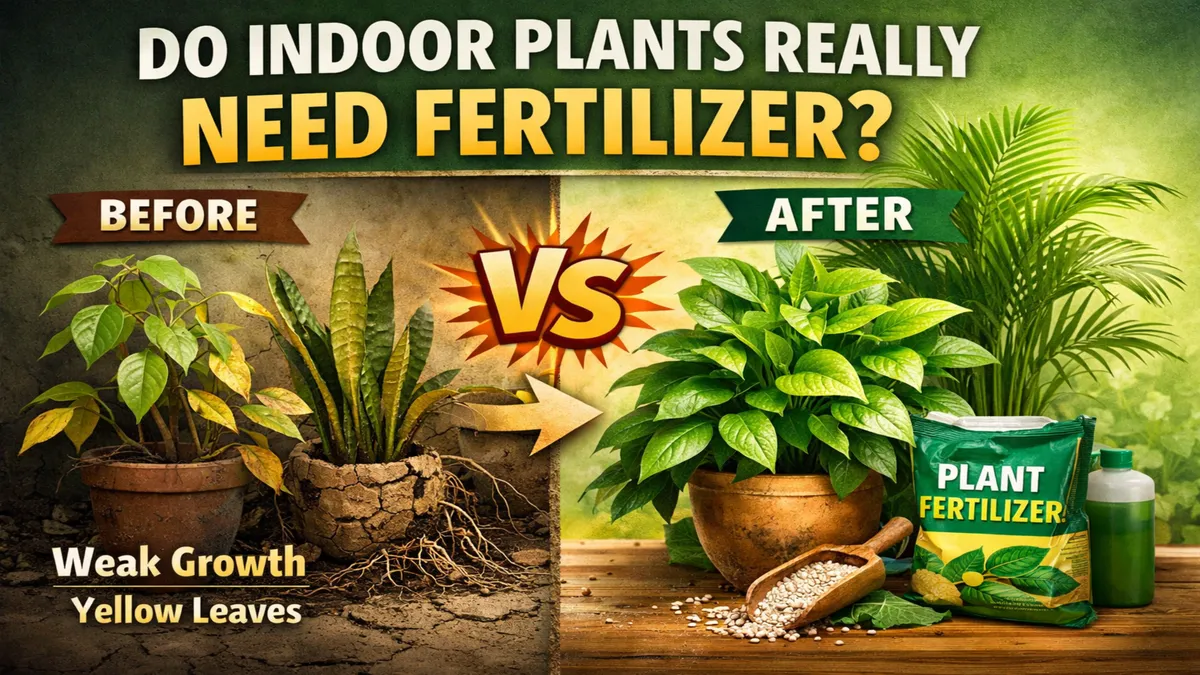
Indoor plants often look fine for months without fertilizer, leading many to wonder if fertilizer is truly necessary for plants. When I first started growing indoor plants, I asked myself the same question. The truth is, plants can survive for a while without fertilizer, but survival and healthy growth are not the same thing. Understanding how long plants can go without fertilizer is important because fertilizer helps prevent gradual decline and long-term damage.
Quick Comparison:
• Best for low light : Snake Plant
• Best for fast growth : Pothos
• Best for beginners : ZZ Plant
• Best for air purification : Areca Palm
Related News

How Fertilizer Actually Affects Indoor Plants
Indoor plants rely entirely on their potting soil for nutrients. Unlike outdoor plants, they can't draw fresh minerals from the ground or rainwater. And once the nutrients in the soil are depleted, the plants have no natural backup source. Fertilizer simply replaces what the soil gradually loses over time.
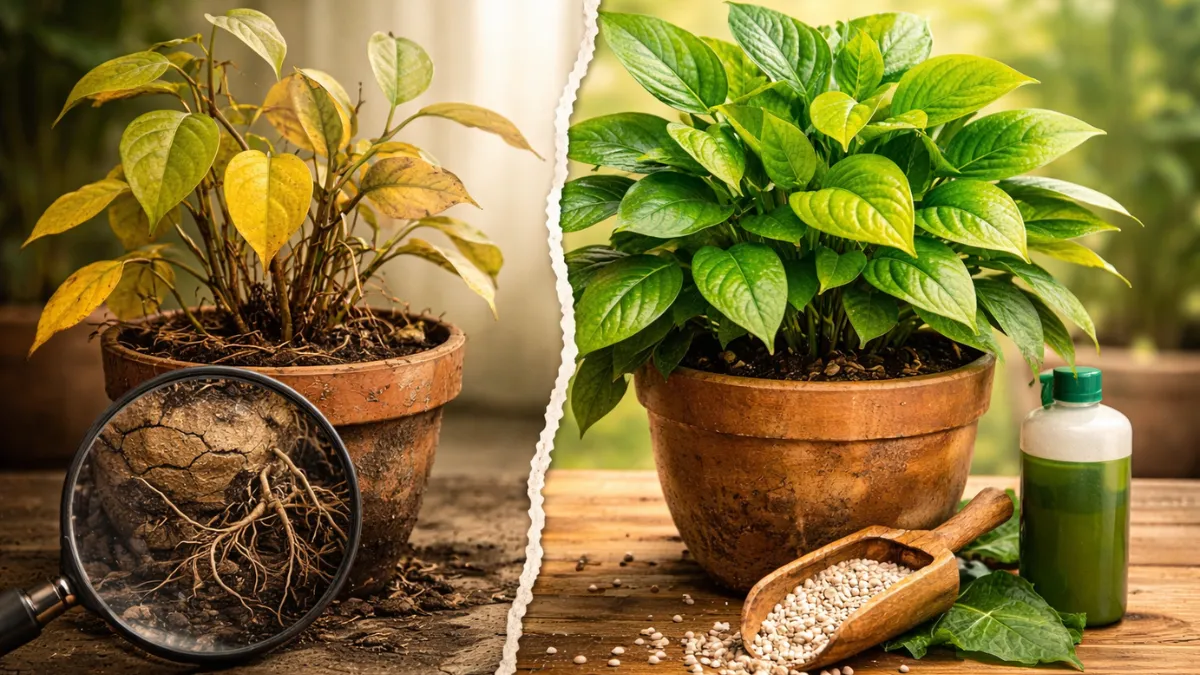
Without fertilizer, plants don't suddenly die. Instead, their growth gradually slows, their leaves become smaller, and their roots weaken. This slow change is easy to overlook, especially if the plant is already a slow grower or kept in low light.
How Long Can Indoor Plants Go Without Fertilizer?
Most indoor plants can survive for 3 to 6 months without fertilizer if they are planted in fresh, good-quality potting mix. This is because new soil already contains stored nutrients that the plants gradually use up. After this period, nutrient levels drop rapidly.
Some hardy plants like snake plants, ZZ plants, and succulents can survive for a year without fertilizer. Faster-growing plants like pothos or peace lilies, due to their higher nutrient needs, may show signs of stress within 2 to 3 months.
What happens when plants don't get fertilizer for too long?
When plants don't receive fertilizer for an extended period, they don't always show immediate, dramatic symptoms. The first sign is often stunted growth, not yellowing leaves. Over time, the leaves may become smaller, yellow, or uneven in color.
The roots also suffer silently. Weakened roots can't absorb water properly, making watering problems seem worse than they are. Many people mistake this for overwatering or poor lighting, when the real problem is a nutrient deficiency.
Survival vs. Healthy Growth : A Big Difference
A plant surviving without fertilizer is not the same as a plant thriving. Survival simply means the plant stays alive. Healthy growth, however, means strong roots, balanced foliage, and resistance to pests. Without fertilizer, plants go into maintenance mode and stop improving.
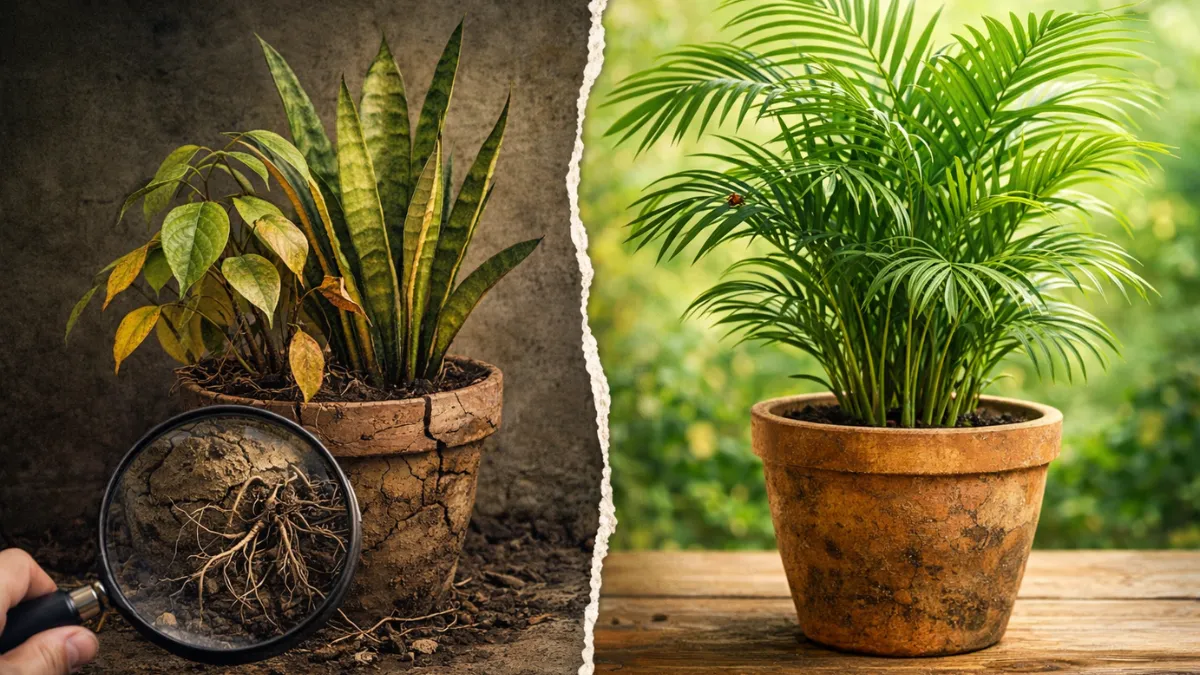
Plants grown without nutrients for extended periods often become more sensitive. Minor stresses like temperature fluctuations or missed waterings affect them more severely than well-nourished plants.
Do all indoor plants need fertilizer?
Not all plants need frequent fertilization, but all indoor plants eventually need nutrients. Slow-growing plants require less fertilizer, not none at all. Even cactus soil loses nutrients over time.
Fertilizing isn't necessary just because a plant has been repotted into fresh soil. That soil already contains nutrients, and fertilizing too soon can stress the roots instead of helping.
Common signs that your plant needs fertilizer:
| Symptom | What It Really Means |
|---|---|
| No new leaves | Nutrient supply is exhausted |
| Smaller leaves | Plant is conserving energy |
| Pale green color | Nitrogen deficiency |
| Weak stems | Lack of balanced minerals |
These signs often appear gradually, which is why fertilizer-related problems are often overlooked.
What fertilizer can't fix
Fertilizer can never compensate for poor lighting, improper watering, or root rot. Adding nutrients to a stressed plant without addressing the underlying problem can make things worse. Fertilizer only helps growth when basic care is already correct.
This is why timing matters more than quantity. Giving a healthy plant a light feeding works better than overfeeding a struggling plant.
When does fertilizing become necessary?
Fertilizing becomes necessary for most indoor plants when they have been in the same pot for 4-6 months. If growth has stalled despite proper lighting and watering, a nutrient deficiency is usually the culprit.
Giving a light, diluted feeding is always safer than a strong dose. Plants respond best to a consistent supply of nutrients rather than a sudden surge.
Related Articles:
Best Indoor Plant Fertilizers That Work Fast (Real Results)
Related Articles:
The Banana Peel Water Fertilizer Hack : Thats Reviving Indoor Plants in 2025!
Related Articles:
The Coffee-Grounds Fertilizer Hack : Thats Making Houseplants Grow Twice as Fast in 2025!
Final Thoughts
Indoor plants can survive for several months without fertilizer, and some even longer, but long-term health always depends on replenishing nutrients. Fresh soil provides a temporary boost, not lasting immunity. Feeding plants gradually and consistently ensures steady growth, strong roots, and fewer problems. Fertilizing isn't about speed—it's about balance and long-term sustainability.