


Some indoor plants have always been marketed as natural air purifiers, but how many plants do you actually need to notice a real difference in your bedroom? I've tested different plant setups in my bedroom over the years, and the answer isn't as simple as "one or two." The truth, however, depends on the room's size, ventilation, and what you mean by "noticeable." Let's get this straight and straight.
Quick Answer:
Related News



To notice a noticeable improvement in air quality in a standard 10x10 ft bedroom, you'll need at least 5–8 medium-sized, healthy plants. However, for scientific-level purification, research suggests you'll need far more. This number is often much higher for a typical bedroom.
What does noticeable air quality actually mean?
Before we count plants, we need to be clear.
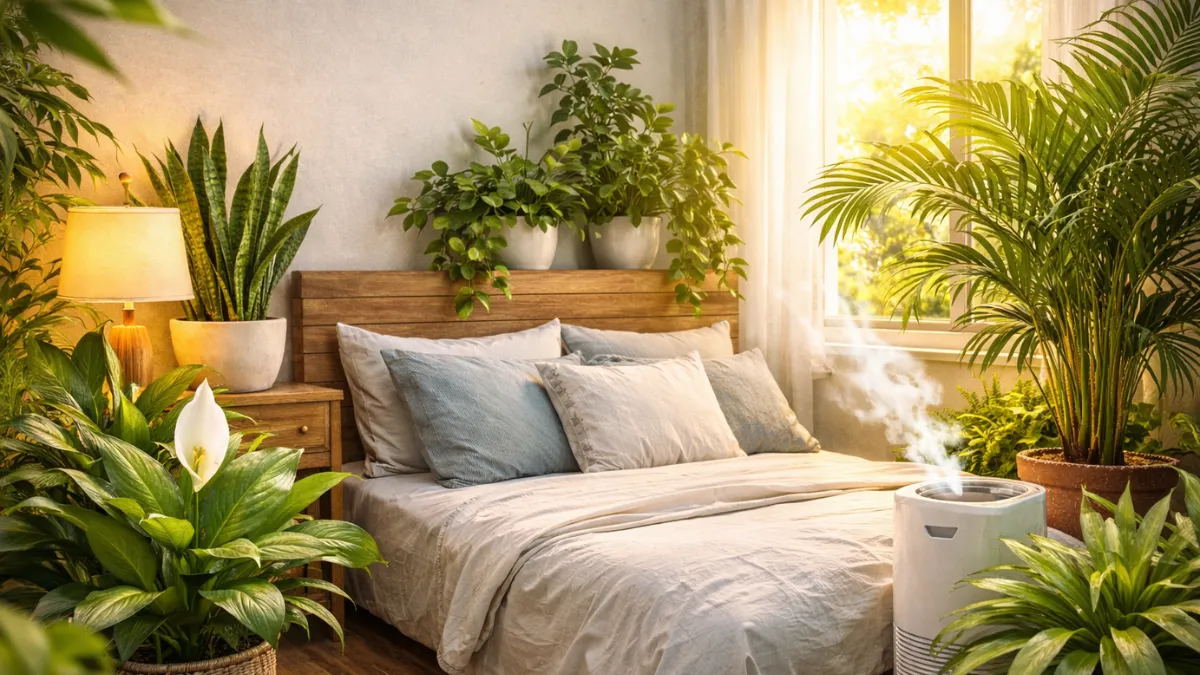
Are you asking the same question:
• How many plants naturally improve bedroom air quality?
• Or how many remove toxins like formaldehyde?
• Or how many increase oxygen at night?
• Or how many reduce suffocation?
Most people mean fresh air, less odors, and a calmer environment. But this is completely different from removing toxins in a lab.
This article focuses on real-life bedroom experiences, not just lab conditions.
What Science Actually Says About Plants and Air
Most of the talk about air purification comes from NASA's famous Clean Air Study, where some plants removed some VOCs from a sealed lab chamber.
But here's the key: those tests were conducted in small, airtight containers, not in real bedrooms with windows, doors, airflow, and dust.
Modern reviews from institutions like Drexel University have shown that you'd need hundreds of plants in each room to achieve normal mechanical ventilation.
So if you're wondering:
Do indoor plants really effectively clean bedroom air?
The honest answer: Not very many. You'll need a lot of plants to see significant results.
Realistic Bedroom Calculations
Let's assume:
Room size : 100–120 sq ft
Ceiling height : 8–10 ft
• Adequate ventilation
Practical improvement range
| Bedroom Size | Minimum Plants | Noticeable Freshness | Heavy Impact (Unrealistic) |
|---|---|---|---|
| 80–100 sq ft | 3–5 | Slight freshness | 50+ |
| 100–150 sq ft | 5–8 | Noticeable improvement | 80+ |
| 150+ sq ft | 8–12 | Moderate freshness | 100+ |
If you're asking the same question:
How many plants do I need in a 10x10 bedroom?
• You can strategize and start with 6 medium plants.
My Personal Bedroom Experiment
In my bedroom (about 120 sq ft), I tried:
• 2 plants = no noticeable difference in the air
• 4 plants = slightly increased humidity
• 7 plants = the air felt fresher, especially in the morning
The biggest change wasn't the oxygen, but rather the humidity balance and psychological freshness.
If you're wondering the same thing:
Can 3 plants improve bedroom air?
To be honest, that's probably not enough to notice a difference.
The Best Plants for Improving Bedroom Air
If you want the maximum impact from each plant, choose species known for strong transpiration and durability.
1. Snake Plant
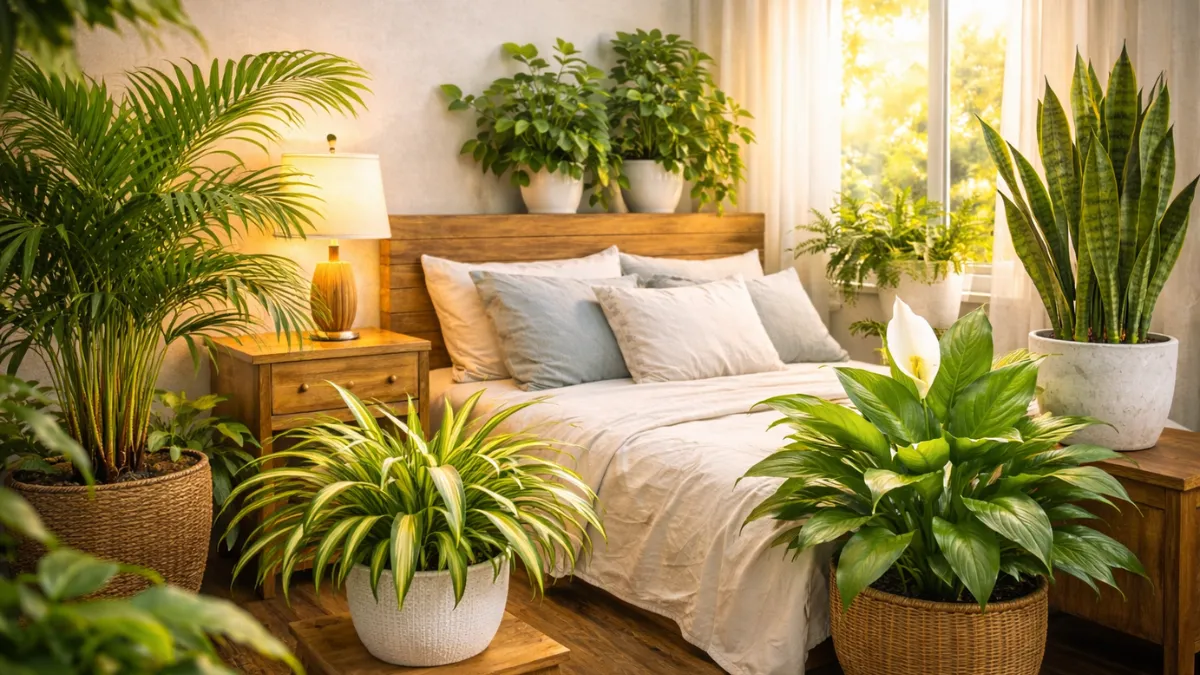
• Excellent for releasing oxygen in low light and at night.
2. Peace Lily
• Good for humidity and light toxin absorption.
3. Areca Palm
• Excellent natural humidifier.
4. Spider Plant
• Easy to grow and slightly increases humidity.
If you're comparing options:
Which bedroom plant improves the air the most?
The areca palm generally has a greater transpiration effect.
Oxygen at Night: Myth vs. Reality
Many readers ask:
Do bedroom plants increase oxygen while sleeping?
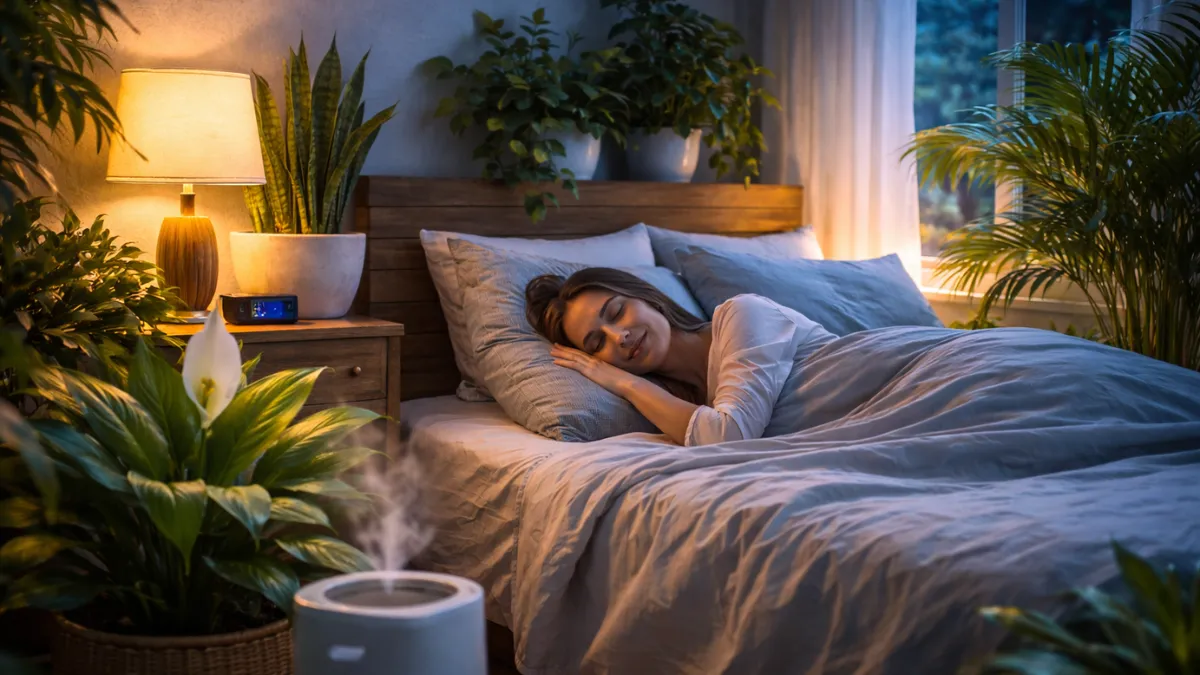
Plants produce oxygen during photosynthesis (daytime). But at night, most plants breathe like humans, while some use a small amount of oxygen.
Snake plants are often said to release oxygen at night due to CAM metabolism, but the amount is very small compared to the volume of the room.
So if you're hoping plants will replace ventilation, they won't.
Plant placement matters more than quantity.
Instead of randomly placing plants, try:
• 2 near a window
• 2 near the bed corner
• 1–2 near the door
• 1 plant on a high shelf
You may ask:
Where should I place plants for better air in the bedroom?
Always distribute them evenly to improve air circulation.
Placing them in a corner has a reduced effect.
Humidity : A Hidden Benefit
Plants always transpire and release moisture.
If your room feels dry from AC or winter heating, 6–8 plants can slightly increase the humidity by 5–10%.
That's why people often ask:
Why do plants make my bedroom feel fresher?
It's usually humidity balance, not toxin removal.
One thing that didn't work for me
I once tried filling my bedroom with 12 small succulents, hoping it would clean the air even better.
It didn't change anything.
Succulents transpire very little. So:
Are succulents good for cleaning the air in the bedroom?
• Not really.
• Leafy tropical plants work better.
• The Real Limitation
Here's the real limitation:
• Plants can't replace:
• Ventilation
• Air purifiers
• Open windows
• HVAC systems
If you're asking:
Can plants replace air purifiers in the bedroom?
No. They complement, not replace.
Psychological and Sleep Benefits
Even if there's a slight change in the air, numerous studies show that greenery reduces stress and improves rest.
You might be wondering:
Do bedroom plants help you sleep better?
In my own experience, yes, indirectly. The calming effect is clear.
I personally sleep better when there's greenery around my bed because my room feels vibrant and peaceful.
The Ideal Plant-to-Space Ratio Rule
A practical home formula:
• 1 medium-sized plant every 15–20 sq ft
So for a 120 sq ft bedroom:
• 6–8 plants
If you're calculating:
How many indoor plants per square foot for clean air?
This ratio is realistic for a clear improvement in comfort.
If you want a more significant air improvement,
Combine:
• 6–8 foliage plants
• Regular window ventilation
• A compact HEPA purifier
• Plants alone won't make a significant difference in air quality.
Two Bedroom Setup Examples
Minimal Setup (Small Bedroom)
• 2 Snake Plants
• 1 Peace Lily
• 1 Spider Plant
• 1 Areca Palm
Total : 5 Plants = Mild Freshness
Best Relaxation Setup (Medium Bedroom)
• 2 Snake Plants
• 2 Areca Palms
• 2 Peace Lilies
• 1 Spider Plant
Total : 7 Plants = Noticeable Improvement
For more guidance, see:
Best Bedroom Plants for Oxygen and Air Quality (Science-Backed Guide)
Final Verdict
So, how many plants do you need in your bedroom to noticeably improve the air? Is it?
In a standard bedroom, 5–8 healthy, medium-sized, leafy plants will create a fresher, slightly more humid, and more calming atmosphere.
But they won't clean the air as much as a mechanical system.
The purpose of planting plants should be comfort, humidity balance, and mental well-being not to replace ventilation.
If you're serious about air quality, use plants as a supportive tool, not the only solution.
Written for IndoorPlantify from real-life experience with indoor plant care.