


You’ve probably heard this before:
Just plant a few plants, and your air will be clean.
Sounds simple, doesn’t it?
But when you actually try to do it, the confusion begins.
How many plants are enough? 2, 5, or 20?
Let’s get this straight so that your time and effort don’t go to waste.
Do indoor plants really clean the air?
Yes, but only to a very limited extent.
Related News



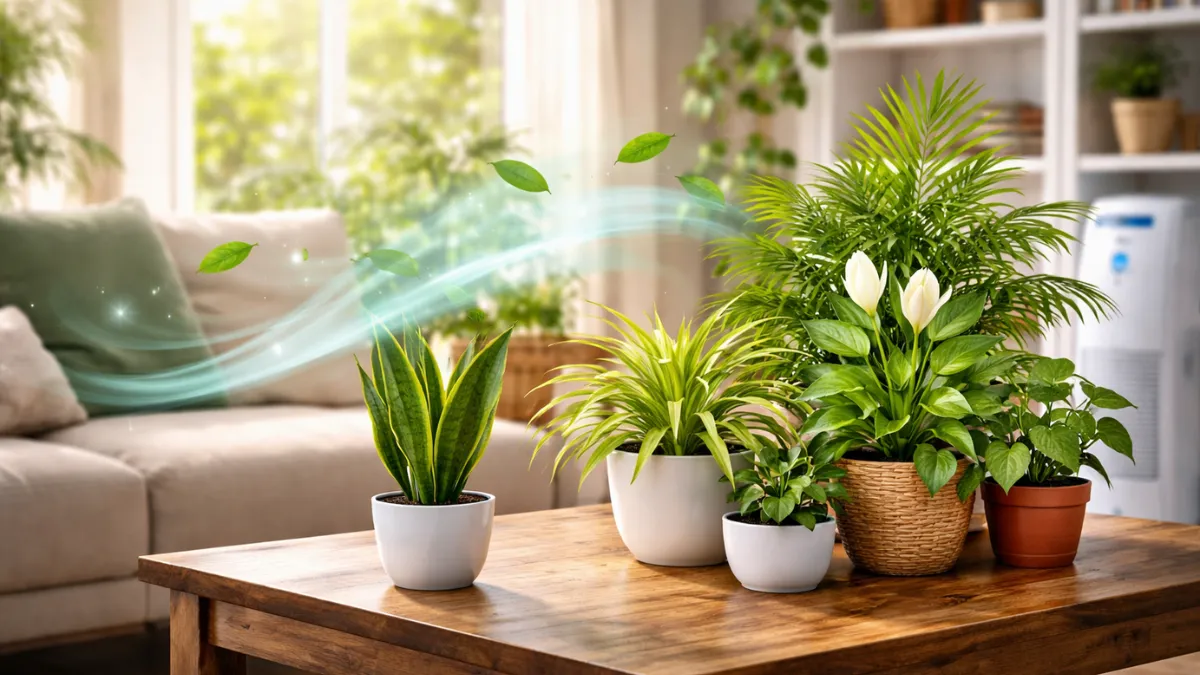
Plants can absorb certain harmful particles and release oxygen.
However, inside an average room, this process is slow and limited.
In my experience, a few plants make a room *feel* fresher.
But they cannot replace proper ventilation or airflow.
To learn more:
• Snake Plant Oxygen at Night : Myth or Scientific Fact?
• Spider Plant Benefits for Indoor Air (Proven & Practical)
How many plants are actually needed?
The simple answer is this:
• For a small room = 2 to 4 plants
• For a medium room =4 to 8 plants
• For a large room = More than 8 plants
These numbers aren't meant to provide complete air purification.
They are intended to create a healthier and fresher environment.
If you want lab-level air purity, you would need dozens of plants.
For most households, this simply isn't feasible.
Why aren't one or two plants enough?
Many people keep just a single plant and expect dramatic results.
This approach doesn't work.
The impact of a solitary plant is very limited.
Its total leaf surface area is so small that it doesn't make any noticeable difference.
I made this very same mistake when I first started out. I planted a snake plant, hoping it would transform the room's atmosphere overnight.
Nothing changed.
The effect becomes apparent only when multiple plants work together.
The Best Plants for Improving Air Quality
Not all plants perform the same way.
Some plants are more effective—and they are also easier to care for.
Snake Plant
• Thrives even in low-light conditions
• Can release oxygen at night (in small quantities)
Read:Snake Plant Oxygen at Night : Myth or Scientific Fact?
Spider Plant
• Grows rapidly and is easy for beginners
• Helps reduce minor indoor air pollutants
Read: Spider Plant Benefits for Indoor Air (Proven & Practical)
Areca Palm
• Increases humidity levels in the air
• Ideal for dry rooms
Peace Lily
• Improves overall air quality
• Requires careful attention when watering
The Right Placement for Better Results
Where you place your plants matters far more than people realize.
• Place plants near windows (avoiding direct sunlight)
• Distribute them throughout the room
• Avoid crowding them all into a single corner
In my experience, spreading the plants out creates a much more pleasant atmosphere in the room.
Keeping too many plants in one spot doesn't yield significant benefits.
Common Mistakes People Make
1. Expecting immediate results
It takes time for plants to demonstrate their effects.
2. Overwatering
This damages the plant's roots and compromises its overall health.
3. Crowding too many plants into a small space
This can restrict airflow and lead to humidity-related issues.
4. Neglecting Ventilation (Air Circulation)
Plants offer assistance, but they cannot replace an air purifier.
Final Reality Check
Plants do help, but they are not air purifiers.
They gradually improve the atmosphere.
They lend a calm, fresh, and natural feel to your room.
However, if the airflow in your room is poor,
simply adding plants will not solve the problem.
To fully understand the relationship between air quality and sleep:
Final Thoughts
Start simple.
Begin by adding just 2–3 plants.
Observe how the atmosphere in your room feels.
Then, if necessary, gradually add more plants.
Do not get fixated solely on increasing the plant count.
Focus instead on keeping your plants healthy and placing them in the right spots.
Ultimately, this is the most effective approach.
Written from real indoor plant care experience for IndoorPlantify.