

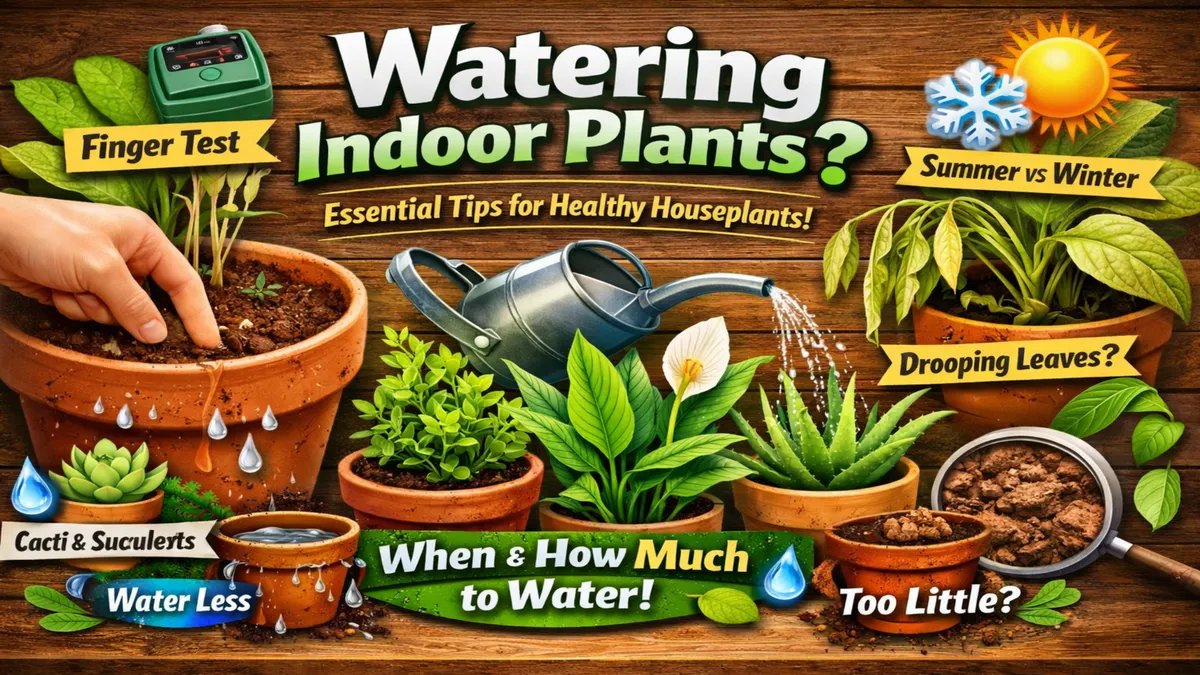
Watering houseplants seems easy to everyone, but most plants die from improper watering, not from lack of care. In many homes, the weather, pot size, soil, and room lighting all make a difference. A fixed schedule never works for all plants. I learned this after losing several healthy plants. This guide will help you understand when, how often, and how much to water your houseplants, using some simple rules that work in real homes.
Why Watering Schedules Matter More Than You Think
Indoor plants live in limited soil and confined spaces. Unlike outdoor plants, they are entirely dependent on you for water. Too much water suffocates the roots by preventing air circulation. Too little water slowly dries them out. Both cause stress and damage to the leaves.
Related News


Because every home is different, air-conditioned rooms, balconies, low-light rooms, and seasonal changes all alter watering needs. That's why copying someone else's schedule often fails miserably.
How Often Should You Water Your Indoor Plants? (Simple Rule)
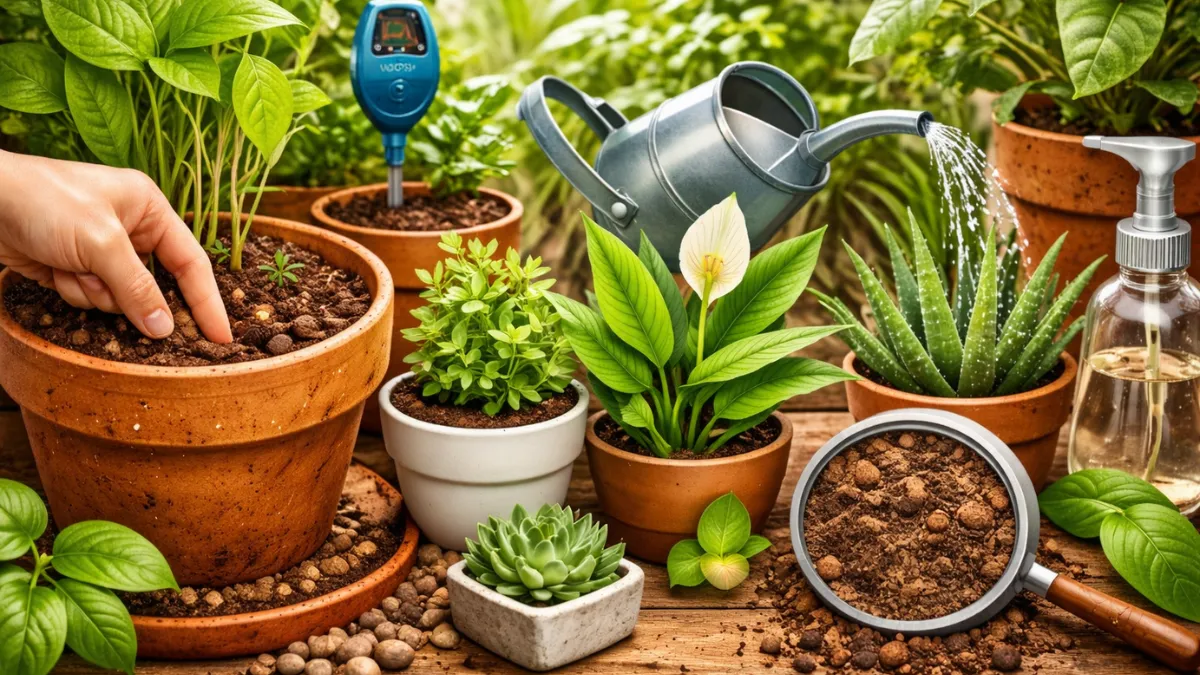
There's no weekly or daily rule that fits all plants. The safest rule is to water only when the topsoil feels dry. Insert your finger about an inch deep. If the soil sticks, wait. If it's dry, water.
Most indoor plants need watering every 5-10 days in the summer. In winter, watering usually decreases to every 10-20 days. Always check the soil first, not the calendar.
Factors Determining Watering Frequency
Type of Houseplant
Succulents and cacti store water and require less frequent watering. Leafy plants like money plants or peace lilies need more frequent watering. The thickness of their leaves provides a clear indication.
Pot Size and Material
Smaller pots dry out faster than larger ones. Terracotta pots lose moisture quickly. Plastic pots retain water longer. The same plant behaves differently in different pots.
Soil Mix
Loose soil mixes with coco peat and compost dry out quickly. Heavy garden soil retains water longer, and if overwatered, the roots are more prone to rot.
Light and Room Conditions
Plants near windows often dry out faster. Air-conditioned rooms dry out the soil slowly but dry out the leaves quickly. Humidity in your home also plays a significant role.
How to Check if Your Plant Needs Water
Never guess. Always test. The finger test is best for beginners. Insert your finger into the soil. Dry soil means water it. Wet soil means wait.
Another indicator is the weight of the pot. Dry pots feel lighter. Wet pots feel heavier. The leaves also tell a story. Drooping leaves can indicate both too much or too little water, so always check the soil before doing anything.
Common Watering Mistakes and Easy Solutions
| Mistake | What Happens | Easy Fix |
|---|---|---|
| Watering daily | Root rot, yellow leaves | Water only after soil check |
| No drainage hole | Water stays at bottom | Always use drainage pots |
| Same schedule for all plants | Some die faster | Adjust per plant type |
| Watering at night | Fungus growth | Water in morning |
| Using cold water | Root shock | Use normal room water |
Watering Guide by Plant Type
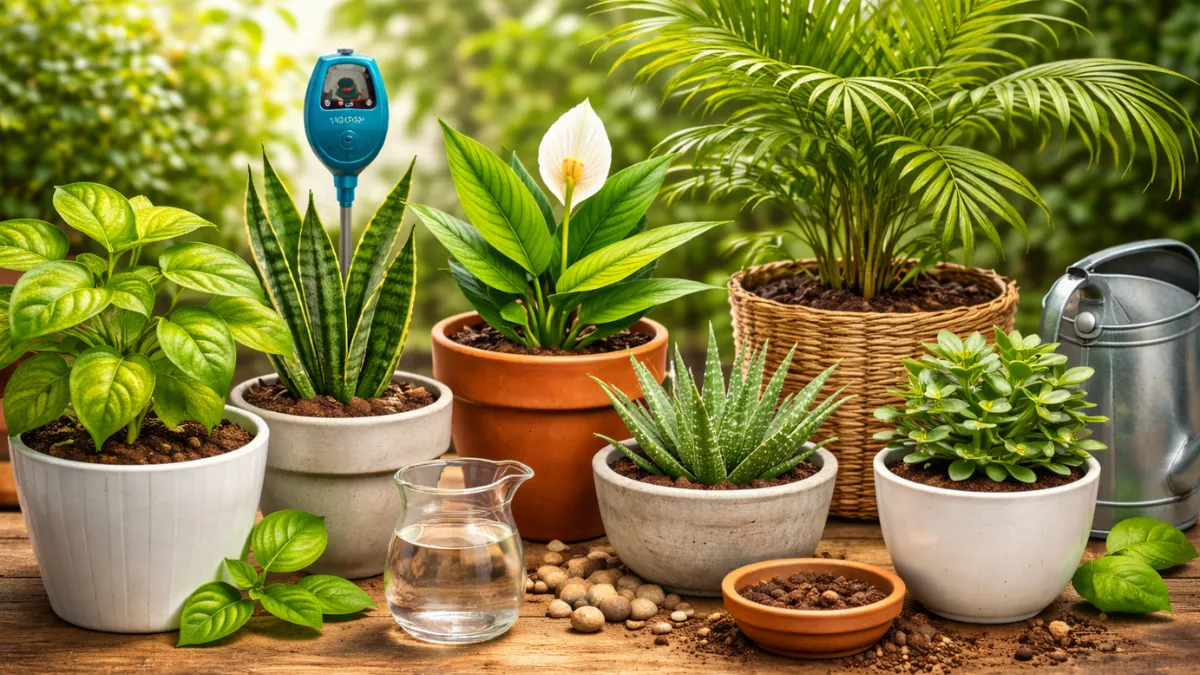
Money plants typically need watering when the soil is about half dry. Overwatering can cause their stems to become soft. Snake plants, on the other hand, require very little water. Watering once every 10-15 days is sufficient.
Peace lilies need consistently moist soil, but never soggy. Areca palms like regular watering but not standing water. Aloe vera needs the soil to dry out completely before the next watering.
Seasonal Watering Tips You Should Follow
In summer, the soil dries out quickly. This may require more frequent watering, but always check the soil before watering. Never overwater the pot.
During the monsoon season, reduce watering. The humidity keeps the soil moist for longer. In winter, reduce watering significantly. Cold soil retains water for longer, and the roots absorb less water.
How Much Water is Enough?
Water slowly until excess water starts draining from the drainage holes. This ensures that the roots are evenly watered. Avoid watering in small amounts daily. This only wets the topsoil, leaving the roots dry.
Empty the trays under the pots after 10 minutes. Standing water rots the roots and creates a mosquito problem in the house.
Signs That You Are Watering Correctly
Healthy plants grow continuously. Their leaves remain firm and green. There is no yellowing, no odor from the soil, and no fungus on the surface. The soil dries at a normal rate, not remaining wet for days.
When watered correctly, plants become low-maintenance and stress-free.
Related Article:
[Overwatering Is not the Problem : The Real Reason Your Plants Are Dying]
Related Article:
[Why Indoor Plant Leaves Turn Yellow & How to Fix It]
Related Article:
[Queen of the Night Blooms Only Once at Midnight — Heres How to Make It Happen]
Final Tips
Watering indoor plants is about observation, not a routine. Always check the soil before watering. Adjust according to the weather, pot type, and the nature of the plant. It's safer to underwater than to overwater. Once you understand your plant's signals, watering becomes easy, and your plants will stay healthy for years with minimal effort.