

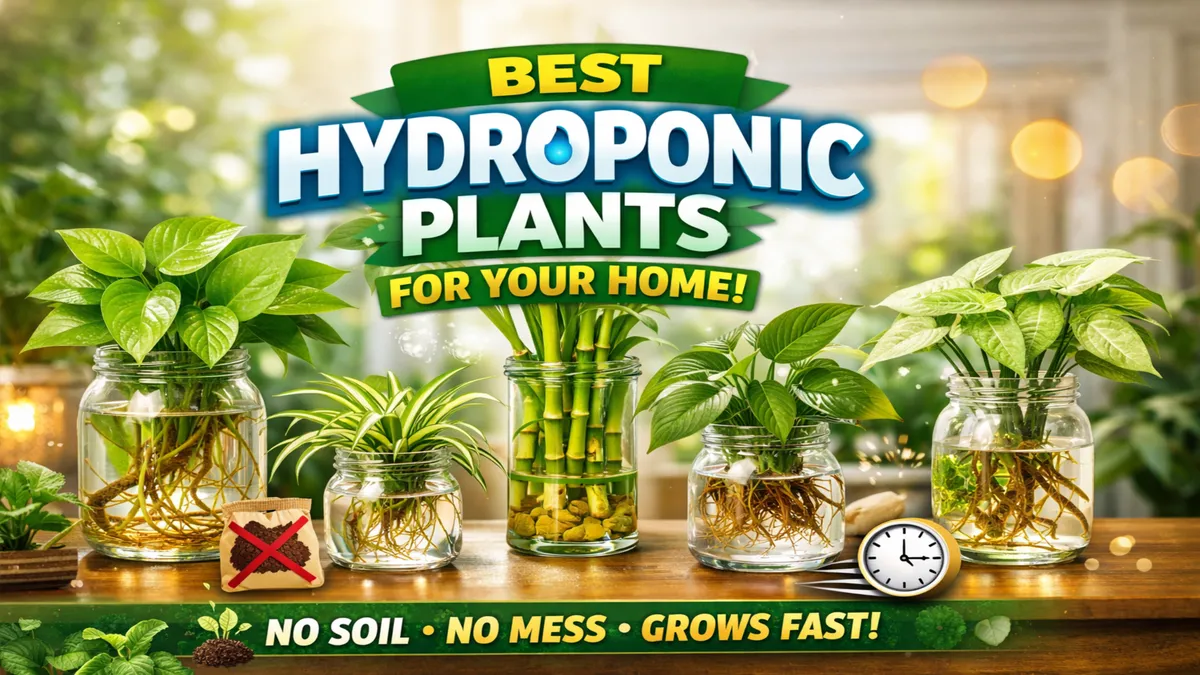
Growing plants without soil might sound difficult, but once you understand it, it becomes very easy. Hydroponic plants grow in nutrient-rich water, and they stay clean, fresh, and healthy indoors. In many homes, we don't have space for large gardens, so growing plants hydroponically seems like a smart and peaceful option. It involves less mess, fewer pests, and is very easy to maintain. It's also great for beginners who simply want healthy green plants at home.
The Best Hydroponic Indoor Plants for Your Home
The best thing about hydroponic plants is that they don't need soil, heavy pots, or daily digging, and most of them thrive in small corners of the living room, kitchen, or bedroom, making them perfect for flats and small homes.
Related News

Hydroponic plants only need clean water, light, and nutrients, so you just need to change the water regularly and keep the plant roots fresh, and if you do this correctly, you'll enjoy lush green plants with much less effort than with regular soil-based plants.
What Exactly is Hydroponic Indoor Plant Growing?
Growing plants hydroponically means the plants grow in water instead of soil. Their roots absorb nutrients directly from the water, so they stay strong and healthy. This method keeps your home clean because there's no soil, no mess, and no heavy gardening work.
Benefits of Growing Hydroponic Plants at Home
Hydroponic plants take up very little space, grow quickly, and require minimal maintenance. There's no risk of soil-borne pests, so the plants stay healthy for longer. They are perfect for busy families, rented flats, or people who love plants but don't like heavy gardening work.
Popular Hydroponic Plants You Can Easily Grow
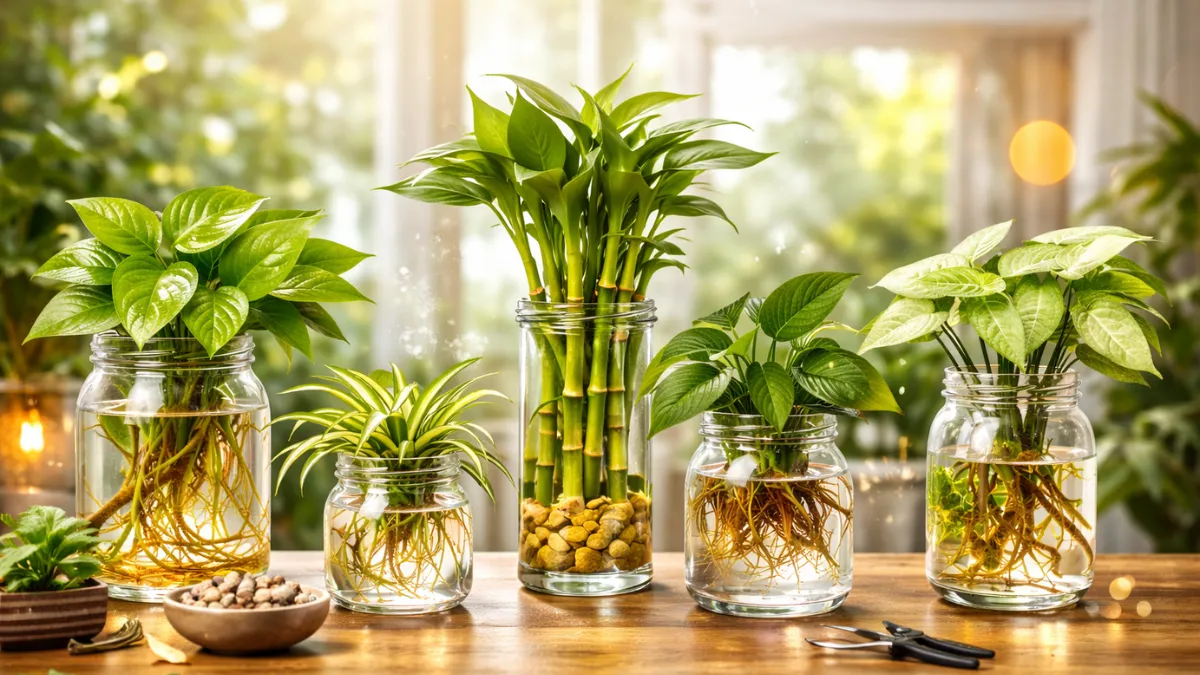
Money Plant in Water
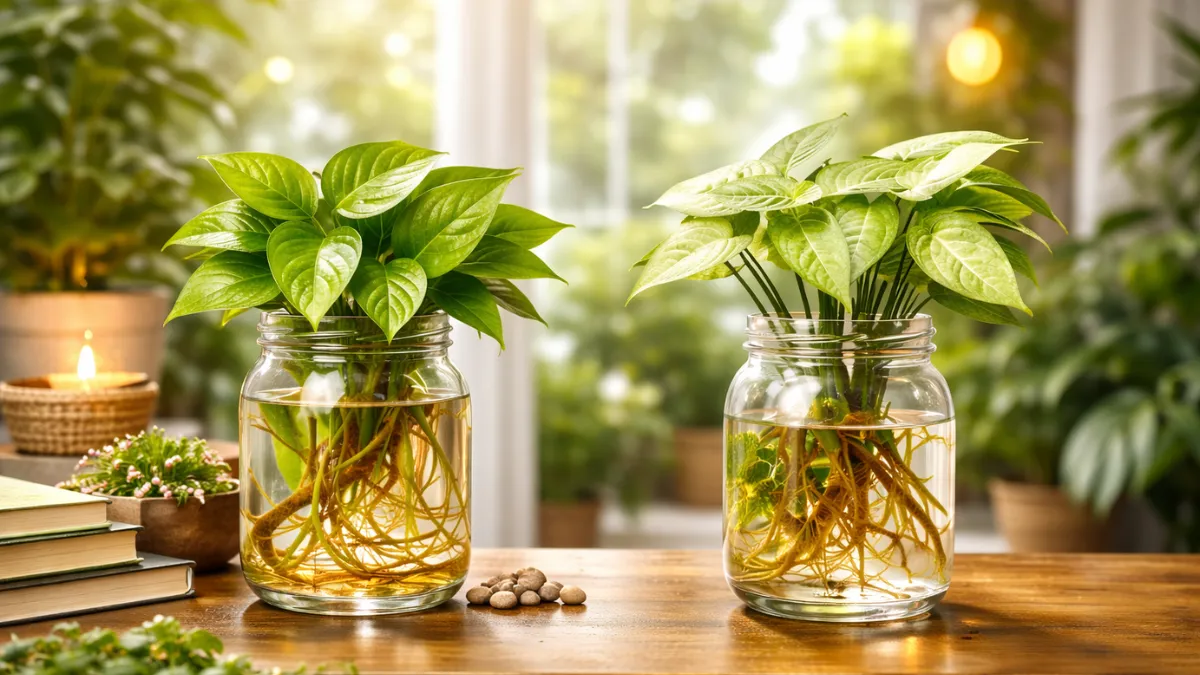
The money plant is one of the most common hydroponic plants in Indian homes. Simply cut a healthy stem, place it in a bottle or jar of water, and it grows very well. It prefers normal room light and thrives beautifully near windows or balconies.
Lucky Bamboo
Lucky bamboo is another popular plant that grows solely in water. It looks elegant on study tables, office desks, TV units, or near the entrance. Just keep the roots submerged in water and change the water every 7-10 days, and it will stay fresh.
Philodendron
The philodendron is a hardy plant that grows very well in a jar of water. It has large green leaves that liven up a room. It's very easy to maintain, and even if you occasionally forget to change the water on time, it still thrives.
Spider Plant
The spider plant grows quickly and looks adorable when kept in a glass jar. It produces small plantlets that also grow easily in water. It's a great air-purifying plant for indoors and looks wonderful in the corners of your living room.
Pothos and Syngonium
These plants are beautiful, easy to grow, and require minimal care. Keep them in glass bottles, jars, or transparent containers, as they spread nicely in these. They are perfect for indoor shelves, window sills, and table decorations.
Easy Care Tips for Hydroponic Plants
Keep these plants in clean water, and change the water weekly to prevent algae growth. Use filtered or RO water if possible. Do not expose these plants to direct sunlight. They thrive in indirect indoor light or window light. Add liquid nutrients only when necessary, but do not overuse them.
Common problems and simple solutions (helpful table)
| Problem | Why It Happens | Simple Fix |
|---|---|---|
| Roots turning brown | Dirty or old water | Change water regularly |
| Leaves turning yellow | Too much sunlight or poor nutrients | Move to low light area and refresh water |
| Bad smell in water | Bacteria growth | Wash container and refill fresh water |
| Plant not growing | Weak cutting or low nutrients | Use healthy cutting and add mild nutrients |
Where can you keep hydroponic plants at home?
You can place them on study tables, kitchen shelves, balcony corners, office desks, near windows, or on TV cabinets. They look modern and clean, and make the home feel fresher and more positive.
Final thoughts
Hydroponic indoor plants are perfect for homes that require low maintenance, don't need soil, and fit easily into small spaces. From my own experience, these plants are peaceful, easy, and very satisfying to maintain. If you want greenery without the hassle, start with easy plants like money plants or lucky bamboo and gradually try more.