

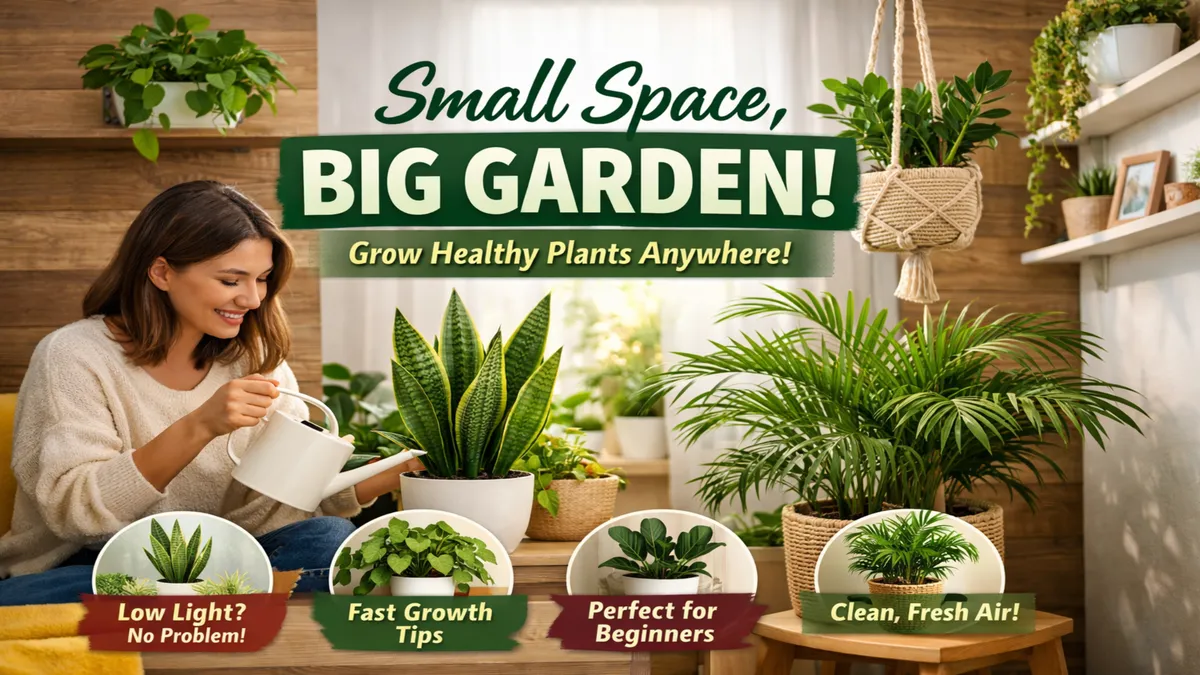
Do small homes prevent you from enjoying indoor plants? Many people think gardening requires large balconies or extra rooms, but that's not true. With the right plant choices and smart placement, even a small apartment can feel fresh and vibrant. This guide explains how indoor gardening works in small spaces, what truly helps plants thrive indoors, and which mistakes silently hinder progress over time.
Quick Comparison:
• Best for Low Light : Snake Plant
• Best for Fast Growth : Pothos
• Best for Beginners : ZZ Plant
• Best for Air Purification : Areca Palm
Related News
Why Small Spaces Are Actually Good for Indoor Gardening
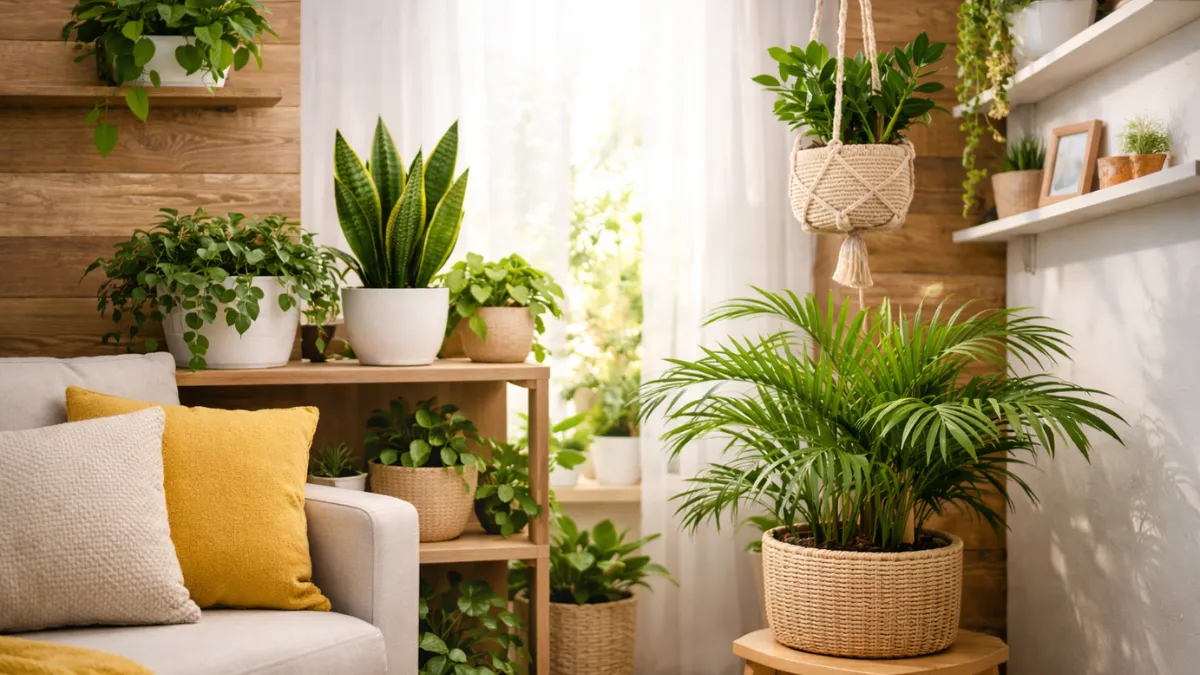
Small spaces often maintain consistent indoor temperatures and controlled airflow. This significantly helps plants avoid stress from drastic environmental changes. When plants are close to daily human activity, issues like dry soil or pests are detected and addressed more quickly.
Another advantage is focused care. Fewer plants mean better attention to watering, light, and placement. Instead of spreading your efforts thin, small-space gardening encourages consistent care, which matters more for long-term plant health than the size of the space.
Related Articles:
Best Indoor Plants for Small Apartments (Space-Saving Picks 2026)
Indoor Plants That Thrive During Winter – Expert Recommendations
Indoor Plants : Complete Beginner-to-Expert Guide (2026 Edition)
Choosing Plants That Respect Limited Space
Not every plant is suitable for small homes. Plants that grow slowly or remain compact are easier to manage. However, plants that spread wide or branch out rapidly often block light and airflow, creating hidden care problems over time.
Look for plants that can tolerate irregular light and occasional neglect. Snake plants, pothos, peace lilies, and philodendrons thrive even without daily attention. These plants tend to grow slowly rather than rapidly, keeping your space balanced.
Understanding Light Before Buying Any Plant
Indoor light dictates everything. Many small homes have only one main light source, usually a window. Plants placed too far away will gradually weaken, even if they appear fine for months. Their growth becomes spindly, and the leaves are the first to show discoloration.
Low-light plants can survive away from windows, but they still need light, not darkness. If natural light is limited, rotating plants every few weeks ensures even growth and prevents one-sided stress.
Smart Placement Saves Space and Keeps Plants Healthy
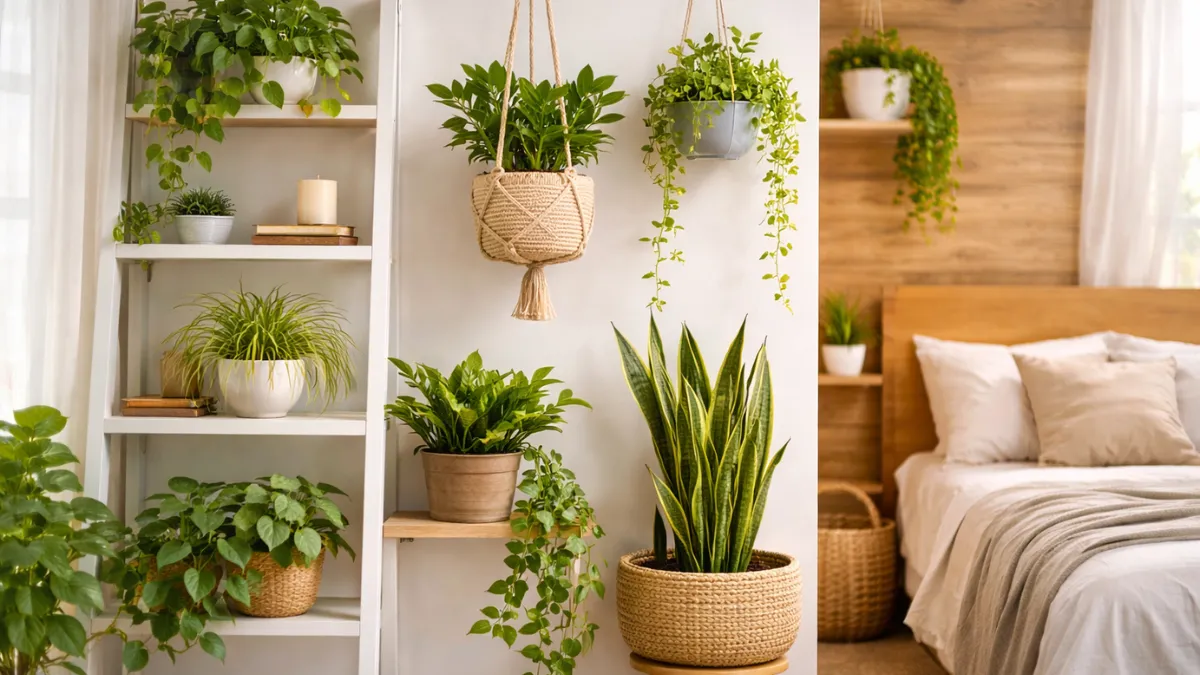
Vertical placement is safer than crowding plants on the floor. Shelves, wall-mounted planters, and hanging baskets free up floor space and provide better light exposure. This also improves air circulation around the leaves, reducing fungal problems.
Avoid placing plants permanently in cramped corners. Air circulation is crucial in small rooms. Closely spaced plants trap moisture, leading to yellowing leaves and gradual root problems that often go unnoticed.
Container Size Matters More Than Plant Size
Small plants in large pots retain too much moisture for too long. This leads to root rot, especially indoors where evaporation is slow. Always choose pots that match the root system, not the size of the foliage. Drainage holes are essential in plant pots.
Decorative pots without drainage should always have a nursery pot inside. Water must be able to drain easily, otherwise the soil health will gradually deteriorate, even if the plant looks healthy from above.
Common Mistakes in Small Spaces and Easy Solutions
| Mistake | What Actually Helps |
|---|---|
| Too many plants together | Leave space for airflow |
| Oversized pots | Match pot to roots |
| Ignoring light direction | Rotate plants regularly |
| No drainage | Always allow excess water to escape |
Watering in small homes requires extra care.
Indoor humidity often gets trapped in small spaces, causing the soil to dry out more slowly. And watering on a fixed schedule often exacerbates problems. Instead, check the soil moisture with your finger before watering again.
Low-light plants need less water, not more. Overwatering is the most common reason for indoor plants failing in apartments. Slow growth is normal and healthier than rapid, weak growth.
Fertilizing Without Overloading the Space
Plants in small spaces often grow slowly, so they require fewer nutrients. Over-fertilizing leads to a buildup of salts in the soil, causing brown leaf tips and root damage. A light feeding every few weeks during their active growth period is usually sufficient.
If growth stalls, adding more fertilizer won't help. You need to address light and root space issues first. Nutrients are only effective when the basic conditions are already right.
Final Tips for Long-Term Success in Small Spaces
Indoor gardening in small spaces works best with patience and observation. Choose plants that adapt easily, respect light limitations, and avoid overcrowding. Slow growth is healthy growth indoors. When plants feel settled, they reward you with clean air, calming energy, and consistent beauty, without taking over your home.