

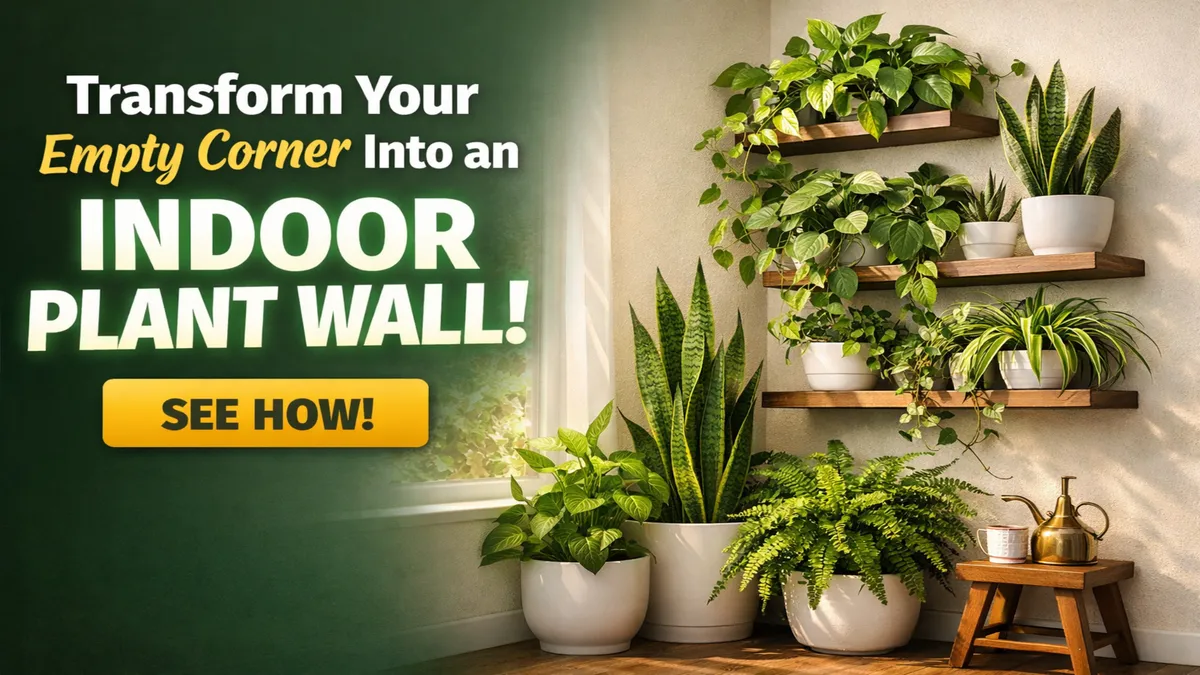
Most homes have corners that go unused and feel awkward, boring, or forgotten. An indoor green corner with a curated plant wall transforms that empty space into a calming visual focal point. Instead of simply placing plants haphazardly, a curated wall focuses on balance, light, and plant compatibility. I’ve created many plant corners in apartments with limited sunlight, and when done thoughtfully, even small walls look intentional rather than cluttered. This guide shows you how to create a realistic, low-stress indoor plant wall that will actually last.
Quick Answer:
Related News
A curated indoor plant wall is created by grouping compatible plants vertically or semi-vertically based on light, growth rate, and care needs. Use structural support, layered heights, and consistent spacing to keep it healthy and visually balanced.
What is an Indoor Green Corner?
An indoor green corner is a designated space, usually near a wall or window, where plants are intentionally arranged to create a visual cluster.
Unlike scattered potted plants, a green corner:
• Utilizes vertical or layered space
• Looks planned, not accidental
• Supports plant health through shared conditions
A curated plant wall doesn’t mean covering the entire wall. Even a partial vertical arrangement can have the same effect.
• Choosing the Right Corner First
• Before buying plants, honestly assess the corner.
Light Direction Matters
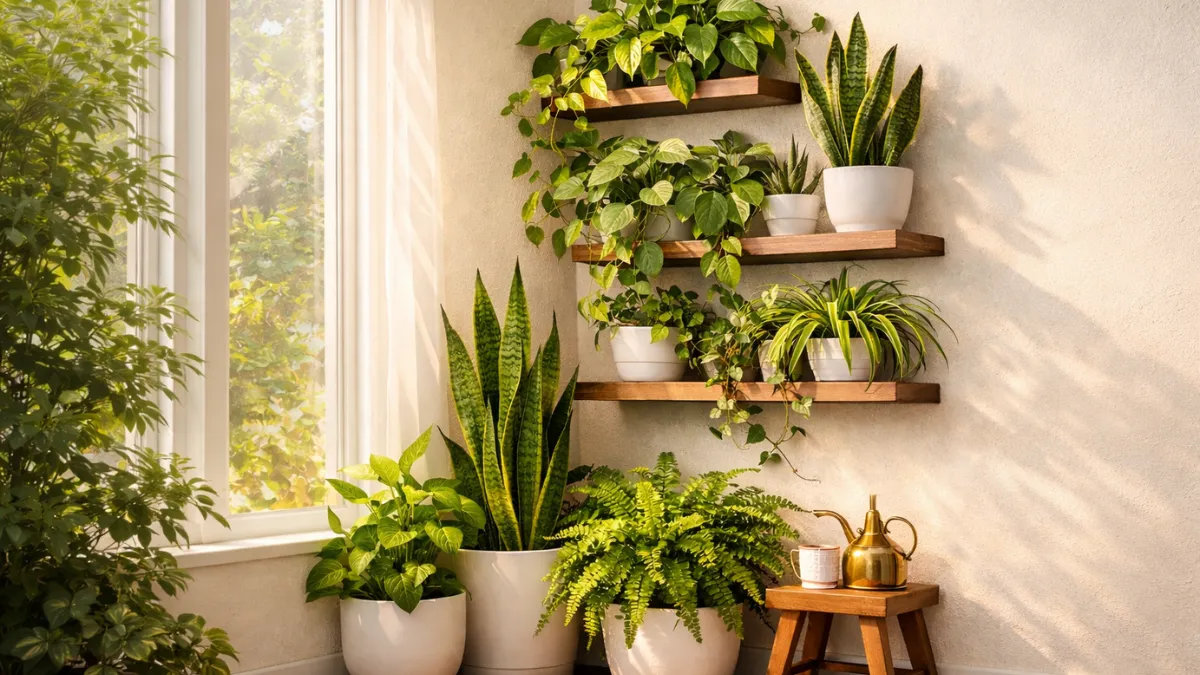
Most indoor corners receive indirect light, not direct sunlight. South or east-facing corners work best.
• Best Lighting for an Indoor Plant Wall
• Indoor Plants for Indirect Light
Airflow and Accessibility
Avoid corners directly below AC vents or behind heavy furniture. You'll need access for watering and pruning.
What didn't work for me:
I once installed a plant wall behind a sofa, which made watering difficult, had poor air circulation, and attracted fungus gnats within a few weeks.
Best Plants for a Curated Plant Wall
Choose plants with similar watering and light requirements to avoid uneven growth.
| Plant Name | Light Needs | Growth Habit | Wall Suitability |
|---|---|---|---|
| Pothos | Low–Medium | Trailing | Excellent |
| Philodendron | Medium | Climbing | Excellent |
| Snake Plant | Low | Upright | Good |
| Spider Plant | Medium | Arching | Good |
| Ferns | Medium–High | Soft spread | Moderate |
• Best Plants for Indoor Vertical Gardens
How to Structure a Plant Wall
Option 1: Floating Shelves
Ideal for renters. Use varying shelf heights to avoid symmetry overload.
Option 2: Wall-Mounted Planters
Works well for trailing plants like Pothos and Philodendron.
Option 3: Leaning Plant Ladder
Great for small corners where drilling isn't possible.
Spacing, Balance, and Visual Flow
• A sophisticated look comes from restraint.
• Leave breathing room between pots.
• Mix not only plant types but also leaf shapes.
• Always place heavier plants at the bottom.
• How to Decorate with Indoor Plants Beautifully
Watering and Maintenance Realities
Plant walls dry out unevenly. Plants at the top dry out faster than those at the bottom.
My own real-life experience:
I water my plant walls in sections, not all at once. This significantly reduced root rot and leaf yellowing.
Maintenance Tips
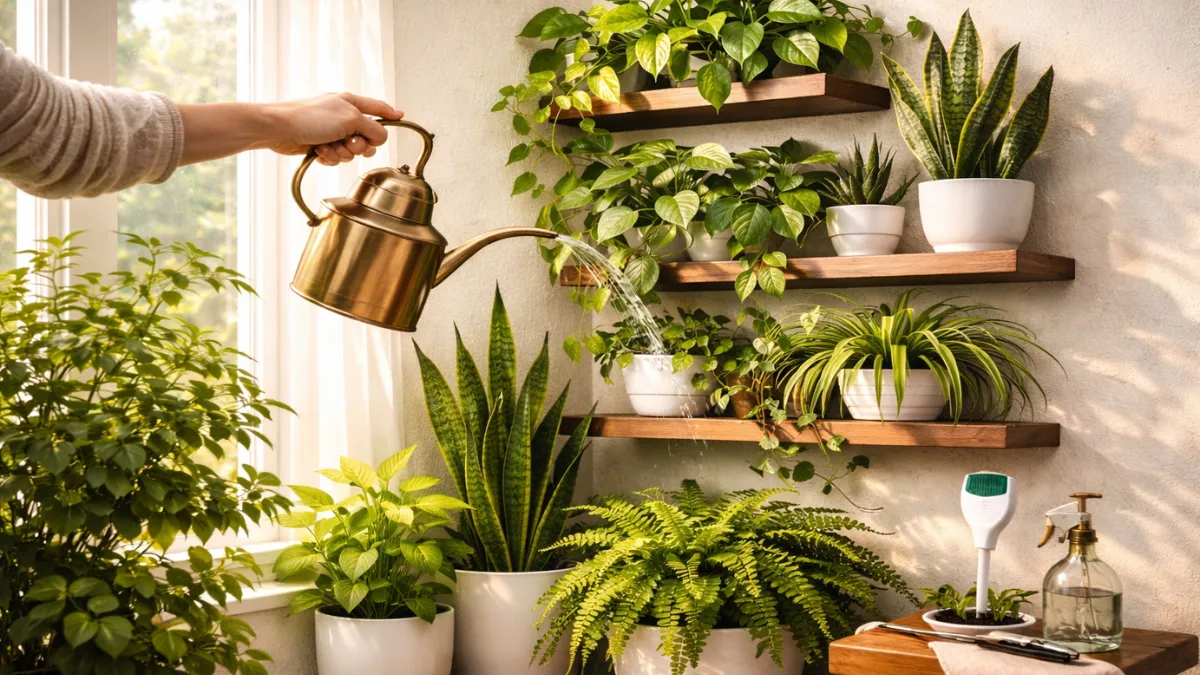
• Check each plant's moisture level individually
• Rotate pots every 3-4 weeks
• Prune vigorously to maintain shape
Limitations:
Plant walls require more attention than plants placed on the floor. If you travel frequently, keep the design minimal.
Common Mistakes to Avoid
• Overcrowding with fast-growing plants
• Mixing high-moisture plants with drought-tolerant plants
• Neglecting wall protection (use liners or trays)
• Indoor Plant Wall Mistakes
Styling Without Overdoing It
• Always prioritize the plants over the decor.
• Neutral pots work best
• Avoid mixing too many colors
• Let the foliage be the main attraction
Also Read : Spider Plant vs Snake Plant: Which Is Better Indoors? (2026 Test)
Also Read : 9 Indoor Plants That Are 100% Safe for Cats (2026 List)
Also Read : 5 Pet-Safe Indoor Plants for Cats & Dogs (Non-Toxic & Easy to Grow)
Purpose and Belief Statement
This guide is designed to help real homes create sustainable green corners, not Pinterest-perfect walls that die after two months. Every recommendation prioritizes plant health and practical maintenance.
Written for IndoorPlantify from real indoor plant care experience.