

If your houseplants keep dying despite your best efforts, you are not alone.
Most people assume that plants die because they are neglected. However, in reality and based on actual experience the truth is often quite the opposite.
Related News
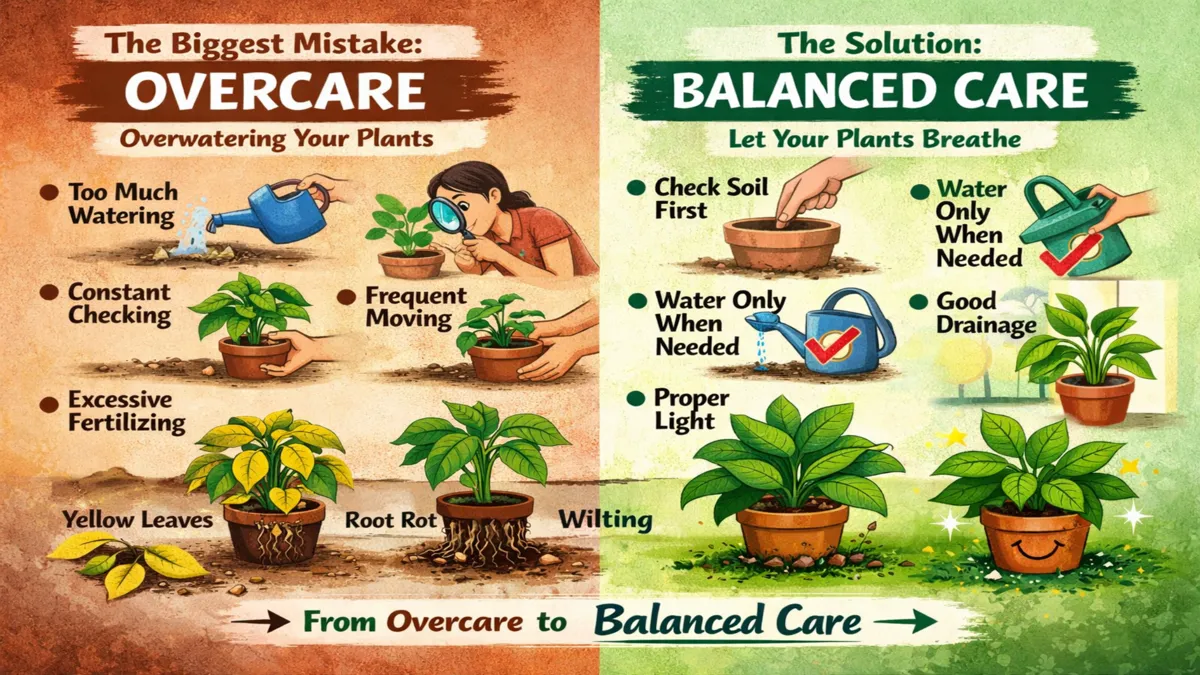
The biggest mistake in houseplant care one that no one really talks about is overcare.
Yes, doing too much watering too frequently, constantly checking on them, and interfering unnecessarily can gradually harm your plants.
I once lost a healthy plant myself, simply because I was trying to "help" it too much. It looked perfectly fine right up until the moment it suddenly took a turn for the worse.
Let's take an honest look at this.
The Answer in Brief
The Biggest Mistake : Overcare (specifically, overwatering).
• Plants need balance, not constant attention.
• Most houseplants prefer soil that is slightly dry rather than constantly wet.
• Roots need oxygen, not just water.
The Solution : Adopt a routine based on your plants' actual needs, rather than on your own emotions.
Also Read : How to Save Your Indoor Plants From Root Rot – Step-by-Step
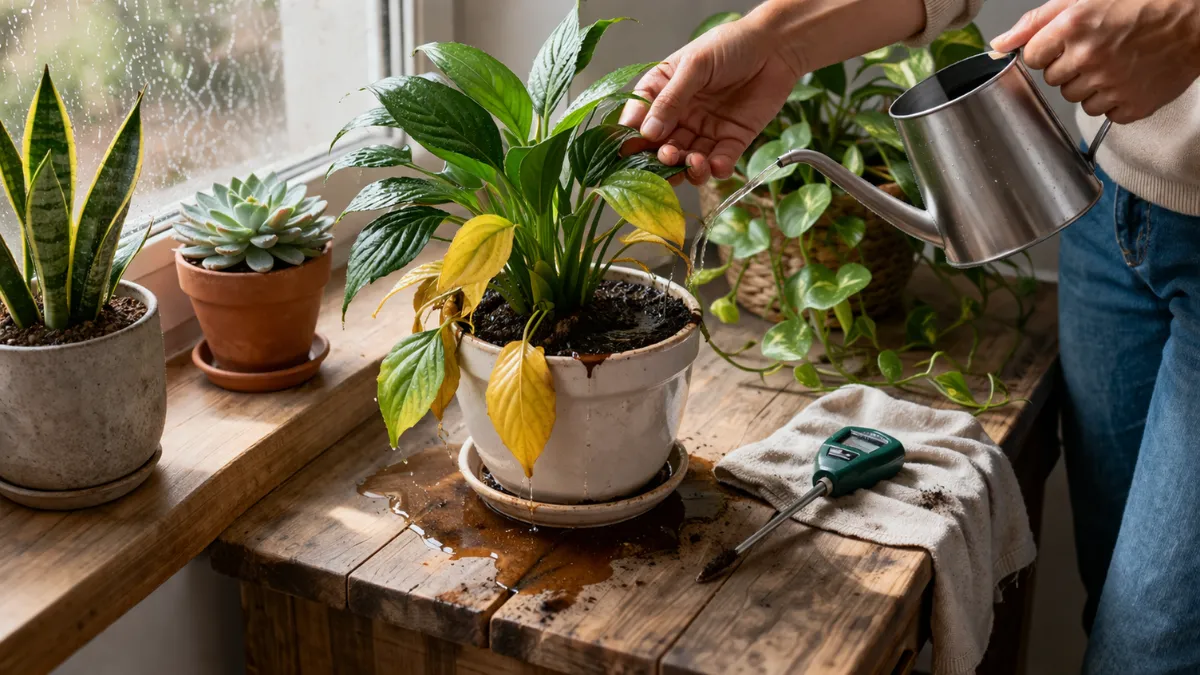
What Does Overcare Mean for Houseplants?
Overcare means treating your plant as if it requires daily attention, when in reality, most houseplants thrive best with consistency and patience.
It involves actions such as:
• Watering too frequently.
• Constantly moving plants from one spot to another.
• Fertilizing unnecessarily.
• Constantly checking the soil or leaves.
At first, it feels like you are doing something beneficial.
But plants are not pets they do not require constant interaction or attention.
Why Overwatering Is the Real Problem
The most dangerous form of overcare is overwatering. Here is what actually happens:
• The soil remains wet for an extended period.
• The roots do not receive sufficient oxygen.
• The roots begin to rot.
• The plant stops absorbing nutrients.
Eventually, these symptoms begin to appear in the plant:
• Yellowing of leaves.
• Wilting.
• The stem becoming soft or mushy.
• Stunted growth.
And here is the most confusing part:
These symptoms often look as though the plant is receiving too little water, consequently, people start watering it even more.
In this manner, plants quietly perish.
My Own Experience (A True Story)
I once had a healthy Money Plant that was growing beautifully.
Fearing that it might dry out, I began watering it every two days.
Within just two weeks:
• The leaves turned yellow.
• Growth came to a halt.
• The roots began to rot.
The plant did not die because I neglected it; rather, it died because I did not allow it to breathe properly.
Why do people make this mistake?
This mistake stems from certain misconceptions:
1. More care = Better growth.
This is not true. Plants require the right kind of care, not excessive care.
2. Dry soil is bad.
In many cases, slightly dry soil is actually beneficial for plants.
3. Daily watering is essential.
Most indoor plants require watering only once a week or even less frequently.
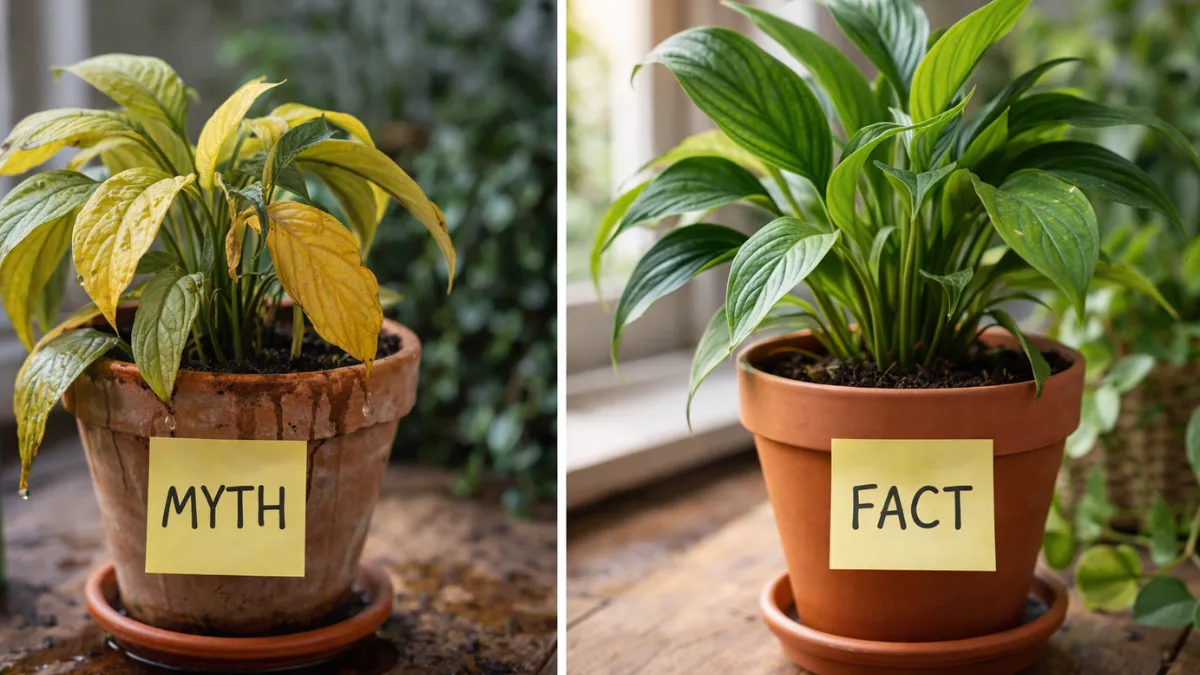
Reality Check: Myths vs. Facts
Myth:
Plants need to be watered every day.
Fact:
Most indoor plants prefer the soil to dry out between waterings.
Myth:
Yellow leaves = Lack of water.
Fact:
Yellow leaves often indicate overwatering.
Myth:
More attention leads to healthier plants.
Fact:
Excessive attention can actually cause stress to plants.
Also Read : 15 Low Maintenance Indoor Plants You Cant Kill – Beginner Guide
Also Read : Why Your Indoor Plants Are Dying Even With Watering Correctly – Experts Explain
How to Correct This Mistake (Practical Steps)
1. Perform the Finger Test
Insert your finger 1–2 inches deep into the soil:
Dry = Water
Moist = Wait
2. Use Appropriate Pots with Drainage
Always ensure:
• The pot has drainage holes at the bottom.
• Water does not stagnate.
3. Water According to the Plant Type
Different plants = Different needs
Snake Plant = Low water
Peace Lily = Moderate
Succulents = Very low
4. Stick to a Rule (Don't Rely on Instinct)
Do not water simply because:
• The soil looks dry on the surface.
• You feel like it's time.
Trust the actual condition of the soil.
5. Avoid Frequent Relocation
Plants take time to adapt to a new environment.
Excessive moving/handling = Stress.
The Important Caveat (The Hard Truth)
Not all plant problems are caused by overcare.
In some cases:
• Lack of light
• Incorrect soil mix
• Pest infestations
can also produce similar symptoms.
Therefore, always examine your plant carefully before attributing a problem to a specific cause.
Final Thoughts (In a Human Voice)
Indoor plants don’t need perfection they need understanding.
The biggest mistake isn’t that people fail to care for their plants properly.
Rather, the mistake is that they care too much but in the wrong way.
Once you learn to step back, observe closely, and trust your plant’s natural rhythm, everything becomes easy.
Sometimes, the best thing you can do for your plant is simply to leave it alone.
Written for IndoorPlantify, based on real-world experience caring for indoor plants.