

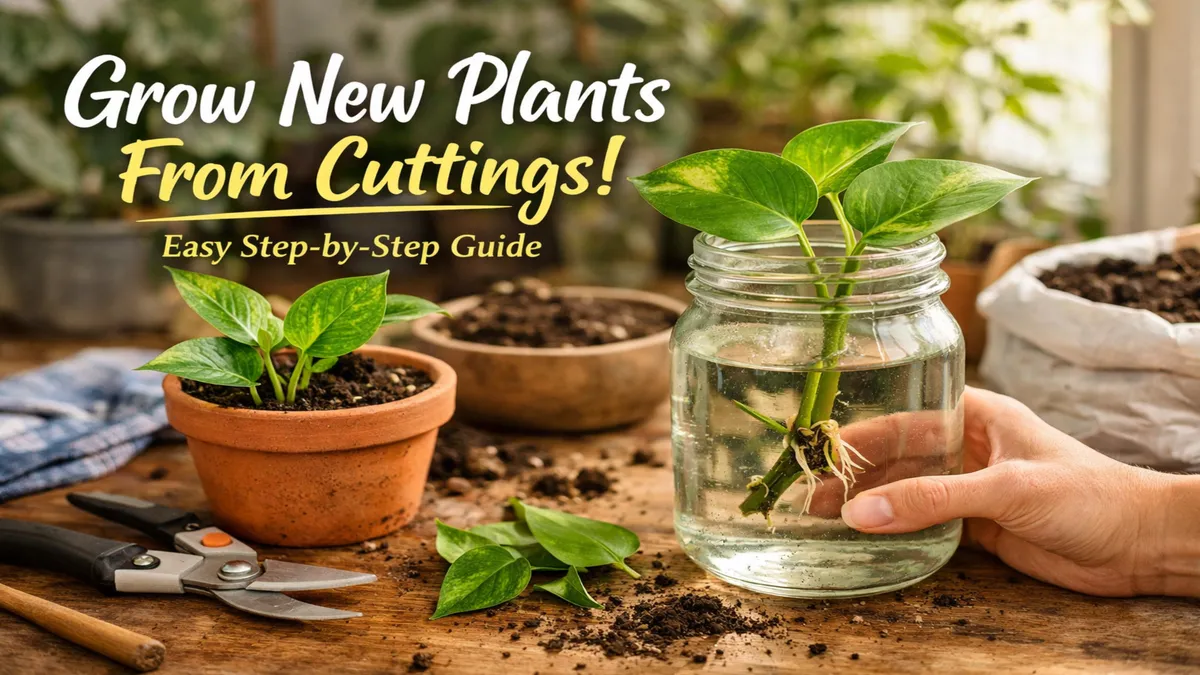
Growing new plants from the ones you already have feels special.
You don't need fancy tools.
Related News

You don't need a large garden.
All you need is a healthy plant and a little patience.
If you've ever looked at your plant and wondered, "Can I grow another plant from this?"—the answer is yes. This guide will explain everything to you step-by-step, in the simplest way possible.
What is plant propagation?
Propagation means creating a new plant from an existing plant.
Instead of buying a new plant, you use a cutting, leaf, or division from the parent plant. After some time, it grows its own roots and becomes independent.
In my own experience, propagation is the easiest way to expand your indoor plant collection without spending a lot of money.
Before You Begin: What You'll Need
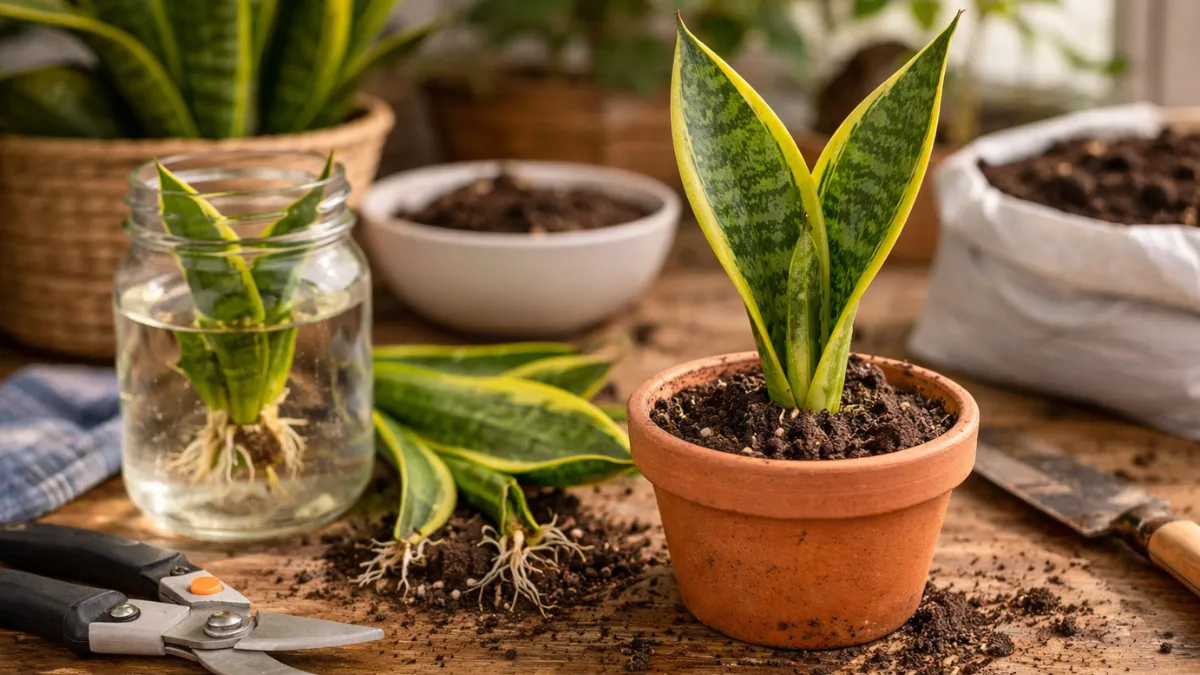
You don't need complicated equipment.
Here's the basic setup:
• Clean scissors or pruning shears
• A glass jar (for watering)
• A small pot with drainage holes
• Fresh potting mix
• A healthy parent plant
One mistake I made early on was using sharp scissors. Instead of cutting the stem cleanly, it crushed it. That cutting never took root. Always use sharp, clean tools.
Step 1: Choose a Healthy Parent Plant
Never grow a plant from a weak or sick plant.
Look for these things:
• Strong stems
• Healthy leaves
• No insects
• No yellowing
A stressed plant has a harder time growing roots. A healthy plant does much better.
If your plant looks tired, give it some care first. Then grow the plant later.
Step 2: Choose the right place to cut
Most beginners grow plants from stem cuttings.
Look for a node.
A node is the small protrusion on the stem where leaves grow. Roots grow from this spot.
Cut just below the node. The cutting should be 4–6 inches long. Remove the lower leaves so they don't remain in the water or soil.
If you cut above the node, roots won't form. This is where many beginners get confused.
Step 3: Choose your propagation method
There are two easy methods for beginners.
Propagation with water
Place the cutting in a glass of clean water.
Make sure:
• The node is under the water
• The leaves are above the water
• The glass is in bright, indirect light
• Change the water every 3–4 days.
In my home, plants like Pothos typically develop roots in 7–14 days. Some plants take longer. Patience is essential.
Propagation from Soil
Place the cutting directly into moist potting mix.
Keep the soil slightly moist, not wet.
Loosely covering the pot with a plastic bag can increase humidity, but this is optional.
I find that growing plants in water is easier for beginners because you can see the roots growing. This builds confidence.
Step 4: Wait and Watch
Now you wait.
Roots need time. Don't pull the cutting out every day to check.
Wait until the roots are about 1–2 inches long before transferring them to soil, in water.
In soil, gently pull after 2–3 weeks. If you feel a blockage, roots have formed.
This is the stage where many people panic. But doing nothing is often the best thing.
Step 5: Plant in a pot (if using the water method)
Once the roots have strengthened, plant the cutting in fresh soil.
Water it lightly after planting.
Keep it in bright, indirect light.
For the first week, the plant may appear slightly bent. This is normal. It's adjusting from water to soil.
Know one thing : Not all plants transition easily from water to soil. Some have difficulty. This is also normal.
Common plants that grow easily
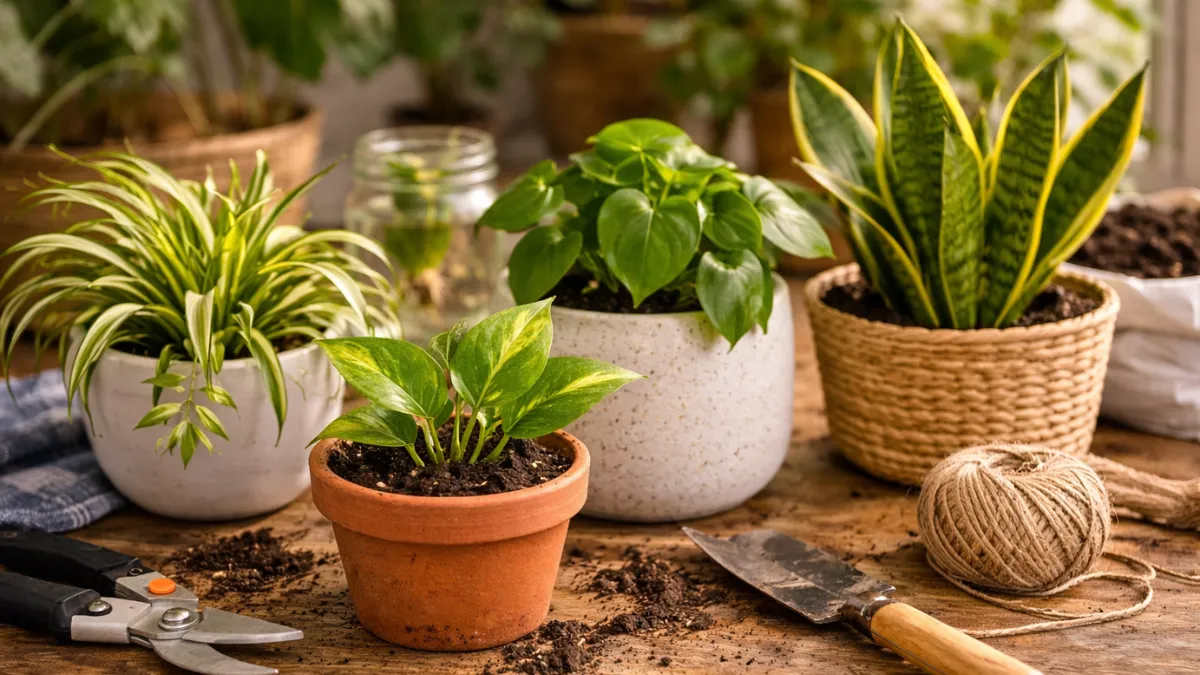
If you're just starting out, try these plants:
• Pothos
• Snake Plant
• Spider Plant
• Philodendron
These plants are easy to grow and good for beginners.
Don't start with slow-growing plants. They test your patience.
Common Mistakes to Avoid
Overwatering is the biggest problem.
Overwatering doesn't mean roots will grow faster.
Another mistake is placing the cuttings in direct sunlight. Bright, indirect light works best. Direct sunlight can dry out or burn the cuttings.
Also, don't rush to fertilize. New cuttings don't need fertilizer immediately.
How long does it take to grow a plant?
It depends on the plant.
Some take root within a week. Others take a month.
Temperature, light, and the type of plant all play a role.
In my experience, warmer rooms speed things up a bit. Colder corners slow things down.
When to Grow Plants
Spring and early summer are the best months.
Plants are growing rapidly during this time. They recover quickly.
You can also grow plants in winter, but results may be slower.
Related articles:
Indoor Plants : Complete Beginner-to-Expert Guide (2026 Edition)
Related articles:
Best Indoor Grow Lights for Houseplants (2026 Full Spectrum Guide)
Related articles:
Indoor Plant Watering Schedule Chart (Weekly & Seasonal Guide 2026)
Final Thoughts
Growing plants seems magical at first. A simple cutting can grow into a whole new plant.
But it's not magic. It's simply about understanding how plants grow.
Start with a cutting. Keep it simple. Don't overthink it.
Once you see those tiny roots forming, your confidence will grow.
Written from real experience with indoor plant care for IndoorPlantify.