

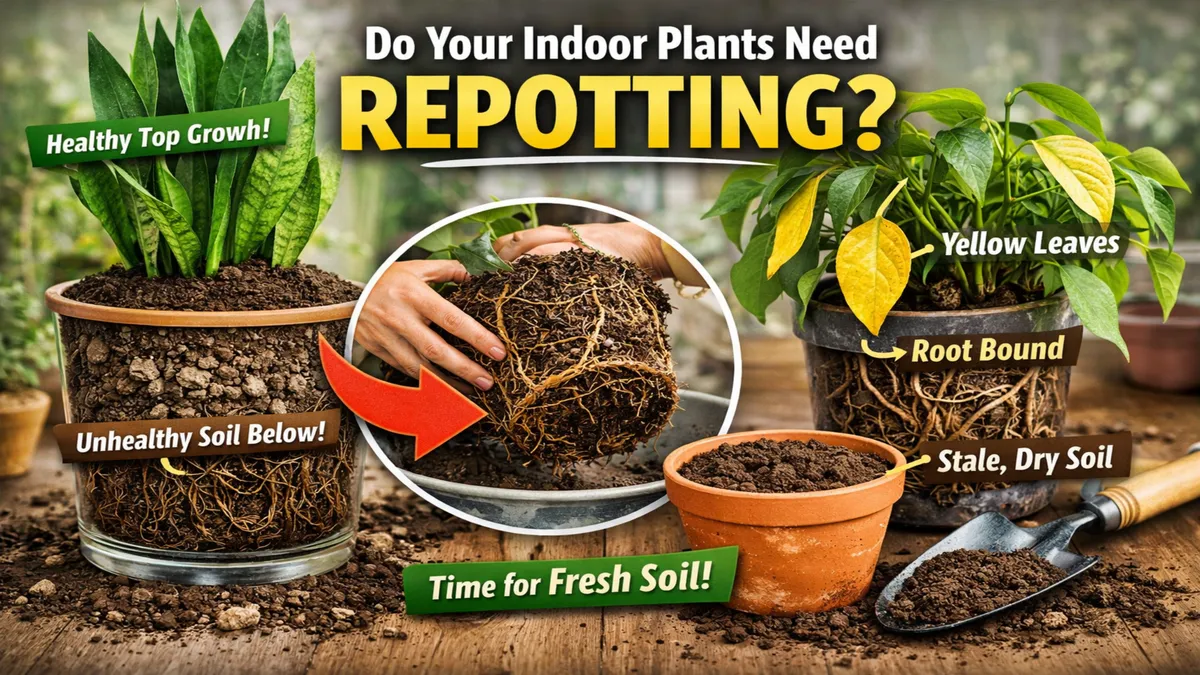
Indoor plants may look healthy from the top, but the soil beneath the surface gradually loses its vitality. Old soil doesn't retain water properly, nutrients become depleted, and roots struggle to grow. Many plant problems actually begin in the pot, not in the leaves. Knowing when and how often to repot helps your plants thrive consistently and without stress. This guide provides clear timelines, warning signs, and realistic expectations based on everyday indoor plant care experience.
Quick Comparison:
• Best for Low Light : Snake Plant
• Best for Fast Growth : Pothos
• Best for Beginners : Snake Plant
• Best for Air Purification : Spider Plant
Related News
How Often Do Indoor Plants Really Need Repotting?
Most indoor plants need repotting every 12 to 18 months. And it's not just about size or appearance. Over time, the soil compacts, nutrients leach out, and air pockets disappear. Even if watering seems normal, the roots may no longer be able to breathe properly.
Some slow-growing plants can stay in the same soil longer, while faster-growing ones need fresh soil sooner. The key is understanding the condition of the soil, not just following a calendar. It's more important to observe how your plant is responding than to adhere to a rigid schedule.
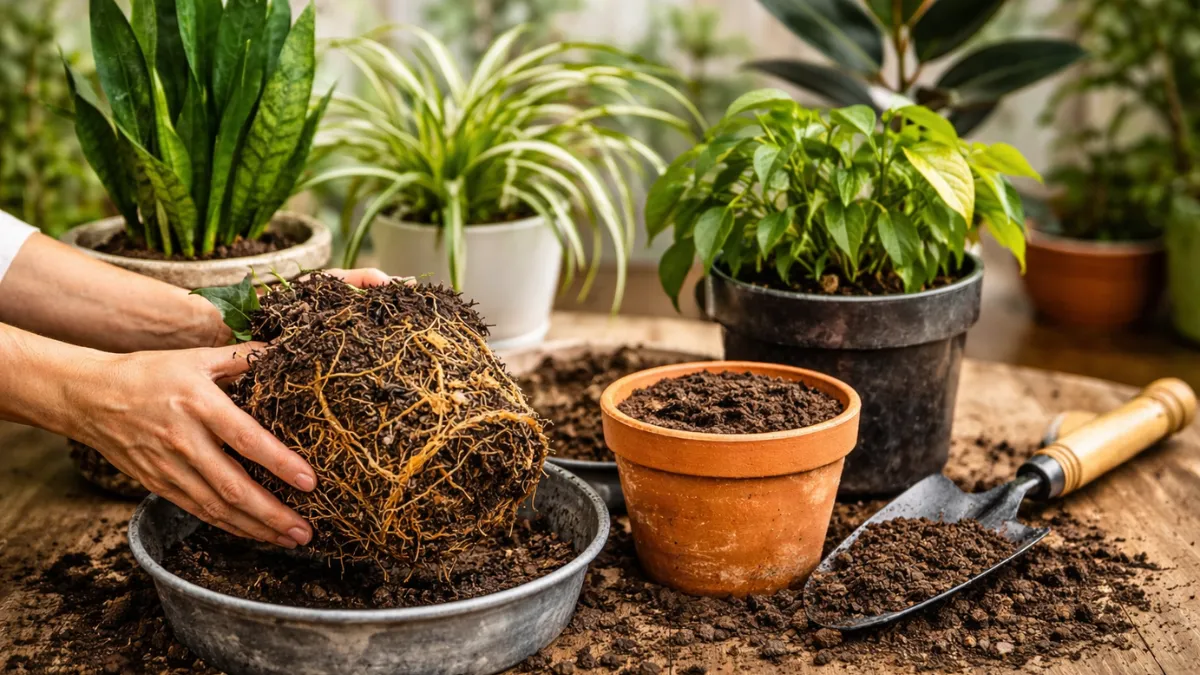
Why Old Soil Doesn't Support Healthy Growth
Old soil breaks down into smaller particles that restrict airflow. Roots need oxygen just as much as water. When air can't circulate through the soil, the roots weaken, and growth slows, even if the plant still looks green.
Nutrients also become depleted over time. Regular watering washes minerals out of the pot. Compost helps, but it can't fix compacted or lifeless soil. Fresh soil creates a balance between air, water, and nutrients.
Signs that your indoor plant needs a soil change
Plants usually give subtle signs before serious damage occurs. Slow growth, yellowing leaves, and water pooling on the soil surface are common indicators. You might also notice roots circling the pot or growing out of the drainage holes.
Another sign is that the soil is pulling away from the sides of the pot. This means it's no longer retaining moisture evenly. If water drains straight through without being absorbed, the soil is likely too old to be salvaged.
How plant type affects the frequency of soil changes
Not all plants use soil in the same way. Succulents and snake plants grow slowly and prefer drier conditions. Their soil can last up to two years if they have good drainage. Faster-growing plants like pothos or peace lilies use up nutrients more quickly.
Flowering plants generally need more frequent soil changes because flowering requires energy. Herbs grown indoors also deplete soil quickly. Changing the soil according to the plant's growth rate keeps it stable rather than stressed.
Repotting vs changing the soil in the same pot
Changing the soil doesn't always mean a bigger pot. If the roots still fit comfortably, you can replace the old soil and use the same container. This refreshes the nutrients without forcing excessive growth.
Repotting into a larger pot is only necessary when the roots are severely pot-bound. Too much space can lead to excess moisture retention and root damage. The health of the soil is more important than the size of the pot.
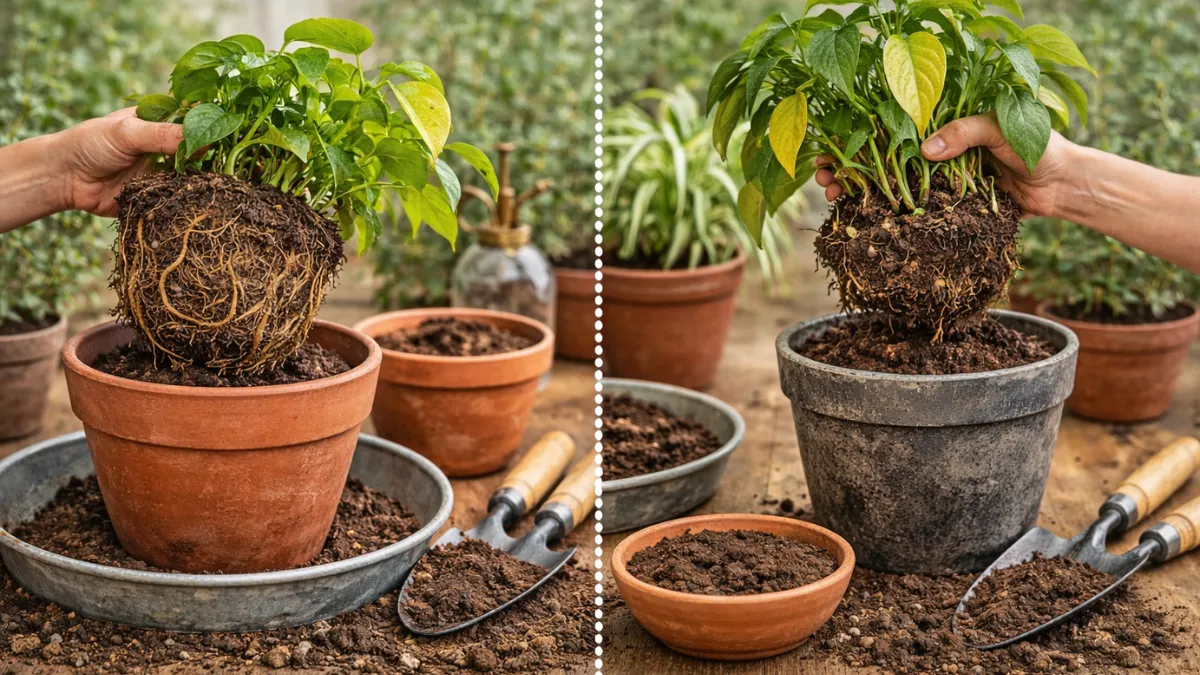
Repotting Timeline Based on Plant Behavior
The best time depends on how the plant is behaving indoors. You can use this table to determine the timing more precisely instead of guessing.
| Plant Behavior | Soil Change Timing | Reason |
|---|---|---|
| Slow growth, thick leaves | Every 18–24 months | Soil breaks down slowly |
| Fast leafy growth | Every 12 months | Nutrients used quickly |
| Frequent wilting | As soon as noticed | Soil no longer holds water |
| Roots circling pot | Immediate | Roots need space and fresh soil |
What Won't Fix Old Indoor Plant Soil
Simply adding fertilizer won't revive poor soil. Fertilizer provides nutrients to the plant, not to the soil structure. Compacted soil remains compacted, no matter how much fertilizer you add.
Adding new soil on top of old soil also doesn't work. The roots still remain in the poor layers below. For true improvement, most of the old soil needs to be carefully removed and replaced.
How to Repot Your Plant Without Shocking It
Gentle handling is crucial. Carefully remove the old soil, avoiding pulling or tearing the roots. Keep the root ball as intact as possible. The fresh soil should be gently pressed down, never packed tightly.
After repotting, water lightly and return the plant to its usual location with its normal light exposure. Sudden changes in location or overwatering can stress the plant. Plants adjust better when changes are gradual and minimal.
Related Articles:
Best Soil Mix for Indoor Plants (DIY Recipe + Expert Tips)}
Final Tips for Long-Term Soil Health
Repotting is a normal part of indoor plant care, not a last resort. Most plants thrive with fresh soil every one to two years, depending on their growth rate. Observe how the water behaves and how the roots are growing. Healthy soil is well-aerated, drains well, and supports consistent growth without force.