

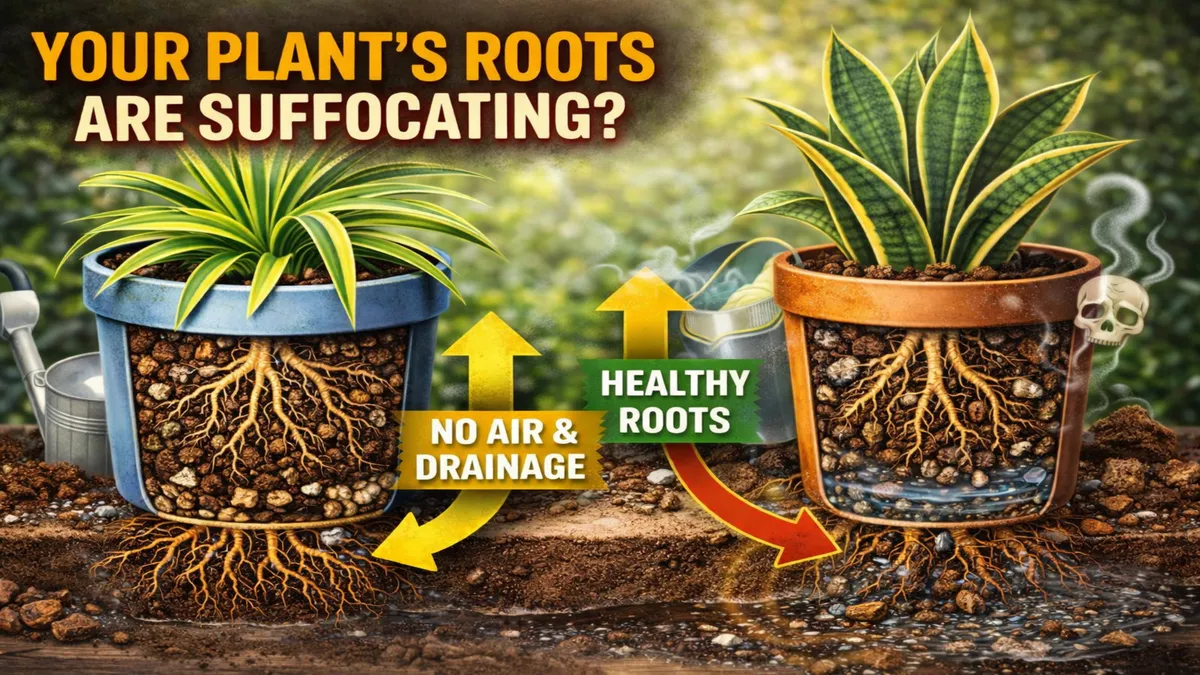
Indoor plants may look perfectly fine from the outside, while slowly dying from the inside. Root suffocation occurs when roots don't get enough air in the soil. This is usually caused by compacted soil, poor drainage, or consistent overwatering. Because when oxygen stops reaching the roots, the plants weaken gradually before any obvious damage is visible. Knowing the early signs can help you fix the problem before the plant deteriorates.
Quick Comparison:
• Best for low light : Snake Plant
• Best for fast growth : Spider Plant
• Best for beginners : Snake Plant
• Best for air purification : Areca Palm
Related News

What Root Suffocation Really Means for Indoor Plants
Roots don't just anchor the plant and keep it healthy; they also breathe. Healthy soil has tiny air pockets that allow oxygen to reach the roots. When those spaces are filled with water or compacted soil, the roots slowly suffocate instead of growing.
This stress doesn't kill plants quickly, but it weakens them gradually. Plant growth slows down. Leaves lose their vigor. Roots begin to rot instead of absorbing nutrients. Most plant problems that are blamed on light or fertilizer actually start in the soil.

Above-Ground Signs That Indicate Root Problems
Yellowing Leaves Without Dry Soil
Yellowing leaves are often blamed on overwatering, when the real problem is a lack of oxygen. When roots are suffocating, they can't absorb nutrients even when water is present.
Wilting After Watering
If a plant wilts after watering, the roots may already be damaged. Suffocated roots cannot draw water into the plant's system.
Slow or Stunted Growth
A plant that remains the same size for months isn't resting; it's struggling underground.
Hidden Root-Level Signs You Can't Ignore
Sour or Rotten Smell from the Soil
Healthy soil always smells clean. A sour smell indicates poor oxygen flow and rotting roots.
Soil That Stays Wet for Days
If the soil remains wet long after watering, air cannot penetrate the root zone.
Soft or Brown Roots
Healthy roots are firm and light-colored. Soft, brown roots are already suffocating and rotting.
Common Causes of Root Suffocation in Indoor Plants
Root suffocation is usually caused not by a single mistake, but by gradual damage. And these are among the main causes:
• Lack of drainage holes in pots
• Heavy, compacted soil mix
• Consistent overwatering
• Old soil with poor structure
• Roots becoming pot-bound in small containers
• Decorative pots without proper ventilation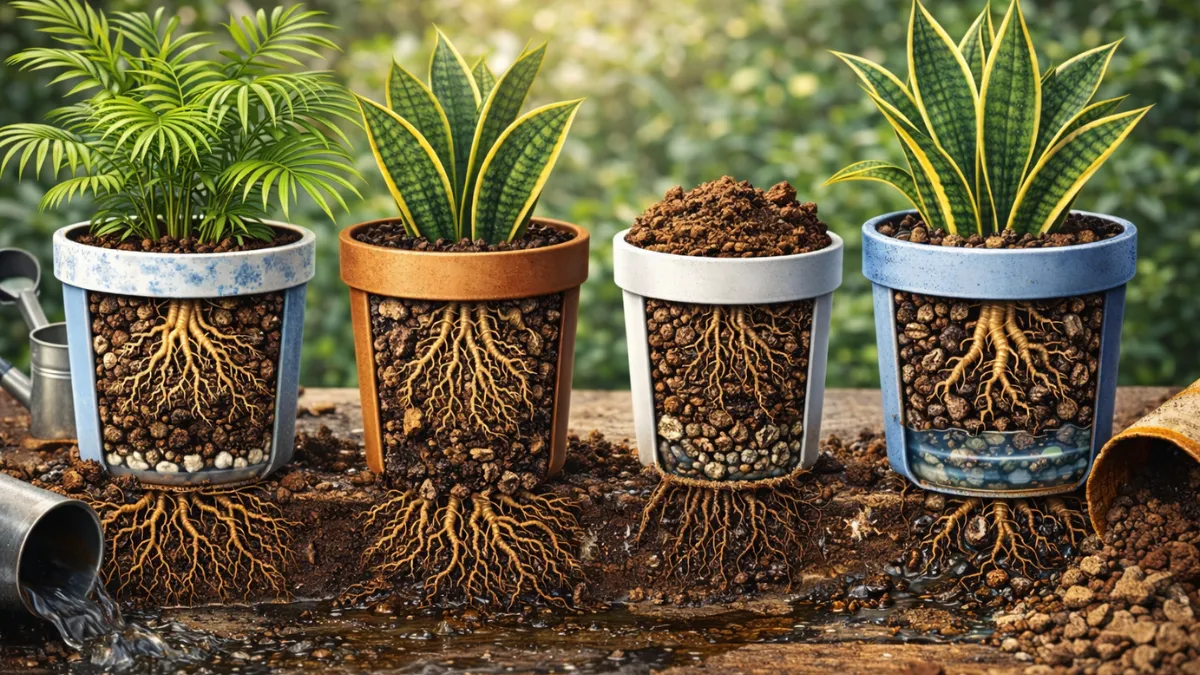
Root Suffocation vs. Root Rot (Clear Difference Table)
| Problem Type | What’s Happening | Root Condition | Plant Behavior |
|---|---|---|---|
| Root suffocation | Lack of oxygen | Weak, pale roots | Slow decline |
| Root rot | Fungal damage | Brown, mushy roots | Fast decline |
| Poor drainage | Water trapped | Wet roots | Wilting |
| Compacted soil | No air pockets | Tight roots | Stunted growth |
Why Fertilizing Won't Fix This Problem
• Because fertilizer doesn't provide oxygen.
• More nutrients won't fix damaged roots.
• More water will only make it worse.
• More sunlight won't cure root suffocation. Only soil texture, airflow, and drainage address the root cause of root suffocation problems.
How to Safely Treat Suffocated Roots
Step 1: Improve Drainage
Always use pots with drainage holes. Water should never collect in decorative covers.
Step 2: Change the Soil
Use loose, well-aerated indoor potting mix. Avoid heavy garden soil.
Step 3: Repot if Necessary
Crowded roots trap moisture and air. Repot into a slightly larger pot.
Step 4: Adjust Watering
Water only when the top layer of soil feels dry, not on a fixed schedule.
What Won't Work in the Long Run
• Letting the soil dry out completely after damage
• Adding fertilizer
• Spraying the leaves
• Moving the plant solely for light
• Putting pebbles at the bottom of the pot instead of using drainage holes
• These treat the symptoms, not the cause.
Recovery Timeline (Realistic Expectations)
• Weeks 1-2: Soil drains better, odor decreases
• Weeks 3-4: Yellowing of leaves stops
• Months 1-2: New growth slowly begins
• Months 3+: Plant vigor improves
Roots heal slowly. Visible recovery takes time.
When Root Damage is Extensive
If most of the roots are brown and mushy, recovery is limited. In this case:
• Trim away damaged roots
• Completely replace the soil
• Reduce watering
• Accept slow regrowth
• Sometimes it's safer to save cuttings than the entire plant.
Related article:
Roots Are Healthy But Plant Not Growing? Hidden Reasons Explained
Related article:
Indoor Plants : Complete Beginner-to-Expert Guide (2026 Edition)
Final Tips
Root suffocation happens quietly, gradually, and is easy to overlook. Most indoor plant problems don't start in the leaves, but in the soil. Pay more attention to aeration, drainage, and soil structure than to your watering schedule. Healthy roots mean a healthy plant. When roots can breathe, the plant naturally becomes stronger, greener, and more robust over time.