

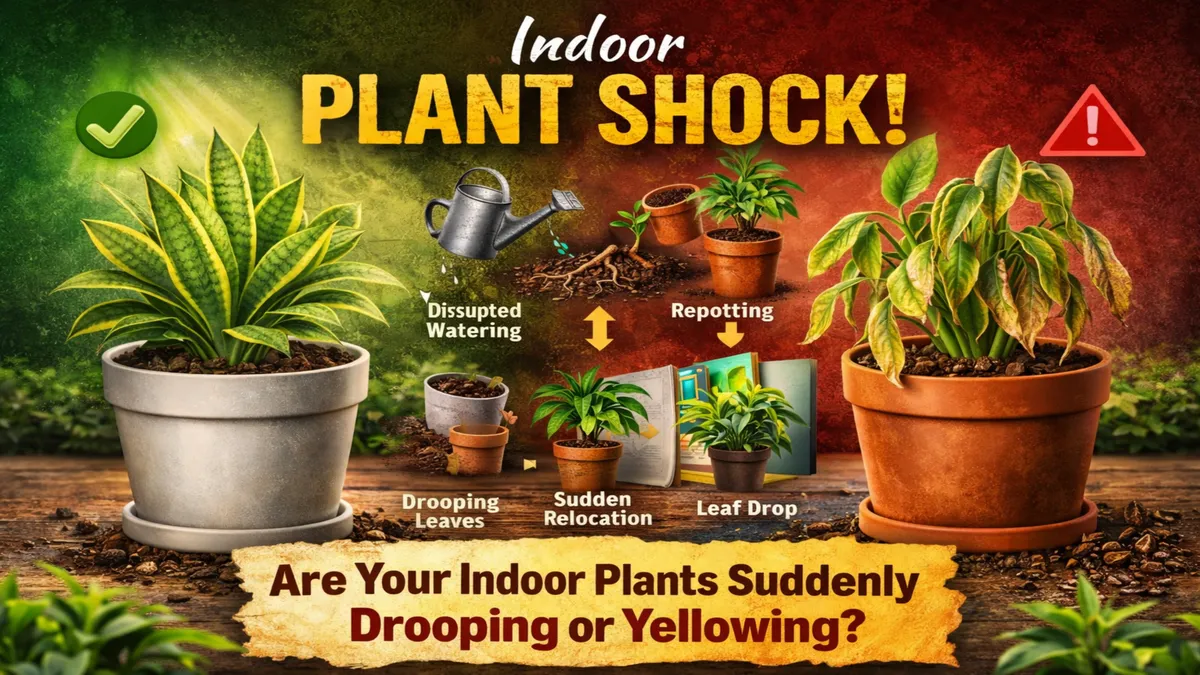
Indoor plants can look perfectly healthy one day and then suddenly begin to wilt, yellow, or drop leaves the next. This sudden decline is often due to indoor plant shock. This typically occurs after changes such as repotting, relocation, or watering mistakes. The good news is that plant shock is common and can be remedied if you recognize the symptoms early and react calmly rather than overcorrecting.
Quick Comparison:
• Best for low light : Snake Plant
• Best for fast growth : Spider Plant
• Best for beginners : Snake Plant
• Best for air purification : Spider Plant
Related News


What is Indoor Plant Shock?
Indoor plant shock is a stress response. It often occurs when a plant experiences a sudden change that it cannot quickly adapt to. Because the roots, leaves, and internal systems struggle to balance water and nutrients, visible decline results.
Plant shock is not a disease or pest problem. It is a temporary condition. However, repeated stress or incorrect remedies can worsen the damage rather than improve it.
Common Symptoms of Indoor Plant Shock
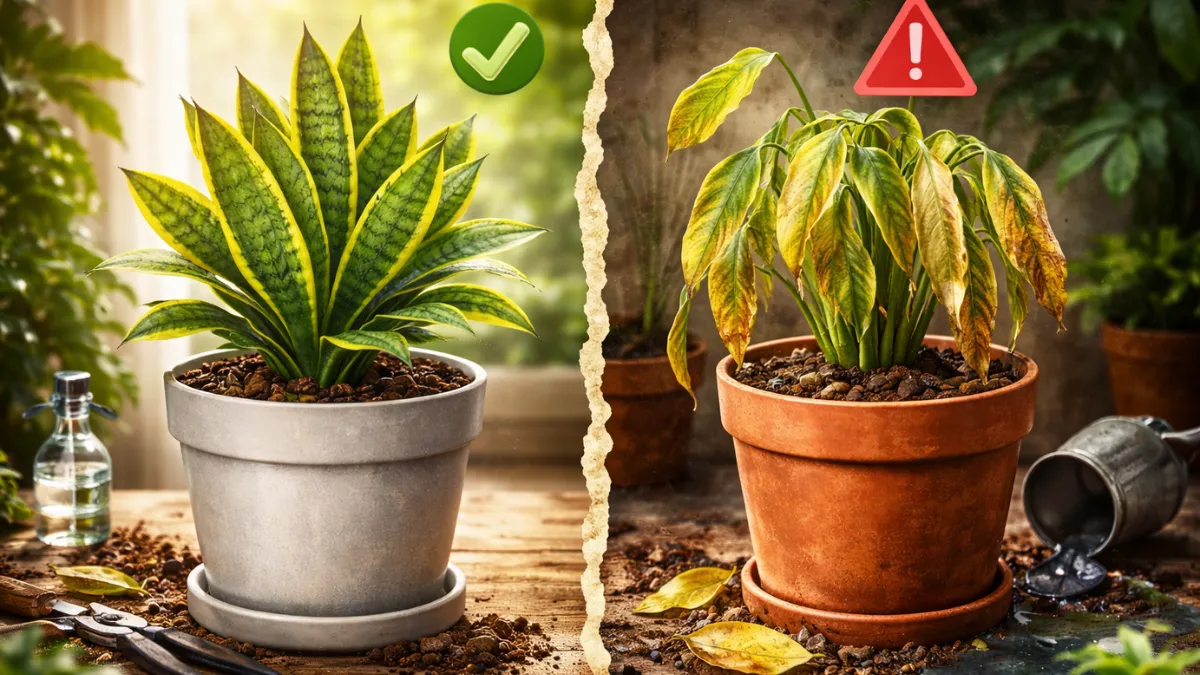
The most noticeable sign is sudden wilting, even if the potting soil is moist. Leaves may appear limp, droopy, or dull. This often confuses plant owners into overwatering, which can further stress the roots.
Other symptoms include yellowing leaves, leaf drop, stunted growth, and browning edges. Some plants may droop or stop standing upright. These signs usually appear within a few days of the change.
Main Causes of Indoor Plant Shock
Repotting or Root Disturbance
Repotting is the most common cause. Even with gentle handling, fine roots can be damaged. When roots are damaged, water absorption slows down, causing leaves to droop even in moist soil.
Sudden Light Changes
Moving a plant from low light to bright light, or vice versa, can cause significant shock. Leaves adapt to specific light levels. Sudden exposure forces the plant to protect itself by slowing growth.
Overwatering
Overwatering suffocates the roots, while underwatering causes them to dry out. Both conditions disrupt the flow of nutrients. Shock often occurs when watering habits change too quickly.
Temperature Stress
Drafts, heaters, or air conditioning vents can stress indoor plants. Roots are especially sensitive to cold floors and sudden temperature fluctuations.
How Long Does Indoor Plant Shock Last?
Most mild plant shock lasts one to three weeks. During this time, growth slows while the plant repairs damaged roots. The leaves may not recover, but new growth is a good sign.
Severe shock can last a month or more. Recovery depends on the type of plant, the extent of root damage, and how stable the environment is after the shock.
How to Safely Treat Indoor Plant Shock
The most important step is to stop making changes. Stability helps plants recover. Place the plant in a calm location with indirect light and a stable temperature.
Water only when the topsoil feels dry. Avoid fertilizing during recovery. Fertilizing stressed roots can burn them and delay healing.
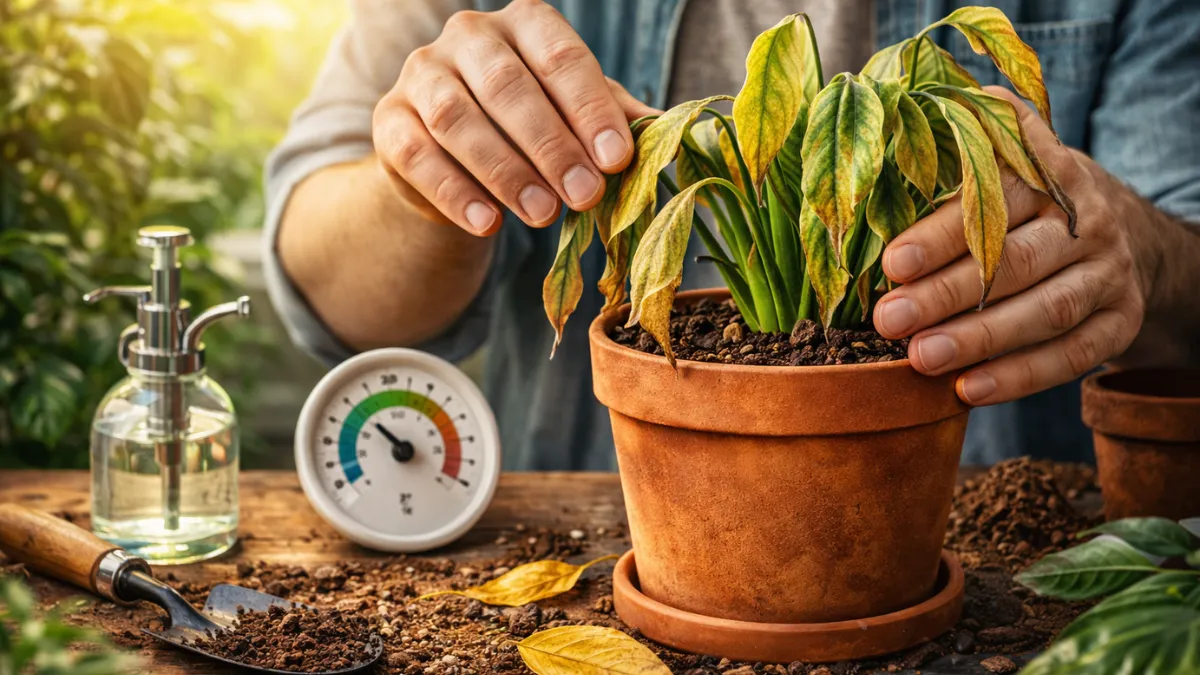
What to Do and What Not to Do Guide for Plant Shock Recovery
| Do | Don’t |
|---|---|
| Keep light consistent | Move plant daily |
| Water gently | Flood the soil |
| Be patient | Add fertilizer |
| Watch new growth | Trim aggressively |
What Won't Fix Plant Shock
Overwatering won't revive shocked roots. Neither will frequent repotting. Cutting off all the damaged leaves at once will only add stress instead of helping.
Plant tonics and quick fixes rarely work during shock. Time and consistency are more effective than products.
When to Prune During Plant Shock
Only remove completely dry or mushy leaves. Healthy leaves, even if yellowing, still help produce energy. Over-pruning forces the plant to divert energy elsewhere when it should be focusing on healing its roots.
Related Articles:
Artificial vs Real Indoor Plants : Shocking Truth Nobody Tells (2026)
Related Articles:
NASA Study Shocked Everyone : Do Indoor Plants Really Clean Air Better Than Purifiers?
Related Articles:
Indoor Plants : Complete Beginner-to-Expert Guide (2026 Edition)
How to Prevent Indoor Plant Shock in the Future
Always make changes gradually. When repotting, disturb the roots as little as possible. After moving a plant from one location to another, allow it at least two weeks to adjust before making any other changes.
Match the pot size to the root size. Suddenly moving to larger pots increases water stress. Consistent care reduces the risk of shock, not perfect care.
Final Tips
Indoor plant shock may seem alarming, but it's usually temporary. Most plants recover well with time, consistent light, gentle watering, and patience. Focus on creating a calm environment rather than trying to fix everything at once. Healthy new growth is the best sign that your plant is adjusting and gradually returning to balance.