
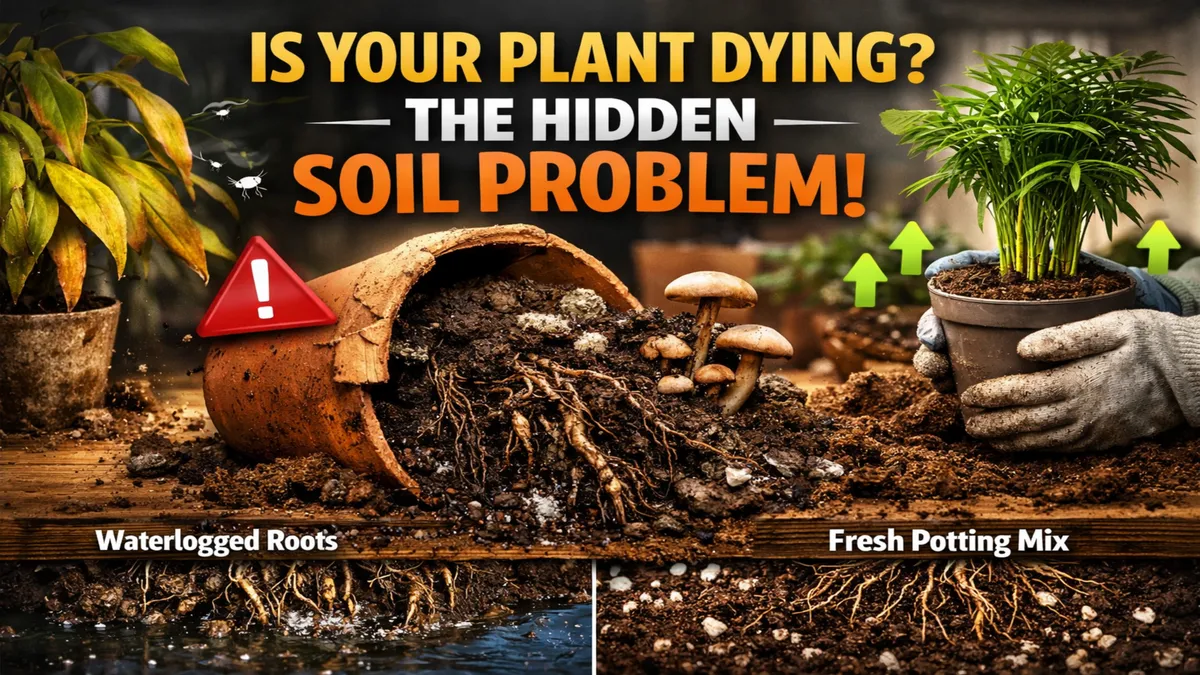
Indoor plants often look healthy at first, then gradually decline for no apparent reason. Their leaves yellow, growth slows, or roots rot, even when watering seems correct. In many homes, the real problem isn't light or water, but the soil. Using the wrong type of soil, reusing old potting mix, or neglecting drainage can silently damage roots. These soil mistakes compound over time, and by the time symptoms appear, the plant is already stressed and struggling to recover.
Quick Comparison:
• Best for low light : Snake Plant
• Best for fast growth : Pothos
• Best for beginners : Spider Plant
• Best for air purification : Areca Palm
Related News
Using the Wrong Soil for Indoor Pots
Many indoor plants fail because garden soil is used in pots. Garden soil compacts indoors, retains too much water, and restricts airflow to the roots. Roots need oxygen to survive, and heavy soil slowly suffocates them, even if watering seems normal.
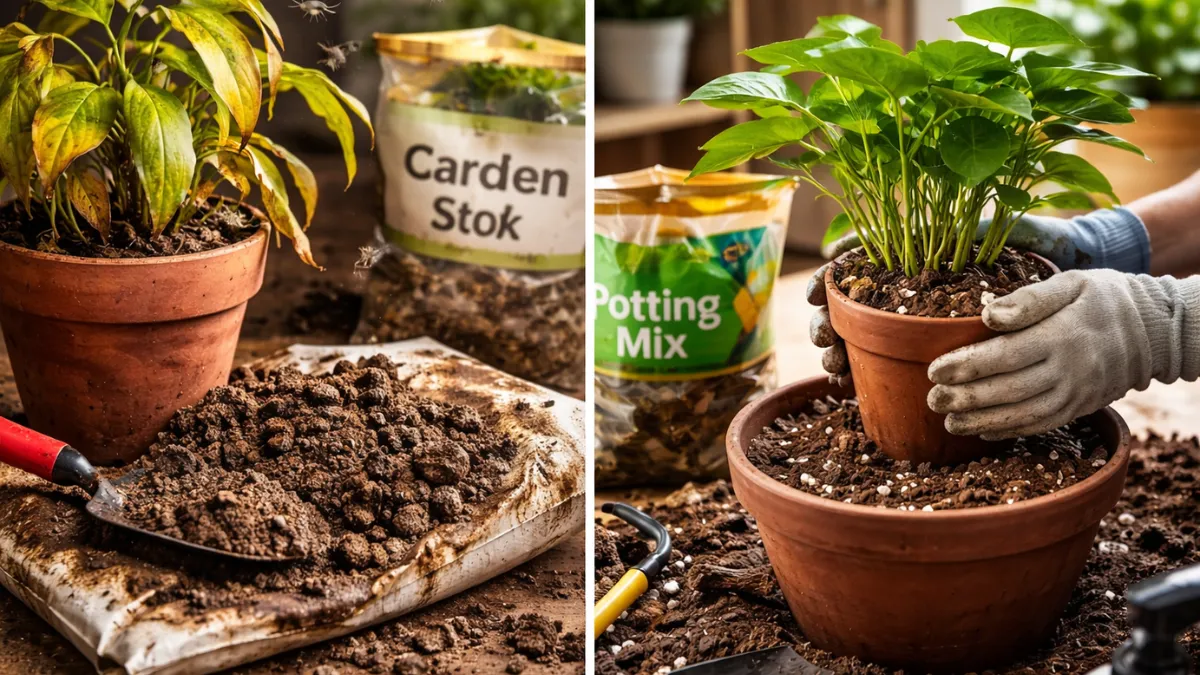
Indoor potting mixes are designed to remain loose and drain water evenly. When the wrong soil is used, water sits around the roots for days. This creates the perfect environment for rot and fungal problems. If the soil is the problem, changing light or watering won't fix it.
Overwatering Due to Poor Drainage
Drainage problems often mimic overwatering, but the real culprit is soil that doesn't drain properly. Pots without drainage holes or dense soil mixes trap water at the bottom, keeping the roots constantly wet, even with infrequent watering. Roots that remain wet for too long stop absorbing nutrients.
This causes the leaves to turn yellow, then brown, and growth slows down. If water is trapped at the bottom, letting the topsoil dry out won't help. Proper drainage is paramount.
Signs that your soil is retaining too much water
If the soil smells sour, stays wet for days, or feels soggy rather than just moist, the drainage is poor. Fungus gnats are another common indicator. These problems mean the roots are stressed, not thirsty.
Reusing old or depleted soil
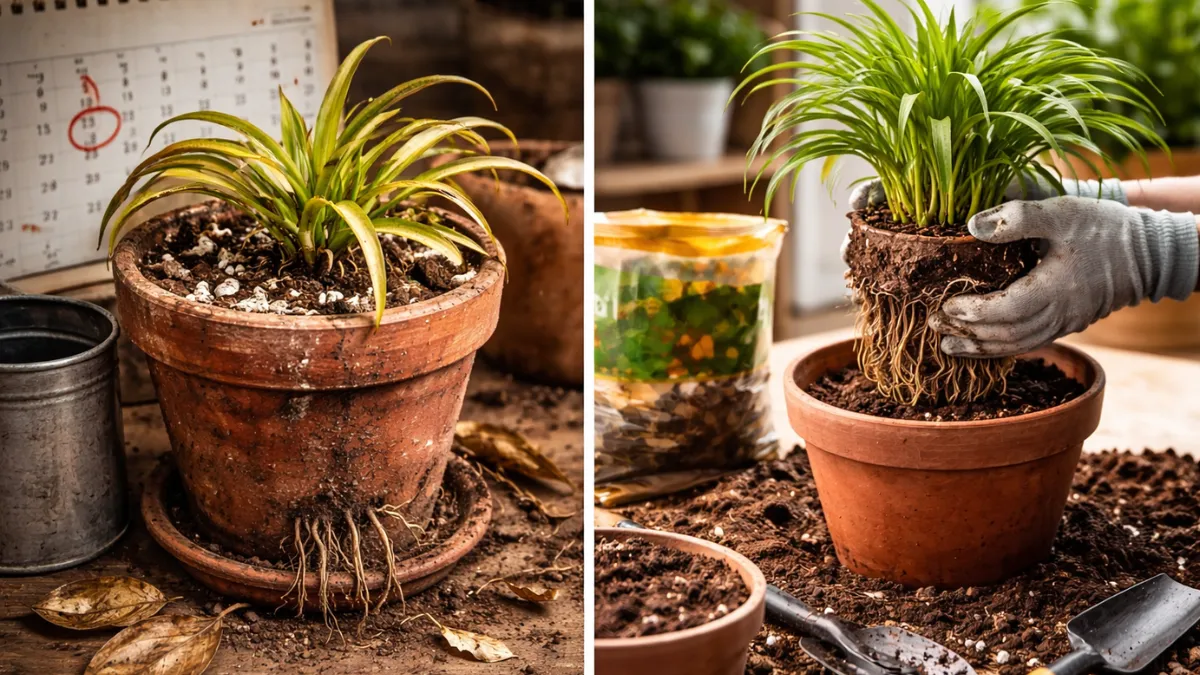
Old soil may look fine but often lacks proper structure and nutrients. Over time, the particles break down and compact, further reducing airflow. Nutrients leach away with each watering, leaving the roots in lifeless material.
Plants grown in reused soil often have stunted growth, even with fertilization. Fertilizer cannot compensate for poor soil structure. Refreshing the soil gives the roots room to breathe and grow again.
Neglecting the soil refreshing cycle
Indoor soil doesn't last forever. Most indoor plants need their soil replaced every 12-18 months. Waiting too long leads to compacted soil, salt buildup, and uneven moisture levels.
If a plant has stopped growing for months without any other apparent problems, old soil is often the culprit. Repotting doesn't always mean a bigger pot; sometimes it simply means fresh soil.
Fertilizer burn from poor soil balance
Soil mistakes aren't just about watering. Using too much fertilizer in poorly draining soil causes salt buildup. The salt burns the roots, leading to brown leaf tips and sudden leaf drop.
Flushing the soil rarely works if drainage is poor. The solution is to improve the soil mix first, then reduce fertilization. Strong fertilizers will never fix damaged roots.
Using the same soil mix for all plants
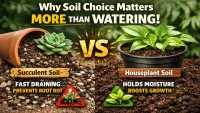
Not all indoor plants require the same soil. Succulents, tropical plants, and ferns have different root needs. Using a single universal mix often leads to a slow decline rather than rapid failure.
For example, cactus soil dries out quickly, while tropical plants prefer a mix that retains some moisture. When the soil doesn't match the plant, the roots constantly struggle to adapt.
Common Soil Mistakes vs. the Right Solutions
| Soil Mistake | Why It Harms Plants | What Actually Works |
|---|---|---|
| Garden soil in pots | Compacts and suffocates roots | Use indoor potting mix |
| No drainage holes | Traps water at roots | Always use draining pots |
| Old reused soil | Lacks airflow and nutrients | Refresh soil yearly |
| Same soil for all plants | Mismatched moisture needs | Match soil to plant type |
Assuming the topsoil tells the whole story
Many plant owners only check the top inch of soil. But the soil below can remain wet while the surface appears dry. This leads to overwatering and root rot.
A better gauge of moisture is obtained by inserting a finger deeper into the soil or lifting the pot to feel its weight. Soil problems are often hidden beneath the surface until damage is done.
Related Articles:
Best Soil Mix for Indoor Plants (DIY Recipe + Expert Tips)}
Compacting the soil too much
Packing the soil tightly during repotting eliminates the air spaces that roots desperately need. Soil should be gently settled, not packed. Compacted soil has poor drainage and hinders root growth.
If water pools on the surface after repotting, the soil is likely too tight. Loose soil allows for healthy root development over time.
Expecting soil problems to be fixed instantly
Soil problems take time to resolve. After amending the soil, it can take weeks for plants to show improvement. The roots need to regrow before the foliage recovers.
Quick fixes like excessive fertilizing or pruning won't speed up the process. Consistent conditions and patience are more important than constant adjustments.
Final thoughts on healthy indoor soil
Healthy soil quietly supports everything about an indoor plant. When the soil is well-draining, aerated, and matched to the plant's needs, most care problems resolve themselves. If a plant is struggling despite good light and watering, the soil is usually the hidden culprit. Addressing the soil first provides long-term stability and gives plants the best chance to recover naturally.