

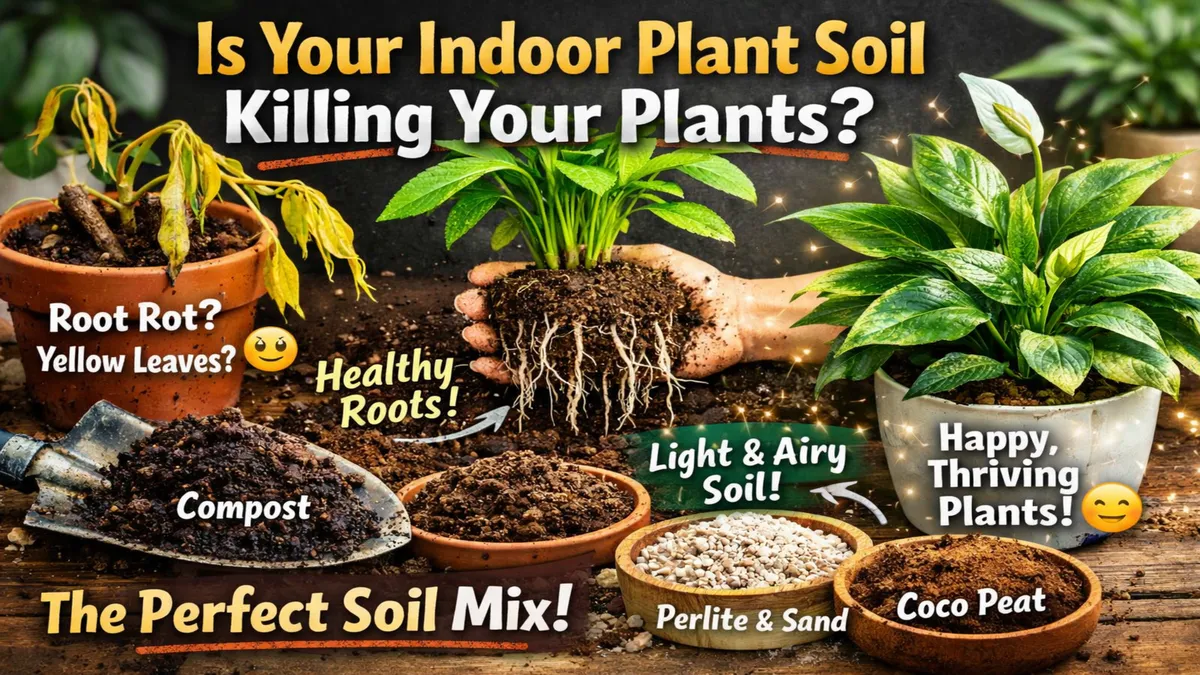
Indoor plants don't suffer from a lack of love or care. Instead, most problems start in the soil at the bottom of the pot, the part we never see. I learned this the hard way, after losing many plants in my home. The right soil keeps plants strong, calm, and happy. It allows the roots to breathe, drink, and grow without stress. Understanding indoor plant soil is like understanding your plant's mood.
Quick Answer Box
Quick Comparison: • Best for low light: Light, airy soil with coco coir • Best for fast growth: Soil mixed with compost and perlite • Best for beginners: Ready-made indoor potting mix • Best for air circulation: Coarse soil with sand or bark
Related News
Why Indoor Plants Need Special Soil
Indoor plants live very different lives than outdoor plants. Because they live in pots, inside rooms with limited air and sunlight, garden soil becomes heavy in pots and suffocates the roots. Indoor soil, on the other hand, needs to be loose, drain well, and still retain some moisture.
Good indoor soil quietly supports the roots. It doesn't stay too wet for too long, nor does it dry out too quickly. When the soil balance is right, plants grow slowly but steadily, without yellowing leaves or root rot.

What Healthy Indoor Plant Soil Looks and Feels Like
When you touch good indoor soil, it feels soft and crumbly, not sticky. Water drains easily, but the soil still feels slightly moist. There's no foul odor. The roots can move and spread freely without obstruction.
If the soil feels hard and compacted like clay or stays wet for days, the roots are suffocating. If it feels dusty, the water drains too quickly. Healthy soil always stays somewhere in between.
Key Ingredients Experts Recommend for Indoor Soil
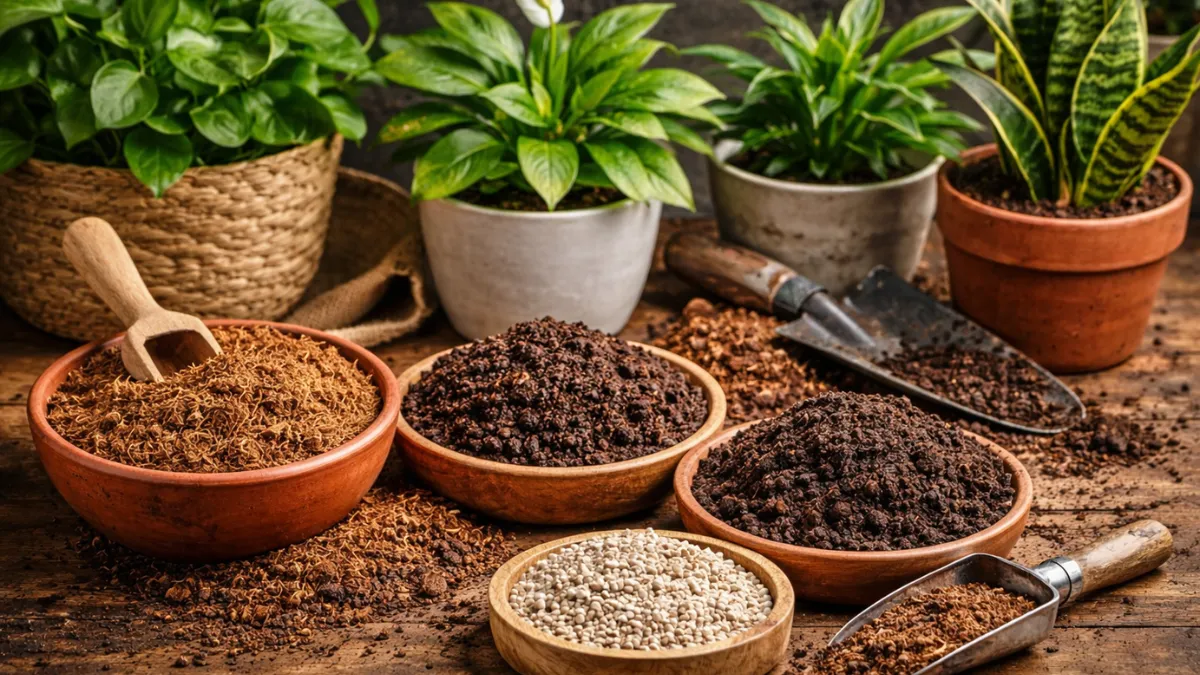
Coco Peat for Lightness
Coco peat keeps the soil light and airy. It retains moisture gradually without waterlogging the roots. Often, in homes, coco peat works better than peat moss because it handles heat well and remains stable for longer.
Compost for Nutrition
Compost provides plants with nutrients slowly. It improves soil life and keeps growth natural. Always use well-rotted compost. Fresh or smelly compost can burn roots and attract pests.
Sand or Perlite for Drainage
Sand or perlite helps with quick drainage. This is crucial for indoor pots that don't get much sunlight. Drainage prevents root rot and fungal diseases.
Garden Soil in Small Amounts
Garden soil can also be used, but only in very small quantities. Adding too much makes the mix heavy. Sift it well before mixing to remove stones and insects.
An Easy Indoor Potting Mix That Works for Most Homes
For most indoor plants, this easy mix works well:
• 40% Coco Peat
• 30% Compost
• 20% Garden Soil
• 10% Sand or Perlite
This mix stays light, provides nutrients slowly, and drains well. I use it for my money plant, snake plant, peace lily, and many other plants.
Common Soil Problems and Easy Solutions
| Problem | What You See | Simple Fix |
|---|---|---|
| Soil stays wet | Yellow leaves, smell | Add sand or perlite |
| Soil dries too fast | Wilting, dry tips | Add coco peat |
| Fungus on soil | White layer | Improve airflow, reduce watering |
| Roots coming out | Stunted growth | Repot with fresh soil |
How often should you change the soil for your indoor plants?
Indoor plant soil doesn't last forever. Over time, it compacts and loses nutrients. Most indoor plants need fresh soil every 12 to 18 months. If their growth slows down or water sits for too long, it's time to repot.
Always repot gently. Avoid damaging healthy roots. Fresh soil gives plants a new start and naturally reduces pest problems.
Related article: [Best Soil for Indoor Plants : Complete Guide for Healthy Growth (2026)]
Choosing Soil Based on Plant Type
Succulents need well-draining soil. Add extra sand or small pebbles. Flowering plants prefer richer soil but still need good aeration. Foliage plants prefer a balanced soil that stays lightly moist.
Don't use the same soil for every plant without making adjustments. Small changes make a big difference indoors.
Related article: [Best Soil Mix for Indoor Plants : DIY Recipe & Ready Options]
Watering and Soil Work Together
Even the right soil fails if watering is incorrect. Always check the topsoil before watering. If it feels moist, wait. Soil and water should complement each other, not fight.
Good soil forgives small mistakes. But poor soil punishes even the best care.
Related article: [Best Indoor Plants for Small Apartments (Space-Saving Picks 2026)]
Final Tips for Healthy Indoor Plant Soil
Indoor plant soil isn't about scientific jargon. It's about balance, aeration, and patience. Keep the soil light, fresh, and alive. Touch it, observe it, and trust in slow growth. When the soil is right, plants stop struggling and begin to thrive peacefully, as they should in a peaceful home.