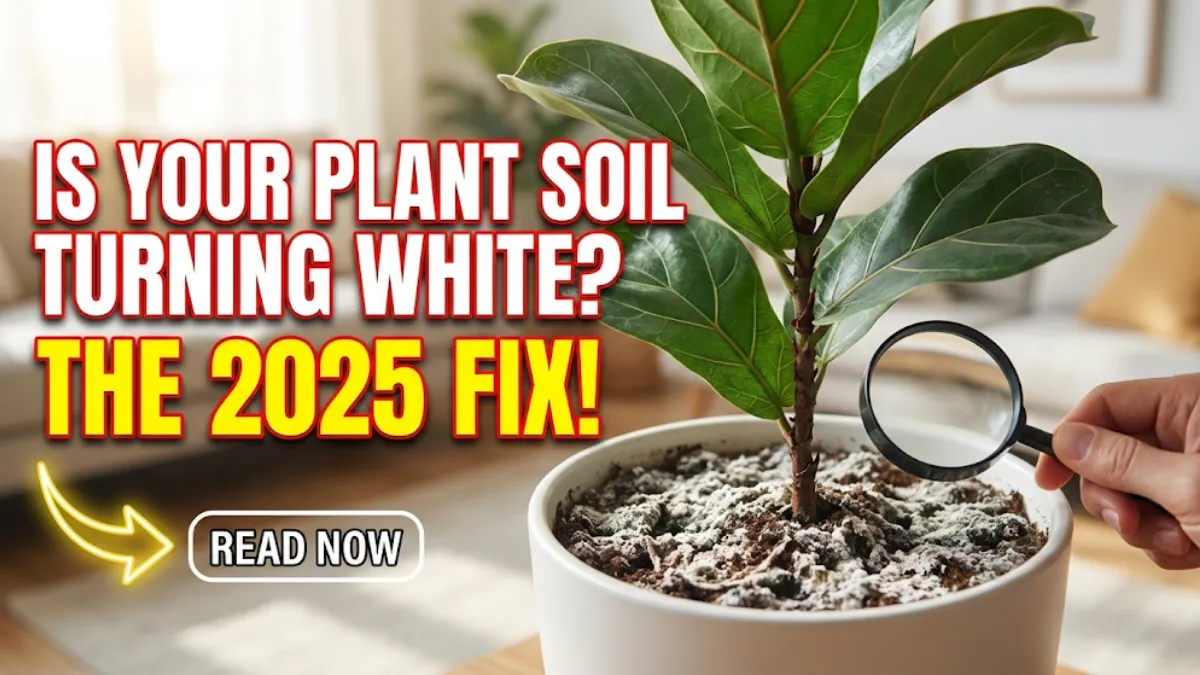
Indoor plant soil turning white has become one of the most common winter problems in 2025. This white layer appears due to fungus, mineral salts, overwatering, and poor ventilation — but the good news is, it’s easily fixable.
✨
AI summarized this news · Reviewed by Indoor Plantify
Nowadays, people are facing this problem a lot like the soil of their indoor plants is turning white and fungus is also visible in the plant pot. This is happening because the winter is dry and due to excessive watering or less ventilation, this season is perfect for white fungus and mineral accumulation. Many plant parents suddenly get scared after seeing a white layer on the soil, but you should not panic and many plant parents even think that their plants have got spoiled, but in most of the cases this is not the case, they can also be cured. Today we will tell you about this, how you can solve this type of problem and how you will be able to make your plants green and healthy once again.There can be many reasons for this, let me now tell you one by one all the reasons due to which this problem is occurring.
Cause 1 : Harmless white mold (very common in 2025 homes)
These days, people are increasingly wondering how harmless white mold forms. This white mold is formed by beneficial fungi in low humidity and poorly ventilated soil.
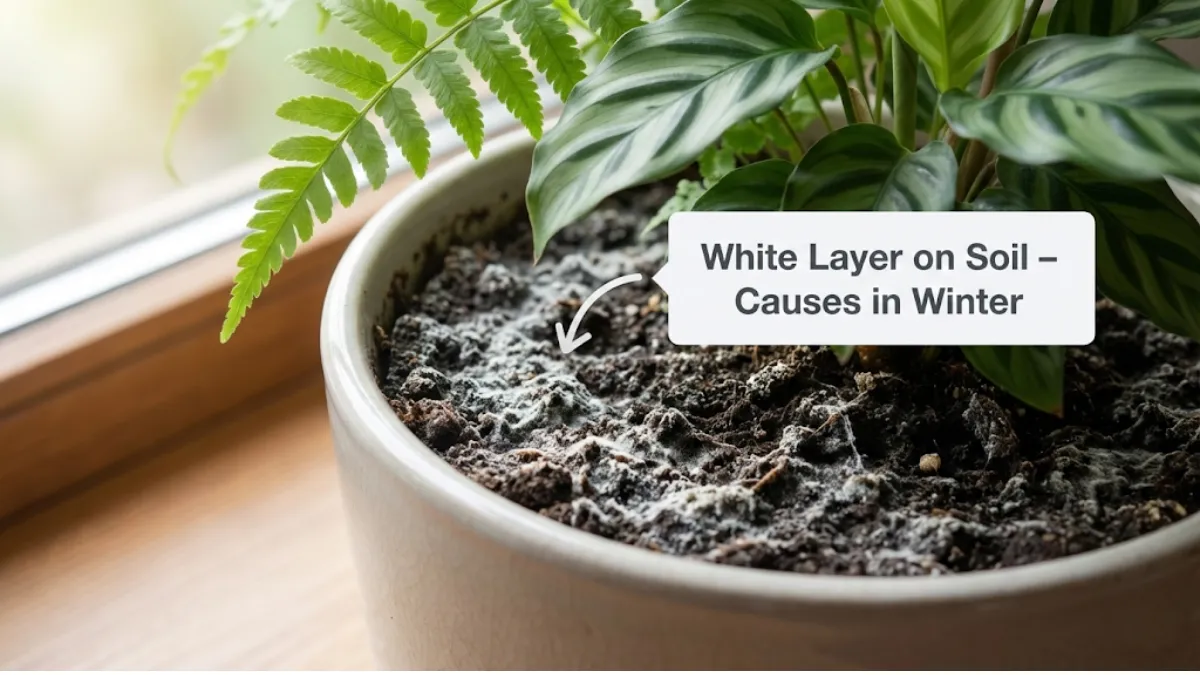
File Photo : White layer forming on indoor plant soil during winter — understanding the common causes like fungus, minerals, and low ventilation.
This white, cotton-like layer may seem intimidating, but it's not dangerous. There are several solutions:
• Remove the top 1 inch of soil.
• Increase ventilation.
• Always allow the soil to dry out 60 to 70% before watering.
• To kill more fungus, sprinkle a teaspoon of dried cinnamon on the plants every 5 to 7 days. This white layer will disappear on its own.
Cause 2 : Excessive accumulation of mineral salts
You often make the mistake of giving your plants tap water directly, but this shouldn't be done because tap water contains high levels of chlorine, fluoride, and minerals that accumulate over time, forming a white film on the soil. This is especially common in these plants.
• Pothos
• Peace Lily
• ZZ Plant
• Snake Plant
Solution :
• Rinse your potting soil with clean water every month.
• Use only filtered/RO or overnight soaked tap water.
• Reduce your fertilizer use for 2–3 weeks.
• As soon as the salt levels are reduced, the soil will recover quickly.
Reason 3 : Perlite dust visible on the soil
Plant parents often ask whether the white substance on the soil is just perlite, but they haven't found the right answer yet. The correct answer is that yes, many potting mixes contain perlite, which floats to the surface after watering. This white layer isn't harmful. However, if you still want to fix it, I'm offering you some solutions.
No treatment is needed to fix it. Simply mix it back into the soil that already contains perlite. It will heal on its own.
Cause 4 : Overwatering + poor drainage
If you overwater your plants, their soil turns white. This white soil can then cause fungus to grow on your plants.
How to Fix It
• Always use a pot with a drainage hole.
• Empty the tread/saucer after watering.
• Use well-draining soil (cocopeat + perlite + compost). Good soil dries evenly and prevents the growth of white mold.
Reason 5 : Reduced ventilation
As you can see, in 2025, we're relying heavily on indoor air conditioners, heaters, and sealed windows. However, this isn't good for our indoor plants, as indoor plants kept in closed rooms can develop fungus.
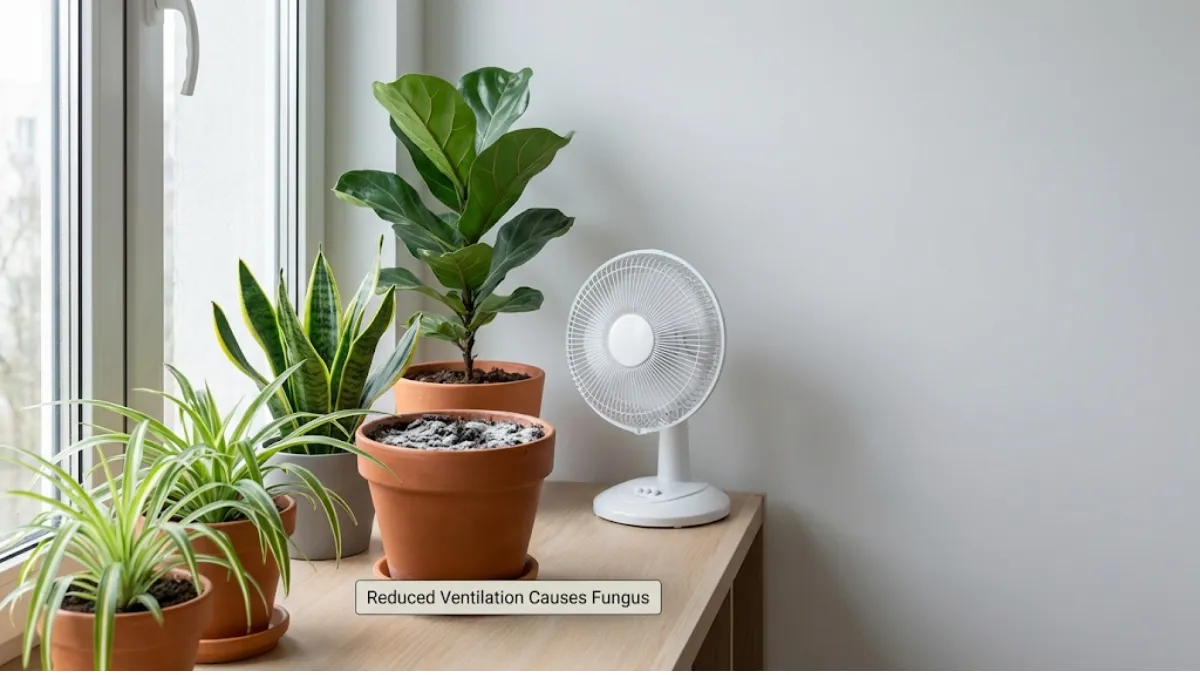
File Photo : Reduced ventilation can cause white fungus on indoor plant soil — keeping airflow moving helps prevent winter fungal growth.
What can be done to prevent this?
• Expose your plants to direct sunlight for about 30 minutes daily.
• Place a small fan near the plant shelf.
• Allow a gentle breeze to circulate around the pots.
• Fungus thrives in cool, moist air, and moving air automatically kills it.
When is a white coating dangerous?
White layer is mostly not dangerous for your plants but in some cases it becomes very dangerous like when it spreads very fast, the soil of your plants keeps getting damp and your roots start smelling damp. If you want to save your plants from white layer then in such a situation change the soil of your plants completely into fresh soil immediately.
Some important things you should know
The problem of soil turning white is occurring a lot these days and to avoid this, if you use all the reasons that I have told you above properly, then this problem will never arise in your plants. Mostly the white layer does not cause any harm but it causes harm to your plants only when you do not pay attention to it, like if the soil of your plants remains rotten continuously, damp dirt starts coming in the roots due to which the white layer can cause a lot of harm. To fix this, you have to use a pot with drainage hole and provide air flow to your plants and water them carefully. If you do all this properly, then your indoor plants will remain absolutely fungus free.
Follow Us On Social Media
Join the Discussion
No discussions yet. Be the first to start one!
Expert FAQs
Why is the soil of my indoor plants turning white?
The white layer on your indoor plant soil can be due to several reasons, including harmless white mold, excessive accumulation of mineral salts, or perlite dust. It can also be caused by overwatering combined with poor drainage.
Is the white mold on my indoor plant soil harmful?
No, the white, cotton-like layer of mold is typically harmless and formed by beneficial fungi. It often appears due to low humidity, poor ventilation, or soil staying wet for too long.
How can I get rid of harmless white mold on my plant soil?
To remove harmless white mold, you can remove the top 1 inch of soil, increase room ventilation, and allow the soil to dry 60-70% between waterings. Sprinkling a teaspoon of dried cinnamon every 5-7 days can also help.
What causes mineral salt accumulation on plant soil?
Mineral salt accumulation is often caused by directly using tap water, which contains high levels of chlorine, fluoride, and other minerals that build up over time. This is particularly common in plants like Pothos and Peace Lilies.
How can I prevent or reduce mineral salt buildup in my plant soil?
To prevent mineral salt buildup, rinse your potting soil with clean water monthly and use filtered, RO, or overnight-soaked tap water. Reducing fertilizer use for 2-3 weeks can also help the soil recover.
What should I do if the white substance on my soil is just perlite?
If the white substance is perlite dust, which floats to the surface from the potting mix after watering, no special treatment is needed. You can simply mix it back into the soil.
Can overwatering cause the soil to turn white?
Yes, overwatering can cause the soil of your plants to turn white, and this condition can subsequently lead to the growth of fungus.