


If you feel that the upper part of your room looks a bit empty, you are not alone. Most people fill their tables and floors with plants but tend to overlook the space above eye level.
This is precisely where hanging plants can completely transform the look of a room.
Related News



They soften corners, add a sense of movement, and make your room feel fuller without taking up any floor space. The best part? Some plants naturally prefer to grow this way.
Here are 8 indoor plants that thrive beautifully near the ceiling or in hanging planters.
1. Pothos (Money Plant)
This is one of the easiest hanging plants you can grow.
Pothos features long, trailing vines that can grow several feet in length, making it perfect for hanging from shelves, hooks, or the ceiling. It tolerates low-light conditions well, so you don't have to overthink where to place it.
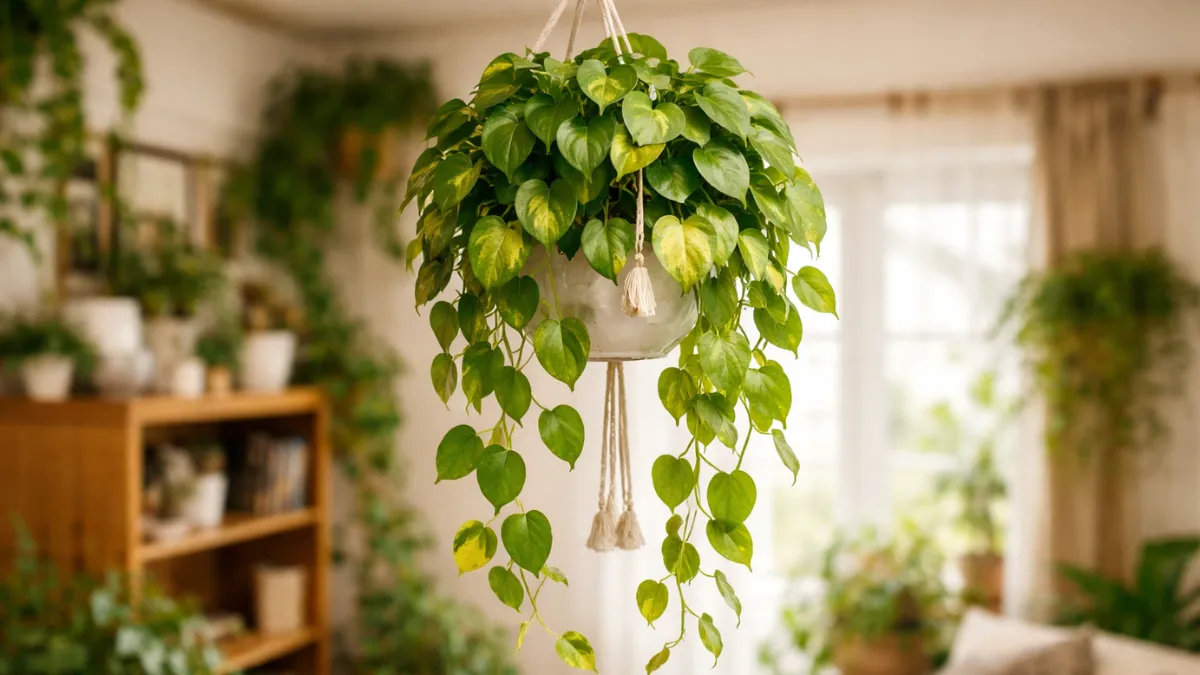
In my experience, Pothos grows even faster when you pay a little less attention to it. In fact, overwatering actually slows down its growth.
2. Spider Plant
If you are looking for something light and airy, spider plants are the perfect choice.
They feature slender, arching leaves and produce tiny new plantlets known as pups that dangle down like little decorative ornaments. Over time, these pups make the plant look even fuller and more lush.
I once placed a spider plant near a window, and within just a few months, it created the effect of a natural, hanging curtain.
3. String of Pearls
This plant looks completely different from typical leafy plants. Its leaves resemble tiny beads like green pearls that trail gracefully downwards. It thrives best in bright light and looks absolutely stunning in small hanging pots.
I made the mistake of overwatering it. Its bead-like leaves began to shrivel. Once I cut back on the watering, it gradually recovered.
4. English Ivy
English Ivy offers a classic and elegant aesthetic.
Its vines grow very rapidly; if provided with support, they can climb upwards, or they can be left to trail downwards. It grows exceptionally well near windows or in bright, indirect light.
However, one drawback is that it is somewhat sensitive to dry indoor air. If the air in your room is excessively dry, its leaves may begin to turn brown.
5. String of Hearts
This is one of the most beautiful hanging plants you can find.
Its slender vines feature tiny, heart-shaped leaves that trail downwards with a delicate grace. It is the perfect choice for a bedroom or any cozy corner.
In my experience, this plant grows somewhat slowly at first. However, once it becomes established, it begins to trail further and grows denser in appearance over time.
6. Boston Fern
If you are looking for a lush, bushy hanging plant, the Boston Fern is an excellent choice.
Rather than long vines, it produces dense, feathery fronds that spread out in all directions. It creates a soft, verdant, and magnificent look when hung near the ceiling.
One thing to keep in mind is that it requires consistent moisture. If you forget to water it, it dries out very quickly.
7. Philodendron (Heartleaf)
This plant is often mistaken for a Pothos, but its leaves are softer and thinner.
It grows long trailing vines and adapts easily to indoor environments. You can place it in hanging baskets or let it cascade down from high shelves.
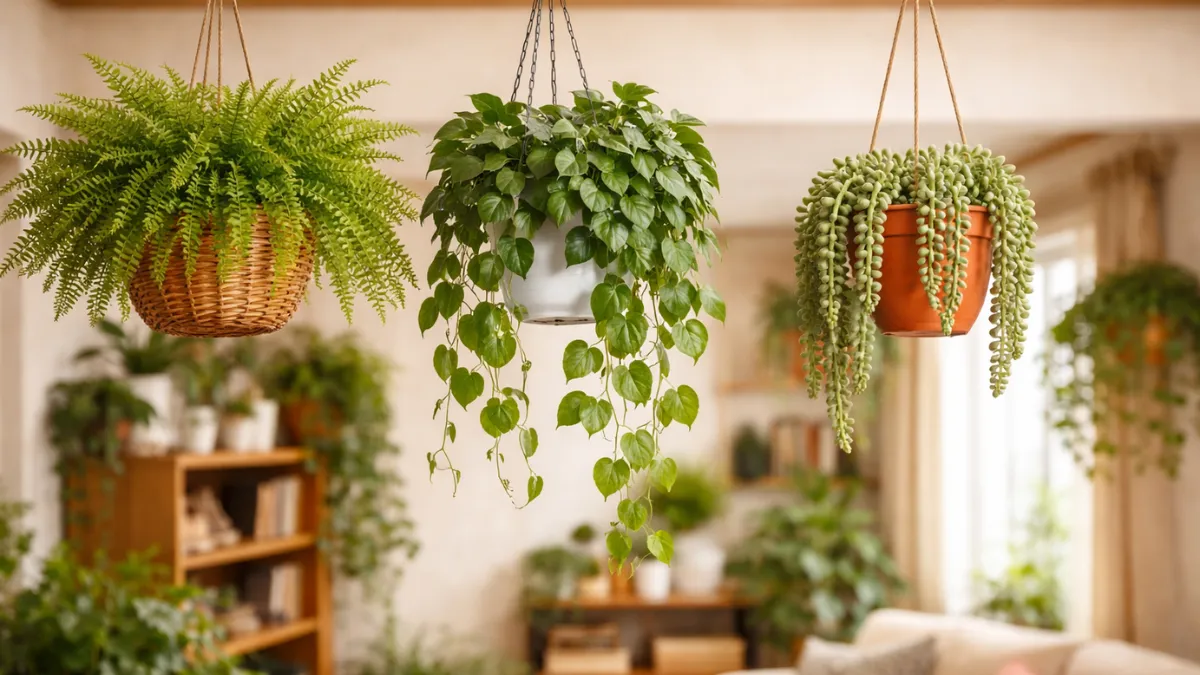
I’ve noticed that it thrives in slightly brighter light compared to the Pothos, although both are low-maintenance plants.
8. Burro’s Tail (Donkey Tail Succulent)
This is a unique trailing succulent.
Its leaves are thick and fleshy, growing along long, hanging stems. It looks spectacular in elevated hanging pots, where its stems can trail down freely.
However, it is quite delicate. Its leaves can fall off at the slightest touch. Therefore, once you have placed it in a specific spot, avoid moving it around frequently.
Final Thoughts
Hanging plants aren't just for decoration. They help you make the most of the vertical space in your home and bring a sense of vibrancy to your living environment.
If you are just starting out, opt for a Pothos or a Spider Plant. They are easy to care for and grow relatively fast.
If you are looking for something a bit more striking and beautiful, give the String of Pearls or String of Hearts a try.
One thing I’ve learned over time is this: don't overcrowd your ceiling or high spaces with too many plants. Instead of filling every corner, just 2 or 3 well-placed hanging plants can create a much more stunning visual impact.
Start small, observe how the plants grow, and then make adjustments accordingly.
Also Read :
Parrot Tulips : The Stunning Color-Changing Tulip Taking Over Gardens in 2025
Is Keeping Snake Plant Near a Window a Big Mistake? Light Truth
7 Indoor Plants That Thrive Near TVs and Electronics
Written for IndoorPlantify, based on genuine experiences of caring for indoor plants.