

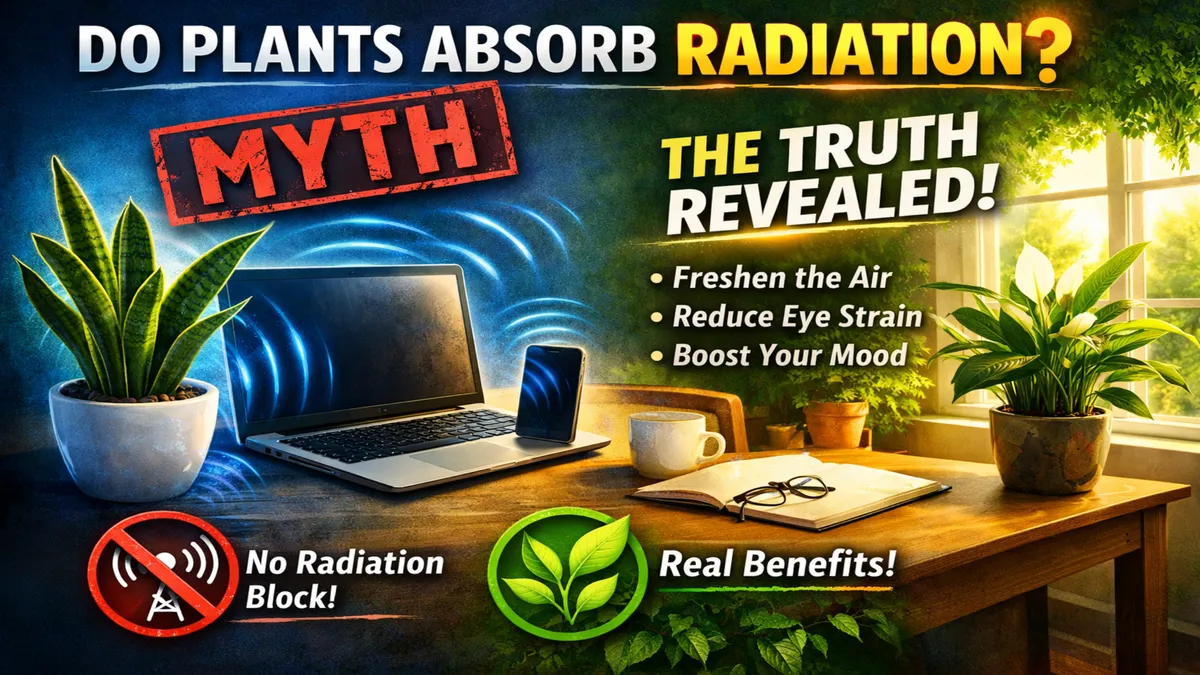
Many people place indoor plants near their mobile phones and laptops, believing that these plants absorb harmful radiation. I also believed this for many years, keeping plants on my work desk and near my Wi-Fi router. But one day, I decided to honestly investigate whether this belief was true or just another internet myth. In this article, I will share the clear facts, my real-life experience, and what plants actually do for your indoor environment.
Do Indoor Plants Really Absorb Radiation from Mobile Phones and Laptops?
The short answer is no. Common indoor plants do not block or absorb radiation emitted from mobile phones, laptops, or Wi-Fi devices. The radiation emitted from these gadgets is at a very low level and easily passes through air, walls, and plants without being stopped.
Related News



Numerous studies show that this type of radiation is non-ionizing, meaning it doesn't damage cells like X-rays do. Plants simply don't have the necessary structure or materials to block or mitigate it.
Why Did This Myth Become So Popular in Homes?
This idea gained popularity because plants are perceived as calming and are often associated with health benefits. Some websites and social media posts falsely claimed that plants act as natural radiation shields, and then, gradually, people started repeating it without verifying the facts.
In our homes, we often prefer natural solutions. Therefore, this myth spread quickly, even without any real evidence to support it.
What Do Indoor Plants Actually Help With?
Even though plants don't reduce radiation, they still offer real and proven benefits indoors. This is where plants truly shine.
Improving Indoor Air Quality (Limited but Helpful)
Some indoor plants can slightly improve air quality by increasing humidity and trapping dust on their leaves. This makes the room feel fresher, especially in enclosed spaces where fans or air conditioners are running most of the time.
However, plants are not air purifiers. Their effect is subtle, not powerful.
Reducing eye strain and mental fatigue
In my own experience, keeping a green plant near my laptop reduces eye strain. This is because looking at greenery after prolonged screen time gives the eyes a break. It also helps the mind feel calmer while working or studying.
This benefit is psychological, not related to radiation.
Popular plants that people believe reduce radiation
Several plants are wrongly marketed as "radiation-absorbing plants." Let's look at the truth behind them.
Snake Plant
The snake plant is very hardy and easy to grow. This is why people claim it absorbs radiation, but in reality, it simply releases oxygen slowly and traps dust. It does not block mobile or laptop radiation.
Areca Palm
The Areca palm helps increase humidity and makes rooms feel cooler. This can reduce dryness caused by screens and air conditioning. But again, no protection from radiation.
Money Plant
The money plant is very popular in Indian homes. It improves mood and decor but has no effect on electronic radiation.
Myth vs. Fact Table (Clear Comparison)
| Belief | Reality |
|---|---|
| Plants absorb mobile radiation | No scientific proof |
| Plants block Wi-Fi signals | Signals pass through plants |
| Plants improve screen safety | Only mental comfort |
| Plants reduce eye strain | Indirectly, yes |
| Plants improve room freshness | Slightly |
Where to actually place plants
Instead of placing plants for radiation protection, place them for relaxation and well-being. Near windows for natural light
• On the work desk for visual comfort
• In corners to soften the room's look
• Away from heat sources
What You Can Do to Reduce Gadget Exposure (Real Tips)
If you're concerned about your mobile and laptop usage, here are some practical ways that actually help:
• Take screen breaks every 30-40 minutes
• Keep your phone away while sleeping
• Use your laptop at a proper distance
• Reduce unnecessary screen time
• Plants can be beneficial, but your habits matter more.
Final Thoughts
Indoor plants do not reduce mobile or laptop radiation. This is simply a myth. However, plants do have a place in your home for mental peace, freshness, and beauty. From my own experience, plants make screen-heavy days feel lighter and calmer. Keep plants for the right reasons, and for true indoor well-being, rely on simple habits, not viral claims.