

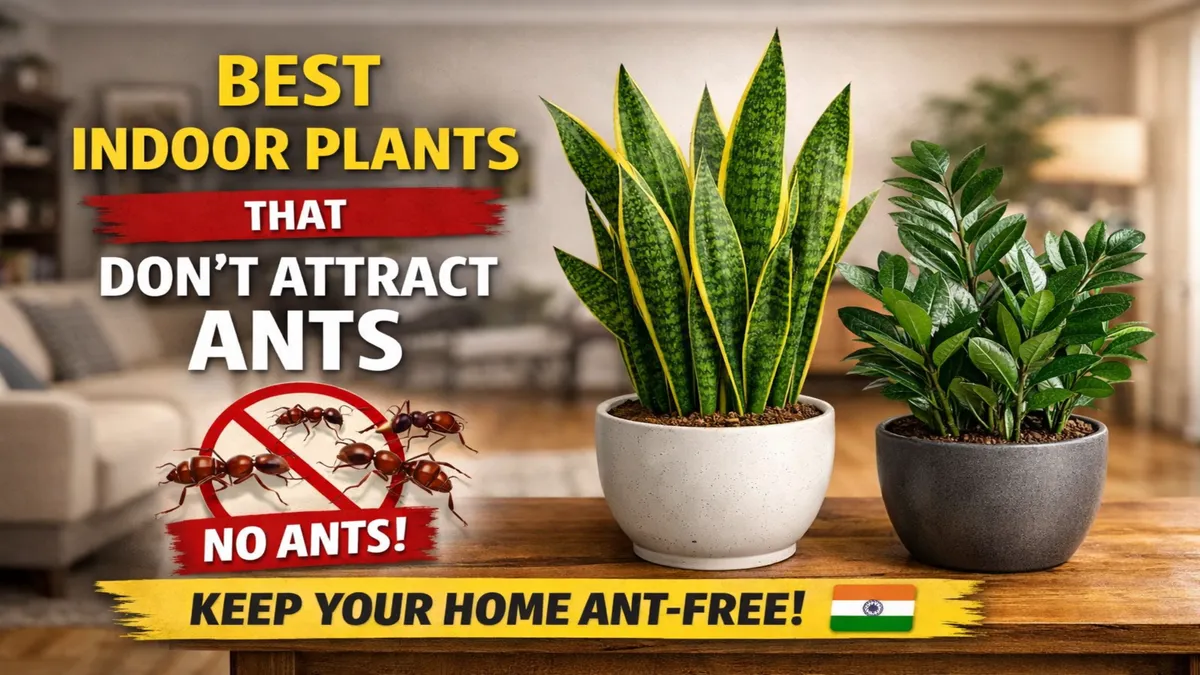
Indoor plants make homes feel calm and fresh, but ants can quickly ruin this experience. Many Indian homes are plagued by ants, especially in hot weather, where the sweet sap from plants attracts them. I noticed ants gathering around some of my older plants during the summer, making caring for them stressful. Fortunately, some indoor plants naturally repel ants and keep them clean. If you're wondering which indoor plants don't attract ants in Indian homes, this guide will help you choose the safest and most reliable option.
Quick Answer:
Related News



The Best Indoor Plants That Don't Attract Ants
These indoor plants attract very few ants and are ideal for Indian homes:
• Snake Plant
• ZZ Plant
• Rubber Plant
• Areca Palm
• Aloe Vera
• Cast Iron Plant
• Peace Lily (with proper care)
• Spider Plant
These plants don't produce a sweet residue that attracts ants.
Why Do Some Indoor Plants in Indian Homes Attract Ants?
Ants usually come for the food, not the plant. They are attracted to the honeydew secreted by insects like aphids and mealybugs. Many people ask why ants are attracted to some indoor plants but not others. The reason is simple: insect-infested plants produce sweet sap.
Other causes include:
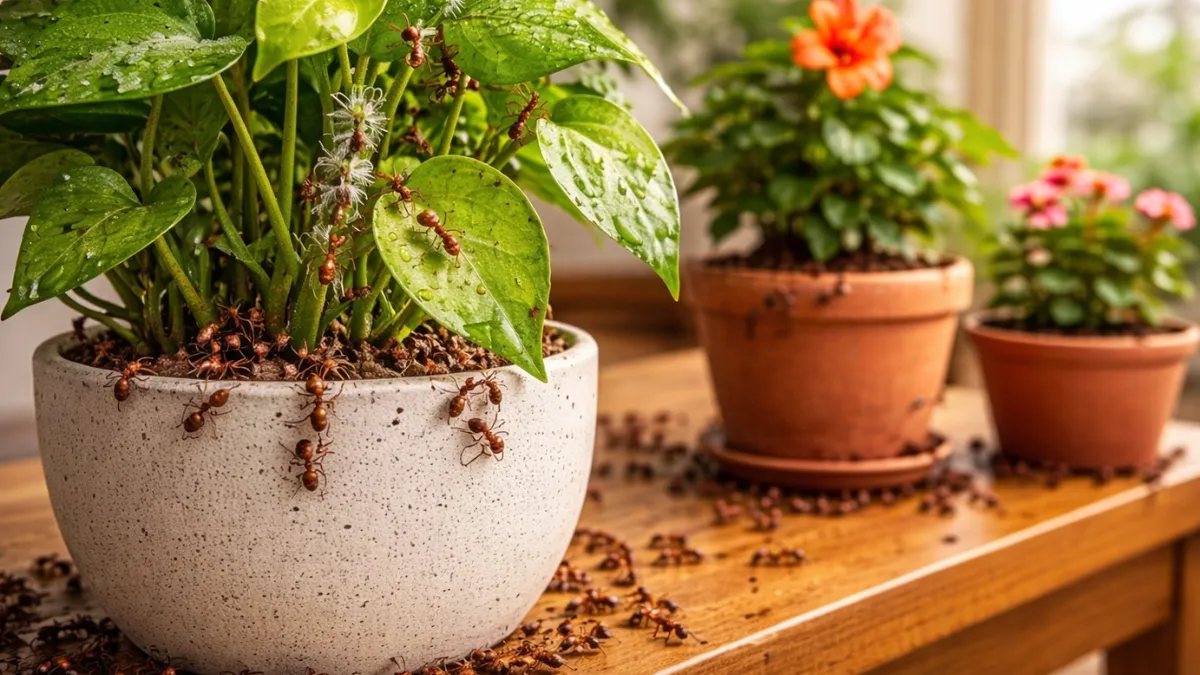
• Sticky sap residue
• Overwatering
• Dry leaves in the soil
• Sweet fertilizers
• Poor air circulation
In my own experience, overwatering has exacerbated insect problems, which indirectly attracts ants.
The Best Indoor Plants That Naturally Don't Attract Ants
1. Snake Plant (Sansevieria)
Snake plants are one of the safest options. Their leaves are tough and rarely attract insects.
People often search [[Is snake plant safe from ants indoors]], and the answer is yes. Snake plants don't produce any sap or sweet residue.
Benefits:
• Very minimal care
• Resists insects
• Great for Indian climate
2. ZZ Plant (Zamioculcas zamiifolia)
The ZZ plant is a great repellent against insects and ants.
Many plant owners wonder if the ZZ plant attracts ants into the house. The ZZ plant has waxy leaves that repel insects.
Why it works:
• Thick, repellent leaves
• Low watering requirements
• Reduced insect infestation
This plant completely kept ants away from my living room for over two years.
3. Rubber Plant (Ficus elastica)
Rubber plants are sturdy and insect-repellent.
If you're asking which large indoor plant doesn't easily attract ants, rubber plants are a great option.
Benefits:
• Thick leaves keep insects away
• Less sap leaks indoors
• Easy to care for
4. Areca Palm
Areca palms are very popular in Indian homes and attract very few ants when they are healthy.
Many people ask whether areca palms attract ants indoors in India. Healthy areca palms do not attract ants.
They're perfect because:
• The leaf texture is clean
• Minimal insect attraction
• Improves the indoor environment
Comparison Table : Ant-Resistant Indoor Plants
| Plant Name | Ant Resistance | Maintenance Level | Suitable for Indian Homes |
|---|---|---|---|
| Snake Plant | Excellent | Very Low | Yes |
| ZZ Plant | Excellent | Very Low | Yes |
| Rubber Plant | Very Good | Low | Yes |
| Areca Palm | Very Good | Moderate | Yes |
| Aloe Vera | Excellent | Very Low | Yes |
| Cast Iron Plant | Excellent | Very Low | Yes |
5. Aloe Vera – Naturally Pest Resistant
Aloe vera is one of the safest plants for ant-free homes.
People often wonder if aloe vera can attract ants indoors. Aloe vera rarely attracts ants because it doesn't produce sweet sap.
Benefits include:
• No medication use
• Very minimal care
• Highly repellent against pests
6. Cast Iron Plant – Extremely Strong and Ant-Free
The cast iron plant is renowned for its strength.
Many newcomers ask which indoor plant in India is the most insect-repellent. The cast iron plant is one of the best answers.
Why it's effective:
• Strong leaves
• Repellent against pests
• Survives in low light
Plants that commonly attract ants (avoid these)
Some plants attract ants more often.
People often ask which indoor plants in Indian homes attract ants the most. These include:
• Money plants (when infested)
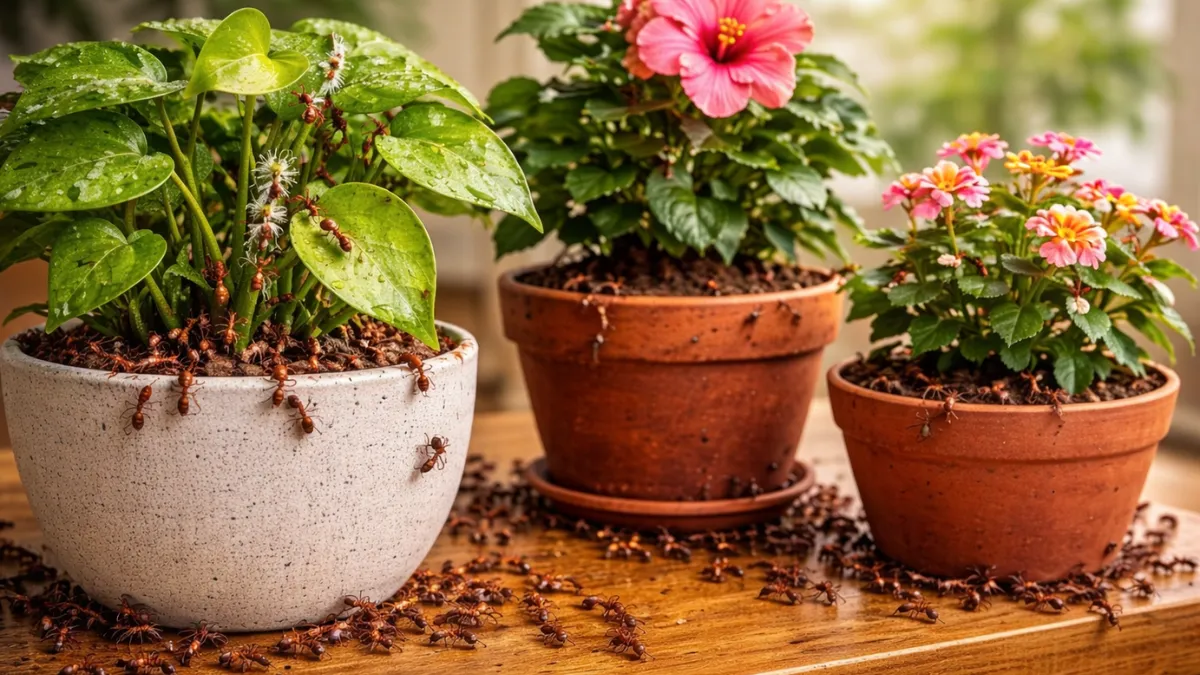
• Hibiscus
• Sweet-scented flowering plants
• Aphid-infested plants
The problem is not with the plant but with the insects.
How to Naturally Prevent Ants from Indoor Plants
Prevention is easier than cure. Many plant owners in India search for how to naturally keep ants away from indoor plants.
Effective prevention tips:
• Don't overwater
• Clean leaves regularly
• Remove dead leaves
• Check for insects weekly
• Keep the plant area clean
One thing that didn't work for me was using homemade sweet fertilizer, but the ants immediately increased.
Real Experience
In my own home, replacing insect-prone plants with snake plants and ZZ plants completely eliminated the ant problem within a few weeks. I also learned that healthy plants attract fewer ants.
However, one limitation is that even resistant plants can attract ants if infested, so regular inspection is essential.
This guide helps Indian plant lovers choose indoor plants that are pest-repellent and easy to care for.
Final Words
Choosing the right plants makes a big difference in keeping your home clean and ant-free. If you're wondering how to choose indoor plants in India that don't attract ants, consider insect-repellent, low-care plants like the snake plant, ZZ plant, and aloe vera.
These plants are safe, durable, and great for Indian indoor environments.
Related Helpful Articles:
10 Pet-Safe Indoor Plants for Cats (Vet-Approved Choices)
9 Indoor Plants That Are 100% Safe for Cats (2026 List)
5 Pet-Safe Indoor Plants for Cats & Dogs (Non-Toxic & Easy to Grow)
Written from real indoor plant care experience for IndoorPlantify.