

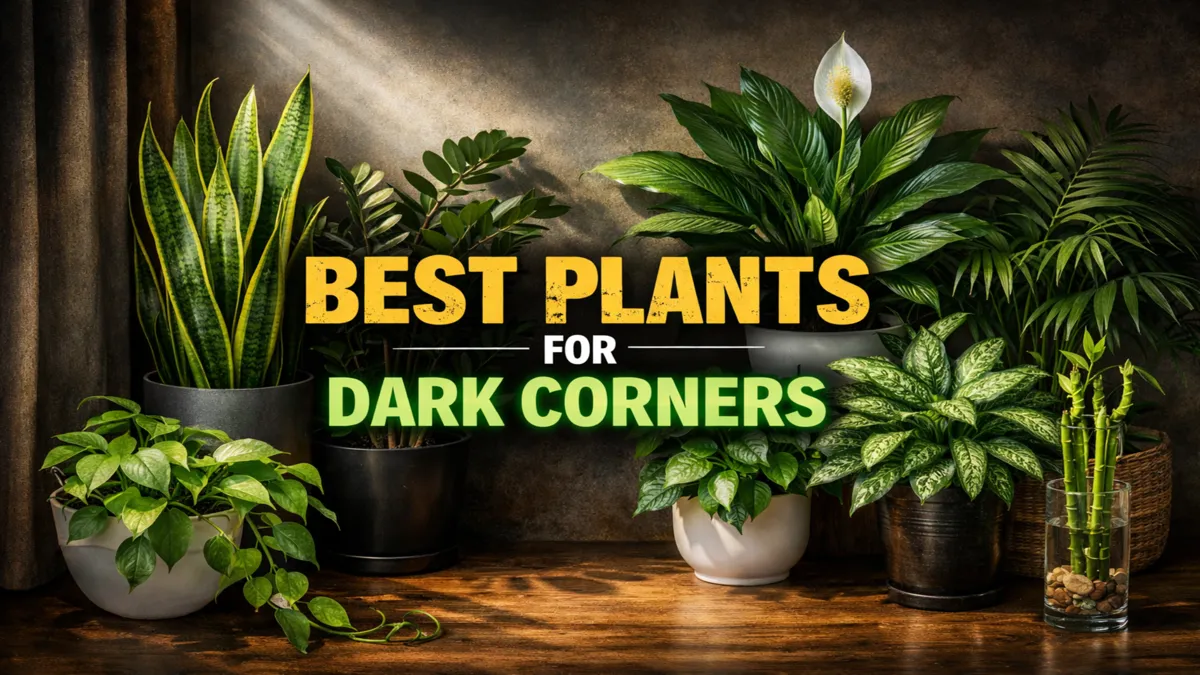
Some parts of the house never see sunlight. Hallways, corners behind furniture, and small apartments often seem too dark for plants. Many people think that plants can't survive there.
But this isn't entirely true.
Related News
Many indoor plants grow naturally under the canopy of forests where sunlight is scarce. These plants adapt well to low-light homes and still remain healthy.
If you want to bring greenery to those boring corners, these plants are a great place to start.
1. Snake Plant (Sansevieria)
Snake plants are one of the hardiest indoor plants you can keep. They tolerate low light, irregular watering, and dry indoor air.
Their long, straight leaves also make them perfect for filling empty corners without taking up much space.
In my experience, snake plants grow slowly in dark areas but remain healthy for years. Just make sure you don't overwater. This is the most common mistake people make.
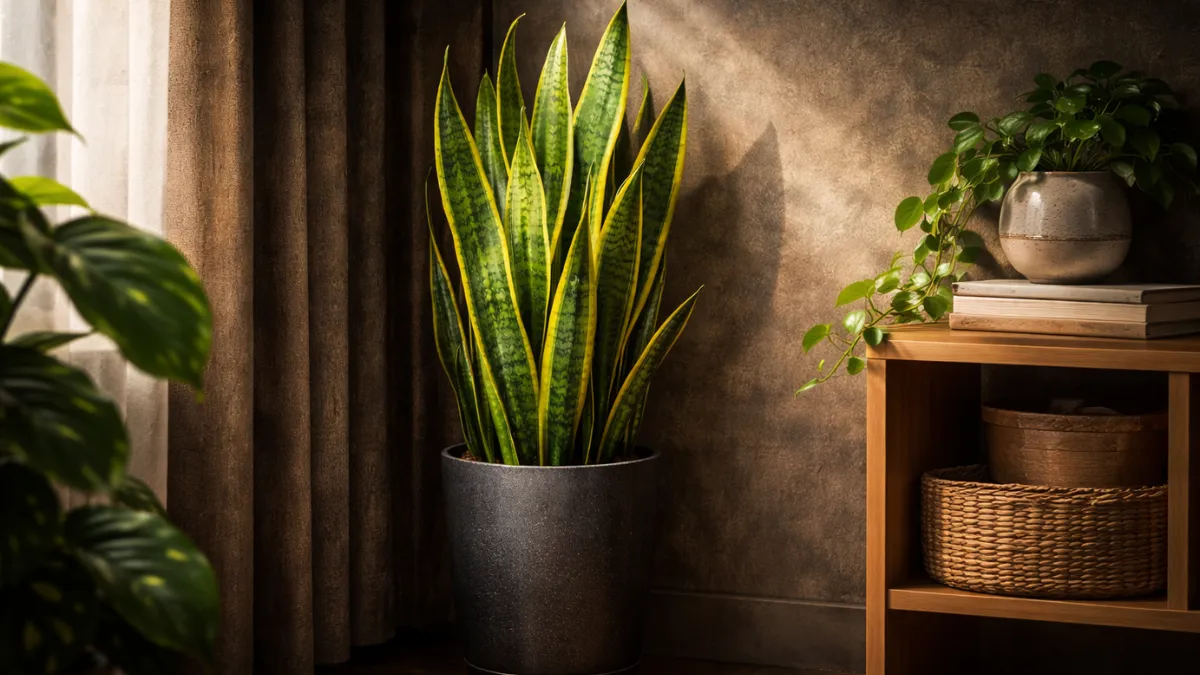
Water only when the soil is completely dry.
2. ZZ Plant (Zamioculcas zamiifolia)
The ZZ plant is famous for surviving in places where most plants would fail. Offices, hallways, and shady rooms are perfect for it.
Its bright green leaves reflect light beautifully, helping to naturally brighten dark corners.
I once placed a ZZ plant in a corner where there was almost no sunlight. It struggled to grow, but with very little care, it did well for over a year.
This plant prefers neglect to too much attention.
3. Pothos (Money Plant)
Pothos is one of the easiest plants for beginners. It grows well in low light and adapts quickly to indoor environments.
Its long vines can hang down shelves or climb small supports, making it ideal for decorating empty spaces.
However, it has one major drawback.
In dark corners, pothos leaves may become smaller and growth may slow. However, occasional watering can keep the plant alive.
4. Peace Lily
Peace lilies are known for their beautiful white flowers and dark green leaves. They can tolerate shade better than many flowering plants.
This makes them a good choice for dark rooms where you still want something decorative.
In my experience, peace lilies are very expressive plants. When they need water, their leaves droop slightly, making it easy to know when to water.
One mistake I made initially was placing it in a completely windowless room. It survived, but flowering stopped.
Low light is fine, but a little indirect light helps with flowering.
5. Cast Iron Plant
The name of this plant pretty much says it all.
Cast iron plants are very hardy and can withstand poor light, irregular watering, and indoor temperature fluctuations.
They grow slowly but remain robust even in difficult conditions.
This plant is especially useful for corners where other plants have already failed. Once established, it requires very little attention.
6. Chinese Evergreen (Aglaonema)
Chinese evergreen plants are popular for their beautifully patterned leaves and good shade tolerance.
They are often used in offices because they survive well even under artificial lighting.
Even in dark homes, these plants maintain healthy leaves, although their growth may be slightly slower.
An easy care tip is to keep the soil lightly moist but never soggy.
7. Parlor Palm
Parlor palms are classic indoor plants that have been used in homes for over a century.
They tolerate low light surprisingly well and add a soft tropical feel to rooms.
Unlike some palm trees that require bright light, this tree naturally grows on shady rainforest floors.
However, it doesn't like completely dry soil for long periods. Light irrigation helps keep the leaves healthy.
8. Lucky Bamboo
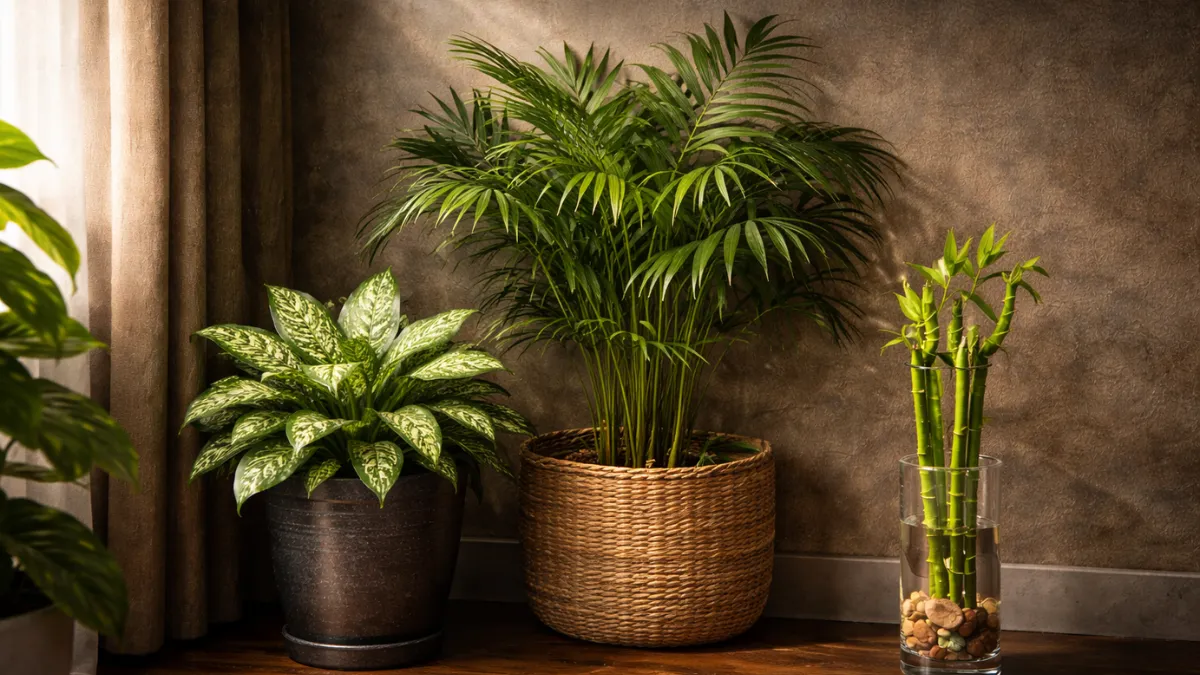
Lucky bamboo isn't actually bamboo, but it grows well in low-light conditions.
Many people grow it in water instead of soil, making it easier to care for.
It's typically placed on desks, shelves, or in corners with limited natural light.
Just remember to change the water every two weeks. Stagnant water can eventually harm the plant.
Final Words
Dark corners don't have to be empty. With the right plants, even dimly lit spaces can feel fresh and vibrant.
Plants like the snake plant, ZZ plant, and pothos are especially reliable for beginners. They adapt well and don't require constant care.
Related Helpful Articles:
Dark & Moody Houseplants That Are Trending in 2026
Indoor Green Corners — How to Create a Curated Plant Wall
Start with one or two plants and see how they respond to your home's environment. Over time, you'll learn which plants thrive best in your space.
Even the darkest corner can become a small green space with the right selection.
Written from real indoor plant care experience for IndoorPlantify.