

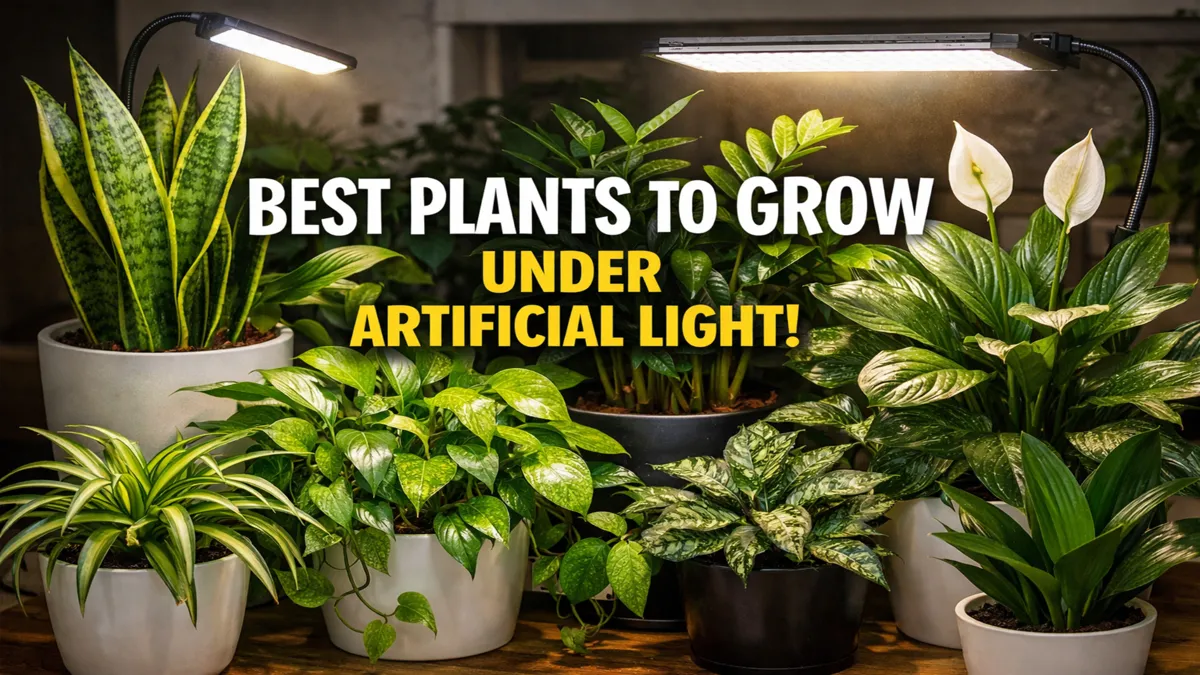
Not every home has bright windows.
Some rooms remain dim throughout the day. Offices, basements, and small apartments often receive almost no sunlight.
Related News

The good news is that many indoor plants don't actually need direct sunlight. Some plants can grow surprisingly well with a simple LED grow light or even a bright room light.
In my experience, some indoor plants thrive better under constant artificial light than under the intermittent light of a window.
Here are eight indoor plants that can grow successfully under artificial light.
1. Snake Plant (Sansevieria)
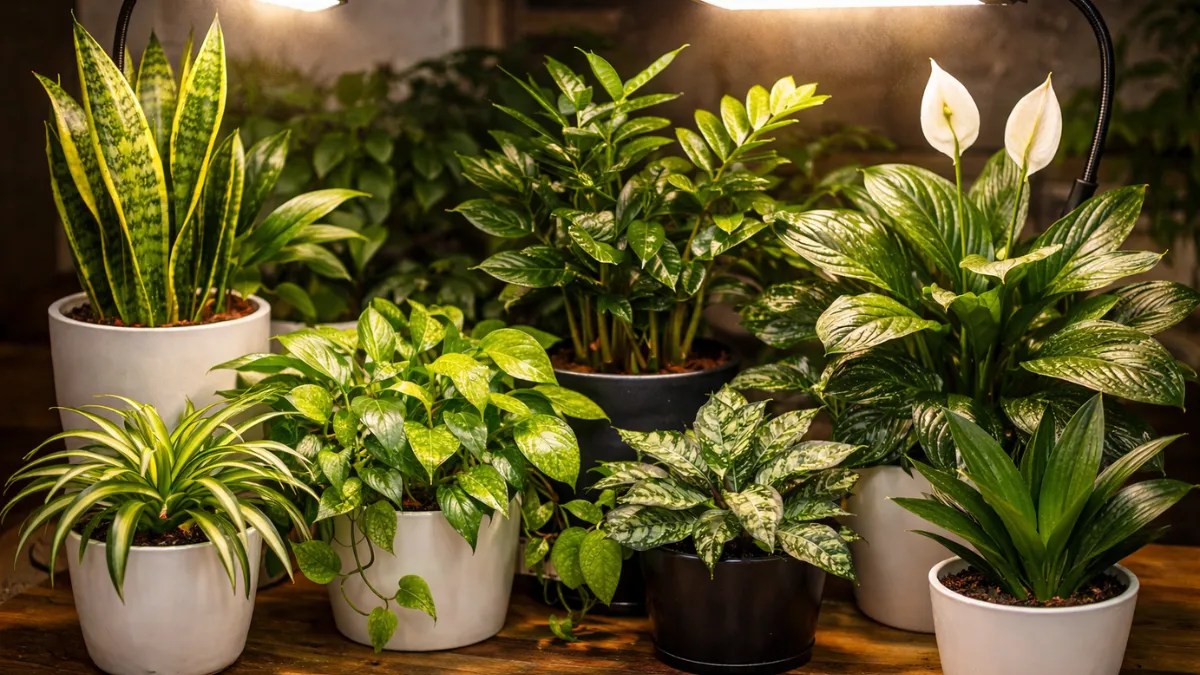
Snake plants are one of the hardiest indoor plants you can grow.
They tolerate very low light and can survive almost anywhere in the house. Under artificial light, they grow slowly but remain healthy and upright.
In my experience, snake plants kept under a basic LED desk light stay greener than those kept in dark corners without any light.
Just make sure the soil is completely dry before watering.
Why it works with artificial light:
• Very low light tolerance
• Slow growth rate
• Stores water in thick leaves
2. ZZ Plant (Zamioculcas zamiifolia)
ZZ plants are renowned for surviving in places where most plants fail.
They grow naturally in shady areas, making them ideal for artificial lighting. Offices often use them because they can easily handle fluorescent light.
I once made the mistake of watering a ZZ plant too often in low light. The soil remained wet for too long, causing root problems.
Under artificial light, less watering is usually better.
3. Pothos (Epipremnum aureum)
Pothos is one of the easiest indoor plants for beginners.
It grows well under artificial lighting and adapts quickly to indoor conditions. Even under simple LED bulbs, pothos vines can continue to produce new leaves.
In my home setup, pothos placed under a 12-hour LED grow light began to grow long vines within a few weeks.
Pothos is also forgiving if you occasionally forget to water.
4. Peace Lily (Spathiphyllum)
Peace lilies prefer dim light, but they can also grow surprisingly well under artificial lighting.
In many office buildings, peace lilies grow well under fluorescent ceiling lights.
One thing I noticed is that flowering may be slower under artificial light. The plant will still grow healthy leaves, but flowering may occur less frequently.
So if your goal is to grow lush foliage, peace lilies still work well.
5. Spider Plant (Chlorophytum comosum)
Spider plants adapt easily to artificial lighting.
They grow well under LED grow lights and standard indoor lighting. As long as the light remains consistent, their curved leaves remain bright.
A simple routine works best:
• 10–12 hours of artificial light
• Light watering when the soil dries
• Occasional pruning of dead ends
Under constant light, spider plants also produce small plantlets called spiderettes.
6. Chinese Evergreen (Aglaonema)
Chinese evergreen plants naturally thrive in low-light tropical forests.
Because of this, they tolerate artificial light very well. Many indoor gardeners use them in windowless rooms or hallways.
In my experience, colorful varieties retain their leaf patterns better when placed under LED grow lights rather than in dimly lit corners.
The only drawback is that growth is slower. But the plant remains healthy for years.
7. Philodendron (Heartleaf Philodendron)
Heartleaf philodendrons are excellent plants for artificial lighting setups.
These are climbing plants that adapt easily to indoor conditions. Mild artificial light can also help the vines grow steadily.
These plants are also very tolerant.
If light is a little dim, they grow slowly rather than rapidly.
A small LED grow light placed above the plant can significantly improve leaf size and color.
8. Cast Iron Plant (Aspidistra elatior)
The cast iron plant gets its name for a reason.
It can survive in very difficult indoor conditions, including very dimly lit areas. Artificial lighting is usually sufficient.
Many people keep this plant in hallways, offices, or rooms without windows.
The one real drawback is that this plant grows very slowly. If you're looking for fast growth, it may not be the best option.
But if you want a plant that can survive almost anything, it's hard to beat.
Tips for Growing Plants Under Artificial Light
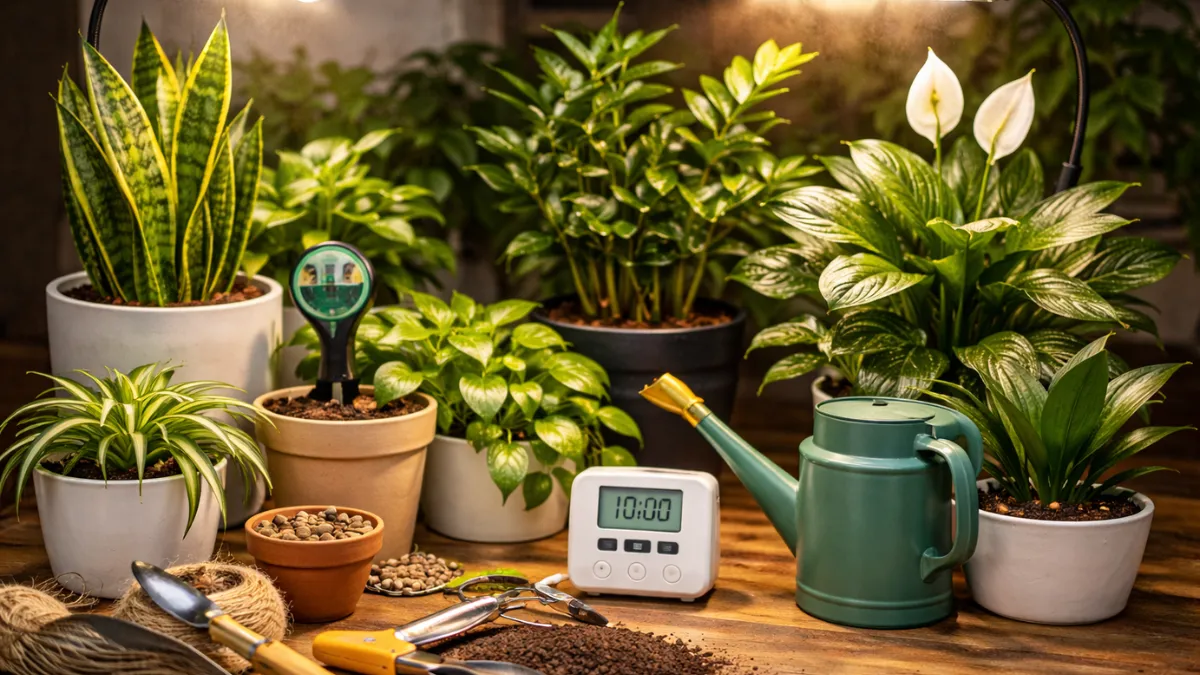
Artificial lighting works best when used correctly.
A few simple adjustments can make a big difference.
Use consistent lighting hours
Most indoor plants prefer about 10–12 hours of light per day. A timer can help maintain consistency.
Choose LED grow lights
LED grow lights provide the right spectrum for plant growth and produce less heat compared to traditional bulbs.
Keep lights close
Artificial lights should usually stay 12–24 inches above the plant for best results.
Watch watering carefully
Plants under artificial light often use water more slowly than those in sunlight.
Overwatering is the most common mistake.
Related Helpful Articles:
Artificial vs Real Indoor Plants : Shocking Truth Nobody Tells (2026)
Indoor Plants : Complete Beginner-to-Expert Guide (2026 Edition)
Final Thoughts
A lack of sunlight does not mean you cannot grow indoor plants.
With simple artificial lighting, many plants adapt surprisingly well and continue growing indoors.
In my experience, the key is consistency. Stable light, moderate watering, and patience usually lead to healthy plants.
If you are starting with artificial lighting, plants like snake plant, pothos, and ZZ plant are some of the easiest choices.
Once you see how well they adapt, growing plants without sunlight becomes much easier.
Written from real indoor plant care experience for IndoorPlantify.