


Growing plants without soil may seem a little strange at first. But once you try it, it's surprisingly easy.
Many common houseplants actually grow very well in water. All you need is a glass jar, clean water, and a little patience.
Related News
In my own experience, if you want greenery without the hassle of soil, pests, or frequent potting, water-grown plants are perfect. Some of the plants below can survive in water for many years with proper care.
Let's learn about some of the best indoor plants that grow without soil and how to keep them healthy.
Quick Info Table
| Feature | Details |
|---|---|
| Growing Method | Plants grow in water instead of soil |
| Best Containers | Glass jars, vases, bottles, hydroponic pots |
| Light Requirement | Bright indirect light works best |
| Water Type | Clean filtered or room-temperature tap water |
| Water Change | Every 7–10 days to prevent bacteria |
| Fertilizer | Liquid hydroponic fertilizer occasionally |
| Best For | Small apartments, desks, shelves, beginners |
| Common Plants | Pothos, Lucky Bamboo, Spider Plant, Philodendron |
| Maintenance Level | Very low maintenance |
| Main Benefit | Cleaner setup with no soil mess |
1. Pothos
Pothos is one of the easiest plants to grow in water.
You simply need to cut a vine below a leaf node and place it in a jar of water. Within a few days, roots will start to emerge. Over time, the roots will grow longer and stronger.
In my experience, pothos is the most water-tolerant plant. Even if you forget to change the water for a week, it usually continues to grow happily.
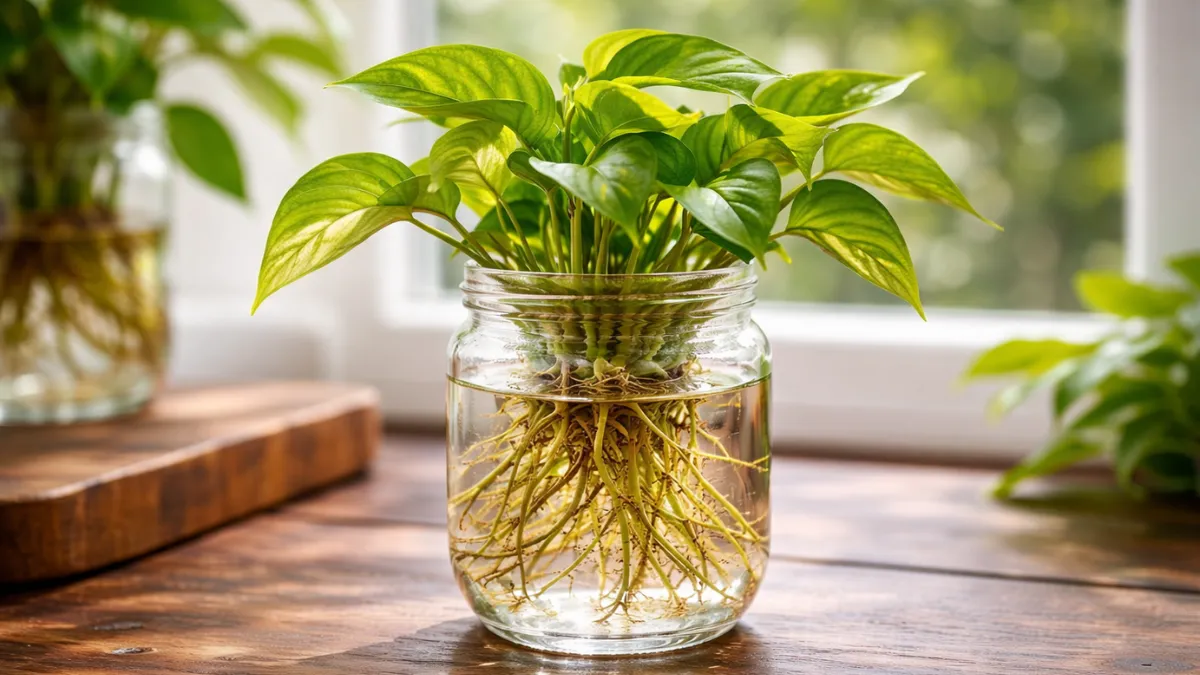
Place it near a window with bright, indirect light for optimal growth.
2. Lucky Bamboo
Lucky bamboo is perhaps the most popular water-based plant.
Despite its name, it's not actually bamboo. It's a type of dracaena that adapts well to water.
Most people grow lucky bamboo in decorative glass containers with small stones to support the stems.
One thing I learned the hard way is that tap water with high chlorine content can harm it. Using filtered water keeps the plant healthier.
3. Spider Plant
Spider plants grow easily in both soil and water.
The small plants growing from the mother plant can be placed directly in water to form roots.
These small plants are perfect for growing. Within a few weeks, they develop a strong root system and continue to grow without soil.
Spider plants also tolerate varying lighting conditions, making them beginner-friendly.
4. Philodendron
Philodendrons are very similar to pothos and perform in much the same way in water.
Cuttings placed in water will root quickly. If you occasionally add a diluted liquid fertilizer, this plant can survive in water for a long time.
Philodendrons grow best in warm indoor environments and indirect sunlight.
Their heart-shaped leaves also add a nice decorative touch to a shelf or desk.
5. Chinese Evergreen
Chinese evergreen plants can also adapt to growing in water.
Typically, stem cuttings root very easily in water and remain healthy if the water is cleaned regularly.
In my experience, these plants grow slower in water than in soil, but they still remain attractive and stable.
The patterned leaves make them a great decorative indoor plant.
6. Coleus
Coleus is often grown outdoors in soil, but it roots much faster in water.
If you place coleus cuttings in a glass jar, roots can emerge in just a few days.
The colorful leaves make coleus a fun plant to grow in water, especially near bright windows.
However, it grows rapidly in soil, so growing in water works best for decoration or propagation.
7. Wandering Jew (Tradescantia)
This fast-growing climbing plant is great for water.
Cut a stem and place it in water, and it usually starts taking roots within a week.
The purple and striped leaves make it one of the most attractive-looking plants in a water jar.
Because it grows rapidly, you may need to prune it occasionally to keep the plant neat.
8. Mint
Mint is usually grown in gardens, but it also grows very easily in water indoors.
A simple stem cutting placed in a glass container can quickly grow roots.
In my kitchen, I once kept a small jar of mint near the window. It kept well for months and was also handy for cooking.
Just make sure it gets plenty of sunlight to keep it fresh and fragrant.
9. Peace Lily
Peace lilies are usually grown in soil, but with proper care, they can also thrive in water.
The roots should be supported at the base with stones or a thin pot.
Peace lilies prefer direct sunlight and clean water that should be changed regularly.
One drawback is that they may grow slower in water than in soil, but they can still survive and look beautiful.
Easy Tips for Growing Plants in Water
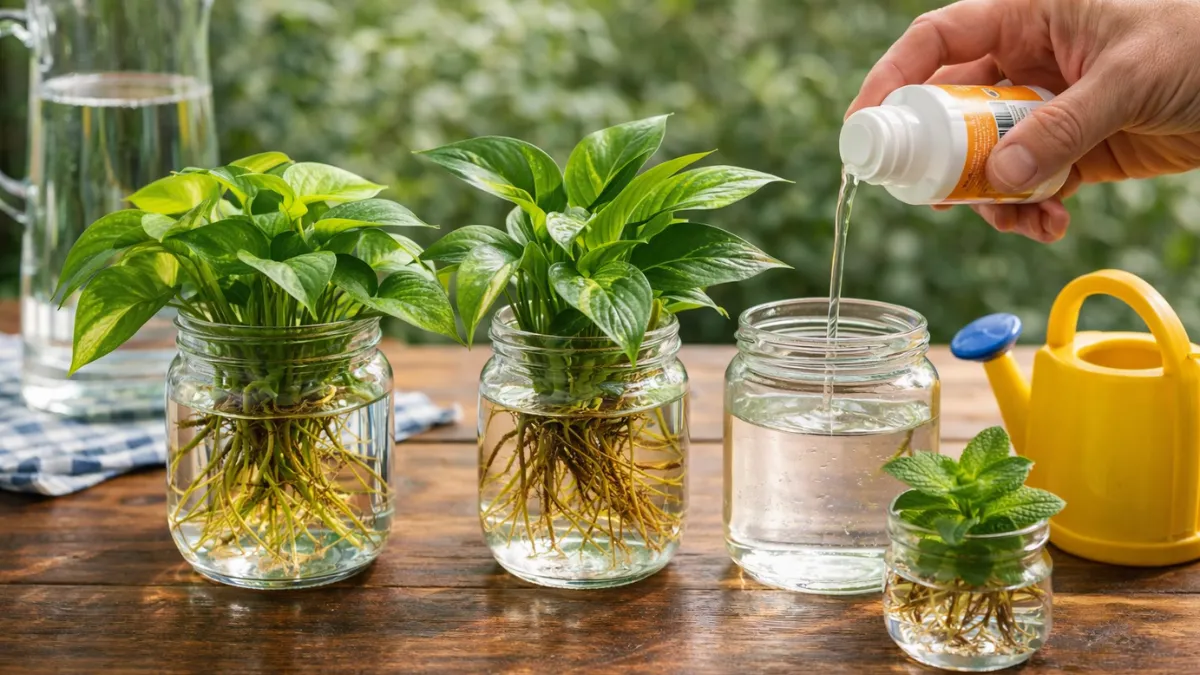
Growing indoor plants without soil is easy, but a few simple habits help keep them healthy.
First, change the water every 7–10 days. This prevents bacteria and keeps the roots fresh.
Second, use clean containers. Glass jars are best because you can see root growth.
Third, keep the plants in bright, direct light. Direct sunlight can heat the water and stress the plant.
You can also add a small amount of liquid fertilizer once a month to provide nutrients.
A Common Mistake to Avoid
When I first started growing plants in water, I made the mistake of adding too many leaves.
Leaves left in water often rot and cloud the water. Only the roots or stem nodes should be submerged.
When I corrected this, the plants became much healthier.
Related Helpful Articles:
Indoor Potted Flowers That Keep Blooming Without Extra Effort
Best Hydroponic Indoor Plants You Can Grow Without Soil
Final Words
Growing indoor plants without soil is easy, clean, and surprisingly, very rewarding.
They're perfect for beginners, small apartments, or anyone who prefers low-maintenance greenery.
With just a jar of water and a little light, many houseplants can grow beautifully indoors.
And honestly, watching the roots grow through the clear glass is one of the best parts of water gardening.
Written from real experience caring for indoor plants for IndoorPlantify.