

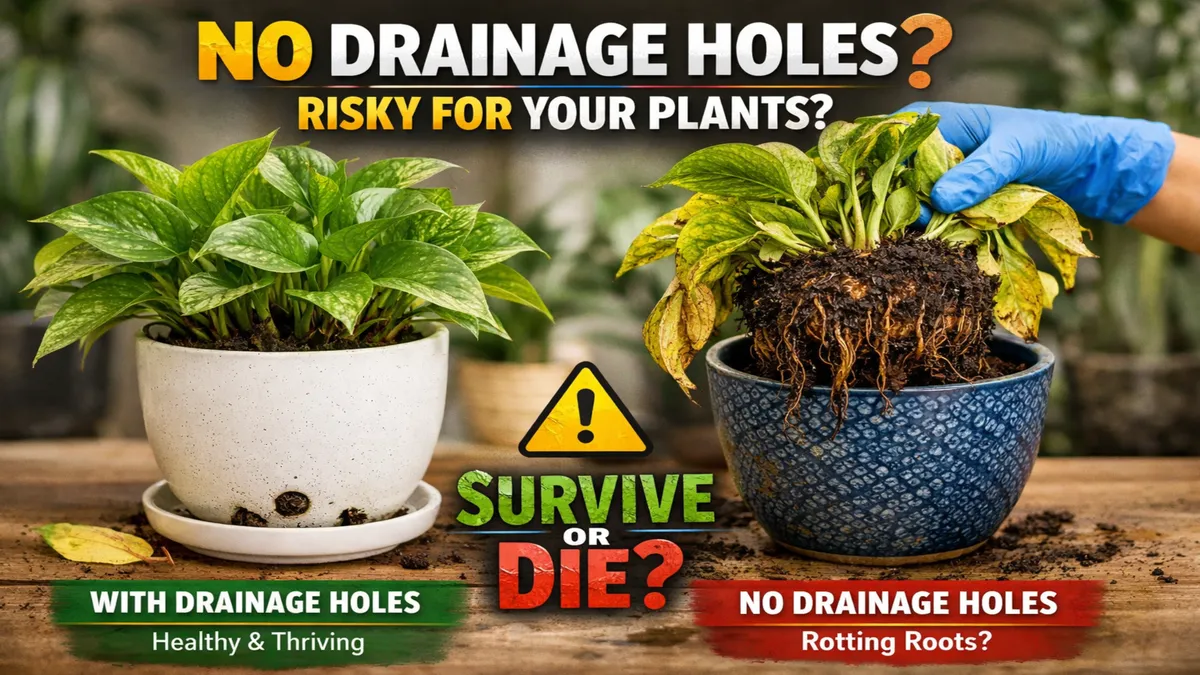
Indoor plants make homes feel calm and vibrant, but choosing the wrong pot can quietly harm them. Many decorative containers lack drainage holes, a major concern for plant owners. I faced a similar situation when I purchased a beautiful ceramic pot without holes and wasn't sure if my plant would survive. Understanding how drainage affects roots helps prevent common indoor plant problems and keeps your plants healthy for the long term.
Quick Answer:
Related News
Can indoor plants survive without drainage holes?
Yes, indoor plants can survive without drainage holes, but it's risky. Without drainage, excess water gets trapped, increasing the risk of root rot, fungus growth, and plant death. However, using special techniques like careful watering, the right soil, and double potting can help plants survive safely in containers without drainage holes.
Why Drainage Holes Are Important for Indoor Plants
Drainage holes allow excess water to drain out, preventing roots from suffocating and rotting. Roots need both moisture and oxygen to survive. Without airflow, roots gradually decay.
Many people ask why drainage holes are important for indoor plants. The answer is simple: they prevent water from accumulating, which harms root health.
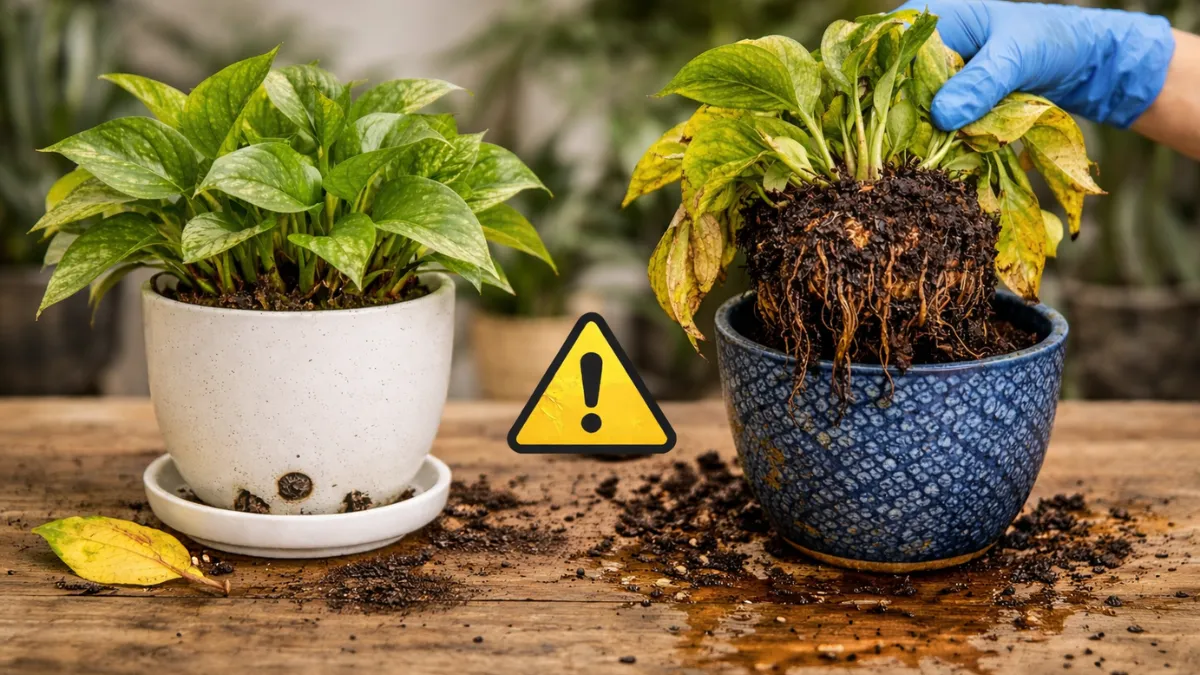
What Happens Inside Pots Without Drainage
| Condition | With Drainage Holes | Without Drainage Holes |
|---|---|---|
| Excess water | Drains out safely | Stays trapped |
| Oxygen availability | Healthy root oxygen | Limited oxygen |
| Root rot risk | Low | High |
| Soil health | Balanced | Often soggy |
| Plant survival rate | High | Moderate to low |
In my own experience, one of my pothos plants survived for months in a pot without drainage, but its growth was slower than similar plants in containers with proper drainage.
The Biggest Risks of Growing Plants Without Drainage Holes
Understanding the risks helps prevent irreversible damage.
1. Significantly Increased Risk of Root Rot
Many people wonder if indoor plants without drainage holes can suffer root rot. Unfortunately, yes. Root rot is the most common cause of plant death in such situations.
When roots remain in water for too long, they begin to rot.
Signs include:
• Yellowing leaves
• Soft stems
• Foul-smelling soil
• Slow growth
2. Overwatering is Very Easy
Without drainage holes, watering mistakes cannot be automatically corrected.
A common question is how overwatering plants in pots without drainage holes affects them. Excess water accumulates at the bottom and gradually damages the roots.
I once overwatered a snake plant in a decorative pot without holes, and the roots began to rot silently before symptoms appeared.
3. Salt and Mineral Buildup Damages Roots
Tap water contains minerals that build up over time.
Many plant owners ask if salt buildup damages indoor plants in un-drained pots. Yes, because the minerals can't be flushed out, they slowly poison the roots.
Plants That Can Better Sustain Undrained Pots
Some plants tolerate poor drainage conditions better than others.
People often search for which indoor plants survive best without drainage holes. These plants are more tolerant:
| Plant Name | Tolerance Level | Reason |
|---|---|---|
| Snake Plant | High | Stores water in leaves |
| ZZ Plant | High | Drought tolerant |
| Pothos | Moderate | Adaptable roots |
| Spider Plant | Moderate | Flexible growth |
| Succulents | Low | Need fast drainage |
| Peace Lily | Low | Sensitive roots |
The Safest Ways to Grow Plants Without Drainage Holes
If you use the right technique, you can safely grow plants without drainage.
Method 1: Double Potting (The Safest Method)
This is the method I personally use and recommend.
People often ask what double potting is for indoor plants. It means placing your plant in a plastic pot with drainage holes and placing it inside a decorative pot.
Benefits:
• Perfect drainage
• Easy watering control
• Decorative look
• Reduced risk of root rot
This method works very well in the long run.
Method 2: Add a drainage layer (limited effectiveness)
Some people recommend adding stones to the bottom.
A frequently asked question is whether adding stones improves drainage without holes. It helps a little, but it doesn't replace proper drainage holes.
Drawbacks : Water will eventually accumulate.
Method 3: Use a well-draining soil mix
The right soil prevents water from accumulating.
People often ask what soil is best for pots without drainage holes. The right mix includes:
• Coco peat
• Perlite
• Sand
• Lightweight potting soil
This improves aeration.
How to Safely Water Indoor Plants with No Drainage Holes
Watering methods are crucial.
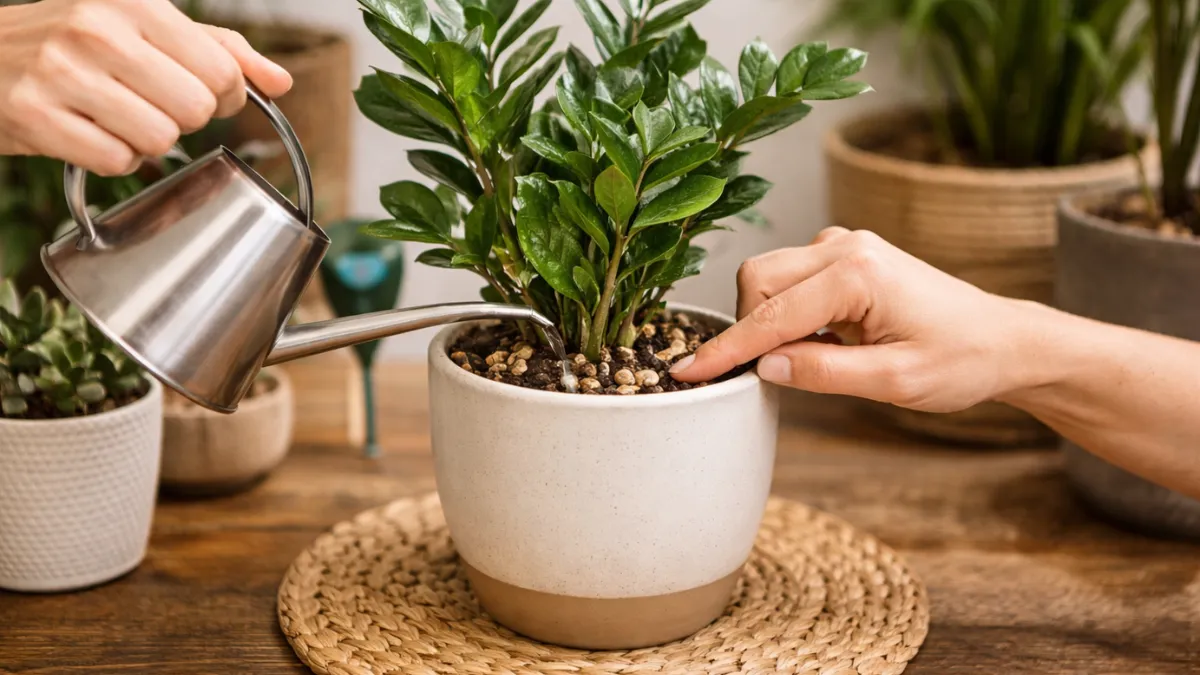
Many newcomers ask how much to water plants with no drainage holes. The answer is: Use 50% less water than normal.
Safe Watering Practices
• Check soil dryness first
• Use small amounts of water
• Water slowly
• Avoid watering too often
Observe the plant's response
I learned this when I accidentally overwatered a ZZ plant. Reducing watering saved it, and new growth appeared after a few weeks.
Warning Signs That Your Plant Is Suffering from Lack of Drainage
Recognizing early symptoms can prevent the plant from dying.
Many plant owners look for signs that indoor plants need drainage holes. Look for:
• Yellowing leaves
• Slow growth
• Soft stems
• Fungus gnats
• Bad odor
These signs indicate root stress.
When is it safe to use pots without drainage holes?
Pots without drainage holes can work safely under certain conditions.
People often ask if it's safe to grow indoor plants in decorative pots. Yes, if you:
Use double potting
• Water carefully
• Choose tolerant plants
• Monitor the plant's health
The purpose is clear : This guide helps indoor plant owners avoid common mistakes when using decorative pots without drainage holes.
Best Option : Make Your Own Drainage Holes
If possible, creating drainage holes is the safest solution.
Many people ask if you can drill drainage holes in ceramic pots. Yes, using the right drill bits makes the containers plant-safe.
This ensures plant survival.
Related Helpful Articles:
10 Pet-Safe Indoor Plants for Cats (Vet-Approved Choices)
9 Indoor Plants That Are 100% Safe for Cats (2026 List)
5 Pet-Safe Indoor Plants for Cats & Dogs (Non-Toxic & Easy to Grow)
Final Verdict: Should you use pots without drainage holes?
Indoor plants can survive without drainage holes, but caution is required. The safest and most reliable method is double potting. While some plants can tolerate these conditions, drainage holes always ensure better long-term health.
One thing that didn't work for me was relying solely on a layer of pebbles without adjusting the watering. Over time, the plant still developed root rot.
Limitation : Even with precautions, pots without drainage always pose a higher risk than containers with proper drainage.
For best results, combine smart watering, the right soil, and careful plant monitoring.
Written from real experience caring for indoor plants for IndoorPlantify.