


Many indoor plants experience yellowing leaves, even if you water and care for them properly. Hidden causes such as light imbalances, root stress, mineral and environmental changes often cause this problem.
Yellow leaves can seem confusing.
• You water the plant.
• You place it near the light.
• You try everything right.
Related News


Yet one morning, you find another yellow leaf.
In many homes, this happens even when plant care seems perfect. The truth is, plants react to small changes that can be easily overlooked.
Once you understand the underlying causes, fixing the problem is usually much easier.
The Hidden Reasons Behind Yellowing Leaves in Indoor Plants
Most yellowing leaves aren't due to neglect. They usually appear due to minor environmental imbalances around the plant.
These problems develop gradually, so the plant shows stress through yellowing leaves.
Let's look at the most common hidden causes.
Quick Info Table
| Problem Sign | Possible Hidden Cause | What It Means | Quick Fix |
|---|---|---|---|
| Lower leaves turning yellow | Natural aging | Older leaves naturally fade | Trim old leaves |
| Yellow leaves with soft stem | Overwatering | Roots staying wet too long | Reduce watering |
| Yellow edges on leaves | Mineral buildup | Salt accumulation in soil | Flush soil with clean water |
| Pale yellow leaves | Low light stress | Plant not getting enough light | Move near brighter window |
| Yellow spots or patches | Temperature stress | Sudden room temperature changes | Keep plant in stable environment |
| Leaves yellow after repotting | Root disturbance | Roots adjusting to new soil | Allow recovery time |
Light imbalance (too little or too much)
Light problems are one of the most overlooked causes.
Plants need light to produce energy through photosynthesis. When light levels are too low, the plant cannot support all its leaves.
Older leaves gradually yellow and fall off.
But too much direct sunlight can also cause leaves to turn yellow. Leaves may wilt, develop light spots, or appear slightly burned.
In my experience, many people place plants near a bright window but forget that afternoon sun can be very harsh.
Moving the plant a little further away from direct sunlight often corrects the problem.
Overwatering That Doesn't Seem Like Overwatering
Most people think overwatering means watering every day.
But sometimes the real problem is slowly drying out soil.
If the potting mix stays wet for several days, the roots can't breathe properly. Over time, they weaken, and the plant reacts by yellowing its leaves.
I once had a pothos plant that kept turning yellow despite watering it only once a week.
Later, I realized the decorative pot didn't have proper drainage. The soil stayed wet for longer than I thought.
After I moved it to a pot with drainage holes, the yellowing leaves stopped.
Mineral Buildup in the Soil
Tap water often contains minerals like calcium, fluoride, and salt.
Over time, these minerals accumulate in the soil. This buildup can hinder the plant's ability to absorb nutrients.
This results in slightly yellowing leaves, even if the plant is receiving adequate water and light.
You may also notice a white film forming on the soil surface.
An easy solution is to flush the soil with clean water once every few weeks. This washes away excess minerals.
Sudden Temperature Changes
Indoor plants prefer a stable environment.
But in many homes, temperature changes occur unnoticed.
Common examples include:
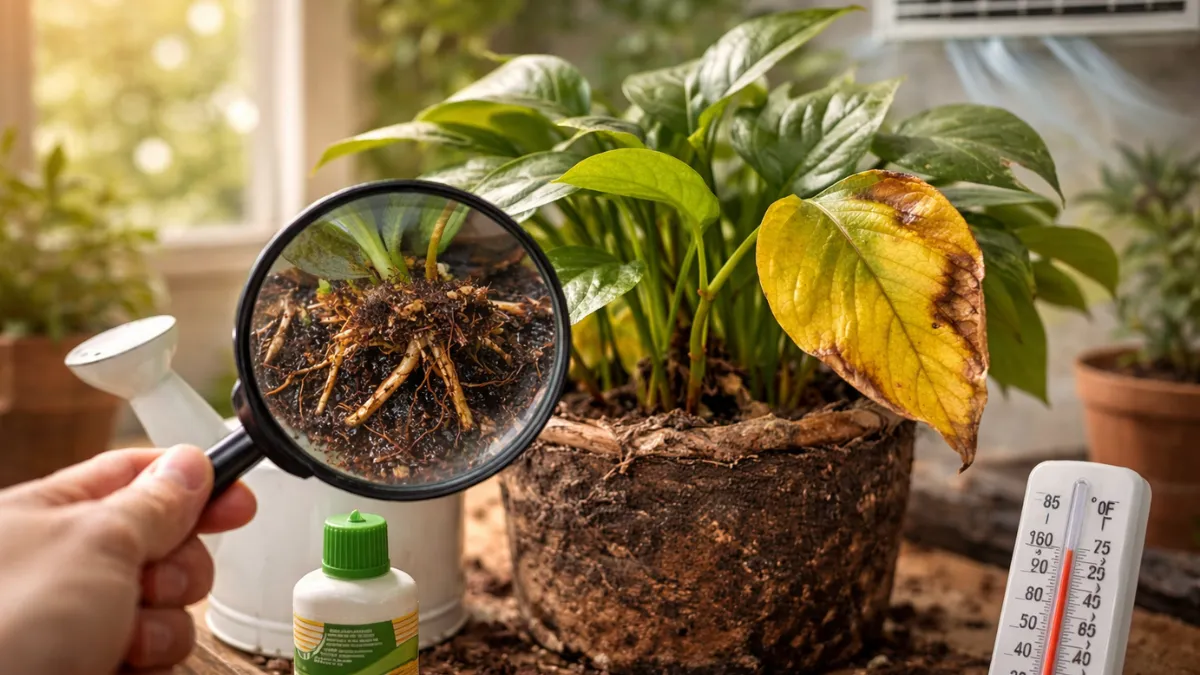
• Air conditioners turning on and off
• Cold air blowing through windows
• Heat from nearby appliances
• Fans blowing directly on the plants
When plants experience sudden temperature stress, their leaves sometimes turn yellow.
I once observed this with a peace lily kept near an AC vent. The leaves gradually turned yellow until I moved it to a cool corner.
Root Stress After Repotting
Plants grow better after repotting.
However, roots sometimes get slightly damaged during this process.
For a short time after repotting, the plant focuses on repairing its roots rather than supporting all of its leaves.
It's completely normal for some yellowing of leaves to occur during this adjustment period.
This recovery usually takes two to three weeks.
One mistake I made early on was repotting plants too often. This actually caused more stress than it helped.
Now I only repot when the roots clearly outgrow the pot.
Natural Aging of Leaves
Occasionally yellowing leaves are part of a plant's life cycle.
Plants regularly shed their oldest leaves as new ones grow.
This usually happens with the lowest leaves near the base of the plant.
If only one or two lower leaves turn yellow while the rest of the plant appears healthy, there's usually no cause for concern.
Simply cut off the leaf and let the plant continue to grow.
Hidden Nutrient Imbalance
Plants need small amounts of nutrients like nitrogen, magnesium, and potassium.
If the soil becomes depleted, leaves may gradually turn yellow.
However, too much fertilizer can also cause similar symptoms.
That's why balanced feeding is essential.
In my experience, light fertilization during the growing season works much better than overfeeding.
Once, too much fertilizer burned the roots of one of my snake plants. The leaves turned yellow shortly afterward.
Since then, I always add more fertilizer than recommended.
Stress from Frequent Plant Movement
Plants adapt to their surroundings slowly.
When you repeatedly move a plant between different rooms or lighting conditions, it takes time to adjust each time.
This constant adjustment can stress the plant.
Yellow leaves sometimes appear during this transition.
Keeping the plants in a stable location usually resolves this problem.
When Yellow Leaves Are Actually a Warning Sign
Occasionally, yellowing leaves is normal.
But if many leaves turn yellow at once, the plant may be under more stress.
Look for these signs:
• Yellow leaves spreading rapidly
• Soft or slimy stems
• Soil smells bad
• Leaves curling
These symptoms could indicate root problems or serious watering issues.
At that point, it's important to check the condition of the roots and soil.
Easy Ways to Prevent Yellow Leaves
A few simple habits can prevent most yellowing leaf problems.
Keep these simple tips in mind:
• Use pots with drainage holes
• Allow the soil to dry out slightly between waterings
• Avoid sudden temperature changes
• Flush the soil occasionally to remove minerals
• Repot only when necessary
• Keep plants in stable light
Plants generally respond quickly when the environment is balanced.
Related Helpful Articles:
Yellow Leaves on Indoor Plants? Heres What Experts Say
ZZ Plant Leaves Yellow? 2025 Winter Mistake 63% Owners Make
The important thing most plant owners forget:
Plants communicate slowly.
They don't show stress immediately. Yellowing leaves often appear weeks after the actual problem begins.
This delay is why caring for plants can sometimes seem confusing.
But once you carefully consider the environment—light, soil, water, and temperature—the cause usually becomes clear.
Indoor plants are surprisingly forgiving.
With minor adjustments, they often recover faster than we expect.
Written from real experience caring for indoor plants for IndoorPlantify.