

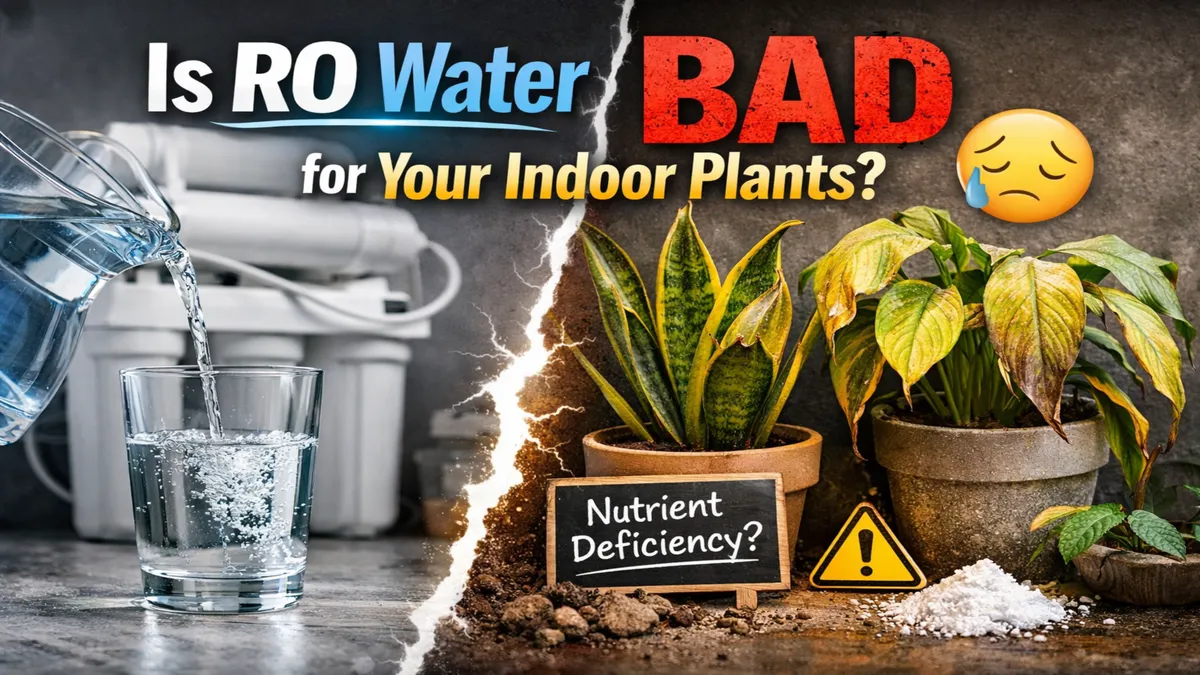
Indoor plant owners often believe that clean water equals healthy plants. Because RO water is purified and chemical-free, it seems like the safest option. I used RO water for months, thinking it would protect my plants from the salts in tap water. But surprisingly, some plants began to grow slowly for no apparent reason. This forced me to question everything and do in-depth research. So, is RO water really safe for indoor plants long-term, or is it silently harmful?
Quick Answer:
Related News
Is RO Water Safe for Indoor Plants?
RO water is safe occasionally, but not for regular use. It removes harmful salts but also removes minerals essential for healthy plant growth. Long-term use can weaken plants.
Best Practice : Mix RO water with tap water or add minerals back occasionally.
What is RO water and why do people use it?
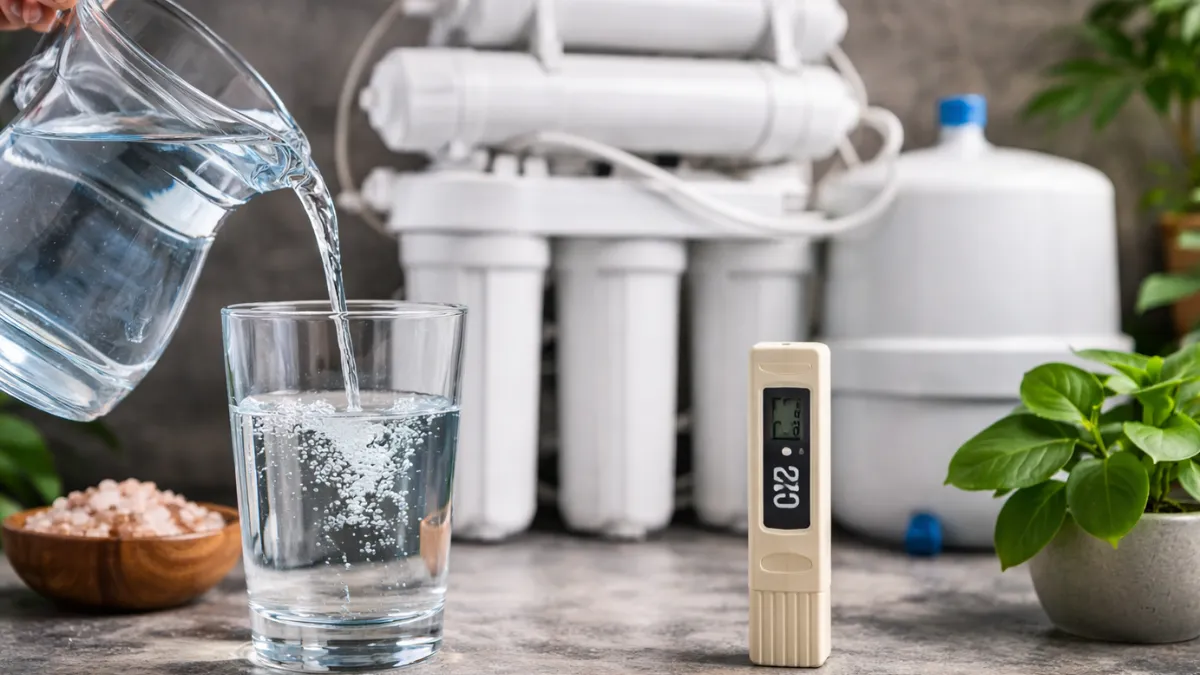
RO (reverse osmosis) water is filtered through a special membrane that removes:
• Heavy metals
• Chlorine
• Fluoride
• Salt
• Dissolved minerals
This makes the water very pure. Many people believe that purity means safety. But most plant growers don't realize why purified water can sometimes harm indoor plants.
Plants don't just need clean water. They also rely on the small minerals naturally present in water.
Shocking truth : RO water removes essential nutrients
RO water removes both harmful and beneficial substances.
Plants need small amounts of minerals, such as:
• Calcium
• Magnesium
• Potassium
• Some micronutrients
Without these, plants gradually weaken. This explains why indoor plants grow slowly when watered with RO water, even if everything else appears fine.
| Component | Tap Water | RO Water |
|---|---|---|
| Chlorine | Present | Removed |
| Harmful salts | Sometimes high | Removed |
| Calcium & Magnesium | Present | Removed |
| Plant-supporting minerals | Present | Mostly removed |
RO water is clean but "nutritionally depleted."
How RO water affects indoor plants over time
Short-term use is generally fine. Long-term use may cause hidden problems.
Common effects include:
• Slowed growth
• Weak stems
• Yellow leaves
• Weak roots
Many people ask if RO water can cause nutrient deficiencies in indoor plants. The answer is yes, but gradually.
The damage is gradual and difficult to notice at first.
My real-life experience using RO water
I watered my snake plant and peace lily with only RO water for about four months. Initially, everything seemed fine. But later, growth stopped completely.
The leaves didn't die, but new leaves never appeared. This made me realize why plants stop growing despite adequate water and sunlight.
When I started using mixed water (RO + tap), growth resumed within a few weeks.
One thing that didn't work:
I tried using only RO water and increasing fertilizer. But growth was still slow.
This showed me why fertilizer alone can't fix mineral-deficient water problems because water itself doesn't contain the necessary base minerals.
When water lacks its natural mineral balance, plants absorb nutrients differently.
When RO water is actually helpful
RO water can be beneficial in certain situations:
• If tap water has too much salt
• If white salt deposits form on the soil
For sensitive plants like calathea and spider plants
That's why many people wonder which indoor plants benefit most from RO water.
Sensitive plants prefer less salt, but they sometimes need minerals too.
The best and safest way to use RO water for indoor plants
The safest way is to mix it.
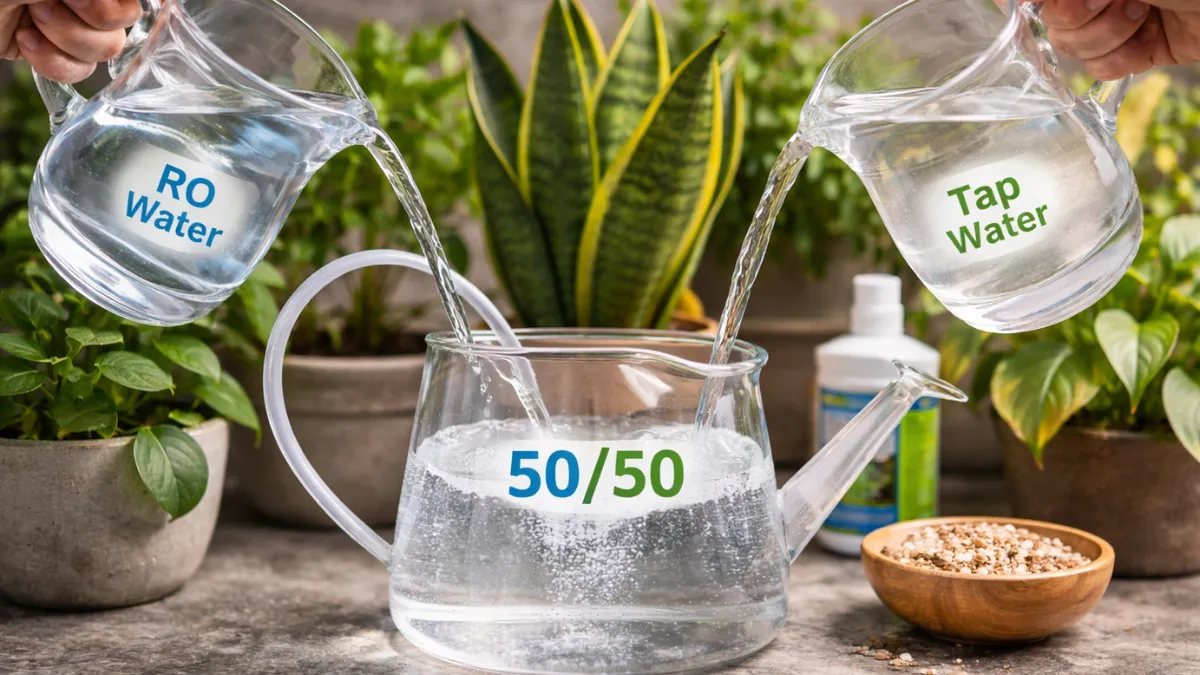
Correct ratio:
• 50% RO water
• 50% tap water
This maintains purity and mineral balance.
Second option:
Use RO water most of the time, but switch to tap water once every 2–3 weeks.
This helps prevent plant disease.
How to use RO water safely without harming plant growth.
Signs that your plant is suffering from RO water alone
Look for these small warning signs:
• No new leaves
• Thin stems
• Slow growth
Weak root development
These signs answer how to identify mineral deficiencies caused by purified water.
The plant survives but doesn't grow.
Plants Most Sensitive to RO Water Problems
These plants often grow slowly but steadily:
• Snake Plant
• Money Plant
• Peace Lily
• Rubber Plant
• Areca Palm
They depend on a constant mineral supply.
This explains which common indoor plants require mineral-rich water to grow properly.
When is RO water better than tap water?
RO water is preferable if tap water has:
• Very high TDS (over 300 ppm)
• Obvious salt deposits
• Hard water stains
Important Limitation of RO Water
• RO water itself is not harmful. The limitation is lack of nutrients.
• It cannot support optimal plant growth alone.
• Plants evolved with mineral-rich natural water sources.
This answers why completely pure water is not ideal for plant health.
Simple Rule Most Plant Experts Follow
Best indoor watering practice:
• Tap water (if not extremely hard)
• Or mixed RO + tap water
• Avoid using only RO water long-term
Balanced water supports healthy roots, leaves, and growth.
This solves what type of water helps indoor plants grow faster and healthier.
Final Verdict: Should You Use RO Water?
RO water is not dangerous, but not perfect either.
Use it smartly, not exclusively.
Best summary:
• Safe occasionally
• Not ideal alone long-term
• Mixing with tap water works best
• Healthy plants need both clean and mineral-balanced water.
Related Helpful Articles:
Best Indoor Plants for Self-Watering Pots (Smart Gardening)
Indoor Plant Watering Schedule Chart (Weekly & Seasonal Guide 2026)
Why Indoor Plants Stop Absorbing Water (Even When Soil Is Wet)
Written from real indoor plant care experience for IndoorPlantify