


If you have even a little knowledge of plants, you'll know that north-facing rooms often feel dim and gloomy, especially in Indian homes where buildings are close together. Many people think that plants can't survive there. But that's not true. I've successfully grown several indoor plants in north-facing bedrooms, halls, and study rooms. You just need to choose the right plants and care for them properly. In this article, I'll tell you about some low-light indoor plants that actually thrive in such rooms.
Why are north-facing rooms low in light?
North-facing rooms don't receive direct sunlight. They mostly get soft, indirect light for a short period during the day. This makes them cooler and darker compared to other rooms.
Related News



Because of this low light, many flowering or sun-loving plants don't grow well here. However, some indoor plants naturally grow under trees or in shady forests, so they adapt well to these conditions.

Best Low-Light Indoor Plants for North-Facing Rooms
Snake Plant (Sansevieria)
The snake plant is one of the hardiest indoor plants I've ever grown. It easily survives in very low light and requires very little water. In my north-facing bedroom, it grows slowly but remains healthy.
Related Article
[Should You Move Your Snake Plant Closer to the Window? Most Homes Get This Wrong]
This plant also significantly improves indoor air quality and doesn't require daily attention. It's perfect for beginners and busy people.
ZZ Plant
If your room remains dark during the day, the ZZ plant is perfect for you. Its thick leaves store water, so it doesn't need frequent watering. I also have one in the corner of my north-facing living room.
Related Article
[ZZ Plant Low Light Survival Exposed : The Truth Most Homes Get Wrong]
Even under artificial light at night, it remains green and vibrant. The only mistake to avoid with this plant is overwatering.
Pothos (Money Plant)
The money plant is very common in Indian homes, and for good reason. It thrives in low light and can happily live in north-facing rooms. I've grown it in both water and soil, and it did well in both.
Related Article
[Money Plant Looks Healthy but Still Not Growing? The Real Reason Most Homes Miss]
Place it near a window or on a wall shelf. But avoid keeping it in complete darkness.
Low-Light Plants That Also Look Decorative
Peace Lily
The peace lily thrives in indirect light and enhances the beauty of your home with its white flowers. In my experience, it produces fewer flowers in north-facing rooms, but it remains green and healthy there as well.
Related Article
[Peace Lily Air Purifier Myth Busted : What Works in Real Homes]
Water it only when the topsoil feels dry. It also tells you when it needs water by drooping slightly.
Aglaonema (Chinese Evergreen)
Aglaonema is a colorful plant that does very well in low light. It's perfect for bedrooms and offices with north-facing windows.
It doesn't like cold drafts or overwatering. Its easy care keeps it fresh for years.
Using Artificial Light for Extra Support
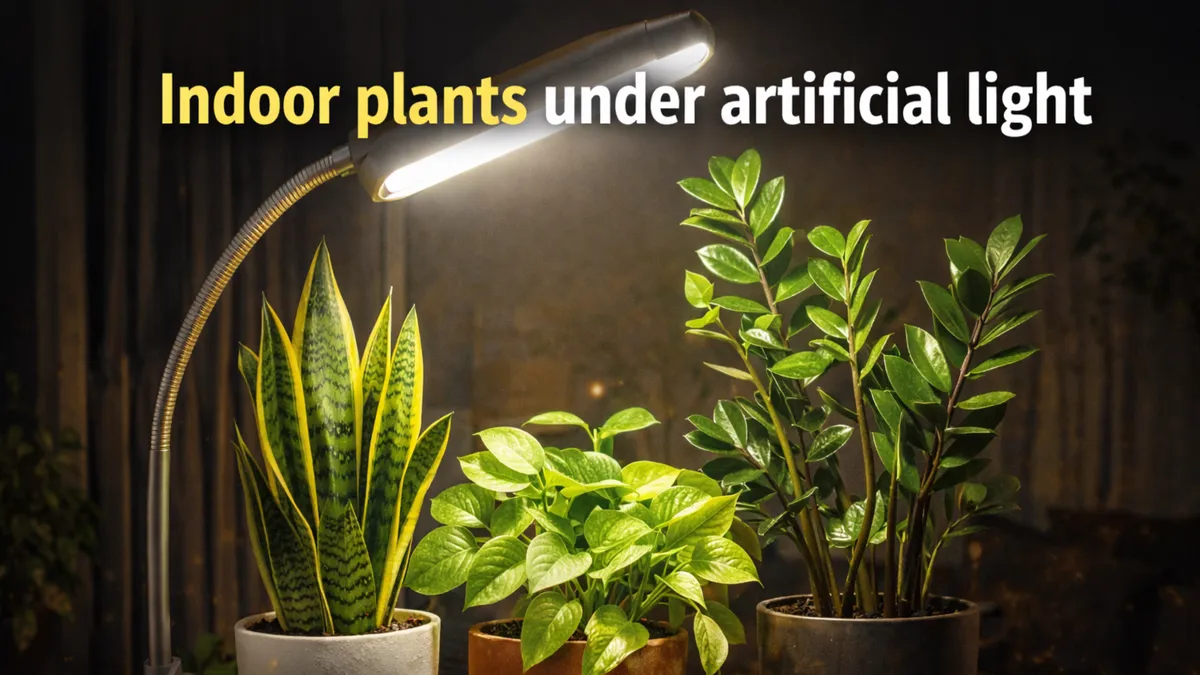
If your room is very dark, you can use a simple LED bulb or tube light. Most plants in Indian homes don't require special grow lights.
Keep the light on for 6–8 hours daily. I have successfully used regular white LED lights for Money Plants and Snake Plants.
General Care Tips for Low-Light Indoor Plants
Even low-light plants need some light. You can keep them indoors, but not too far from a window. And yes, rotate the pots every few weeks so that all sides get some light.
Water less in low-light rooms because the soil dries out slowly there. Overwatering is the biggest reason indoor plants die in north-facing rooms.
Care Comparison Table for Plants in North-Facing Rooms
| Plant Name | Light Needed | Watering Frequency | Best Room Location |
|---|---|---|---|
| Snake Plant | Very Low | Every 10–15 days | Bedroom corner |
| ZZ Plant | Low | Every 15–20 days | Living room |
| Money Plant | Low–Medium | Every 7–10 days | Near window |
| Peace Lily | Low | Weekly | Bedroom or hall |
| Aglaonema | Low | Every 7–10 days | Office room |
Mistakes to Avoid in North-Facing Rooms
| Common Mistake | What Happens | Simple Fix |
|---|---|---|
| Overwatering | Root rot | Water less |
| No window light | Weak growth | Move closer to window |
| Too many plants | Humidity issues | Keep space between pots |
Final Tips from Real Home Experience
North-facing rooms are not the enemy of plants. Just choose slow-growing, shade-loving plants and keep the care simple. Don't overwater and don't expect rapid growth. Focus on patience, and these plants will stay healthy and make your room feel calm and fresh. I have grown many of these plants for years with basic care and low light. And they are still thriving today.