


Yes, a money plant can grow in water without soil if it is done correctly. Many indoor gardeners prefer growing money plants in water because it is clean, low-maintenance, and visually attractive. However, simply placing a cutting in water is not enough for long-term healthy growth. Light, water quality, and regular care play an important role. In this guide, we explain how to grow a money plant in water without soil, how long it can survive, and the common mistakes you should avoid.
Quick Answer:
A money plant can grow in water without soil for a long time if it receives indirect light, clean water, and occasional nutrient support. Regular water changes and proper stem placement are essential for healthy growth.
Can Money Plant Grow in Water Without Soil?
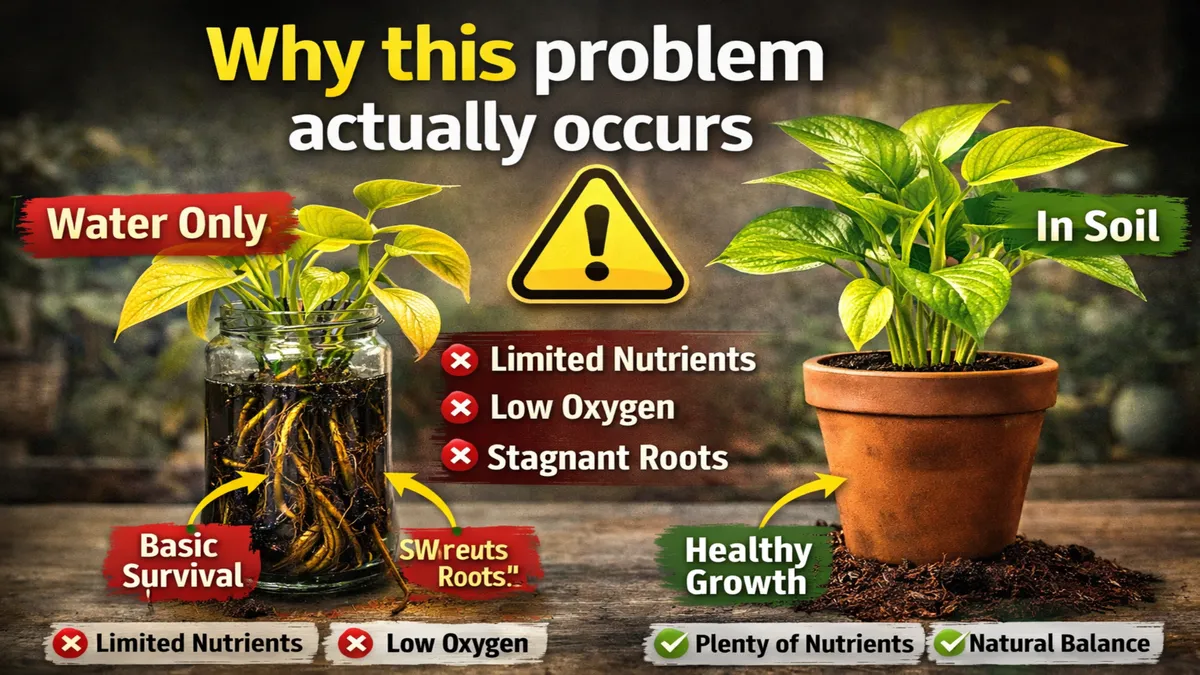
Money plants can survive in water because they are very tolerant, but water alone doesn't provide all the nutrients necessary for long-term growth only for basic survival, not for robust health or full-sized leaves.
Related News


In soil, the roots receive minerals, small air pockets, and a natural balance, but in water, the roots become sluggish, causing their nutrient reserves to deplete gradually, and the plant survives but doesn't truly thrive like a healthy indoor plant.
Signs that your plant is struggling
When a money plant stays in water for too long, it stops producing new leaves properly, the old leaves remain small, the color becomes a lighter green, and the stems become thinner, indicating that the plant is alive but not strong.
Another sign is the roots turning brown or becoming slimy, which many people overlook, thinking it's normal, but it actually means that oxygen levels are low and the roots are slowly deteriorating.
Also Read : Money Plant Looks Healthy but Still Not Growing? The Real Reason Most Homes Miss
Example
Often, money plants kept in glass bottles near the sink in the kitchen appear fine for months, but after a year, they start showing weak vines and yellowing leaves because the daily temperature fluctuations affect the water quality.
In your bedroom, plants kept in jars of water near the AC unit grow slowly because the cool air slows down root activity, and the water doesn't warm up like soil, leading to uneven and sometimes stunted growth.
What actually works in real homes
Money plants can grow in water for an extended period if given basic care, but it's not possible indefinitely without additional support, as plain water cannot replace the nutrients found in soil under typical household conditions.
The best approach is to let the plant grow in water for a while, then either transfer it to soil or provide proper water-based nutrients to support healthy root development and strong foliage.
How to Grow Money Plant in Water (Step-by-Step)
You need to change the water every seven to ten days, not just when it looks dirty, because fresh water brings fresh oxygen, which the roots need far more than people realize for stable and healthy growth.
Use a dark-colored bottle instead of clear glass, as sunlight in the water often causes algae to grow, which steals oxygen from the roots and slowly weakens the plant without showing immediate damage.
Keep the plant in indirect light, not direct sunlight, because roots grown in water heat up quickly, and too much sun will cause the leaves to yellow and the water to start smelling within a few days.

Placing it near a window that gets gentle morning sun is best, but avoid placing the bottle near gas stoves, AC vents, or fans, as sudden temperature changes silently damage the plant.
Also Read : Overwatering Is not the Problem : The Real Reason Your Plants Are Dying
Some common mistakes people make
Many people add fertilizer directly to the water without diluting it, thinking it will speed up growth, but this often burns the roots and makes the water dirty, causing rapid damage to the roots.
Another mistake is putting too many cuttings in one bottle, which looks nice but forces the roots to compete for oxygen, resulting in all the cuttings becoming weak instead of one healthy growing vine.
Ignoring root health
Often people focus only on the leaves and completely forget about the roots, but the roots tell the real story, and when the roots look black, mushy, or smelly, the plant is already under stress.
Healthy water roots should look white or light brown and feel firm, and if there is any change, it means the plant needs fresh water, better light, or sometimes even a transfer to soil.
A Soothing Conclusion
Money plants can survive in water for extended periods, but not indefinitely without care, and soil still offers the best balance for robust growth, larger leaves, and less daily worry.
If you prefer growing them in water, handle them gently, change the water regularly, provide indirect light, and observe the roots, as plants communicate silently, and consistent care always works better than shortcuts.