

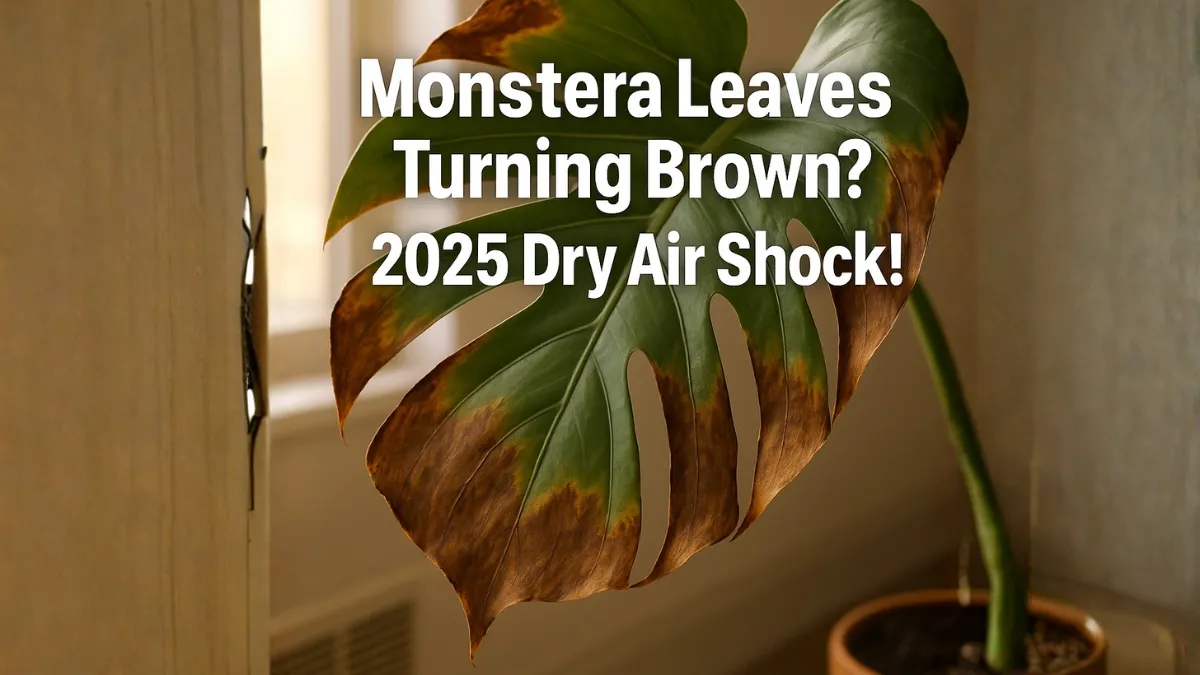
Many people are currently experiencing the problem of their Monstera plants' leaves turning excessively brown.He also says that his Monstera plants are bursting and this is happening suddenly. The reason for this growth is excessive use of heaters and ACs in winters and lack of humidity inside the house, due to which the leaves of Monstera burst on their own when they grow, but when the humidity goes below 45%, then due to this their leaves become brown, crispy and rough, due to which the parents of those plants get very upset. In today's indoor environment, these tropical plants are not getting the required amount of humidity, due to which this problem is occurring in our plants. Let us know why this problem is occurring and how to fix it.
Dry Air Shock — The No. 1 Cause of Brown Splits
Brown splits occur when Monstera leaves dry out faster than the plant can hydrate, causing the plant to lose moisture. This causes the thin spaces between the leaf blades to weaken and tear over time. This problem is more common in hot bedrooms, air-conditioned rooms, or near windows where the air is dehydrated. Leaves are particularly sensitive to moisture, and even brief exposure to dry air can cause cracks or brown streaks. This won't kill your plant, but it is causing significant stress. You can prevent new leaves from splitting unnaturally by increasing the ambient humidity, avoiding direct airflow, and keeping the plant away from heaters.
Related News



Underwatering stress leading to leaf blistering
People often ask whether under-watering causes Monstera leaves to turn brown. The answer is yes. Low humidity weakens leaf tissue and makes it paper-like, especially along the fenestration lines. When plants are chronically under-watered, the pressure on their leaves decreases, causing them to shrink slightly and then tear, weakening the edges of the fenestration and rapidly changing color. To correct this, water the plants until excess water drains from the plant, and only water when the soil dries out to within an inch or two. Water again once the soil has thoroughly dried. Regular watering keeps the leaf cells strong and hydrated, significantly reducing stress-induced cracks. Proper hydration, combined with high humidity, helps plants recover faster.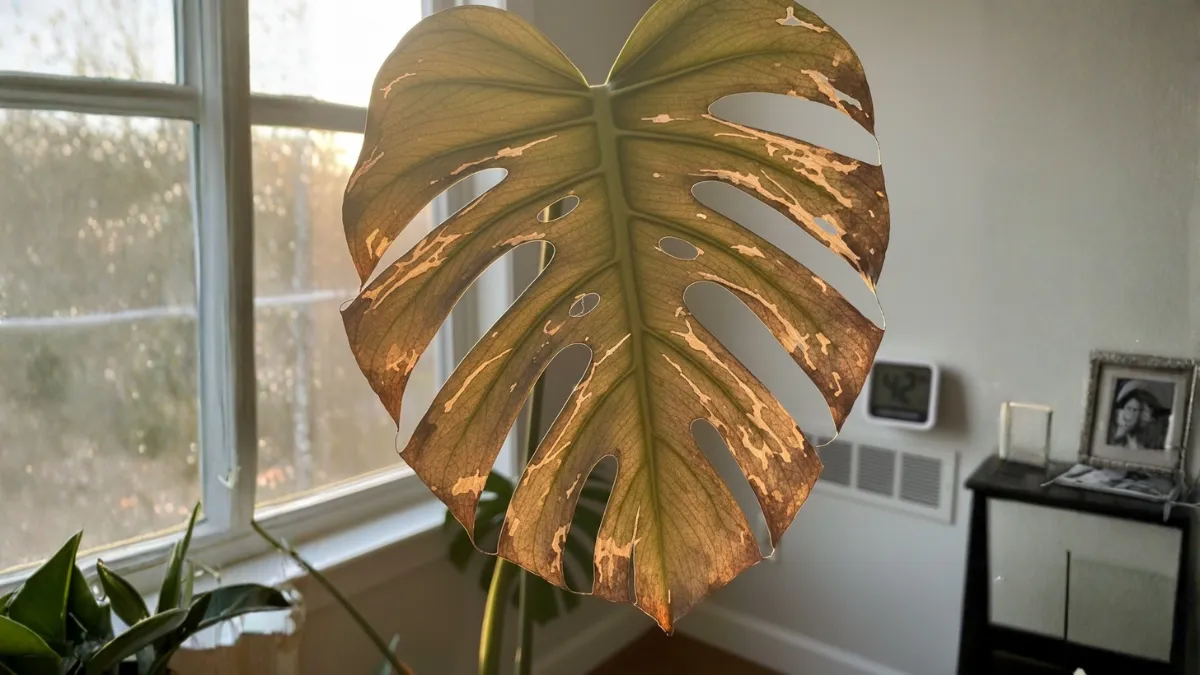
Low light and cold winds are increasing plant damage.
Low light slows down the Monstera plant's ability to develop healthy, thick leaves. In 2025, Google queries for "Monstera thin leaves cracking" increased due to reduced sunlight in winter. Thin leaves tear easily, especially when cold air from windows or AC vents hits the plant's leaves. The temperature changes weaken the leaf structure, causing cracks to form right where the fenestrations form. To correct this, expose the plant to bright, indirect light—about 3–5 hours each day. But keep it away from cold windows, air conditioners, and heaters. A consistent temperature between 18°C–27°C ensures that new leaves develop strong tissue that prevents tearing.
Mechanical Damage—A Silent Cause Most People Overlook
This is a problem that often goes unnoticed when you move the plant. Many Monstera leaves tear due to rubbing against walls, shelves, or neighboring plants. But the problem with "Monstera leaves tearing on their own" is that people assume something is wrong with the plant. In reality, young leaves are very soft and delicate; even a slight friction can cause small cracks that worsen over time. Pets bumping into the plant or accidentally hitting it while watering often go unnoticed. The simple solution is to give your Monstera space to fully open. Rotate the pot occasionally, adjust surrounding objects, and ensure the new leaves have adequate space to open without obstruction. This simple step can prevent many physical cracks.
Nutrient deficiencies are weakening leaf fibers.
This question is also increasing rapidly in the minds of people that why the fibers of Monstera plants are becoming weak due to lack of nutrients. The simple reason for this is that deficiency of magnesium, potassium or calcium can weaken the cell walls, due to which the fenestration lines become soft and the risk of tearing increases. When the plants start lacking essential minerals, the edges dry out rapidly and then they tear easily. Give your Monstera plant a balanced liquid fertilizer every 20 to 25 days, so that the strength of the leaf tissue returns. Adding magnesium supplements or diluted seaweed fertilizer makes the leaves stronger and thicker. Make sure to repot your plants at least once a year with fresh soil so that the roots get enough nutrients for healthy fenestration.
How to prevent leaves from turning brown in the future?
To prevent future leaf growth, keep the humidity above 50%, water regularly, provide bright, filtered light, and use a pebble tray or keep a bowl of water nearby to naturally increase humidity. Thoroughly clean your plant's leaves weekly to allow for proper photosynthesis. Never place the plant near a heater or AC vent. Provide a balanced fertilizer monthly, and refresh the soil every 12 to 18 months. New leaves in good condition will have strong, shiny fenestrations without cracking or browning.