

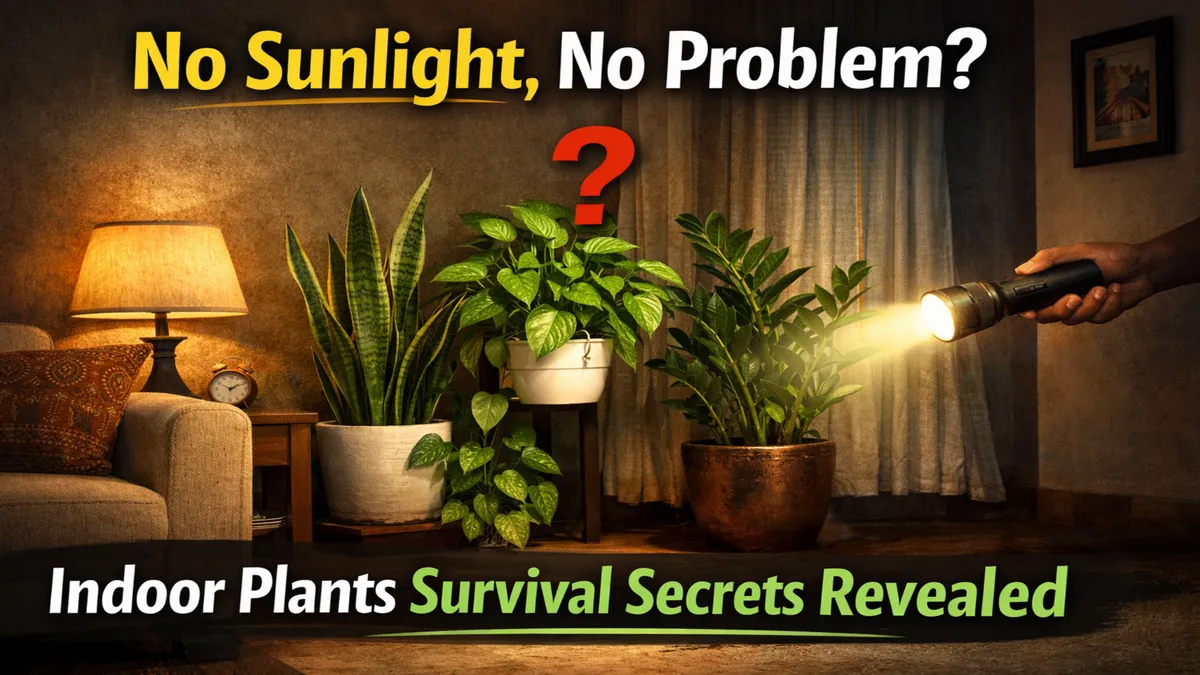
You've probably noticed that many homes have corners where sunlight never reaches, yet people still place plants there, hoping they'll survive. I did this myself in my apartment many times, and for months I wondered why some plants quietly thrived while others slowly withered away without any apparent reason.
Why does this problem actually occur?
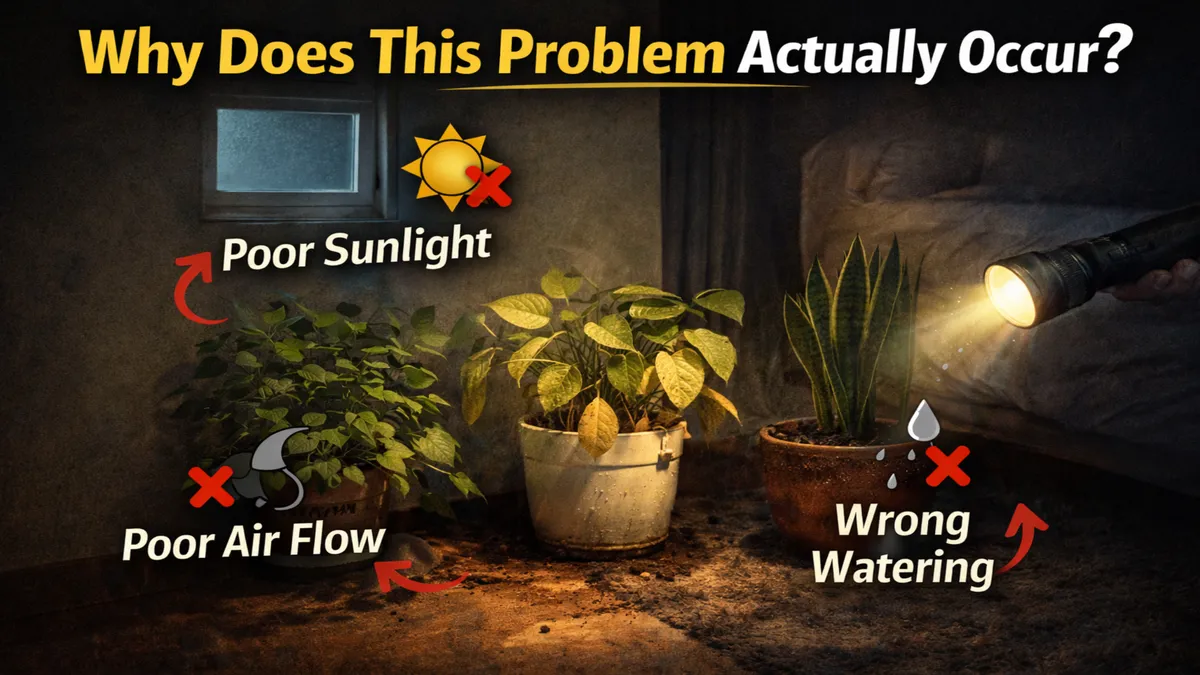
Most people think that indoor plants die simply because there isn't enough sunlight, but that's not the whole truth. The real problem stems from low daily light levels in enclosed rooms, poor air circulation, and incorrect watering habits.
Related News
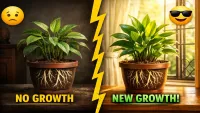
Another contributing factor is having expectations based on outdoor plants, which are completely incompatible with indoor conditions. Because indoor plants grow slowly, respire at a slower rate, and use less water, treating them like balcony plants will only stress them out.
Signs That Your Plant Is Unhappy
Plants always give off warning signs before they die, but we often overlook them because changes happen gradually indoors. Their leaves lose their luster, growth slows down, and new leaves are smaller than the old ones, meaning the plant is alive but not thriving.
Another clear sign is yellowing near the base of the plant while the upper leaves still look fine for weeks. This happens when the roots stay wet for too long in low light, causing damage to occur silently underground before the leaves show any major symptoms.
Examples
In bedrooms where the curtains are always closed, money plants often grow long and leggy with wide gaps between the leaves. This tells you the plant is stretching for light and isn't happy with its location, even if it still looks green.
Plants without windows in bathrooms, like snake plants, survive but grow very slowly. If you water them weekly like you would in a normal room, the roots will silently rot, and one day the plant will die without giving you time to correct the problem.
What Actually Works in Real Homes
Instead of chasing sunlight around your house, focus on consistent low light and routine. Plants prefer predictable conditions over sudden bursts of bright light followed by dark days.
Always choose plants that are known to thrive in shade, not just survive in online photos. Some plants that do well in these conditions include ZZ plants, snake plants, and aglaonema. These plants are built for a slow-paced indoor life and forgive many small mistakes.
Small Changes That Make a Big Difference
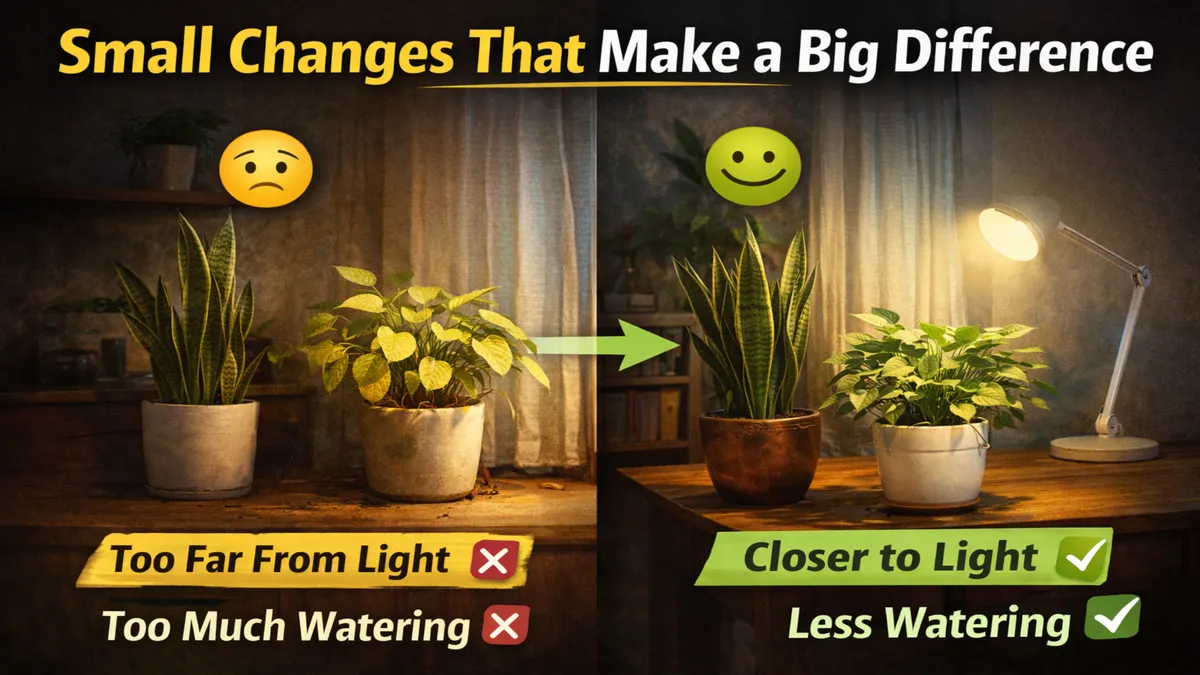
Move your plant closer to any light source, even if it's just indirect daylight coming from a window across the room. A difference of two or three feet can make a huge difference over the course of months.
Water less often than you think you should. In low light, the soil stays wet longer, so allowing it to dry out completely between waterings helps the roots breathe better and prevents fungal problems without the need for chemicals.
Using Artificial Light Wisely
If your room is dark all day, a simple white LED bulb used for eight hours a day is more helpful than fancy plant lights. I used a regular desk lamp, and the plants responded gradually but noticeably within a few weeks.
Keep the light at a consistent distance and for a set duration each day. Plants prefer routine over intensity, and irregular lighting confuses their growth cycle, leading to weaker foliage, even if the light is technically brighter.
Common Mistakes People Make
The biggest mistake is constantly moving plants around to find the perfect spot. Frequent relocation stresses the plant more than insufficient light, as it never gets a chance to settle into a stable environment.
Another common mistake is over-fertilizing to compensate for poor growth. In low light, plants can't properly utilize the extra nutrients, so the fertilizer accumulates in the soil and damages the roots, making the plant weaker instead of healthier.
People also copy watering schedules online without considering their room's specific conditions. Every home has different airflow, humidity, and light levels, so a weekly watering schedule rarely works for shady indoor spaces.
Over-cleaning the leaves
Many people wipe the leaves once a week to make them shiny, but scrubbing too hard can damage the pores on the leaves. I learned this after noticing brown spots, so now I only gently wipe the leaves to remove dust about once a month, only when necessary.
A calming conclusion
Living without direct sunlight doesn't mean you can't have healthy plants in your home. It simply means you need patience, realistic expectations, and a low-maintenance approach. When you appreciate slow growth, indoor plants quietly thrive and stay lush and green for years.