Parrot Tulips are taking over 2025 gardens with their bold, feathered petals and dramatic color-changing blooms. Learn how to grow them, care for them, and choose the best varieties for your space.
✨
AI summarized this news · Reviewed by Indoor Plantify
Have you ever seen a tulip plant that looks like it was painted by a painter? Today we are talking about such a tulip plant whose name is Parent Tulip. With its feather-like curly petals and bold attractive colors, this plant is completely different from any other tulip plant. Its petals can change their color from deep red and orange to purple and each of its flowers is a masterpiece.
This is completely different from all other standard tulip plants because the petals of the parent tulip plant are twisted and turned like a parrot, due to which this plant got its name. Due to the wonderful look of this plant, you can use these flowers for flower decoration in your gardens, courtyards or any other places.
Parrot tulips attract everyone's attention because of their unique colors. They bloom from mid-spring to the last months and when the season reaches its peak, they fill the gardens with their vibrant colors. New gardeners like them not only because of their colors, there is another special reason because this plant is very attractive and colorful in appearance, due to which new gardeners like them very much and no other tulip plant can beat it in terms of colors.
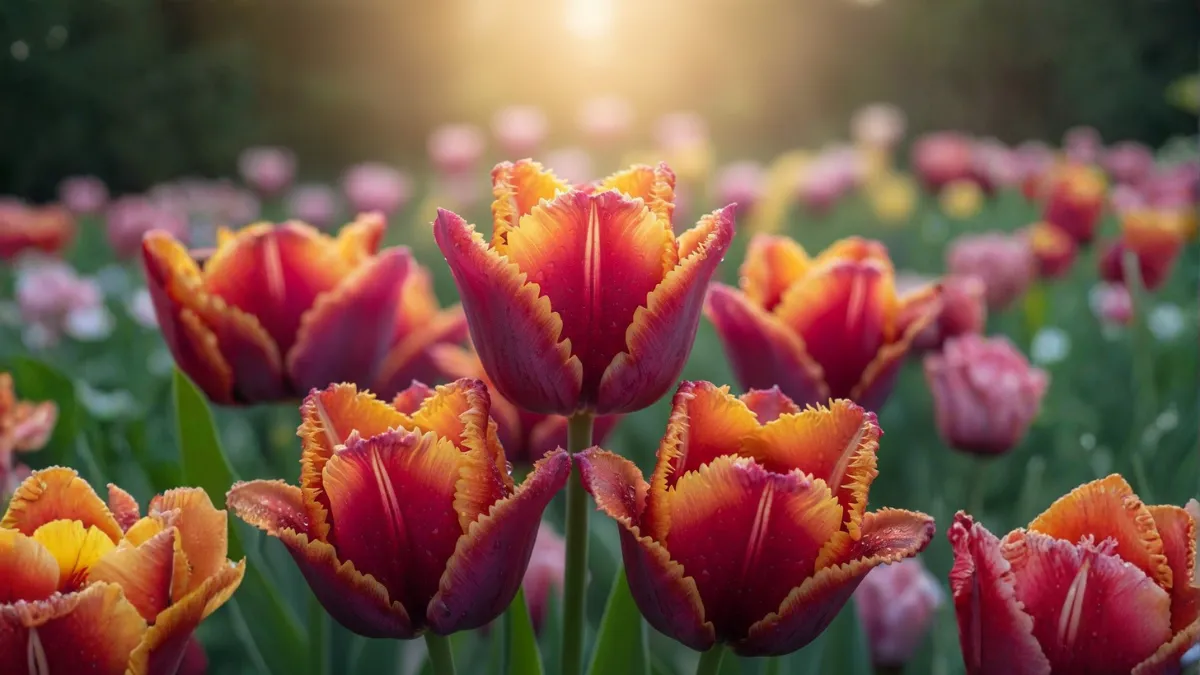
File Photo : Sunlit Parrot Tulips glowing in vibrant red and golden feathered petals during peak spring bloom. Data Insight : Parent tulips can grow to about 18-24 inches tall and each bulb can flower multiple times in a single season if properly cared for.
How to Grow and Care for Parrot Tulips
Planting : Plant the bulbs 6-8 inches deep in well-drained soil in the fall.
Sunlight : These plants can thrive in full sun; however, they can also thrive in light shade.
Watering : It's best to water this plant moderately. Avoid overwatering, as standing water can cause the bulbs to rot.
Fertilizer : Use a fertilizer specifically for bulbs when planting and in early spring for vigorous growth.
Maintenance : Remove faded flowers to conserve the bulbs' energy for the next season.
Pro tip : Rotate your parrot tulip bulbs every few years to maintain soil fertility and vibrant blooms.
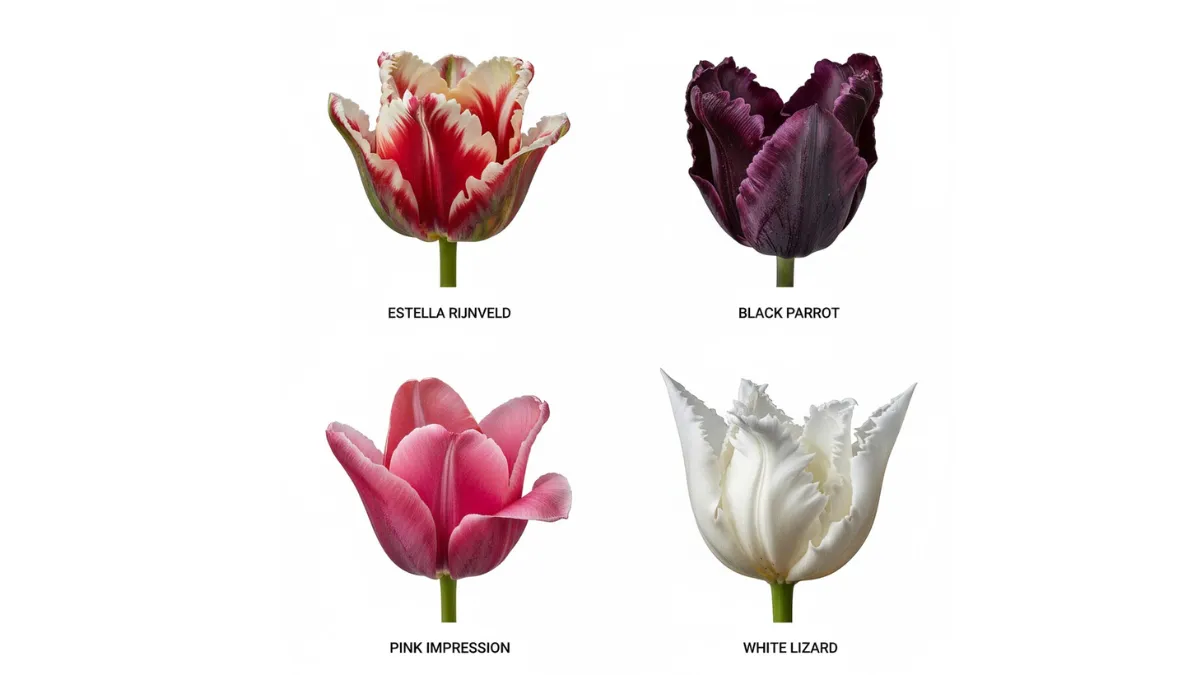
Here are some popular varieties of Parrot tulips
Estella Rijnveld : Fiery red with a fringed yellow edge.
Black Parrot : Deep purple, almost black petals for a stunning look.
Pink Impression : Light pink with a delicate feather-like texture.
White Lizard : White petals with a greenish-yellow feather pattern.
Each variety brings a unique touch to your garden, making them perfect for collectors or anyone seeking something spectacular.
File Photo : Four popular Parrot Tulip varieties—Estella Rijnveld, Black Parrot, Pink Impression, and White Lizard—showcasing their unique feathered petals and striking colors.
last thing
The Parrot Tulip is more than just a flower, as its petals, vibrant colors, and striking presence make it a must-have for any garden enthusiast. If cared for properly, its colorful parrot-like feathers will surely impress you.
Follow Us On Social Media
Join the Discussion
No discussions yet. Be the first to start one!
Expert FAQs
What makes Parrot Tulips unique compared to other tulip varieties?
Parrot Tulips are distinct due to their feather-like curly petals and bold, attractive colors that can change from deep red and orange to purple. Their petals are twisted and turned, resembling a parrot, which gives them their name.
Why are Parrot Tulips particularly appealing to new gardeners?
New gardeners are drawn to Parrot Tulips because of their unique and vibrant colors, which make them very attractive and eye-catching. They offer a spectacular appearance that stands out in any garden.
When do Parrot Tulips typically bloom?
Parrot Tulips bloom from mid-spring and continue through the last months of the season. They fill gardens with their vibrant colors when the season reaches its peak.
What is the typical height of Parrot Tulips and how often do they flower?
Parrot Tulips can grow to about 18-24 inches tall. Each bulb has the potential to flower multiple times in a single season if it receives proper care.
What are the key steps for planting and caring for Parrot Tulips?
Plant bulbs 6-8 inches deep in well-drained soil in the fall. They thrive in full sun but can tolerate light shade, require moderate watering, and benefit from bulb-specific fertilizer during planting and early spring.
What is a pro tip for maintaining vibrant blooms and soil fertility for Parrot Tulips?
A pro tip is to rotate your parrot tulip bulbs every few years. This practice helps to maintain soil fertility and ensures vibrant blooms in subsequent seasons.
Can you name some popular varieties of Parrot Tulips?
Some popular varieties include Estella Rijnveld, known for fiery red with a fringed yellow edge; Black Parrot, with deep purple petals; Pink Impression, featuring light pink with a delicate feather-like texture; and White Lizard, with white petals and a greenish-yellow feather pattern.