

Indoor plants are often promoted as natural air purifiers, and the Peace Lily (Spathiphyllum) typically tops this list. Many blogs, social media posts, and even gardening stores claim that Peace Lilies can cleanse indoor air and remove toxins from your home.
But how much truth is there to this claim?
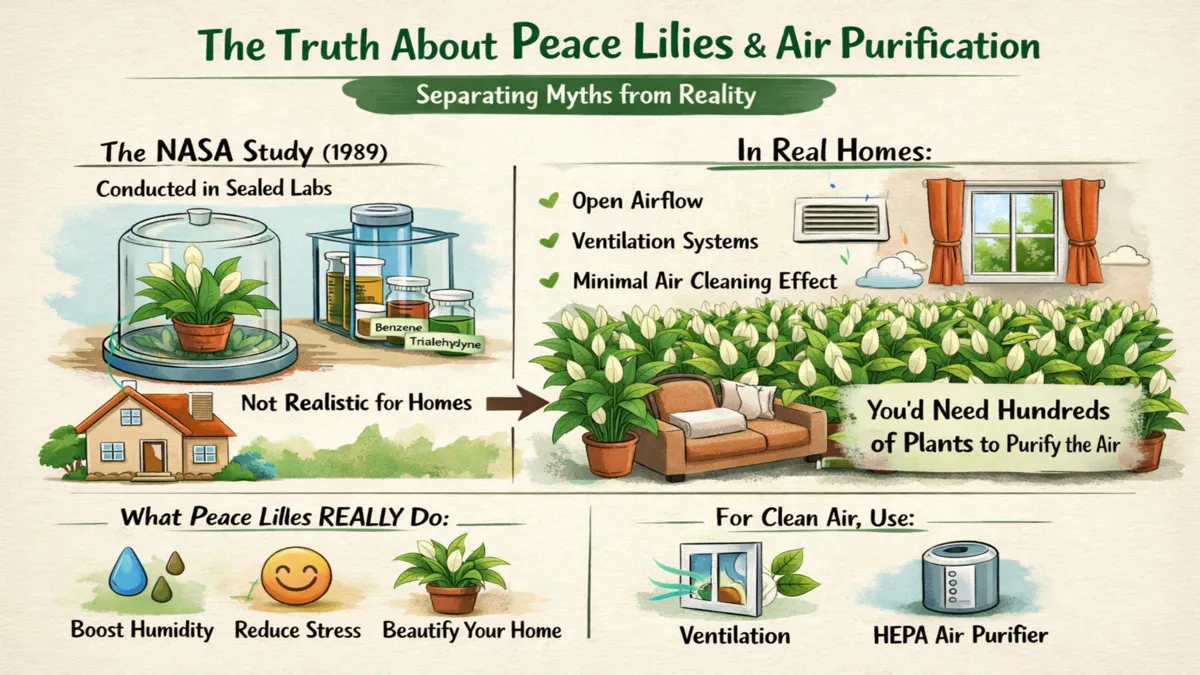
This notion largely stems from NASA's famous Air-Purifying Plants study, which suggested that certain indoor plants could remove pollutants such as benzene, formaldehyde, and carbon monoxide from the air. Since the Peace Lily was included in that research, it quickly gained a reputation as an effective air-purifying plant for indoor spaces.
Related News



However, modern research suggests that the reality is a bit more complex.
In this article, we will debunk the myth of the Peace Lily as an air purifier, explore what the science actually says, and discuss how this popular indoor plant truly benefits your indoor environment.
The Origins of the Peace Lily's Air-Purifying Claims
The belief that Peace Lilies purify the air originated with NASA's 1989 Clean Air Study.
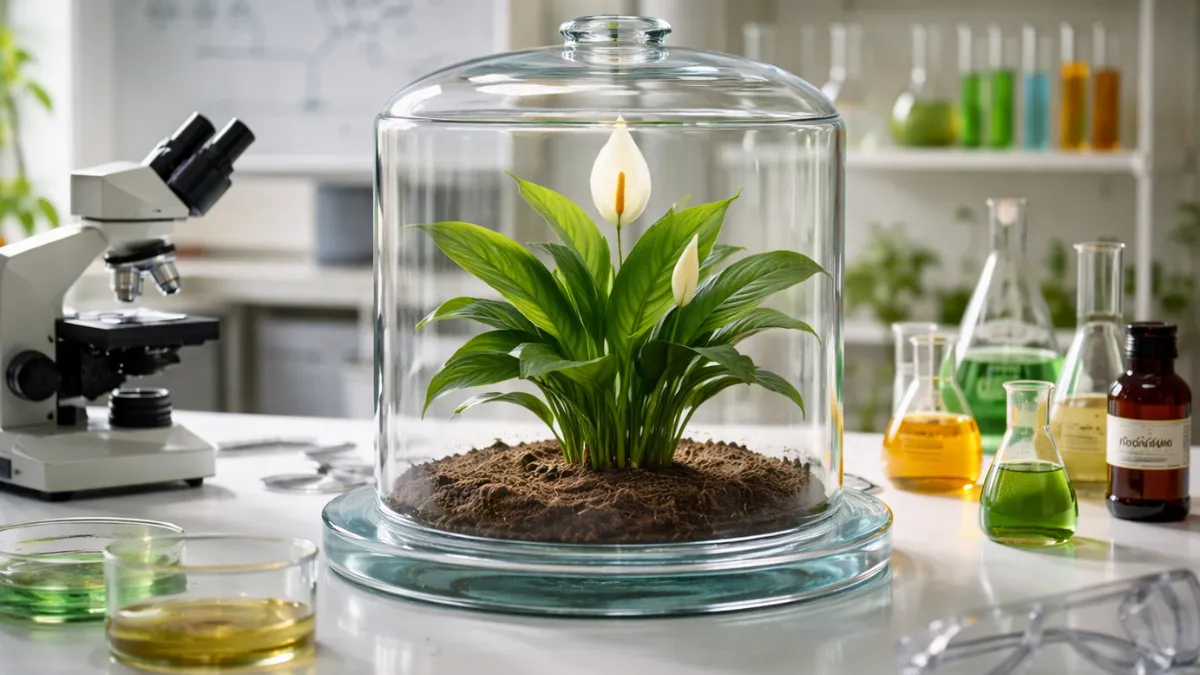
In this experiment, various plants were placed inside sealed chambers to determine whether they could remove airborne chemicals. The Peace Lily was one of the plants that demonstrated the ability to reduce the following toxins:
• Benzene
• Formaldehyde
• Trichloroethylene
• Ammonia
Also Read : Peace Lily Air Purifier Myth Busted : What Works in Real Homes
Also Read : 5 Indoor Plants That Improve Air Quality Better Than Air Purifiers
As a result of these findings, the Peace Lily soon became a staple on NASA's popular list of air-purifying plants.
However, there is one crucial detail that many people tend to overlook.
This experiment was conducted within small, sealed laboratory containers not in actual homes. In homes, airflow is open, ventilation systems are in place, and the air is constantly being exchanged; consequently, the air-purifying effect of plants is significantly diminished.
Do Peace Lilies Really Purify Indoor Air?
In a realistic indoor environment, the air-purifying impact of plants is negligible.
Recent scientific reviews indicate that to achieve the same air-cleaning capacity as standard ventilation or an air purifier in a typical room, you would need hundreds of plants.
Therefore, while Peace Lilies can technically absorb small amounts of chemicals through their leaves and the microbes present in their soil, their actual impact in an average home is virtually non-existent.
This means that one should not rely solely on Peace Lilies as the primary means of air purification.
Instead, they serve best as ornamental plants, offering minor environmental benefits such as maintaining humidity levels and improving mental well-being.
How many Peace Lilies would be required to purify the air?
This question frequently appears in search queries:
How many Peace Lilies do you need to clean the air?
Based on scientific estimates, to significantly reduce pollution levels in an average home, you would need between 10 and 100 plants per square meter.
This implies that a standard living room could require hundreds or even thousands of plants to function effectively as an air purifier.
Obviously, this is not a practical solution.
For comparison:
• A single HEPA air purifier can clean the air in an entire room within just a few minutes.
• Plants, on the other hand, affect air quality very slowly.
Therefore, while plants may contribute marginally to the chemical composition of indoor air, they do not offer a practical solution for comprehensive air purification.
Do Peace Lilies Release Carbon Dioxide at Night?
Another common question is:
Do Peace Lilies release carbon dioxide at night?
Yes like most plants, Peace Lilies also respire at night, which means they release a small amount of carbon dioxide.
However, this amount is very minimal and is not harmful to humans.
In fact, a sleeping human releases far more carbon dioxide than any houseplant.
Therefore, keeping a Peace Lily in your bedroom is completely safe.
Many people actually prefer keeping them in their bedrooms, as their deep green leaves create a calm and soothing atmosphere.
What do Peace Lilies actually do indoors?
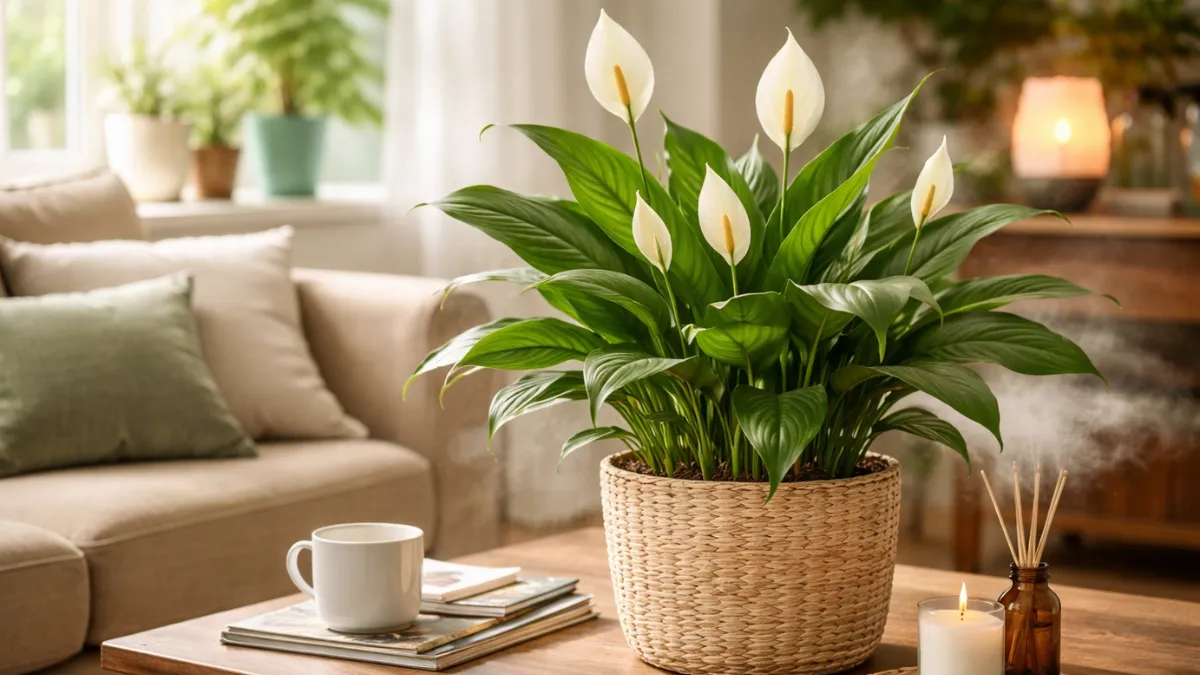
Even if the claims regarding their air-purifying abilities are somewhat exaggerated, Peace Lilies still offer several genuine benefits when kept indoors.
Also Read : Indoor Plants : Complete Beginner-to-Expert Guide (2026 Edition)
Also Read : Best Indoor Plants for Clean Air & Better Sleep (Science-Based Guide)
1. They Increase Indoor Humidity
Plants release moisture through a process called transpiration.
Peace Lilies can slightly increase humidity in dry rooms, which may help alleviate issues such as:
• Dry skin
• Sinus irritation
• Static electricity
Even if the effect is subtle, it can still make you feel more comfortable.
2. They Improve Mental Health
Studies have shown that indoor plants can reduce stress and boost your mood.
Having greenery indoors can offer the following benefits:
• A greater sense of relaxation
• Improved concentration
• Reduced anxiety
Peace Lilies are particularly popular because their deep green leaves and white flowers combine to create a calm and soothing atmosphere.
3. They Enhance Home Decor
People also grow Peace Lilies for a very simple reason: they look beautiful.
Their lovely and striking white flowers make them the perfect addition to spaces such as:
• Living rooms
• Offices
• Bedrooms
• Minimalist home interiors
Spider Plants vs. Snake Plants: Air Purifiers
Many people compare various indoor air-purifying plants particularly Spider Plants and Snake Plants.
Like Peace Lilies, these plants were also included in NASA's study on air-purifying plants.
However, modern research reveals the same limitation: their air-purifying effect in actual homes is quite minimal.
Spider Plants
Spider Plants are hardy and easy-to-grow plants. They can tolerate neglect and indirect light, making them an excellent choice for beginners.
Some people ask : Do Spider Plants remove mold from the air?
There is no concrete evidence that spider plants can remove mold spores from indoor air. Mold control requires ventilation and humidity management, rather than the use of indoor plants.
Snake Plant
Snake plants are often marketed as bedroom plants because they perform CAM photosynthesis, a process that allows them to release oxygen at night.
However, the amount of oxygen released is minimal and does not result in any significant improvement in indoor air quality.
Overall, all three plants the Peace Lily, Spider Plant, and Snake Plant are excellent choices for indoor environments, but they are not particularly effective at purifying the air.
Also Read : indoorplantify.com
Peace Lily (Air-Purifying Plant) Care
If you wish to grow a Peace Lily indoors, proper care is essential. Healthy plants always perform better.
Lighting
Peace Lilies prefer bright, indirect light, though they can also tolerate low-light conditions.
Avoid direct sunlight, as it can scorch the leaves.
Watering
Water the plant when the top inch of the soil feels dry.
Peace Lilies tend to droop when thirsty, but they typically recover quickly after being watered.
Avoid overwatering, as this can lead to root rot.
Humidity
They prefer moderate to high humidity.
If your home is dry, occasional misting or placing the plant near other plants can be helpful.
Soil
Use a well-draining potting mix suitable for indoor plants.
A blend of peat, perlite, or coco coir works well.
Fertilizer
Apply a balanced liquid fertilizer every 4–6 weeks during the growing season.
Should Peace Lilies be kept indoors?
Absolutely.
Although NASA's claim labeling the Peace Lily as an air purifier has been exaggerated, this plant still offers many benefits:
• Beautiful decorative foliage
• Charming white flowers
• Easy indoor care
• The psychological benefits of greenery
View the Peace Lily as a decorative and health-enhancing plant, rather than as a mechanical air filter.
To truly purify the air, the best strategies are:
• Opening windows to allow for ventilation
• Using an air purifier
• Reducing indoor pollutants
Nevertheless, plants can play a helpful role in making your indoor space healthier and more relaxing.
Final Thoughts
The belief that Peace Lilies can significantly purify indoor air is actually the result of a misunderstanding of NASA's early research on air-purifying plants.
While these plants can absorb trace amounts of chemicals under specific conditions, their impact in actual homes is minimal.
Nevertheless, the Peace Lily remains one of the best indoor plants due to its beauty, low-maintenance nature, and ability to create a serene atmosphere indoors.
Therefore, instead of expecting them to purify your air like a machine, appreciate them for what they truly are beautiful, soothing, and easy-to-grow houseplants.
Written for IndoorPlantify, based on personal, real-world experience with indoor plant care.